Schneider National, a leading multimodal transportation, intermodal, and logistics services provider, has reached a historic milestone by becoming the first major carrier in North America to surpass 10 million zero-emission miles using its battery-electric Freightliner eCascadia fleet, setting a new industry benchmark for sustainable freight movement and operational efficiency while reinforcing its reputation as a pace-setter in responsible transportation innovation across the logistics sector.
With nearly 100 Freightliner eCascadia battery-electric trucks currently in operation, Schneider manages one of the largest heavy-duty BEV fleets on the continent, demonstrating that zero-emission freight transport is no longer a pilot concept but a scalable, commercially viable solution that can operate reliably within complex, high-demand supply chain environments while delivering measurable environmental and operational benefits to shippers.
Schneider’s leadership in efficiency extends far beyond electrification alone, as the company has long been recognized for advancing fuel efficiency and operational excellence through a comprehensive strategy that integrates advanced equipment specifications, optimized network design, and driver-centric training programs, enabling Schneider to consistently set performance standards across both traditional and emerging transportation technologies.
Central to Schneider’s operating philosophy is a commitment to responsibility that translates directly into efficiency, as the company continually invests in next-generation technologies, modern equipment, and data-driven operating practices that reduce greenhouse gas emissions, conserve fuel, minimize waste, and improve asset utilization across the end-to-end supply chain while providing customers with flexible and sustainable transportation options.
According to Schneider President and CEO Mark Rourke, meeting the evolving demands of today’s logistics market requires close collaboration among carriers, customers, and technology partners to identify the most efficient ways to move goods, with Schneider playing an active role not only by deploying innovative equipment but also by working alongside shippers and vendors to uncover incremental efficiency gains that collectively result in optimized supply chains and increased long-term value.
Schneider’s efficiency-driven approach has earned the company repeated recognition from the U.S. Environmental Protection Agency, including top-tier SmartWay Performance Rankings across its core business units and 13 EPA SmartWay Excellence Awards, reflecting year-over-year reductions in emissions intensity and reinforcing Schneider’s standing as one of the most environmentally responsible carriers operating at scale in North America.
Schneider’s asset-based model enables the company to deliver tangible efficiency advantages to customers through direct investment in advanced equipment, including lightweight tractors and chassis that allow for increased payload capacity, enabling certain rail-intermodal routes to move up to 10 percent more freight per load, thereby reducing the number of shipments required and lowering overall emissions per unit moved.
Across its fleet, Schneider deploys advanced powertrain technologies engineered to balance performance with fuel efficiency, complemented by aerodynamic enhancements such as optimized tractor and trailer designs, idle-reduction technologies, HVAC efficiency improvements, and governed speed limiters that collectively reduce fuel consumption while maintaining service reliability and safety standards.
Schneider’s adoption of MirrorEye camera systems replaces traditional side mirrors with high-definition cameras that significantly reduce aerodynamic drag while improving driver visibility, particularly in low-light and adverse weather conditions, resulting in measurable fuel savings alongside enhanced on-road safety and situational awareness.
Recognizing that drivers play a critical role in operational efficiency, Schneider has invested heavily in driver-focused training programs that incorporate simulation-based instruction and embedded best practices designed to reduce fuel consumption, improve vehicle handling, and promote consistent, efficient driving behaviors across its workforce, resulting in annual fuel savings exceeding 335,000 gallons solely from training-driven efficiency improvements.
Schneider equips its drivers with a suite of efficiency-enhancing tools, including UPGo and EZ Pass rail yard access solutions that minimize idle time at intermodal facilities, automated service alerts that proactively identify maintenance needs to prevent breakdowns, and incentive programs that reward drivers for efficient fuel usage and proper equipment operation, ensuring assets remain in peak condition throughout their lifecycle.
Schneider’s intermodal network represents a cornerstone of its efficiency strategy by enabling shippers to shift freight from highway-only transport to rail-based solutions where appropriate, allowing a single gallon of fuel to move one ton of freight up to 500 miles while maintaining seamless integration with customer supply chains and nationwide routing flexibility.
By combining rail efficiency with Schneider’s asset-based trucking operations, the company provides shippers with a range of service options that balance cost, transit time, and sustainability goals, including Schneider Fast Track, a premium intermodal offering designed for time-sensitive freight that requires higher service levels without sacrificing efficiency advantages.
Schneider’s battery-electric fleet has already eliminated an estimated 33.5 million pounds of carbon dioxide emissions, an environmental impact equivalent to removing more than 13,000 gasoline-powered passenger vehicles from the road for an entire year, with these reductions expected to grow substantially as zero-emission mileage continues to expand across the network.
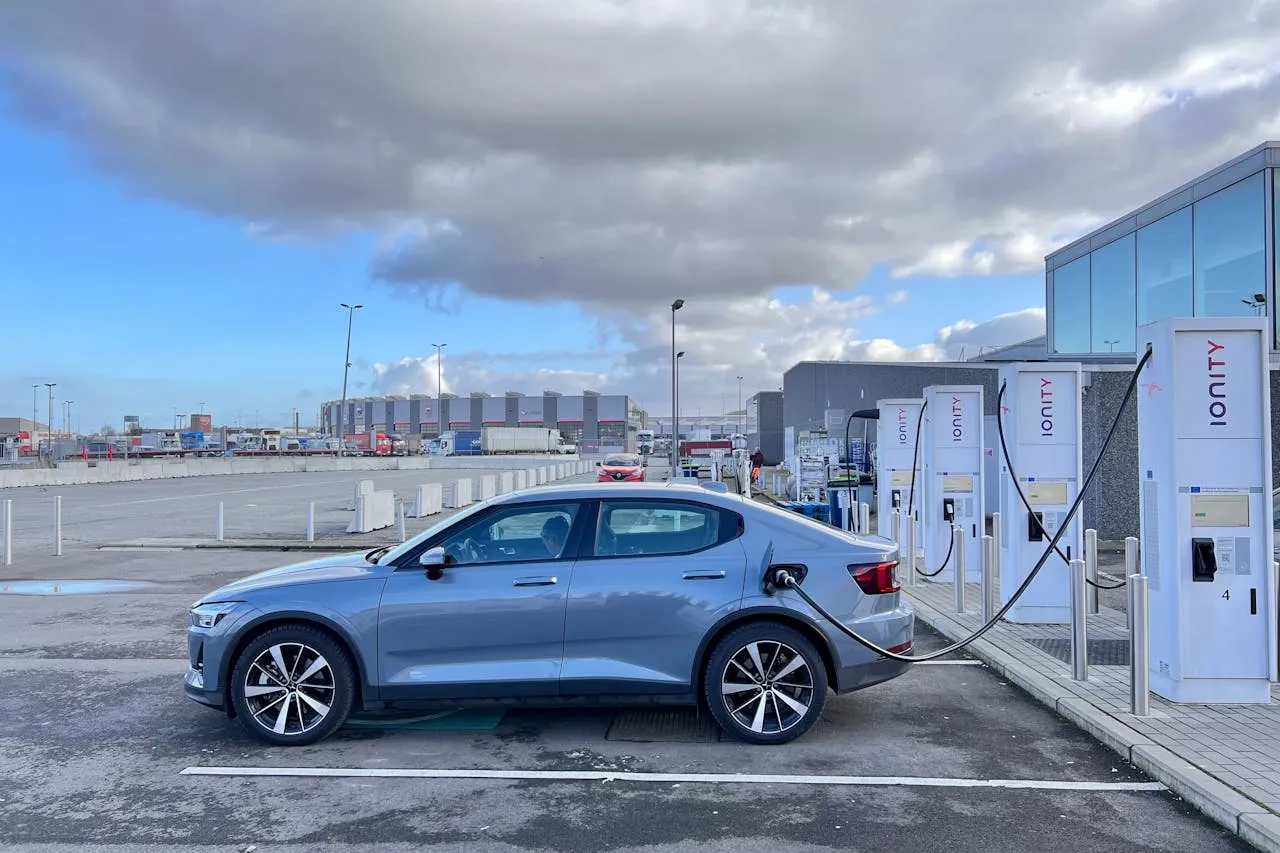
To support large-scale electric truck deployment, Schneider has invested in one of the largest heavy-duty charging depots in the United States, located in South El Monte, California, featuring 16 high-capacity 350-kilowatt dual-corded dispensers capable of charging up to 32 electric trucks simultaneously, ensuring operational readiness and minimizing downtime for BEV assets.
Rather than treating electrification as a standalone initiative, Schneider integrates its BEV operations into a broader ecosystem of efficiency optimization that includes equipment design, route planning, driver training, and intermodal integration, allowing the company to deliver consistent service while advancing sustainability goals in parallel with customer performance expectations.
The expansion of Schneider’s BEV fleet has been supported through a combination of public funding and private investment, including grants from the California Air Resources Board, the California Energy Commission’s Joint Electric Truck Scaling Initiative, and regional air quality agencies, reflecting the role of collaborative funding models in accelerating the adoption of zero-emission freight solutions.
Fifty of Schneider’s 92 Freightliner eCascadia trucks were funded through the Joint Electric Truck Scaling Initiative, a statewide program designed to reduce greenhouse gas emissions, stimulate economic growth, and improve public health outcomes, particularly in disadvantaged communities disproportionately affected by freight-related air pollution.
The remaining electric trucks in Schneider’s fleet were supported through a combination of federal and state programs, including the U.S. EPA FY18 Targeted Airshed Grant, the Hybrid and Zero-Emission Truck and Bus Voucher Incentive Program, and the Volkswagen Environmental Mitigation Trust, demonstrating how diversified funding sources can accelerate clean transportation adoption at scale.
From advanced equipment and driver training to intermodal optimization and zero-emission innovation, Schneider continues to redefine what shippers should expect from a modern transportation partner, delivering measurable efficiency gains while helping customers meet sustainability targets without compromising reliability or service quality.
As Schneider continues to expand its zero-emission mileage, invest in infrastructure, and refine its efficiency-driven operating model, the company remains focused on delivering transportation solutions that align environmental responsibility with economic performance, positioning itself as a long-term partner for shippers navigating the evolving demands of a more sustainable and performance-oriented supply chain landscape.
Source Link:https://www.businesswire.com/