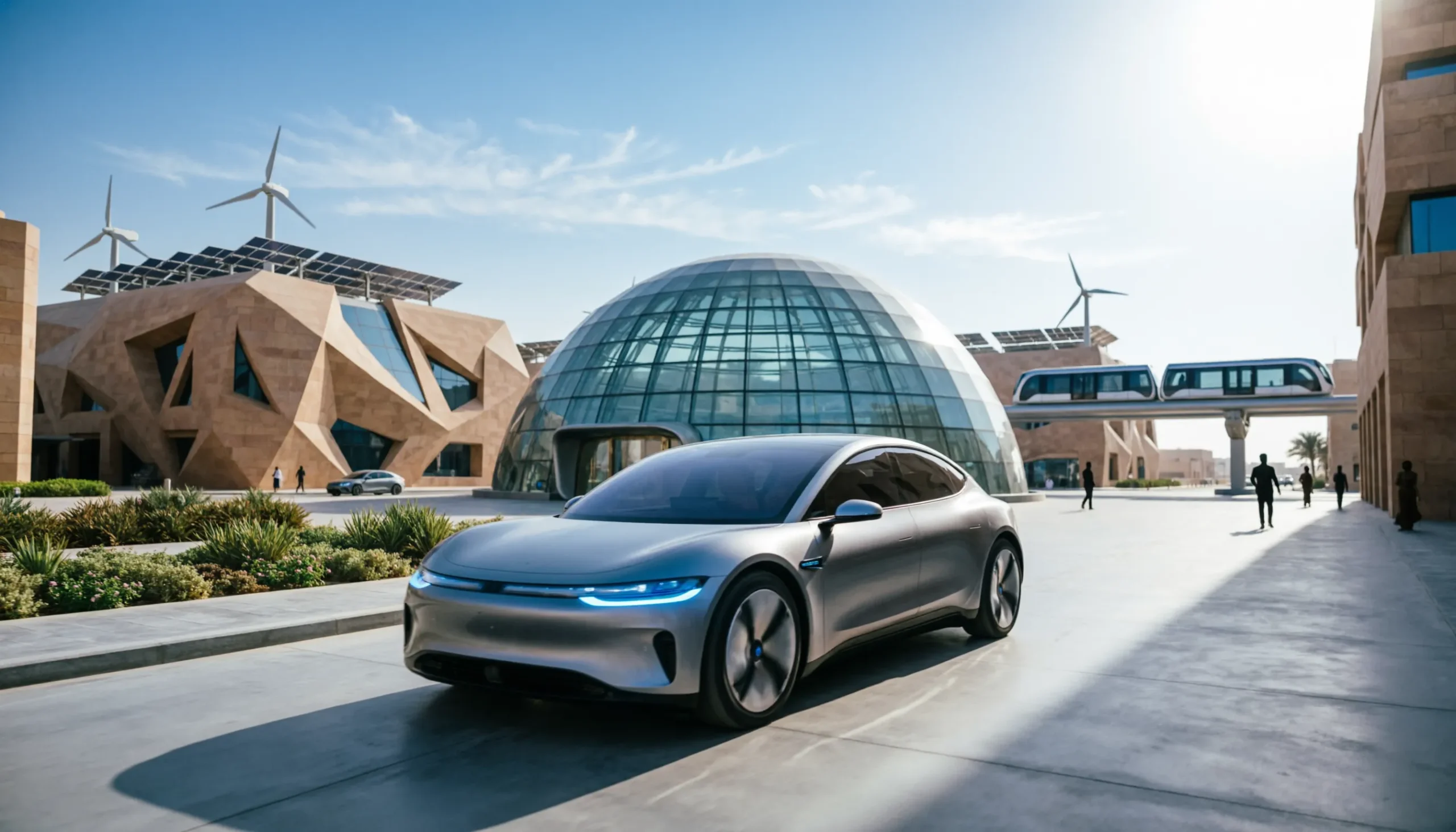
XPENG Marks a Strategic Global Milestone with Its First Appearance at the World Governments Summit
XPENG, a global leader in AI-driven mobility and intelligent transportation solutions, recently concluded its first-ever participation at the World Governments Summit, signaling a significant step in the company’s expanding engagement with international policymakers, regulators, and industry leaders who are shaping the future of artificial intelligence, sustainability, and next-generation mobility. The debut appearance highlighted XPENG’s ambition to move beyond the role of a vehicle manufacturer and position itself as a technology-driven mobility company contributing to global conversations on how AI can redefine transportation, urban living, and human-centered innovation at scale.
The Global Significance of the World Governments Summit in Dubai
Held from 3–5 February in Dubai, the World Governments Summit has evolved into one of the most influential platforms for dialogue between governments, international organizations, and the private sector, and the 2026 edition marked the largest gathering in the event’s history. The Summit welcomed more than 6,000 participants, including 35 heads of state, over 150 government delegations, and approximately 500 ministers, creating a unique environment where policy, technology, and economic strategy intersected. Alongside political leaders from Europe, Asia, the Middle East, and the Americas, senior executives from globally recognized technology, mobility, and industrial companies took part, reinforcing the Summit’s role as a focal point for discussions on the future of governance and innovation in a rapidly changing world.
XPENG’s Strategic Rationale for Participating in the Summit
For XPENG, participation in the World Governments Summit represented far more than a ceremonial debut; it was a deliberate strategic move to deepen engagement with decision-makers responsible for shaping regulatory frameworks, infrastructure investment, and innovation policy in mobility and artificial intelligence. As autonomous driving, smart vehicles, and AI-enabled transportation systems increasingly depend on cross-border collaboration and regulatory alignment, XPENG views direct dialogue with governments as essential to accelerating adoption while ensuring safety, trust, and inclusivity. By participating in this global forum, XPENG demonstrated its commitment to contributing constructively to international discussions on how technology can address complex societal challenges such as congestion, sustainability, accessibility, and urban efficiency.
Advancing the Concept of Physical AI and Intelligent Mobility
A central theme of XPENG’s participation was its long-term vision for Physical AI, a concept that extends artificial intelligence beyond digital applications into the physical world through vehicles, robotics, and intelligent mobility systems. As part of the official Summit program, Dr. Brian Gu, Vice Chairman and President of XPENG, took part in a high-level fireside chat focused on the evolution of AI-powered mobility and the growing role of intelligent systems as guides that support human decision-making. He emphasized that as environments become more complex and data-rich, AI has the potential to reduce cognitive load, enhance safety, and enable people to navigate daily life more intuitively, rather than merely automating isolated functions.
Leadership Insights from Dr. Brian Gu on the Future of AI Mobility
During the discussion, Brian Gu articulated XPENG’s belief that while electrification has transformed the energy foundation of transportation, intelligence will be the true catalyst for redefining how people move and interact with their surroundings. He explained that autonomous driving technologies and robotaxi services are expected to transition from pilot programs to mainstream adoption over the next decade, supported by rapid advances in AI algorithms, sensor technologies, and data processing capabilities, as well as by the gradual maturation of regulatory frameworks worldwide. According to Dr. Gu, this shift will not only improve efficiency and safety but also fundamentally change the relationship between humans and machines, making mobility more adaptive, personalized, and human-centric.
XPENG’s Full-Stack AI Approach Across Multiple Mobility Domains
Dr. Gu also outlined XPENG’s full-stack AI strategy, which integrates hardware, software, data, and algorithms into a unified development framework. Unlike fragmented approaches that rely heavily on third-party solutions, XPENG invests deeply across the entire technology stack to ensure tight integration and continuous learning from real-world conditions. This approach enables XPENG to apply AI consistently across a wide range of domains, including intelligent electric vehicles, advanced autonomous driving systems, flying vehicles, and even humanoid robotics. By leveraging data generated from diverse use cases and environments, XPENG aims to create systems that evolve dynamically over time, improving performance, safety, and user experience as they accumulate operational knowledge.
Moving Beyond Electrification Toward Truly Intelligent Transportation
Throughout its Summit engagement, XPENG reinforced the message that electrification alone, while critical for sustainability, represents only the first step in the transformation of transportation. The company’s vision centers on intelligence as the defining factor of next-generation mobility, where vehicles become active participants in complex ecosystems rather than passive machines. Intelligent vehicles equipped with advanced AI capabilities can anticipate user needs, adapt to changing environments, and collaborate with infrastructure and other vehicles, enabling smoother traffic flows, reduced emissions, and enhanced quality of life in urban and intercity settings. XPENG’s emphasis on Physical AI underscores its belief that the convergence of AI, robotics, and mobility will unlock entirely new possibilities for how people live, work, and travel.
High-Level Engagement with European Leadership
In addition to its participation in the official Summit program, XPENG used the event as an opportunity to strengthen bilateral relationships with political leaders and explore new avenues for international expansion. During the Summit, Dr. Gu met with Pedro Sánchez, Prime Minister of Spain, to exchange perspectives on XPENG’s global growth strategy and its innovations in electric vehicles and AI-driven mobility solutions. The discussion also touched on opportunities to deepen XPENG’s presence in Europe, including the potential for future collaboration and investment in Spain, reflecting the company’s broader ambition to expand responsibly across key international markets.
Building Momentum Across the Middle East and North Africa Region
XPENG’s engagement at the World Governments Summit extended beyond Europe, with a series of meetings held with policymakers and industry leaders from across the Middle East and North Africa region. These discussions focused on emerging mobility trends, the role of Physical AI in addressing regional transportation challenges, and opportunities for collaboration in fast-growing markets where smart city initiatives and infrastructure development are accelerating. The MENA region’s emphasis on innovation, sustainability, and digital transformation aligns closely with XPENG’s technological strengths, making it a strategically important area for future growth and partnership.
Contributing to a Global Dialogue on Human-Centered AI
A consistent theme throughout XPENG’s Summit participation was the importance of human-centered design in the development and deployment of AI technologies. XPENG emphasized that intelligent mobility systems must be designed not only for technical excellence but also with a deep understanding of human behavior, trust, and usability. By engaging directly with governments and international stakeholders, XPENG aims to help shape policies and standards that encourage responsible innovation, ensuring that AI-driven mobility solutions are safe, inclusive, and aligned with societal values. This perspective reinforces XPENG’s positioning as a company that sees technological leadership and social responsibility as mutually reinforcing objectives.
Strengthening XPENG’s Global Identity as an AI-Driven Mobility Company
XPENG’s debut at the World Governments Summit also served to strengthen its global brand identity as an AI-first mobility company rather than a traditional automaker. By sharing its long-term vision, technological roadmap, and commitment to collaboration, XPENG demonstrated how its innovations fit into broader conversations about urbanization, sustainability, and digital governance. The Summit provided a platform for XPENG to articulate how its investments in AI, autonomous systems, and robotics are designed to address real-world challenges and contribute to more resilient, efficient, and livable societies.
XPENG’s Role in Shaping the Next Chapter of Mobility
As XPENG looks to the future, its participation in the World Governments Summit represents an important foundation for deeper global engagement and collaboration. The company’s interactions with policymakers, industry leaders, and international organizations underscore its intention to play an active role in shaping the regulatory, technological, and ethical frameworks that will govern AI-driven mobility in the years ahead. By combining advanced technology with open dialogue and partnership, XPENG aims to help define a future of transportation that is not only smarter and more sustainable but also fundamentally centered on enhancing human experience and well-being.
Source Link:https://www.xpeng.com/