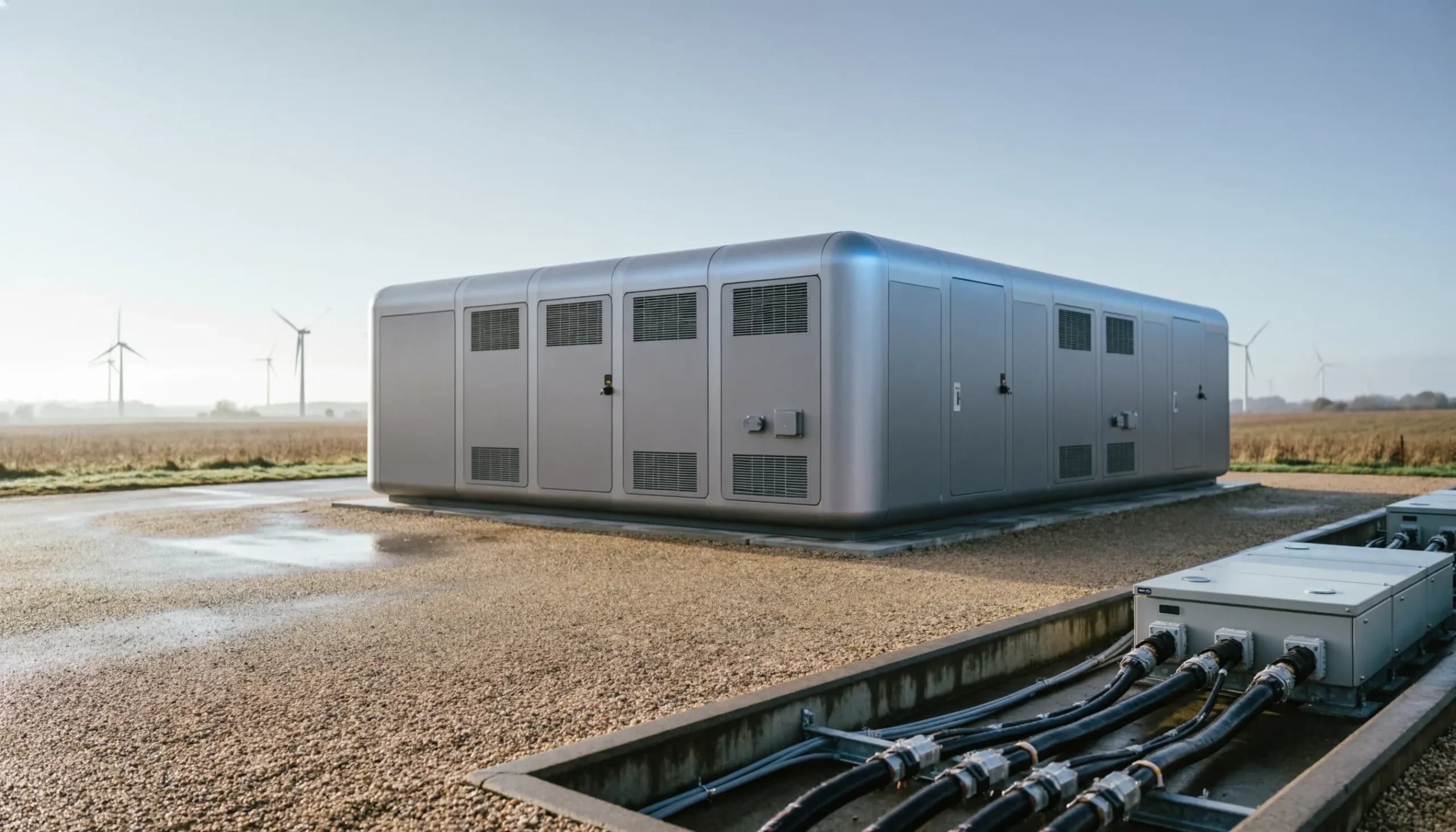
ADS-TEC Energy PLC underscored the growing urgency of intelligently integrating energy infrastructure during its participation at Volta-Xchange in Stuttgart, where representatives from municipalities, grid operators, technology providers and industry convened to discuss the structural transformation of Europe’s power systems, emphasizing that the transition from centralized generation to distributed energy management demands flexible, battery-based storage solutions capable of bridging generation variability, grid limitations and rising electricity demand while enabling immediate, scalable deployment of high-performance charging and localized power applications
Volta-Xchange served as a collaborative platform for stakeholders shaping the future of energy systems, focusing on the convergence of grid modernization, storage deployment and application-layer innovation, with discussions centered on how electrification trends, policy frameworks and technological advancement must align to create a resilient, decentralized and economically viable infrastructure model that addresses both current bottlenecks and long-term decarbonization objectives across European markets
Thomas Speidel, Chief Executive Officer of ADS-TEC Energy, emphasized that the defining concept of Volta-Xchange lies in the “intersection” represented by the letter X, symbolizing the meeting point of grid infrastructure, energy storage and end-use applications, reflecting the reality that modern energy systems can no longer rely exclusively on centralized power plants but instead require distributed intelligence and localized flexibility to ensure operational stability and supply reliability
Europe’s traditional energy architecture has historically relied on large-scale centralized generation assets distributing electricity across extensive transmission networks, yet accelerating electrification driven by digitalization, mobility transformation and heating decarbonization has placed unprecedented pressure on grid capacity, revealing structural constraints that cannot be resolved solely through conventional expansion projects that may require years of planning, permitting and construction
The rapid proliferation of data centers supporting artificial intelligence and cloud computing, the widespread adoption of heat pumps in residential and commercial buildings, and the accelerating penetration of electric vehicles have collectively intensified peak demand patterns, creating localized congestion points within distribution networks that challenge utilities and municipalities seeking to maintain reliability without overburdening infrastructure
Battery-based storage systems provide a critical bridge within this evolving architecture, offering instantaneous responsiveness to fluctuating generation and consumption patterns while smoothing demand peaks, stabilizing voltage levels and enabling high-power applications even in areas where grid capacity is constrained, thereby supporting electrification objectives without necessitating immediate large-scale transmission upgrades
Speidel articulated that energy distribution is no longer defined by consumers traveling to centralized refueling stations but rather by power being delivered directly to where people live, work and travel, including railway stations, city centers, supermarket car parks and fleet depots, illustrating a paradigm shift from centralized fueling to distributed charging ecosystems that require robust, localized energy management solutions
Battery-buffered fast charging systems developed by ADS-TEC Energy exemplify this shift by decoupling charging performance from instantaneous grid supply limitations, storing energy during periods of lower demand and delivering high-power output during charging sessions, thereby enabling ultra-fast electric vehicle charging without triggering costly grid reinforcement projects or prolonged approval processes
Such systems serve as operational buffers between available grid capacity and real-time charging demand, ensuring that infrastructure deployment can keep pace with electric mobility adoption while maintaining grid stability and avoiding delays associated with traditional expansion measures, which in many European regions remain subject to regulatory complexity and multi-year implementation timelines
ADS-TEC Energy has achieved significant global deployment milestones, installing more than 2,500 battery-buffered charging points worldwide, demonstrating both the scalability and reliability of its integrated storage-charging solutions across diverse urban and commercial environments, while additional ChargePost installations are scheduled to become operational at major supermarket locations, further embedding high-power charging within everyday consumer destinations
These deployments illustrate how retail environments can evolve into energy hubs that combine convenience with infrastructure optimization, enabling customers to charge vehicles rapidly during routine activities while operators benefit from manageable grid loads and reduced dependency on immediate distribution network upgrades, reinforcing the practicality of decentralized storage as a near-term enabler of transport electrification
A prominent example of this approach can be found at Stuttgart-Zuffenhausen railway station, where four ChargePosts equipped with a total of eight high-power charging points provide ultra-fast charging capability without requiring complex or extensive grid enhancements, showcasing how localized storage can deliver metropolitan-grade charging performance within existing infrastructure constraints
The ChargePost platform represents a technological response to the fundamental challenge of balancing high instantaneous power demand with limited grid supply capacity, utilizing integrated battery systems to accumulate energy progressively and release it at the high output levels required for rapid electric vehicle charging, thereby reconciling infrastructure readiness with consumer expectations for speed and convenience
By leveraging storage as an intermediary layer, municipalities and private operators can accelerate charging network rollouts, strategically placing high-power systems in locations that would otherwise be unsuitable due to insufficient grid capacity, effectively democratizing access to fast charging and supporting broader decarbonization goals without overextending public infrastructure budgets
This model not only reduces capital expenditures associated with transformer upgrades and new cabling but also mitigates construction disruption in dense urban settings, offering a streamlined path toward electrified mobility ecosystems that align with both environmental targets and practical urban planning considerations
Speidel emphasized that regulatory frameworks must evolve to recognize the intrinsic value of flexibility delivered by battery storage, arguing that policy structures often prioritize traditional grid expansion while underestimating the economic and operational benefits of decentralized storage solutions that can be deployed rapidly and deliver measurable performance improvements
Storage systems contribute to resilience by absorbing fluctuations from renewable generation sources such as wind and solar, stabilizing frequency and voltage while providing reserve capacity during peak demand, thereby enhancing system robustness without necessitating immediate structural modifications to transmission and distribution networks
Acknowledging storage as a core infrastructure asset would facilitate investment flows, streamline permitting processes and encourage broader adoption across municipalities and industrial sectors, accelerating the energy transition while maintaining fiscal prudence and technological neutrality
Beyond operational efficiency, resilient energy infrastructure has become increasingly intertwined with questions of sovereignty and geopolitical stability, as decentralized storage empowers municipalities and industrial operators to manage energy locally, reducing reliance on distant generation assets or cross-border supply chains that may be subject to geopolitical volatility
By strengthening local autonomy and enabling self-sufficiency in managing demand and supply fluctuations, battery-based storage enhances national and regional resilience, supporting continuity of operations in the face of external disruptions while fostering greater confidence among businesses and communities transitioning toward electrified systems
In an environment characterized by evolving geopolitical dynamics and supply chain uncertainties, decentralized storage infrastructure serves not only as a technical solution but also as a strategic instrument for safeguarding economic stability and ensuring reliable access to power for critical services and industries
The discussions at Volta-Xchange reflect a broader continental imperative to modernize infrastructure in alignment with climate objectives, technological innovation and socioeconomic development, recognizing that the energy transition requires a multidimensional approach combining grid modernization, digital intelligence, flexible storage and application-level optimization
ADS-TEC Energy’s emphasis on integrated storage solutions positions the company within a critical segment of this transformation, addressing the immediate challenges posed by accelerating electrification while contributing to long-term system adaptability and resilience, demonstrating how modular, scalable technologies can complement rather than compete with traditional infrastructure expansion
As electrification continues to accelerate across transportation, heating and digital sectors, the interplay between grid capacity, storage deployment and application demand will define the effectiveness of Europe’s energy architecture, making the intersection represented at Volta-Xchange not merely symbolic but foundational to the continent’s sustainable future
Through its expanding global deployment footprint and continued innovation in battery-buffered high-power charging, ADS-TEC Energy illustrates how localized flexibility can serve as a practical and economically viable catalyst for system-wide transformation, reinforcing the message that storage is not a supplementary component but an essential bridge connecting generation, grid and demand in the evolving energy ecosystem
Source Link:https://www.businesswire.com/