Autonomous trucking technology continues to advance at a rapid pace as companies race to transform the global freight industry. In this evolving landscape, PlusAI has announced a major milestone with the release of SuperDrive™ 6.0, the newest version of its autonomous driving software platform designed specifically for large-scale commercial deployment. The latest upgrade represents a significant technological leap for the company, adding advanced capabilities such as night-time driving and construction zone navigation—two complex operational challenges that have historically limited the scalability of autonomous freight transportation.
SuperDrive 6.0 is not simply a routine update. Instead, it marks a major step forward in the development of autonomous truck intelligence and operational readiness. The platform has been engineered to accelerate the path toward fully driverless freight operations while improving efficiency, safety, and economic viability. With more than 7 million miles of real-world driving data collected across North America, Europe, and Asia, the system incorporates extensive real-world experience that helps it adapt to complex road conditions and unpredictable traffic environments.
The announcement arrives during a pivotal moment for PlusAI as the company prepares to become a publicly traded organization through a planned business combination with Churchill Capital Corp IX, which is listed on Nasdaq under the ticker CCIX. The planned transaction underscores the growing investor interest in autonomous freight technologies and the long-term potential of self-driving trucking solutions.
According to company leadership, SuperDrive 6.0 represents a fundamental evolution in what autonomous systems are capable of achieving. The software introduces major improvements in perception, prediction, and decision-making, which together create a more capable “autonomous brain” for heavy-duty trucks.
David Liu, CEO and co-founder of PlusAI, emphasized the transformative nature of the release. Rather than delivering incremental improvements, the new version significantly expands the operating capabilities of autonomous trucks. By introducing night driving and construction zone handling, SuperDrive 6.0 allows autonomous vehicles to operate in environments that previously required human drivers.
These new capabilities are particularly important for freight logistics, where continuous operation can dramatically increase efficiency. Autonomous trucks equipped with the updated software could eventually operate around the clock, enabling 24/7 freight transportation without the limitations imposed by driver availability or mandatory rest periods.
Another key advancement is the dramatic acceleration of the company’s artificial intelligence development pipeline. SuperDrive 6.0 boosts the speed of AI model training by ten times, enabling engineers to test, validate, and deploy new features much faster than before. According to PlusAI, the timeline from internal validation of a major feature to deployment in commercial freight operations could shrink to just a matter of weeks.
This rapid iteration capability is critical in the competitive autonomous vehicle industry, where continuous learning and adaptation are necessary to handle the vast range of real-world driving scenarios.
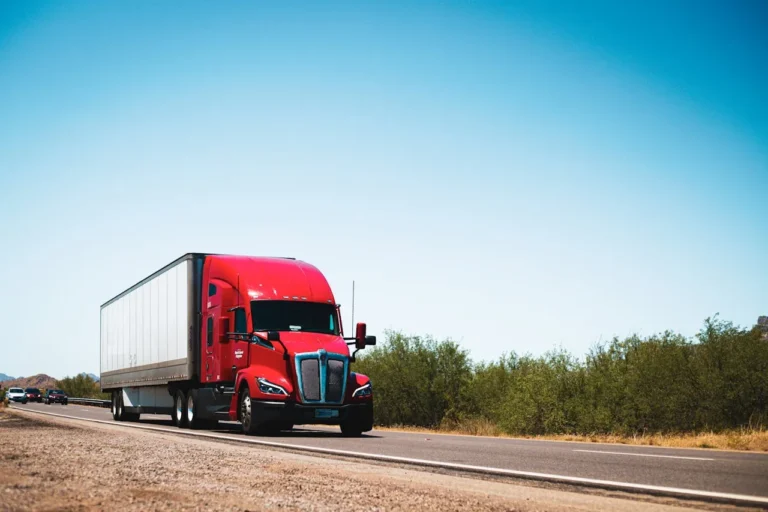
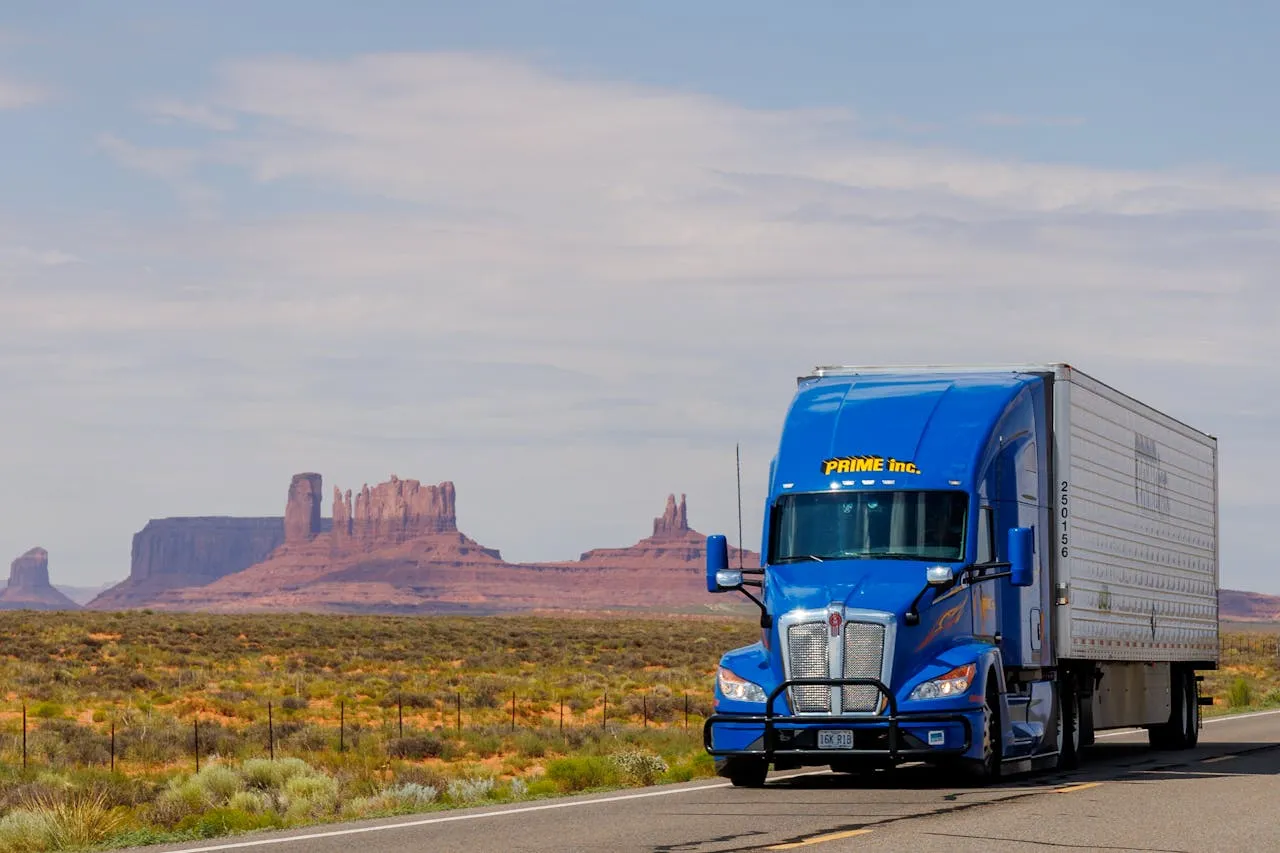
The latest version of SuperDrive is already being used in active freight operations in the United States. Autonomous trucks equipped with SuperDrive 6.0 are currently transporting commercial freight along strategic logistics corridors in Texas, one of the most important trucking hubs in North America.
Texas provides an ideal testing and deployment environment due to its extensive highway network, high freight volumes, and supportive regulatory framework for autonomous vehicle technologies. Within these corridors, the construction zone handling feature of SuperDrive 6.0 is already operational.
Construction zones represent one of the most challenging environments for autonomous driving systems. Road layouts often change rapidly, lane markings may be unclear or temporarily altered, and traffic patterns can shift unexpectedly due to barriers or equipment. By successfully navigating these complex conditions, the SuperDrive platform demonstrates a higher level of situational awareness and decision-making capability.
Night driving functionality is also expected to become available in the near future, which will allow autonomous trucks to operate continuously throughout the day and night. This capability is particularly important in freight logistics, where overnight transportation plays a critical role in maintaining supply chain efficiency.
Improving safety is another key motivation behind these developments. Thousands of traffic accidents occur annually in construction zones across Texas, often caused by speeding, driver fatigue, inattentiveness, or sudden lane changes. Autonomous systems that can consistently monitor road conditions and maintain safe driving behavior have the potential to reduce these risks.
Furthermore, the ability to operate trucks 24 hours a day could significantly improve asset utilization. Traditional trucking operations often leave vehicles idle for long periods due to driver rest requirements. Autonomous operation could more than double the productive use of a single truck, potentially lowering costs and improving supply chain efficiency.
Beyond its operational improvements, SuperDrive 6.0 also introduces major advances in the economics of autonomous vehicle development. Developing autonomous driving systems typically requires enormous volumes of labeled data, computational resources, and engineering effort. These factors have historically made autonomous vehicle development both expensive and time-consuming.
PlusAI has addressed these challenges through a combination of advanced AI techniques, including autolabeling, imitation learning, and reinforcement learning. These technologies allow the system to learn from large datasets more efficiently and reduce the amount of manual data labeling required.
As a result, the company reports a tenfold increase in AI training speed and a threefold reduction in data labeling costs. These improvements significantly lower development costs while enabling faster innovation.
The accelerated development cycle allows new features, operational environments, and trucking routes to be introduced more rapidly. Engineers can move from simulated testing to real-world validation and then to commercial deployment in a much shorter timeframe.
This streamlined process not only reduces costs but also accelerates revenue generation. By shortening the time required to deploy new capabilities into active freight operations, PlusAI can scale its technology more efficiently while expanding its operational footprint.
SuperDrive 6.0 also introduces a new computing architecture designed specifically for commercial reliability. Autonomous freight operations require extremely high system uptime because trucks must operate continuously in demanding conditions over long distances.
To meet these requirements, the platform uses a distributed computing system built around high-performance system-on-chip processors, including advanced platforms from NVIDIA such as NVIDIA DRIVE Orin and NVIDIA DRIVE Thor. These processors provide the computational power necessary to process vast amounts of sensor data in real time while executing complex AI models.
The architecture is designed to maintain performance even when certain system components experience degradation or partial failure. For example, the system can continue operating safely despite sensor calibration drift, temporary sensor obstruction, or partial hardware malfunction.
This level of redundancy and fault tolerance is essential for commercial deployment, where reliability is critical to maintaining consistent freight operations. It also distinguishes production-ready systems from experimental autonomous vehicle prototypes.
At the heart of SuperDrive 6.0 is a new AI layer called Reflex, which is part of the company’s AV 2.0 architecture. This layer uses a Transformer-based model to integrate large-scale perception capabilities with advanced motion forecasting.
Motion forecasting is one of the most important elements of autonomous driving because it allows the vehicle to anticipate how other road users will behave. By predicting the trajectories of surrounding vehicles, pedestrians, and cyclists, the system can make safer and more efficient driving decisions.
The updated motion forecasting model in SuperDrive 6.0 delivers a twofold improvement in predictive accuracy. This enhanced capability allows the autonomous system to better anticipate actions such as vehicles merging into traffic, pedestrians crossing the road, or cars changing lanes.
Improved prediction leads to smoother and safer driving behavior. Autonomous trucks can respond earlier to potential hazards, adjust speed more effectively, and maintain safer distances from other vehicles.
The release of SuperDrive 6.0 represents a major milestone in PlusAI’s long-term roadmap toward fully driverless freight transportation. The company aims to launch scalable commercial driverless trucking operations by 2027, using factory-built autonomous trucks designed specifically for autonomous operation.
These future trucks are expected to integrate SuperDrive technology directly into their manufacturing architecture, enabling seamless integration between hardware and software systems.
By combining advanced AI, real-world driving data, and production-grade hardware platforms, PlusAI is working to create a commercially viable autonomous trucking ecosystem capable of operating across major freight corridors.
The addition of night driving and construction zone handling significantly expands the operational domain of the system. Meanwhile, the accelerated AI development pipeline ensures that new capabilities and operating environments can be introduced rapidly.
Together, these advancements move the company closer to a future where autonomous trucks can safely and efficiently transport goods across long distances without human drivers.
The global logistics industry faces growing challenges, including driver shortages, rising operational costs, and increasing demand for faster delivery. Autonomous trucking technologies offer a potential solution by enabling more efficient, reliable, and scalable freight transportation.
With the introduction of SuperDrive 6.0, PlusAI has taken a major step toward realizing that vision. The platform’s enhanced capabilities, improved AI training efficiency, and production-grade reliability demonstrate how autonomous technology is transitioning from experimental testing to real-world commercial deployment.
As development continues and the 2027 target approaches, autonomous trucking may soon become a transformative force in global supply chains—reshaping how goods move across highways and redefining the future of freight transportation.
Source Link:https://www.businesswire.com/