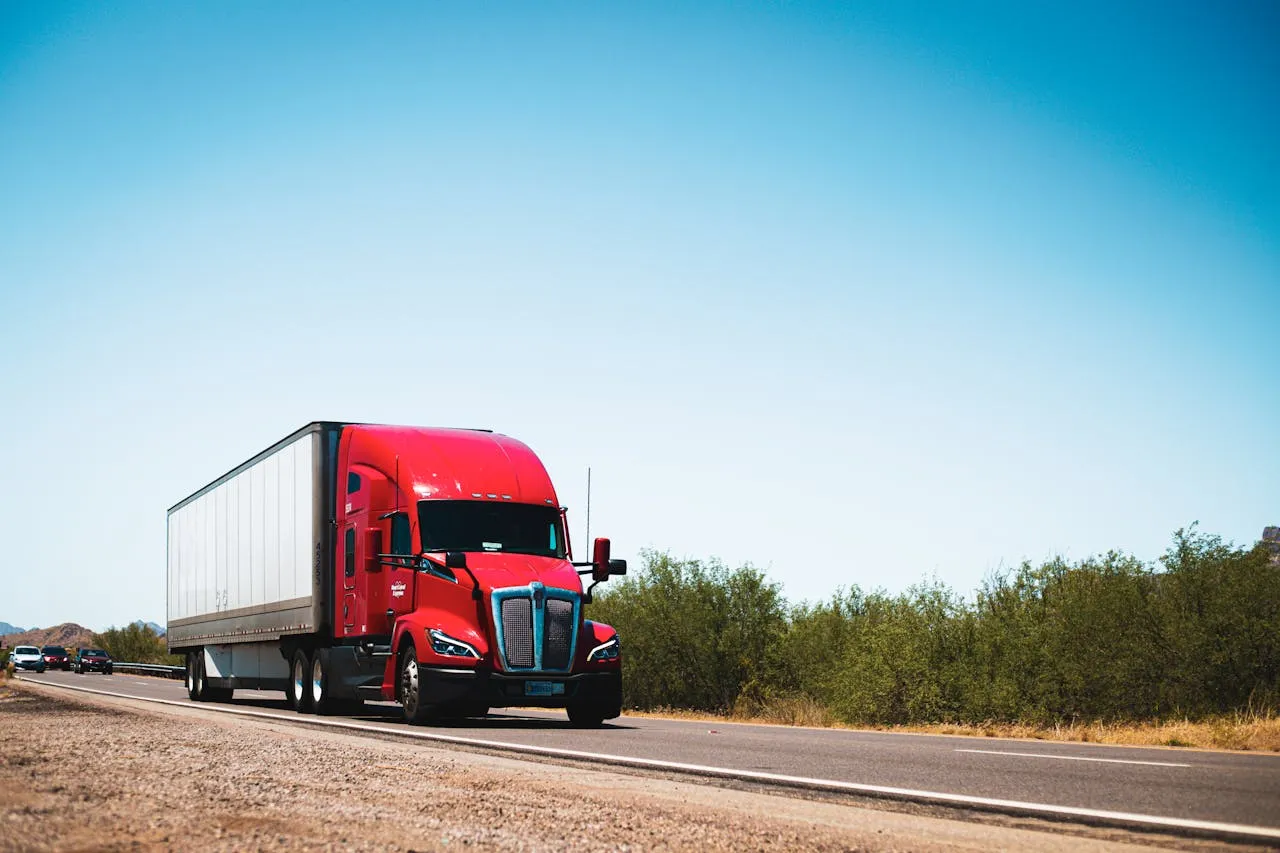
Autonomous trucking continues to gain momentum across the United States as logistics providers and technology companies search for new ways to improve efficiency, strengthen supply chain reliability, and address ongoing transportation challenges. In a major step forward for the commercial deployment of self-driving freight operations, Aurora Innovation, Inc. and McLane Company, Inc. have announced a new agreement to begin driverless trucking operations in Texas using the Aurora Driver, an SAE Level 4 autonomous driving system designed specifically for long-haul freight transportation.
The partnership represents another important milestone in the evolution of autonomous trucking and highlights how advanced transportation technologies are increasingly being integrated into critical supply chain operations. McLane, one of America’s largest supply chain services companies, distributes food, beverages, and consumer goods to restaurants, convenience stores, and retail locations nationwide. By combining McLane’s extensive logistics network with Aurora’s autonomous driving technology, the companies aim to improve freight efficiency while supporting the growing demands of the restaurant and retail industries.
The new agreement follows several years of collaboration between the two companies and builds on an extensive pilot program that has already demonstrated strong operational performance in Texas.
Under the agreement, Aurora and McLane will begin driverless freight hauls between Dallas and Houston using the Aurora Driver system. The route is one of the busiest freight corridors in Texas and serves as a critical connection point for food distribution and commercial transportation activity throughout the region.
Aurora’s self-driving technology is initially being deployed in the long-haul trucking sector because of the structured nature of highway driving and the growing demand for freight capacity across the United States. Long-distance trucking operations often face challenges related to driver shortages, scheduling pressures, rising operating costs, and fluctuating freight demand. Autonomous systems have the potential to help transportation providers address many of these issues while maintaining consistent delivery schedules.
For McLane, the deployment of autonomous trucks supports its ongoing efforts to modernize logistics operations while maintaining dependable service for restaurant chains, convenience stores, and mass merchant customers. The company’s distribution network plays a critical role in moving food and supplies throughout the country, making operational reliability especially important.
Ossa Fisher, president at Aurora, emphasized the significance of the collaboration and the broader role logistics companies play in the U.S. economy.
“The business of moving food is essential to our economy and our way of life,” Fisher said. “With a 134-year legacy, McLane is deeply woven into the American distribution industry. We’re excited to enter the next chapter with McLane and transform the American food supply chain with autonomous trucks.”
The announcement reflects growing confidence in autonomous freight technology as companies move beyond testing phases and begin commercial driverless operations in real-world logistics environments.
The partnership between Aurora and McLane did not emerge overnight. The two companies began working together in 2023 through a supervised autonomous pilot program in Texas. During the pilot phase, the Aurora Driver operated with safety oversight while transporting freight between major Texas markets.
Over the course of the program, Aurora accumulated more than 280,000 autonomous miles and completed approximately 1,400 loads for McLane. The extensive testing provided both companies with valuable operational data and demonstrated the system’s ability to safely manage long-haul freight movements in active commercial environments.
According to the companies, Aurora achieved 100% on-time delivery performance during its operations for McLane. This level of reliability played an important role in McLane’s decision to approve the transition from supervised autonomous driving to fully driverless operations on the Dallas-to-Houston route.
The pilot also demonstrated how autonomous trucking technology can integrate into existing logistics workflows without disrupting customer service operations. Freight deliveries continued to move through McLane’s supply chain network while Aurora refined and validated its autonomous driving platform.
Susan Adzick, president of McLane Restaurant, highlighted the company’s confidence in Aurora’s performance and safety standards.
“We’ve been thoroughly impressed with Aurora’s technology, exceptional safety performance and commitment to operational excellence,” Adzick said. “Autonomous technology helps us drive greater efficiency across the supply chain, while our drivers remain focused on the critical last mile—and continuing to serve as the face of our company to customers.”
The successful pilot period helped establish a foundation for broader deployment and reinforced the growing role of autonomous systems in freight transportation.
The Aurora Driver is an SAE Level 4 autonomous driving system, meaning the technology can operate a vehicle independently under specific conditions without requiring a human driver behind the wheel. Aurora has focused its development efforts on long-haul trucking because interstate highway routes offer more predictable driving environments compared with dense urban settings.
Aurora’s autonomous platform combines advanced sensors, artificial intelligence, machine learning systems, and high-performance computing to navigate highways safely and efficiently. The system continuously monitors road conditions, surrounding traffic, lane positioning, and potential hazards while making real-time driving decisions.
The company believes autonomous trucks can deliver several important benefits for freight transportation operations, including:
By operating continuously, autonomous trucks may also help address industrywide driver shortages that have affected freight capacity across the United States in recent years.
The technology is especially valuable for middle-mile freight operations, which involve moving goods between warehouses, distribution centers, and logistics hubs. These routes are typically repetitive and highway-focused, making them well suited for autonomous driving applications.
Although the new operations will include driverless long-haul transportation, human drivers will continue to play a vital role within McLane’s supply chain network.
Aurora and McLane are using a hybrid logistics model in which autonomous trucks manage long-distance highway routes while McLane drivers continue handling local deliveries and customer-facing responsibilities. In this structure, the Aurora Driver oversees the “middle mile” portion of freight transportation, while human drivers remain responsible for final delivery operations.
This approach allows companies to combine the strengths of autonomous systems with the flexibility and customer service capabilities provided by experienced drivers.
During the pilot phase, Aurora expanded operations to support two round trips daily between Dallas and Houston, operating seven days a week. The consistent schedule demonstrated how autonomous trucks could help support around-the-clock freight movement while maintaining delivery reliability.
The companies indicated that the hybrid operating model will continue as they expand their collaboration. Rather than replacing drivers entirely, the strategy focuses on reallocating responsibilities so human workers can concentrate on tasks requiring direct customer interaction and local operational expertise.
This blended approach may become increasingly common as autonomous freight technology expands throughout the logistics industry.
The restaurant industry depends heavily on efficient and reliable transportation systems. Delays in food deliveries can quickly disrupt operations, affect inventory availability, and impact customer service. For companies like McLane, maintaining consistent freight movement is essential.
Autonomous trucking technology offers several potential advantages for restaurant supply chains:
Autonomous trucks can operate continuously and maintain stable transit schedules, reducing disruptions caused by driver availability limitations or scheduling inconsistencies.
As freight demand fluctuates, autonomous systems may help logistics providers scale operations more efficiently while maintaining service levels.
Many food products require temperature-controlled transportation. Reliable long-haul operations can help reduce spoilage risks and improve cold-chain consistency.
Automation may help reduce inefficiencies associated with route scheduling, downtime, and freight bottlenecks.
The trucking industry continues to face driver shortages in many regions. Autonomous systems can help supplement transportation capacity while allowing human drivers to focus on specialized delivery tasks.
For McLane’s restaurant customers, these improvements could contribute to more dependable inventory replenishment and smoother supply chain operations.
Aurora’s partnership with McLane is expected to grow beyond the initial Texas deployment. The company plans to expand autonomous routes to additional McLane distribution centers across the U.S. Sun Belt by the end of the year.
The Sun Belt region, which includes several high-growth states across the southern United States, represents an important freight corridor due to its large population centers, extensive highway infrastructure, and growing logistics activity.
Expanding operations across multiple distribution centers could significantly increase the scale of autonomous freight transportation within McLane’s network. The companies also indicated that future plans may include supporting additional McLane business operations over time.
Aurora has continued building partnerships with logistics providers, carriers, and freight operators as it works toward broader commercialization of autonomous trucking technology. The company sees food distribution as one of several industries that can benefit from autonomous freight operations because of the need for reliable, high-frequency transportation services.
The Aurora-McLane partnership reflects broader momentum within the autonomous trucking industry. Technology companies, freight carriers, and supply chain providers are increasingly investing in self-driving systems to improve operational efficiency and prepare for future transportation demands.
Texas has become a major testing and deployment hub for autonomous trucking due to its extensive highway system, strong freight activity, and supportive regulatory environment. Routes such as Dallas-to-Houston provide ideal conditions for validating autonomous freight operations at commercial scale.
Industry analysts believe autonomous trucking could reshape logistics operations over the next decade by enabling continuous freight movement, reducing transportation bottlenecks, and improving supply chain resilience.
However, companies continue emphasizing safety as the most important priority during deployment. Extensive testing, real-world validation, and gradual operational scaling remain essential as autonomous systems transition from pilot programs to commercial use.
Aurora’s achievement of hundreds of thousands of autonomous miles and consistent delivery performance with McLane demonstrates the progress being made toward commercial adoption.
The collaboration between Aurora and McLane represents more than just a technology deployment—it signals a broader transformation within freight transportation and supply chain management.
As autonomous trucking technology matures, logistics providers are exploring how self-driving systems can complement existing operations while supporting growing freight demand. The combination of autonomous middle-mile transportation and human-led last-mile delivery creates a model that balances efficiency with operational flexibility.
For McLane, the partnership provides an opportunity to strengthen supply chain performance for restaurant and retail customers across the United States. For Aurora, the agreement marks another major step toward large-scale commercialization of autonomous trucking technology.
With driverless freight operations now beginning in Texas and expansion plans already underway, the partnership illustrates how autonomous transportation is steadily moving from experimental testing into practical, real-world logistics applications that could reshape the future of supply chain operations across America.
About Aurora
Aurora (Nasdaq: AUR) is delivering the benefits of self-driving technology safely, quickly, and broadly to make transportation safer, increasingly accessible, and more reliable and efficient than ever before. The Aurora Driver is a self-driving system designed to operate multiple vehicle types, from freight-hauling trucks to ride-hailing passenger vehicles, and underpins Aurora’s driver as a service product for trucking. Aurora is working with industry leaders across the transportation ecosystem, including AUMOVIO, FedEx, Hirschbach, NVIDIA, PACCAR, Ryder, Schneider, Toyota, Uber, Uber Freight, Volvo Trucks, Volvo Autonomous Solutions, and Werner. To learn more, visit aurora.tech.
About McLane
Founded in 1894, McLane Company Inc. is one of the largest distributors in America, serving convenience stores, mass merchants, and chain restaurants. As an industry-leading partner to the biggest retail and restaurant businesses, McLane buys, sells, delivers, and serves the world’s most beloved brands. With headquarters in Temple, Texas, McLane has more than 80 distribution centers across the country, employs more than 25,000 teammates, and delivers to nearly every zip code in the US. McLane is a wholly owned subsidiary of Berkshire Hathaway, Inc.