For generations, American students were often encouraged to follow a familiar path after high school: enroll in a four-year college, earn a degree and use that credential as the foundation for a successful career.
That path has opened important opportunities for millions of people. But it has never been the only route to a stable and rewarding working life. As the United States faces a growing shortage of skilled workers, the limitations of that traditional approach are becoming increasingly visible.
The country could be facing a shortage of at least 2.1 million skilled trades workers by 2030. The consequences extend well beyond individual businesses or industries. Skilled tradespeople are responsible for maintaining many of the systems and services Americans depend on every day, from electrical infrastructure and plumbing to transportation, vehicle repair, construction and other essential services.
This workforce is sometimes described as part of the “Essential Economy” because these jobs support the physical infrastructure that allows communities and businesses to function. Yet demand for skilled workers continues to grow while the pipeline of people entering these careers remains insufficient.
Ford Motor Company has been working to bring greater attention to the issue through its ACCELERATE the Essential Economy initiative. The program began by bringing together business leaders, educators and policymakers in Detroit to discuss the challenges facing the skilled trades. A year later, Ford is expanding the effort with additional partners, new research and programs designed to strengthen pathways into skilled careers.
The objective is not simply to highlight the shortage. It is to encourage businesses, schools, government organizations and community leaders to work together on practical solutions.
The skilled trades play a central role in the American economy, but the workforce pipeline has not kept pace with demand.
According to research being highlighted through the Alliance for America’s Skilled Trades, training programs are currently producing only about 55 workers for every 100 skilled trades workers needed.
That gap illustrates the scale of the challenge. Even if employers are ready to hire, there must be enough people receiving the education, technical training and hands-on experience required to fill those positions.
The challenge also involves perceptions.
For years, career discussions in American schools have often focused heavily on four-year college education. While college remains an important option, that emphasis can unintentionally send the message that careers requiring technical training, apprenticeships or certifications are less valuable.
New research commissioned with the Ad Council Research Institute is examining how teenagers, parents and teachers view skilled trades careers. One finding highlighted by Ford is particularly significant: only about one-third of teenagers believe a career in the skilled trades is respected.
That perception can influence career decisions long before a student applies for a training program or apprenticeship.
Young people who might have the skills and interests required for careers such as electrical work, automotive technology, welding, construction or equipment maintenance may not know where to begin. Others may receive encouragement to pursue a four-year degree even when a skilled trade could offer a more direct route into the workforce.
Changing those perceptions is therefore becoming an important part of addressing the labor shortage.
One of the major developments since the first ACCELERATE event has been the creation of the Alliance for America’s Skilled Trades.
Ford established the alliance with BlackRock, Google and Carhartt with the goal of strengthening career pathways, expanding awareness of skilled trades and developing better information about the workforce.
The alliance is intended to bring together companies and organizations that can contribute resources, expertise and employment opportunities. It also seeks to create stronger connections between education and the needs of employers.
A national skilled trades report is another component of the effort. By establishing a broader set of workforce data, the organizations involved hope to better understand where shortages exist and what kinds of training capacity will be required in the years ahead.
Having reliable data can help communities identify where additional programs, instructors, facilities and employer partnerships are needed.
Another initiative focuses specifically on automotive technology.
Ford has partnered with Bloomberg Philanthropies to modernize and expand Detroit Public Schools’ automotive technician program. The initiative is intended to provide students with access to training that reflects the changing requirements of the modern automotive industry.
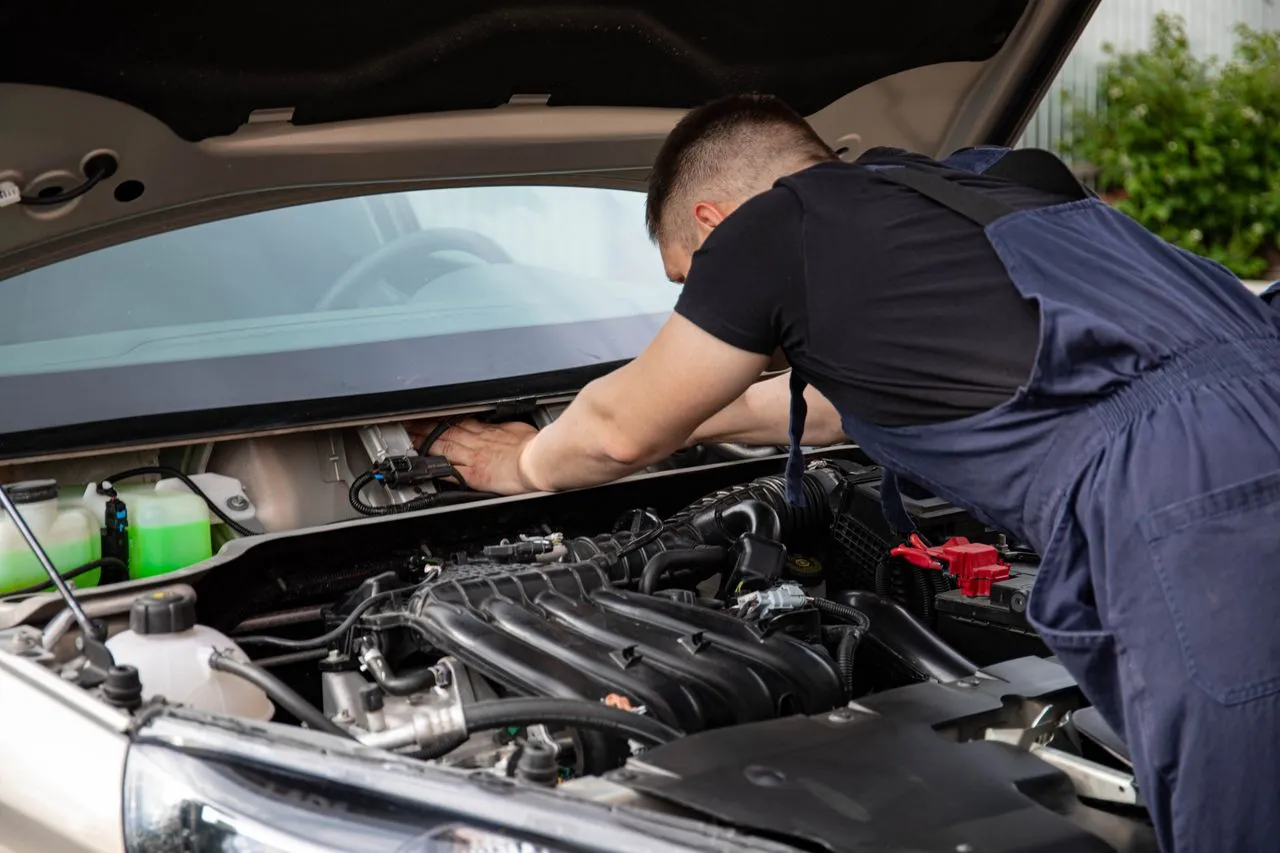
Automotive technology is becoming increasingly complex as vehicles incorporate advanced electronics, software, driver-assistance systems, electric powertrains and connected technologies.
As a result, the role of the automotive technician is changing. Technicians increasingly need a combination of traditional mechanical knowledge and technical expertise involving electrical systems, diagnostics and computerized vehicle systems.
Expanding high-quality training programs can help students gain exposure to those career opportunities earlier while giving employers a stronger pipeline of potential employees.
Ford hopes the Detroit model can eventually provide lessons for other communities looking to strengthen their own automotive technology programs.
Training opportunities are only useful if students can reach them.
Ford Philanthropy has also partnered with Lyft to provide transportation assistance for SkillsUSA students. The initiative is designed to help students access training programs and apprenticeships that might otherwise be difficult to reach because of transportation limitations.
For young people entering skilled trades, transportation can be a significant practical challenge. Training centers, apprenticeship locations and job sites are not always located near schools or residential areas. Reliable transportation can therefore make the difference between being able to participate in an opportunity and being unable to accept it.
Programs that address these logistical barriers can complement investments in education and training.
The workforce shortage is not simply a matter of creating additional training seats.
It also requires changing how society talks about skilled careers.
The skilled trades encompass a wide range of occupations and industries. Electricians, mechanics, welders, technicians, builders, maintenance specialists and other workers perform jobs that require technical knowledge, problem-solving abilities and hands-on expertise.
Many of these careers also provide opportunities for continued advancement, specialization and entrepreneurship.
Yet students and families may not always have clear information about those opportunities. A student interested in working with vehicles, machines, electrical systems or construction may have difficulty identifying the education or apprenticeship pathway that connects those interests to a career.
That is why awareness campaigns and career guidance are becoming increasingly important alongside workforce investment.
Ford plans to bring together a broader group of participants for the next phase of ACCELERATE at Michigan Central Station in Detroit.
The gathering is expected to include tradespeople, business executives, mayors, small-business owners, educators, investors and civic leaders.
Rather than focusing solely on diagnosing the workforce shortage, the event will highlight programs and partnerships intended to address it.
A central element will be the release of The State of America’s Skilled Trades: A National Report. The report has been developed by Jobs for the Future and the Burning Glass Institute in partnership with the Alliance for America’s Skilled Trades.
The report is intended to establish a national benchmark for understanding the skilled trades workforce. It will examine the gap between demand for workers and the capacity of existing training programs.
The finding that training programs are producing only 55 workers for every 100 needed provides one indication of the challenge facing employers and educators.
The next ACCELERATE event will also introduce new members to the Alliance for America’s Skilled Trades.
Expanding participation could allow successful workforce-development programs to be shared more broadly while giving companies and community organizations opportunities to coordinate their efforts.
Business leaders expected to participate include Larry Fink, chairman and CEO of BlackRock; Linda Hubbard, president and CEO of Carhartt; and Ruth Porat, president and chief investment officer of Alphabet and Google.
Skilled trades advocates, including Mike Rowe, are also expected to participate, alongside workers representing the Essential Economy.
Government, education and media perspectives will also be represented. Detroit Mayor Mary Sheffield, journalists Poppy Harlow and Joanna Stern, educators and investors are among the participants connected to the event.
Bringing together these different groups reflects the broad nature of the workforce challenge. Employers understand hiring needs, educators manage training pipelines, governments influence workforce policy and community organizations often work directly with students and job seekers.
Another component of the initiative is a national social-impact program led by the Ad Council.
The organization is known for major public-service campaigns, including Smokey Bear and Love, Your Mind. Its involvement is intended to help broaden awareness of skilled trades careers and challenge assumptions about what constitutes a successful career path.
The goal is not necessarily to replace college with trade training. Instead, the broader message is that young people should have access to multiple legitimate pathways into successful careers.
For some students, a four-year degree will remain the right choice. For others, technical education, apprenticeships, certifications or direct workforce training may provide a better fit.
A stronger workforce system can make those options more visible and accessible.
Ford is also planning to introduce a certified pre-owned program for commercial trucks and vans.
Access to reliable work vehicles can be particularly important for small businesses and independent workers whose jobs require them to travel between customers, construction sites, service locations and other workplaces.
By providing more affordable vehicle options, the program is intended to support workers and businesses operating within the Essential Economy.
It represents another dimension of the broader workforce issue: building a skilled workforce is not only about training people. Workers also need access to the equipment, transportation and economic resources necessary to perform their jobs.
The projected shortage of 2.1 million skilled trades workers by 2030 cannot be addressed through a single program or organization.
Businesses can expand hiring and apprenticeship opportunities. Schools can strengthen technical education. Governments can support workforce development. Community organizations can help students overcome financial, transportation and information barriers. Companies can invest in training and provide clearer pathways into employment.
Each part of the system has a role to play.
The ACCELERATE initiative is built around that collaborative approach. Ford’s position is that the scale of the workforce challenge requires companies, educators, policymakers and communities to move in the same direction rather than waiting for another institution to solve the problem.
The stakes are significant because the skilled trades support the infrastructure on which the broader economy depends.
Electricians keep power systems operating. Technicians maintain vehicles and equipment. Construction workers build and repair critical infrastructure. Welders and machinists support manufacturing. Maintenance professionals keep facilities and industrial systems running.
These occupations are deeply connected to everyday economic activity, even when their contributions are not always visible to the public.
America’s skilled trades workforce challenge is ultimately about more than filling vacant positions.
It is about creating stronger connections between education and employment, improving public understanding of technical careers, expanding access to training and ensuring that students have meaningful choices about their futures.
The next stage of ACCELERATE will provide a platform for companies, educators, government leaders and skilled workers to share research and discuss practical approaches to the problem.
The projected 2.1 million-worker gap will not disappear overnight. Nor will perceptions about skilled trades change through a single event.
But expanding training capacity, improving career awareness, reducing barriers to apprenticeships and creating stronger partnerships between employers and educators can contribute to a more sustainable workforce pipeline.
For the Essential Economy, the need is immediate. Communities and businesses depend on people who can build, repair, maintain, install and operate the systems that keep everyday life moving.
The broader challenge for the United States is ensuring that young people recognize these careers as viable options and have a clear path to enter them.
The future of the skilled trades will ultimately depend on sustained cooperation across industry, education, government and communities. ACCELERATE represents one effort to bring those groups together and turn discussion into action.
Source Link:https://www.fromtheroad.ford.com/