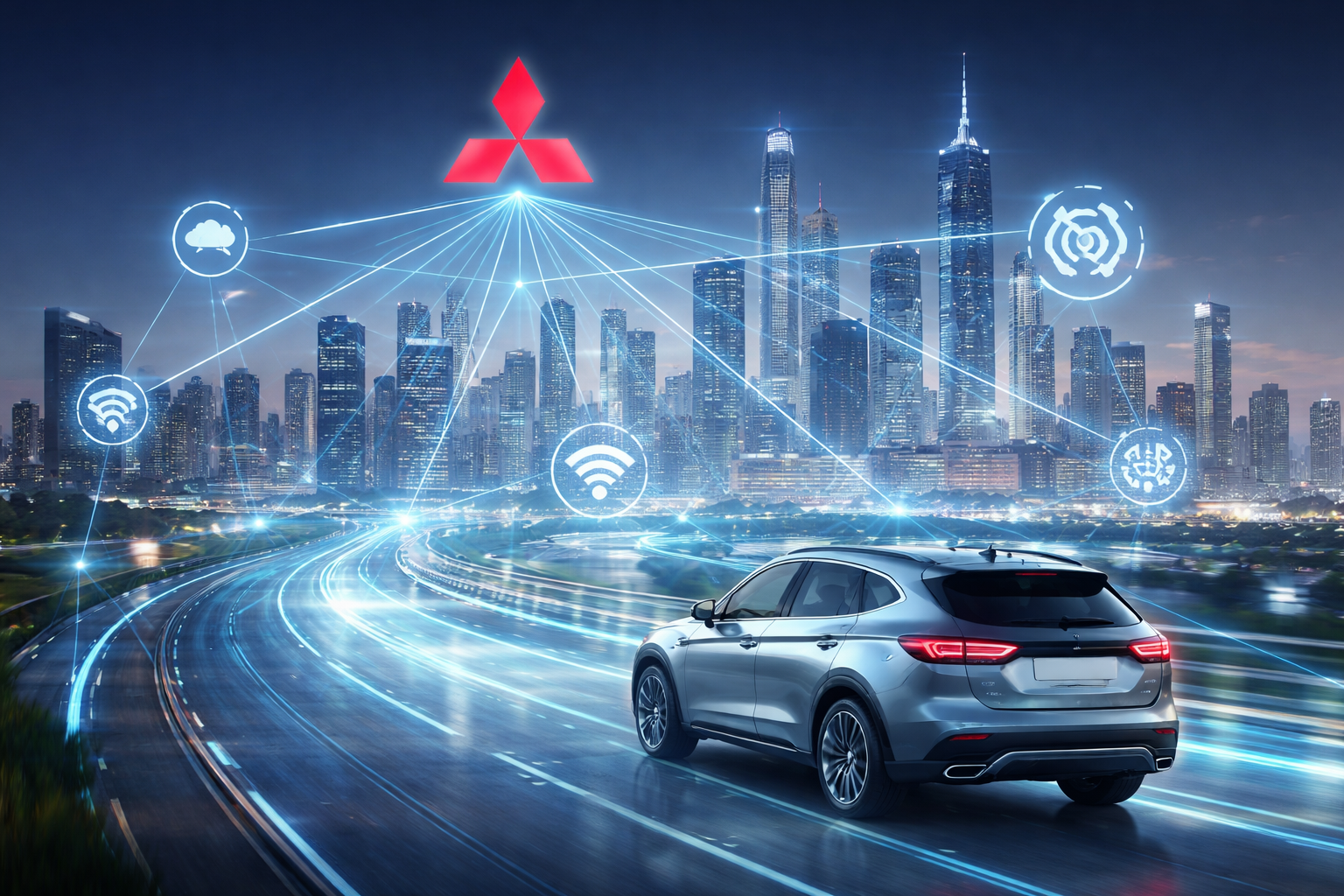
Mitsubishi Heavy Industries strengthens collaboration to advance next-generation automotive edge computing
The Automotive Edge Computing Consortium (AECC) has announced that Mitsubishi Heavy Industries, Ltd. (MHI) has officially joined the organization as a member, marking a significant step in the evolution of distributed computing infrastructure for the automotive sector. The move underscores the growing importance of edge computing, sustainable energy management, and advanced ICT infrastructure in enabling next-generation connected mobility.
AECC is a cross-industry, non-profit consortium established to promote the development of optimal communication and computing architectures for connected vehicles. Its mission centers on improving the collection, processing, and utilization of automotive big data—data that is rapidly expanding as vehicles become more autonomous, connected, electrified, and software-defined. By bringing together automakers, technology providers, telecommunications companies, and infrastructure specialists, AECC aims to create scalable, efficient, and secure platforms that support future mobility services.
Mitsubishi Heavy Industries’ entry into AECC reflects the convergence of automotive technology with data center engineering and energy systems. MHI is widely recognized for its integrated infrastructure solutions that support stable and efficient data center operations, including power generation and distribution, advanced cooling technologies, and digital control systems. With its deep expertise spanning industrial engineering, energy management, and digital infrastructure, MHI is well positioned to contribute to AECC’s efforts to redefine how automotive data is processed at the network edge.
Addressing the Shift Toward Distributed Automotive Computing
As vehicles generate increasing volumes of data from sensors, cameras, lidar, radar, and onboard computing systems, traditional centralized cloud architectures face growing limitations. Latency, bandwidth constraints, energy consumption, and sustainability concerns have driven the industry toward distributed computing models that place processing capabilities closer to where data is generated.
Edge computing—particularly in the context of automotive applications—allows critical data to be processed near vehicles, reducing response times for safety-critical functions while optimizing network traffic. AECC has been at the forefront of defining best practices for this shift, advocating architectures that combine in-vehicle computing, roadside edge nodes, and regional edge data centers.
MHI’s participation strengthens this vision by introducing advanced edge data center technologies that emphasize reliability, scalability, and energy efficiency. As a consortium member, the company will contribute its knowledge of designing and operating edge data centers capable of supporting real-time automotive workloads while minimizing environmental impact.
Leveraging Energy Management and Renewable Integration
One of the defining aspects of MHI’s contribution to AECC lies in its expertise in energy management and sustainable power systems. Data centers—whether centralized or distributed—are increasingly scrutinized for their energy consumption and carbon footprint. As automotive data volumes grow, the need for greener ICT infrastructure has become a strategic priority across the mobility ecosystem.
MHI plans to apply its engineering capabilities to help AECC members visualize and forecast power generation, particularly from renewable sources such as solar and wind energy. By integrating power generation forecasts with computing workloads, edge data centers can proactively optimize when and where data is processed, enabling the use of surplus electricity and reducing dependence on carbon-intensive power sources.
This approach aligns with broader industry goals around decarbonization and energy efficiency. Rather than treating data processing and energy systems as separate domains, MHI’s strategy emphasizes holistic optimization—balancing computing demand, energy availability, and environmental impact in real time.
Optimizing GPU Resources for Automotive Big Data
Another key area of collaboration involves the optimization of GPU resources within distributed computing platforms. Automotive applications such as advanced driver assistance systems (ADAS), autonomous driving algorithms, high-definition mapping, and AI-based traffic analysis require significant computational power, often relying on GPUs and other accelerators.
In distributed environments, inefficient allocation of these resources can lead to underutilization, higher energy consumption, and increased operational costs. Through its involvement in AECC, MHI will support initiatives aimed at improving GPU sharing, workload orchestration, and dynamic resource allocation across edge data centers.
By enabling more efficient use of high-performance computing resources, AECC members can reduce infrastructure redundancy while maintaining the performance needed for mission-critical automotive applications. This is particularly important as edge deployments scale globally to support connected vehicle ecosystems across urban, suburban, and rural environments.
Strengthening Global Collaboration in the Connected Car Ecosystem
AECC’s strength lies in its collaborative, cross-industry structure. The consortium brings together stakeholders from the automotive, telecommunications, cloud computing, and infrastructure sectors to address shared challenges that cannot be solved in isolation. MHI’s membership further enhances this collaborative environment by adding a global industrial player with experience across multiple infrastructure domains.
Through active participation in AECC working groups, proof-of-concept projects, and technical discussions, MHI aims to foster closer collaboration with global partners. These engagements are expected to accelerate the development of interoperable standards, reference architectures, and deployment models for automotive edge computing.
AECC also plays a critical role in sharing insights and requirements with standards development organizations. By contributing real-world use cases and engineering expertise, consortium members help shape industry standards that ensure compatibility, scalability, and security across the automotive data ecosystem.
Enabling Sustainable and Economically Viable ICT Infrastructure
Beyond technical innovation, AECC’s broader vision focuses on creating economically and environmentally sustainable ICT infrastructure for mobility. The rapid expansion of connected vehicles and mobility services presents both opportunities and challenges, particularly in balancing performance demands with cost efficiency and sustainability goals.
MHI’s approach emphasizes workload shifting and intelligent infrastructure utilization—strategies that allow computing tasks to be dynamically moved based on energy availability, network conditions, and cost considerations. For example, non-time-critical workloads can be scheduled during periods of high renewable energy generation, while latency-sensitive tasks remain prioritized at local edge nodes.
Such strategies not only reduce carbon emissions but also improve the economic viability of edge computing deployments. By lowering energy costs and maximizing infrastructure utilization, automotive stakeholders can scale connected services without disproportionately increasing operational expenses.
Executive Perspectives on the Collaboration
Commenting on the announcement, Shin Gomi, General Manager of Data Center & Energy Management at Mitsubishi Heavy Industries, emphasized the strategic alignment between MHI’s capabilities and AECC’s mission.
“We are proud to join AECC and collaborate with industry leaders to help shape the future of the connected vehicle ecosystem,” Gomi said. “By leveraging Mitsubishi Heavy Industries’ engineering expertise and edge data center solutions, we aim to accelerate innovation and problem-solving in areas such as decarbonization, energy efficiency, and workload optimization. Through our collaboration with AECC, we will work toward building ICT infrastructure that is both economically viable and environmentally sustainable.”
The AECC Board of Directors also welcomed MHI’s participation, highlighting the value of its technological expertise.
“We are delighted to welcome Mitsubishi Heavy Industries as a member of AECC,” the board said in a joint statement. “MHI brings valuable experience in infrastructure engineering and energy management that will support AECC’s efforts to advance distributed computing platforms and social infrastructure for the effective utilization of automotive big data.”
Supporting the Future of Connected and Sustainable Mobility
As the automotive industry transitions toward software-defined vehicles, autonomous driving, and smart mobility services, the underlying computing and communication infrastructure will play a decisive role in determining success. Edge computing, in particular, is emerging as a foundational element for delivering real-time, data-driven mobility solutions at scale.
MHI’s membership in AECC signals a recognition that the future of mobility depends not only on vehicle technology but also on the intelligent design of data centers, energy systems, and ICT infrastructure. By integrating these domains, AECC and its members aim to create a resilient, scalable, and sustainable foundation for connected vehicles worldwide.
Through continued collaboration, shared innovation, and a commitment to sustainability, AECC and Mitsubishi Heavy Industries are positioned to help drive the next phase of automotive digital transformation—one that balances performance, efficiency, and environmental responsibility in an increasingly data-driven mobility landscape.
About Mitsubishi Heavy Industries Group
Mitsubishi Heavy Industries (MHI) Group is one of the world’s leading industrial groups, spanning energy, smart infrastructure, industrial machinery, aerospace and defense. MHI Group combines cutting-edge technology with deep experience to deliver innovative, integrated solutions that help to realize a carbon neutral world, improve the quality of life and ensure a safer world. For more information, please visit www.mhi.com or follow our insights and stories on spectra.mhi.com. In its data center business, MHI provides integrated “one-stop solutions” combining power systems, cooling systems, and digital technologies to create green and sustainable data centers, driving decarbonization through both power supply and energy efficiency.
Source Link:https://www.businesswire.com/