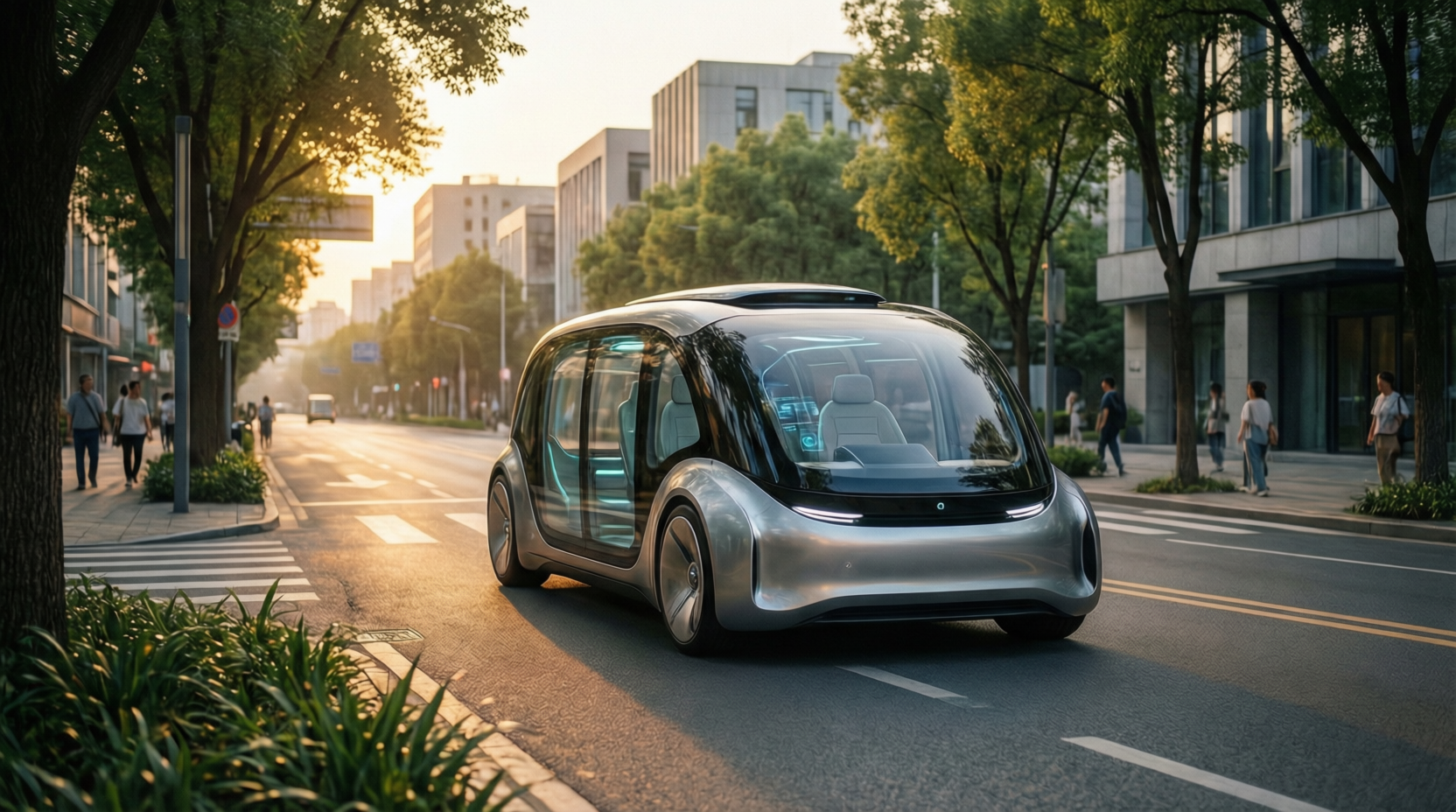
As autonomous vehicles continue their steady expansion onto public roads across the United States, questions surrounding safety, accountability, and transparency are becoming increasingly central to the public conversation. According to traffic safety expert and attorney Amy Witherite, the future success of autonomous driving technology depends not only on innovation and performance, but also on the willingness of companies to be open, cooperative, and accountable when things go wrong.
Witherite’s comments come amid heightened scrutiny of the autonomous vehicle industry following reports that Waymo declined to provide certain information requested by the California Public Utilities Commission (CPUC) after a major power outage disrupted autonomous vehicle services. The incident, which reportedly caused multiple self-driving vehicles to stall or stop in traffic, raised concerns about emergency access, public safety, and the adequacy of current oversight mechanisms.
For Witherite, the issue goes far beyond a single company or incident. Instead, it highlights a broader challenge facing the autonomous vehicle sector: how to balance rapid technological advancement and proprietary protections with the public’s right to safety, transparency, and accountability.
Autonomous vehicle companies are asking the public to trust their technology with human lives,” Witherite said. That level of trust cannot exist without openness, cooperation with regulators, and a clear commitment to answering questions when problems occur.”
Autonomous vehicles are no longer a distant concept confined to research labs or controlled pilot programs. In several states, particularly California, self-driving cars are already operating on public streets, transporting passengers, delivering goods, and interacting with traditional vehicles, cyclists, and pedestrians.
The industry promises substantial benefits, including reduced traffic fatalities, improved mobility for elderly and disabled individuals, and greater efficiency in transportation systems. However, these potential gains also come with significant risks, especially during the transition period when autonomous and human-driven vehicles share the same roadways.
Against this backdrop, public confidence is fragile. Incidents involving stalled vehicles, software malfunctions, or unexpected behavior can quickly undermine trust—particularly if companies appear unwilling to fully explain what happened or how similar problems will be prevented in the future.
Recent reports indicate that the CPUC sought detailed information from Waymo after a widespread power outage allegedly caused disruptions to its autonomous vehicle fleet. According to those reports, multiple vehicles may have stopped or stalled in traffic, potentially blocking intersections and complicating emergency response efforts. While the precise scope and impact of the incident remain under review, the company’s decision to withhold certain information on the grounds of trade secret protections sparked criticism from regulators and safety advocates.
Witherite acknowledges that autonomous vehicle companies operate in a highly competitive and lucrative market. The development of self-driving technology involves massive investments in artificial intelligence, sensor systems, software architecture, and data analytics. Protecting intellectual property is a legitimate concern, particularly in an industry expected to generate billions of dollars in revenue over the coming decades.
“There is no doubt that autonomous vehicles represent a potentially multi-billion-dollar industry,” Witherite said. “Companies will do everything possible to protect what they consider proprietary technology.”
However, she argues that the need to protect trade secrets should not override the responsibility companies have to the public—especially when failures occur on public roads.
Protecting trade secrets must not come at the expense of accountability when technology failures impact thousands of people using public infrastructure,” she said. “These vehicles don’t operate in isolation. They operate in shared spaces, alongside families, emergency responders, and everyday commuters.
According to Witherite, refusing to share information requested by oversight agencies sends the wrong message at a critical juncture in the industry’s development. Rather than reinforcing confidence in the technology, such resistance risks reinforcing public fears that companies may be prioritizing commercial interests over safety.
Regulatory bodies such as the California Public Utilities Commission play a crucial role in overseeing the deployment of autonomous vehicles. Their mandate is not to stifle innovation, Witherite emphasized, but to ensure that new technologies are introduced responsibly and with appropriate safeguards.
Regulatory oversight exists to make sure innovation does not outpace safety,” she said. “When companies resist transparency, it raises serious questions about preparedness, risk management, and public responsibility.
In Witherite’s view, regulators must have access to detailed operational data, incident reports, and system performance metrics in order to evaluate whether autonomous vehicle services meet acceptable safety standards. Without this information, regulators are left to rely on partial disclosures or public-facing statements that may not tell the full story.
She also warned that selective disclosure—sharing only favorable information while withholding details about failures—can be just as damaging to public trust as outright silence.
Public acceptance of autonomous vehicles depends on confidence that issues will be acknowledged, investigated, and corrected,” Witherite said. “Silence or selective disclosure erodes trust at a time when trust is essential.
While autonomous vehicle technology continues to advance rapidly, widespread adoption ultimately depends on public perception. Surveys consistently show that many consumers remain cautious or skeptical about riding in fully self-driving vehicles, particularly in dense urban environments.
For Witherite, transparency is one of the most effective tools available to address these concerns. When companies are open about challenges, limitations, and corrective actions, they demonstrate respect for the public and a commitment to safety.
People understand that no technology is perfect,” she said. “What they don’t accept is the feeling that information is being hidden from them.
Witherite argues that companies should treat transparency not as a legal obligation to be minimized, but as a strategic advantage that can help build long-term credibility. Clear communication with regulators, first responders, and the public can help prevent misinformation, reduce fear, and foster informed discussions about the risks and benefits of autonomous systems.
As autonomous vehicle deployments expand nationwide, incidents like the reported power outage disruption serve as important tests of how companies respond under pressure. According to Witherite, these moments reveal whether transparency and accountability are truly embedded in corporate culture—or treated as optional when inconvenient.
She urged autonomous vehicle developers to proactively establish protocols for information sharing, incident reporting, and regulator engagement, rather than reacting defensively after problems arise.
Transparency should be viewed as a responsibility, not a liability,” Witherite said. “Companies that embrace this mindset will be better positioned to earn public confidence and regulatory support over the long term.
At the same time, she encouraged regulators to remain firm in their demands for meaningful disclosures, emphasizing that consistent oversight is essential to protecting public safety during this transitional period.
Looking ahead, Witherite believes that the ultimate success of autonomous vehicles will hinge on how effectively the industry balances innovation with accountability. Technological breakthroughs alone will not be enough to secure lasting public trust.
In this case, silence isn’t golden,” she said. “Accountability is what will determine whether this technology earns lasting public trust.
As autonomous vehicles become a more visible presence on public roads, the stakes will only continue to rise. For Witherite and other safety advocates, transparency is not merely a regulatory checkbox—it is a fundamental requirement for ensuring that the promise of autonomous driving does not come at the expense of public confidence or human safety.
Source Link:https://www.businesswire.com/