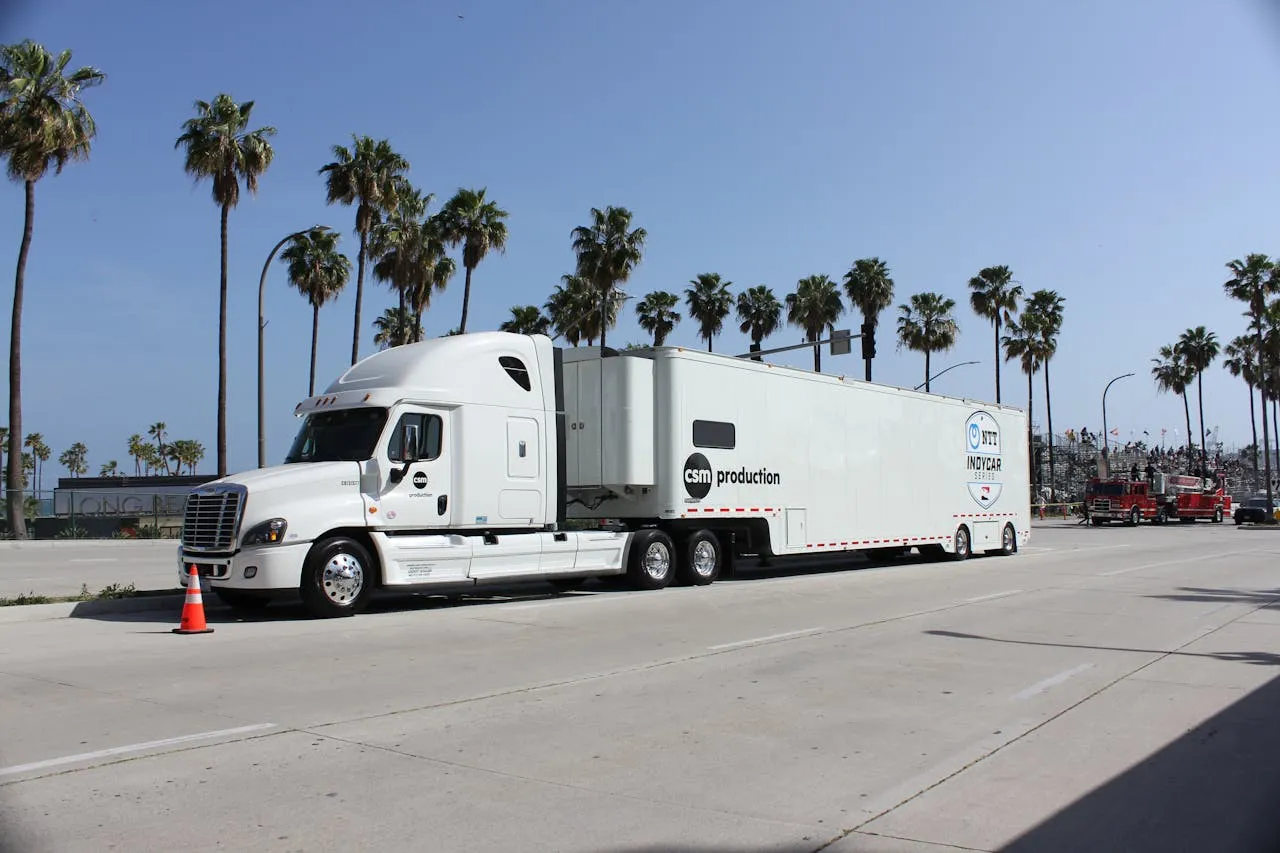
Aeva Technologies has reached another important milestone in the development of autonomous trucking technology with the delivery of its initial Atlas C-sample 4D LiDAR sensors to Daimler Truck North America and Torc Robotics. The achievement represents a major step forward in the companies’ collaboration to support the future series production of SAE Level 4 autonomous Class 8 trucks designed for long-haul freight transportation in North America.
The delivery of the C-sample units demonstrates that the autonomous trucking program is advancing steadily toward commercial deployment. Aeva serves as the exclusive supplier of long-range LiDAR technology for the autonomous Freightliner Cascadia platform, one of the most widely used heavy-duty truck models in the commercial transportation industry. The Atlas sensor platform will play a central role in enabling safe and reliable highway autonomy by providing high-precision perception capabilities over long distances.
The latest milestone reflects the growing momentum in the autonomous trucking industry as technology companies, vehicle manufacturers, and logistics providers continue investing heavily in advanced automation systems. Autonomous Class 8 trucks are expected to transform freight transportation by improving efficiency, reducing operational costs, enhancing road safety, and addressing long-standing driver shortages affecting the logistics sector.
The delivery of C-sample sensors is a significant stage in the automotive and autonomous vehicle development process. C-samples are generally considered near-production prototypes that closely resemble the final commercial hardware intended for large-scale manufacturing. These units are used for extensive integration, validation, testing, and optimization before full-scale production begins.
For Daimler Truck North America and Torc Robotics, the arrival of the Atlas C-sample sensors marks a critical progression toward deploying autonomous Freightliner Cascadia trucks on North American highways. The companies are working toward the commercialization of SAE Level 4 autonomous driving systems capable of operating without human intervention under specific driving conditions and routes.
Unlike lower levels of vehicle automation that still require constant driver supervision, Level 4 autonomy allows the vehicle to handle most driving tasks independently within defined operational domains. In the case of long-haul freight transportation, these systems are primarily designed for highway driving, where traffic patterns and road conditions are more predictable than urban environments.
Aeva’s Atlas 4D LiDAR sensors are intended to serve as a core component of the perception stack that enables the autonomous driving system to understand and respond to its surroundings in real time. Long-range perception is especially important for heavy-duty trucks traveling at highway speeds because these vehicles require longer stopping distances and earlier hazard detection compared to passenger vehicles.
Executives from both companies emphasized the importance of the latest development and highlighted the progress being made toward production readiness.
Rakesh Aneja, Head of Corporate Development at Daimler Truck North America, noted that the partnership with Aeva continues to advance effectively as the companies move closer to series production for the autonomous truck program. He explained that the delivery of Atlas C-sample sensors reflects both the maturity of Aeva’s sensing technology and the strength of the ongoing collaboration between the organizations.
The partnership between Daimler Truck, Torc Robotics, and Aeva combines expertise from multiple areas of the autonomous driving ecosystem. Daimler Truck contributes decades of commercial vehicle engineering experience and manufacturing scale. Torc Robotics provides autonomous driving software and system integration expertise. Aeva contributes advanced sensing and perception technology designed specifically for high-speed autonomous mobility applications.
This collaborative approach is becoming increasingly common in the autonomous vehicle industry because successful deployment requires expertise across vehicle manufacturing, artificial intelligence, software engineering, sensing systems, mapping, safety validation, and fleet operations.
Aeva’s Atlas platform has been purpose-built for the unique requirements of highway-speed autonomous driving. One of the primary challenges for autonomous trucks is the ability to perceive objects, obstacles, and hazards far enough ahead of the vehicle to allow safe decision-making and braking maneuvers.
The Atlas platform is designed to provide detection capabilities at ranges of up to 500 meters. This extended sensing range gives autonomous systems additional time to identify hazards and react appropriately, which is especially important for heavy-duty trucks operating at highway speeds.
At highway velocities, even fractions of a second can significantly impact safety outcomes. Early object detection enables autonomous systems to plan lane changes, braking, and avoidance maneuvers more smoothly and safely. Long-range sensing also helps improve driving comfort and operational efficiency by reducing sudden reactions and enabling more predictive driving behavior.
Another important advantage of the Atlas system is its ability to directly measure velocity in addition to distance. Traditional LiDAR systems primarily focus on measuring the distance to objects, but Aeva’s technology adds another layer of perception by determining how fast objects are moving relative to the vehicle.
This capability allows autonomous systems to better distinguish between stationary objects and moving hazards. For example, the system can more accurately identify whether another vehicle is merging into traffic, slowing down, or traveling at a different speed. Such information improves the reliability of autonomous decision-making in complex traffic scenarios.
Atlas is powered by Aeva’s Frequency Modulated Continuous Wave (FMCW) technology, which differs significantly from many traditional time-of-flight LiDAR systems currently used in the industry.
FMCW technology enables simultaneous measurement of both range and velocity for every detected point in the sensor’s field of view. By directly measuring velocity, the system can improve object tracking accuracy while reducing ambiguity in challenging driving situations.
The technology also offers advantages in difficult environmental conditions. Autonomous vehicles must maintain reliable perception performance across varying weather, lighting, and road conditions, including rain, fog, bright sunlight, shadows, and nighttime operation.
According to Aeva, the Atlas platform is engineered to deliver strong sensing performance across a wide range of environmental conditions while maintaining high-confidence object detection at long distances. Reliable all-weather performance is considered essential for commercial trucking applications because freight vehicles operate continuously across different climates and times of day.
FMCW technology is increasingly attracting attention within the autonomous vehicle industry because of its potential advantages in range, velocity measurement, interference resistance, and low-light performance. As autonomous driving systems move closer to commercial deployment, sensing reliability is becoming one of the industry’s most critical priorities.
With the delivery of the C-sample units now underway, Aeva and Daimler Truck will continue the next phases of integration, validation, and optimization for the autonomous trucking platform. These activities are essential before the technology can transition into full-scale production and commercial deployment.
Vehicle integration involves ensuring that the sensors work seamlessly with the truck’s broader autonomous driving architecture, including cameras, radar systems, onboard computing platforms, software algorithms, braking systems, and steering controls.
Validation testing focuses on confirming that the system operates safely and reliably across a wide variety of real-world scenarios. Autonomous trucking systems must undergo extensive testing to verify performance in traffic congestion, adverse weather, highway merges, construction zones, emergency situations, and numerous other edge cases.
Optimization efforts are aimed at refining performance, improving reliability, reducing system complexity, and preparing the hardware for scalable manufacturing. Commercial deployment of autonomous trucks requires not only advanced technology but also cost-effective production and long-term operational durability.
Soroush Salehian, Co-founder and CEO of Aeva, described the C-sample delivery as a major advancement toward bringing autonomous trucking closer to series production. He emphasized that Atlas was specifically developed for the long-range perception demands associated with highway-speed autonomy.
Salehian also highlighted the value of the platform’s ability to measure both distance and instant velocity simultaneously. According to him, this capability enables autonomous systems to detect and respond to hazards earlier and with greater confidence, supporting safer autonomous driving operations.
The autonomous trucking market continues to gain momentum as freight demand grows worldwide. Logistics companies are seeking solutions that can improve efficiency, reduce costs, and address operational challenges such as driver shortages and increasing transportation demand.
Long-haul trucking is considered one of the most promising applications for autonomous driving technology because highway driving environments are generally more structured and predictable than dense urban settings. Autonomous trucks could potentially operate for longer hours, improve fuel efficiency through optimized driving behavior, and reduce delivery times.
Safety is another major focus area for the industry. Human error remains one of the leading causes of road accidents, and advanced autonomous systems are being developed to improve situational awareness and reaction times. High-performance sensing systems such as LiDAR are viewed as essential components for enabling safe automated driving.
Major automotive manufacturers, technology firms, and logistics companies are investing billions of dollars into autonomous trucking development. Partnerships like the one between Aeva, Daimler Truck, and Torc Robotics demonstrate how collaboration across different technology domains is shaping the future of commercial transportation.
Beyond autonomous trucking, Aeva continues expanding its perception platform into a wide range of industries and applications. The company’s mission focuses on advancing next-generation sensing systems for automated driving, industrial automation, robotics, smart infrastructure, and consumer technologies.
Aeva’s perception platform integrates lidar-on-chip technology, system-on-chip processing, and advanced perception algorithms using silicon photonics technology. This integrated approach is designed to improve scalability, performance, and manufacturing efficiency.
The company’s 4D LiDAR technology is unique in its ability to simultaneously detect both position and velocity. This added dimension of perception can help autonomous systems make more intelligent and informed decisions in dynamic environments.
As industries continue moving toward greater automation, sensing and perception technologies are expected to become increasingly important across numerous sectors. Autonomous vehicles, warehouse robots, industrial machinery, and smart city infrastructure all rely on accurate environmental perception to operate safely and efficiently.
The successful delivery of Atlas C-sample units to Daimler Truck North America and Torc Robotics therefore represents not only a milestone for one autonomous trucking program, but also another indication of how advanced sensing technologies are steadily moving from development stages toward real-world commercial deployment.
With testing, validation, and optimization continuing, the collaboration between Aeva, Daimler Truck, and Torc Robotics could play a significant role in shaping the future of autonomous freight transportation across North America.
About Torc
Torc is driving the future of freight with autonomous technology. Torc has more than 20 years of experience in pioneering safety-critical, self-driving applications. Torc offers an AI-forward, self-driving vehicle software and integration solution and is currently focusing on commercializing autonomous trucks for long-haul applications in the U.S. In addition to its Blacksburg headquarters and engineering offices in Ann Arbor, MI, and Montreal, Torc has a fleet operations facility in Dallas-Fort Worth, to support the company’s productization and commercialization efforts for our customers. As an independent subsidiary of Daimler Truck AG, a global leader and pioneer in trucking, Torc is empowering exceptional employees, delivering a customer-focused autonomous truck product, and providing the safest, most reliable, and cost-efficient solution to the market.
Source Link:https://www.businesswire.com/