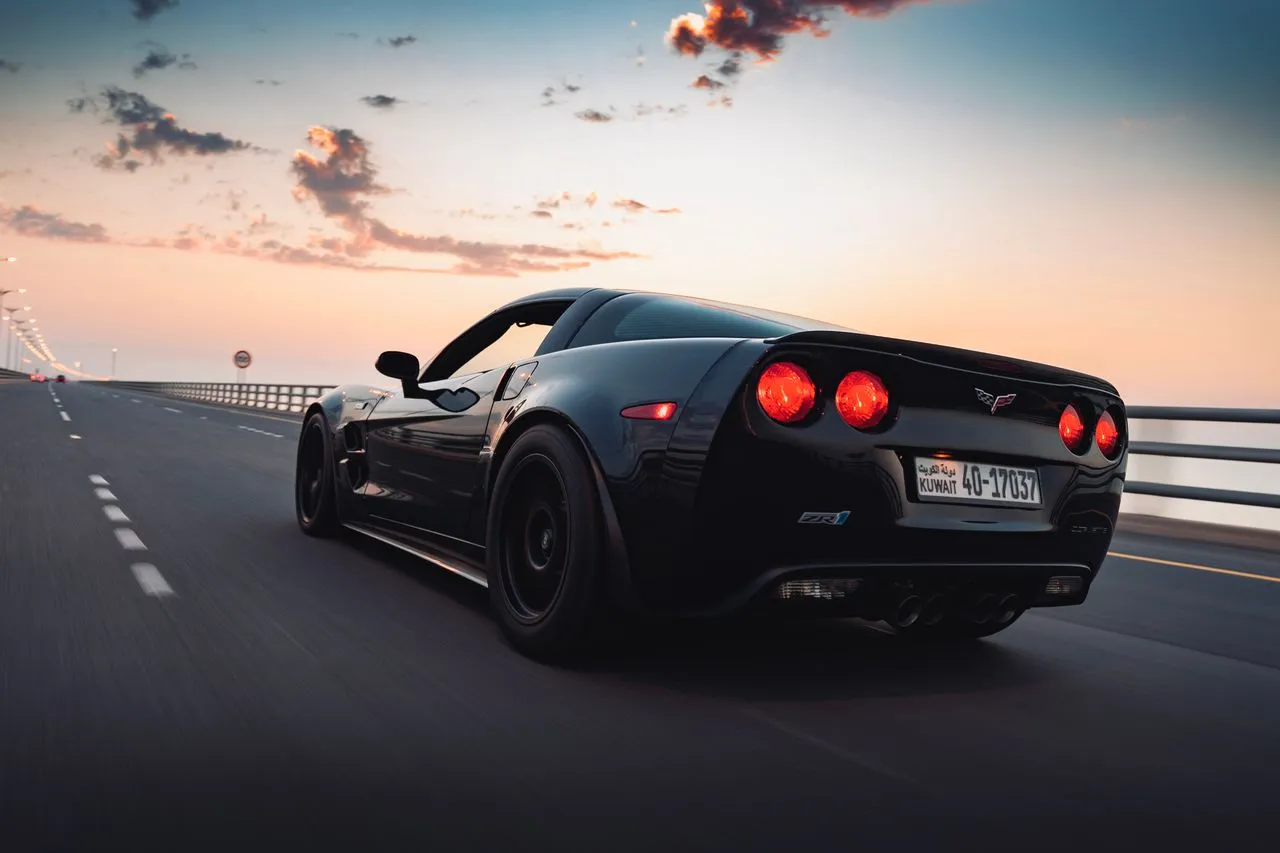
The 2026 Chevrolet Corvette ZR1X has earned major industry recognition after being named one of the winners of the prestigious Wards 10 Best Engines & Propulsion Systems awards. The recognition highlights the vehicle’s advanced hybrid powertrain, exceptional performance capabilities and engineering innovation. With a combined output of 1,250 horsepower, the Corvette ZR1X stands out as the most powerful vehicle among this year’s award winners.
The achievement is particularly significant because the 2026 awards mark a historic moment for the automotive industry. For the first time in the 32-year history of the Wards 10 Best Engines & Propulsion Systems program, every winning vehicle features an electrified powertrain. The winners include both fully battery-electric vehicles and hybrid models, reflecting the growing influence of electrification across the global automotive sector.
Among the winners, the Corvette ZR1X is especially notable for combining a high-performance internal combustion engine with advanced electric propulsion technology. Its power output exceeds that of the next most powerful vehicle on the list by more than 500 horsepower, demonstrating the performance potential of modern hybrid engineering.
The Chevrolet Corvette ZR1X represents an important development in the evolution of high-performance sports cars. Rather than using electrification primarily to improve fuel efficiency, Chevrolet’s engineers developed the hybrid system to increase performance, improve traction and deliver stronger acceleration.
According to Vijay D’Souza, assistant chief engineer and program manager for the Corvette performance hybrid system, the objective was to enhance an already powerful internal combustion engine.
D’Souza explained that the hybrid technology was developed to complement the existing Corvette powertrain and take its performance to another level. The engineering team wanted to preserve the character and capabilities of the traditional Corvette engine while adding electric assistance to improve overall vehicle performance.
The result is a hybrid sports car that delivers extraordinary power while maintaining the driving experience expected from the Corvette nameplate.
The ZR1X uses a combination of a twin-turbocharged V8 engine and an electric motor mounted on the front axle. Together, these systems produce a combined 1,250 horsepower, positioning the vehicle among the most powerful production Corvettes ever developed.
The Wards 10 Best Engines & Propulsion Systems awards recognize outstanding engineering achievements in powertrains available in vehicles sold in the United States.
The annual program evaluates new and significantly improved propulsion technologies across several important performance categories. These include power delivery, smoothness, efficiency, technological innovation and overall engineering quality.
For the 2026 edition, Wards Auto judges evaluated 26 nominated vehicles before selecting the final group of winners. Eligible vehicles included models equipped with completely new powertrains, significantly upgraded propulsion systems and qualifying previous-year winners.
The recognition is particularly important because it reflects the changing direction of the automotive industry. Electrification is becoming increasingly important across different vehicle categories, including sports cars, passenger vehicles, SUVs and commercial transportation.
The fact that all 10 winning powertrains in 2026 feature electrification demonstrates how manufacturers are incorporating electric technology into a wider range of vehicle platforms.
For Chevrolet, the Corvette ZR1X award highlights the company’s ability to combine traditional engine development with modern electric propulsion systems.
The development of the Corvette ZR1X builds on engineering experience gained from the Corvette E-Ray, which entered the market for the 2024 model year.
The Corvette E-Ray introduced an important technological milestone for the brand by becoming the first all-wheel-drive Corvette. Its powertrain combined a small-block V8 engine driving the rear wheels with an electric motor powering the front axle.
This configuration allowed Chevrolet to introduce electric assistance without fundamentally changing the traditional rear-engine-driven performance character of the Corvette.
The E-Ray hybrid system also provided improved traction, stronger acceleration and additional confidence in different driving conditions.
However, the Corvette engineering team had ambitions to take the technology further.
D’Souza explained that the ZR1X had always been part of the broader development plan. Although the exact power figures and technical specifications evolved during the engineering process, the objective remained focused on delivering substantially higher performance.
The development team worked collaboratively to identify opportunities to extract more power from the hybrid all-wheel-drive architecture while maintaining reliability and consistent performance.
This process involved extensive development work across the internal combustion engine, electric motor, battery system and electronic controls.
At the centre of the Corvette ZR1X powertrain is the 5.5-liter twin-turbocharged LT7 V8 engine, which also powers the Corvette ZR1.
The LT7 engine itself previously received recognition in the 2025 Wards 10 Best Engines & Propulsion Systems awards. Its combination of turbocharging technology, high-performance engineering and strong power delivery established an important foundation for the ZR1X.
For the ZR1X, Chevrolet added an electric motor to the front axle, contributing another 186 horsepower to the overall powertrain.
This arrangement creates an electrified all-wheel-drive system that allows the vehicle to benefit from the combined capabilities of its combustion engine and electric propulsion technology.
The front electric motor also helps improve power delivery when accelerating and provides additional traction by driving the front wheels.
Chevrolet’s engineers made several improvements to the electric propulsion system compared with the earlier E-Ray configuration.
The development team increased the front electric motor’s torque by approximately 20 percent. It also expanded the operating window of the hybrid battery by around 20 percent.
These improvements allow the electric all-wheel-drive system to remain active for longer periods during demanding driving conditions, particularly when the vehicle is being driven aggressively on a racetrack.
The changes demonstrate how Chevrolet has developed its existing hybrid technology to meet the more demanding requirements of an extreme-performance sports car.
One of the most important objectives behind the Corvette ZR1X development was improving performance on racing circuits.
High-performance vehicles require more than impressive horsepower figures to achieve competitive lap times. Traction, handling, acceleration, braking stability and power delivery all play important roles in determining overall track performance.
The ZR1X’s hybrid all-wheel-drive system contributes to these areas by distributing power through both the front and rear axles.
The additional electric assistance provides drivers with greater confidence when accelerating out of corners and navigating demanding sections of a circuit.
According to D’Souza, the improved hybrid system gives drivers greater vehicle-control capabilities on the racetrack. Increased driver confidence can translate into faster and more consistent lap times.
He explained that the hybrid drivetrain creates a meaningful performance difference between the Corvette ZR1 and ZR1X, helping the latter achieve even more impressive results.
One of the strongest demonstrations of the vehicle’s capabilities came at Germany’s Nürburgring Nordschleife.
The Corvette ZR1X recorded an impressive lap time of approximately 6 minutes and 49 seconds, highlighting the capabilities of its advanced powertrain and performance engineering.
The achievement reinforces Chevrolet’s ambition to position the Corvette among the world’s leading supercars and hypercars.
Although the Corvette ZR1X has been engineered to deliver exceptional racetrack performance, Chevrolet has also focused on making it suitable for regular road use.
Many highly specialized performance vehicles prioritize track capabilities at the expense of everyday comfort. They may offer extreme acceleration and handling but can become difficult to drive during longer journeys or in normal traffic conditions.
Chevrolet wanted to avoid that compromise with the ZR1X.
The engineering team worked to ensure that the hybrid powertrain could operate smoothly during ordinary driving while remaining capable of delivering extraordinary performance when the driver demands it.
Wards Auto judges highlighted this balance, noting that the ZR1X can operate with the refinement and ease associated with a conventional hybrid vehicle.
D’Souza also emphasized that the car is comfortable enough for everyday driving and extended road trips.
He described taking the ZR1X on a journey to Sault Ste. Marie in northern Michigan, explaining that the vehicle remained comfortable throughout the trip.
However, its performance character becomes immediately apparent when the driver applies greater throttle input.
This combination of everyday usability and extreme performance represents one of the major engineering achievements behind the vehicle.
Integrating an electric motor with a powerful internal combustion engine presents several engineering challenges.
In the Corvette ZR1X, the front electric motor and rear V8 engine do not rely on a conventional mechanical connection to operate together. Instead, their interaction is managed through sophisticated electronic control modules.
These systems continuously exchange information to coordinate power delivery and ensure that the two propulsion systems work together effectively.
The electronic architecture monitors operating conditions and manages how power is distributed between the combustion engine and electric motor.
This coordination is essential for delivering smooth acceleration, predictable handling and consistent performance.
The engineering team had to ensure that the hybrid system responded naturally to driver inputs while maintaining the characteristics associated with the Corvette.
Achieving this level of integration required close cooperation between teams responsible for engine development, electric propulsion, battery technology, vehicle dynamics and electronic control systems.
The result is a powertrain designed to deliver high levels of performance without compromising drivability.
The Corvette ZR1X project represents the combined efforts of numerous engineers and specialists across Chevrolet and General Motors.
D’Souza emphasized that the vehicle’s development was a collaborative effort involving multiple teams working toward a shared performance objective.
The engineers continuously explored opportunities to improve the hybrid system, increase power output and enhance reliability.
This process required technical experimentation, detailed testing and coordination between different engineering departments.
For the team, seeing the final vehicle receive recognition from Wards Auto represents a significant professional achievement.
D’Souza described the project as one of the most rewarding experiences of his career, noting that the combined contributions of many individuals made the vehicle’s performance possible.
He also highlighted the importance of teamwork, explaining that the ZR1X would not have achieved its capabilities without engineers and specialists working together and going beyond their individual responsibilities.
The recognition reflects not only the vehicle’s impressive technical specifications but also the engineering commitment behind its development.
The 2026 Wards 10 Best Engines & Propulsion Systems awards provide a clear indication of how electrification is transforming automotive engineering.
Historically, high-performance vehicles were largely associated with large-displacement internal combustion engines. However, manufacturers are increasingly using electric motors, advanced battery systems and hybrid architectures to improve performance.
The Corvette ZR1X demonstrates that electrification can support more than efficiency and emissions objectives. It can also provide additional power, improved traction and greater flexibility in vehicle engineering.
The inclusion of battery-electric and hybrid vehicles across all 10 award-winning positions highlights the industry’s transition toward electrified propulsion.
For sports car manufacturers, hybrid technology offers an opportunity to combine the sound, character and performance of traditional engines with the immediate torque and additional capabilities of electric motors.
Chevrolet’s approach with the ZR1X demonstrates how these technologies can work together to create a high-performance vehicle capable of competing at the highest level.
The Corvette ZR1X receiving recognition from Wards Auto represents another important achievement for Chevrolet’s performance vehicle portfolio.
With 1,250 horsepower, an advanced hybrid all-wheel-drive system and impressive racetrack capabilities, the ZR1X demonstrates the potential of combining traditional V8 engineering with modern electrification.
Its ability to deliver extreme performance while remaining comfortable enough for everyday driving makes it particularly significant in the high-performance automotive segment.
The award also recognizes the engineering foundation established by earlier Corvette hybrid development, especially the E-Ray and ZR1 programs.
As automakers continue investing in electrified propulsion technologies, the Corvette ZR1X provides an example of how hybrid systems can enhance performance rather than simply replace conventional engine technology.
For Chevrolet, the recognition reinforces the Corvette’s position as a serious competitor in the global supercar and hypercar landscape.
The 2026 Wards 10 Best Engines & Propulsion Systems award is therefore more than an achievement for a single vehicle. It highlights a broader transformation in automotive powertrain engineering, where electric motors and internal combustion engines are increasingly working together to deliver new levels of performance, refinement and technological innovation.
Source Link:https://news.gm.com/