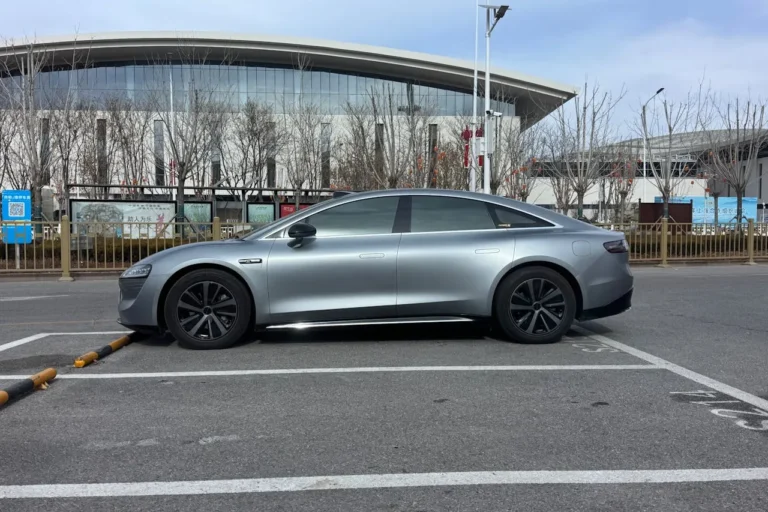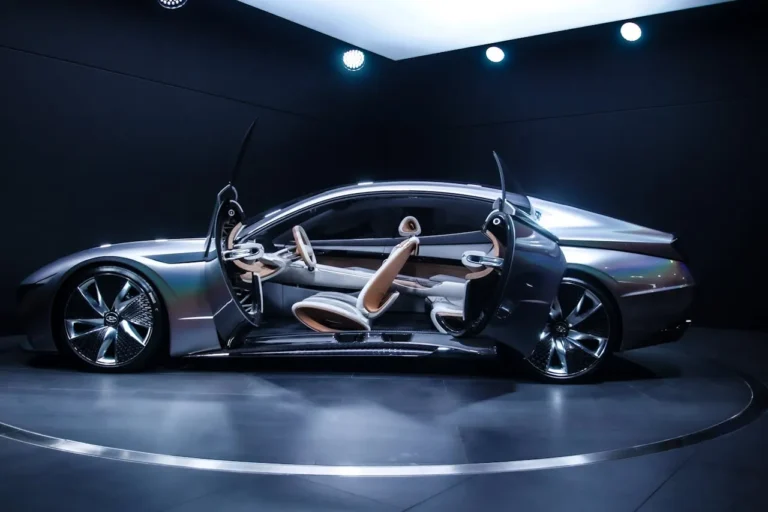
The Fuel Cell Electric Vehicle (FCEV) Powertrain Market Opportunity, Growth Drivers, Industry Trend Analysis, and Forecast 2025–2034 report from ResearchAndMarkets.com provides an in-depth view of a rapidly scaling segment at the intersection of clean mobility and hydrogen energy. It charts how the FCEV powertrain market, valued at USD 362.2 million in 2024, is projected to surge to USD 3.7 billion by 2034, reflecting a strong CAGR of 26.6% over the forecast period. This growth trajectory underscores the strategic role fuel cell powertrains are expected to play in decarbonizing transport, particularly where long range, quick refueling, and high duty cycles are essential.
Holistic Market Overview and Scope
The report offers a comprehensive framework for understanding the FCEV powertrain ecosystem. It combines quantitative forecasts with qualitative insights to help stakeholders benchmark opportunities and risks across regions, vehicle categories, and technology types. Key components of the analysis include:
- Industry trends and growth drivers shaping demand for fuel cell powertrains
- Challenges and restraints, including infrastructure gaps and cost pressures
- Regulatory and policy landscape, with a focus on hydrogen strategies, emissions regulations, and incentives
- Competitive landscape, featuring Porter’s Five Forces and PESTEL analysis
- Market segmentation and regional outlook, covering power ratings, vehicle types, and key geographies
- Company profiles and strategies, including business models, financial indicators where available, and SWOT analysis
By structuring the market into clear segments and regions, the study helps automakers, suppliers, investors, and policymakers identify where the strongest growth catalysts lie and how to prioritize investments.
Market Growth Drivers and Technological Advancements
The rapid expansion of the FCEV powertrain market is primarily attributed to technology maturation and increasing policy alignment around hydrogen as a clean energy vector. Automakers and suppliers are unveiling next-generation fuel cell systems that are:
- More efficient, improving energy conversion and vehicle range
- More compact and lightweight, enhancing packaging flexibility
- Highly scalable and modular, enabling deployment across multiple platforms and use cases
Modularity is a particularly important theme. Modern fuel cell powertrains are being designed as modular stacks and systems that can be integrated into:
- Passenger cars, including premium and luxury FCEVs
- Light and medium commercial vehicles
- Heavy-duty trucks and buses
- Potentially, non-automotive or stationary power applications where similar stack architectures can be repurposed
This modularisation not only improves engineering efficiency but also supports economies of scale, helping to drive down system cost.
A key enabler of this cost reduction has been advances in catalyst and materials technology. By reducing the reliance on expensive precious metals such as platinum and optimizing membrane electrode assemblies (MEAs), manufacturers are lowering the cost per kilowatt while maintaining or improving performance and durability. At the same time, automated production techniques, including roll-to-roll manufacturing and high-throughput assembly processes, are being adopted for critical fuel cell components. These methods improve consistency, reduce defects, and make it easier to scale production to meet growing vehicle volumes.
In addition, continuous improvements in power density—that is, more kilowatts per unit volume—allow OEMs to integrate fuel cell systems in tighter spaces, freeing up room for hydrogen storage and other vehicle systems. This is especially important for passenger vehicles and smaller platforms where space constraints are more stringent.
Policy Support and Hydrogen Infrastructure Expansion
Government support is another cornerstone of market growth. Across leading regions, policies aimed at decarbonizing transport and developing hydrogen economies are accelerating investment in FCEVs and associated infrastructure. Public funding and incentives are being used to:
- Support hydrogen refueling station (HRS) deployment
- Subsidize early FCEV adoption in public fleets and commercial logistics
- Promote localization of fuel cell manufacturing
- Encourage R&D collaborations between automakers, energy companies, and technology providers
The alignment between climate targets, industrial policies, and energy security goals is creating a favorable environment for FCEV powertrains, particularly in markets that see hydrogen as a key pillar of their long-term energy mix.
Key Segment Insights
Passenger Cars: Dominant and Fast-Growing
In 2024, the passenger car segment accounted for around 75% of the global FCEV powertrain market, underscoring its current primacy in fuel cell deployment. From 2025 to 2034, this segment is expected to grow at a CAGR of 27.1%, outpacing the overall market and reflecting both rising consumer interest and policy support.
Several factors are driving this dominance:
- Increasing model availability, as more automakers introduce fuel cell variants alongside battery-electric vehicles
- Expansion of hydrogen refueling networks in select urban and intercity corridors
- Advances in energy management systems, enabling optimized interaction between fuel cell stacks, batteries, and electric drivetrains
- Improved refueling speeds and range, addressing range anxiety and uptime requirements that are especially important for high-mileage users
Luxury and premium vehicle manufacturers are particularly active adopters. They are leveraging modular fuel cell powertrains to deliver long-range, low-emission vehicles that align with tightening emissions standards while still meeting expectations for refinement, performance, and convenience. The higher price points in this segment also help absorb early technology costs.
100–200 kW Powertrain Segment: Versatile and Scalable
Within the power-rating segmentation, the 100–200 kW range stands out as a critical sweet spot. This segment generated approximately USD 150.1 million in 2024 and is poised for significant expansion over the forecast period.
The attractiveness of this range stems from its versatility:
- It is well-suited for medium-duty commercial vehicles, such as delivery trucks, regional logistics fleets, and municipal service vehicles.
- It offers the performance envelope required by many luxury and high-end passenger cars, where higher power output translates into better acceleration and drivability.
- It can be applied to smaller commercial units, including certain light trucks and vans, supporting mixed-use and urban logistics applications.
Standardization and scalable designs in this power band are anticipated to yield strong economies of scale. As volumes ramp up, manufacturers can amortize R&D and tooling costs across multiple platforms, helping to narrow the cost gap with internal combustion engines and pure battery-electric solutions.
Regional Dynamics: Asia-Pacific at the Forefront
Regionally, the Asia-Pacific (APAC) market is currently the epicenter of FCEV powertrain growth. In 2024, APAC accounted for approximately 46% of the global FCEV powertrain market. The region’s leadership is underpinned by an integrated approach to hydrogen and fuel cell development, combining policy support, industrial strategy, and infrastructure investment.
Key characteristics of the APAC landscape include:
- Supportive government policies, such as national hydrogen roadmaps, FCEV deployment targets, and incentives for both vehicles and refueling stations
- Significant investment in hydrogen infrastructure, with public–private partnerships driving network build-out in major corridors and urban clusters
- Active automaker initiatives, with leading OEMs based in Japan, Korea, and China pushing fuel cell passenger cars, buses, and trucks
China is the largest single market within the region and one of the most dynamic. Its FCEV strategy is closely tied to broader goals of industrial upgrading, energy diversification, and emissions reduction. Government-backed programs for fleet electrification, particularly in logistics, public transportation, and port operations, are stimulating demand for fuel cell trucks and buses. Incentives for local manufacturing, pilot zones, and city clusters focused on hydrogen are further reinforcing FCEV deployment and supply chain development.
Other APAC countries, including Japan and South Korea, are also central players, with long-standing commitments to hydrogen mobility, mature refueling infrastructure in select areas, and strong domestic OEM participation.
Competitive Landscape and Strategic Initiatives
The FCEV powertrain market brings together a diverse mix of stakeholders: traditional automakers, fuel cell technology specialists, diversified industrial groups, and emerging hydrogen innovators. Key participants include:
- Major fuel cell powertrain manufacturers and technology companies
- Ballard Power
- Bloom Energy
- Bosch
- Cummins
- Honda Motor
- Horizon Fuel Cell Technologies
- Hyundai Motor
- Intelligent Energy
- ITM Power
- Plug Power
- SFC Energy
- Toyota Motor
- Weichai Power
- General Motors
- Component and system suppliers focused on fuel cell subsystems and enabling technologies
- Aisin
- Denso
- Mahle
- Mitsubishi Heavy
- PowerCell
- Schaeffler
- Toshiba Energy
- Emerging and innovative fuel cell and hydrogen companies
- GenCell Energy
- Hydrogenious
- Hyster-Yale
- Nikola
- Nuvera Fuel
These players are pursuing a range of strategies to strengthen their market position:
- Heavy R&D investment
Companies are channeling capital into improving fuel cell efficiency, durability, and power density, tackling core challenges such as degradation, cold-start performance, and cost per kilometer. - Strategic partnerships and ecosystems
Recognizing that FCEVs cannot succeed without a robust hydrogen value chain, leading firms are forming partnerships with energy providers, gas companies, infrastructure developers, and government agencies. These collaborations are essential for developing refueling networks, hydrogen production and distribution systems, and long-term offtake agreements. - Modular and scalable product platforms
Many manufacturers are moving toward platform-based designs that can be adapted to different vehicle sizes and duty cycles. By offering modular stacks and standardized balance-of-plant components, they can address passenger, commercial, and industrial applications from a common technology base. - Localization and manufacturing footprint expansion
To serve regional markets more effectively and meet local-content requirements, several companies are expanding or establishing manufacturing facilities in key regions, particularly in Asia, Europe, and North America. Local production helps reduce logistics costs, respond more quickly to customer needs, and align with government incentives tied to domestic manufacturing.
Analytical Frameworks and Report Structure
Beyond raw market numbers, the report uses Porter’s Five Forces and PESTEL analysis to provide structured insight into the competitive and macro-environmental context. These frameworks illuminate:
- The bargaining power of OEMs and suppliers in a still-maturing value chain
- The threat of substitute technologies, such as battery-electric and hybrid powertrains, especially in segments where BEVs are already competitive
- Barriers to entry for new fuel cell players, including capital requirements, IP intensity, and partnership needs
- Political, economic, social, technological, environmental, and legal factors that influence investment and adoption
Detailed company profiles supplement these frameworks by examining each major player’s:
- Core product portfolio and technology focus
- Strategic partnerships and alliances
- Positioning across different vehicle segments and regions
- Financial indicators where disclosed
- SWOT analysis highlighting strengths, weaknesses, opportunities, and threats
Key Report Attributes
The report’s core specifications include:
- Number of pages: 220
- Forecast period: 2024–2034
- Market value in 2024: USD 362.2 million
- Forecast market value by 2034: USD 3.7 billion
- Compound Annual Growth Rate (CAGR): 26.6%
- Geographical scope: Global, with regional and country-level insights
Outlook and Strategic Implications
The strong projected growth of the FCEV powertrain market reflects more than just incremental technical progress—it signals a structural shift in how certain segments of road transport will decarbonize. While battery-electric vehicles are likely to remain dominant in many light-duty applications, fuel cell powertrains are positioned as a compelling solution for:
- Fleets requiring long range and rapid refueling
- High-utilization commercial vehicles where uptime is critical
- Markets that are aggressively developing hydrogen infrastructure and production capacity
For stakeholders across the value chain, the report highlights several strategic imperatives:
- Automakers and fleet operators should evaluate where FCEVs best complement BEVs and conventional powertrains across different duty cycles and routes.
- Suppliers and technology developers need to focus on cost reduction, durability improvements, and scalable manufacturing to stay competitive.
- Investors and policymakers must consider how infrastructure, regulation, and incentives can be aligned to unlock the full potential of hydrogen-powered mobility.
In summary, the FCEV powertrain market is transitioning from early-stage commercialization toward more structured, scalable deployment. With robust growth projected through 2034, it represents a significant opportunity for companies that can navigate technology, cost, and ecosystem challenges while leveraging the strong policy momentum behind hydrogen as a cornerstone of future low-carbon transport systems.
Source Link:https://www.businesswire.com/