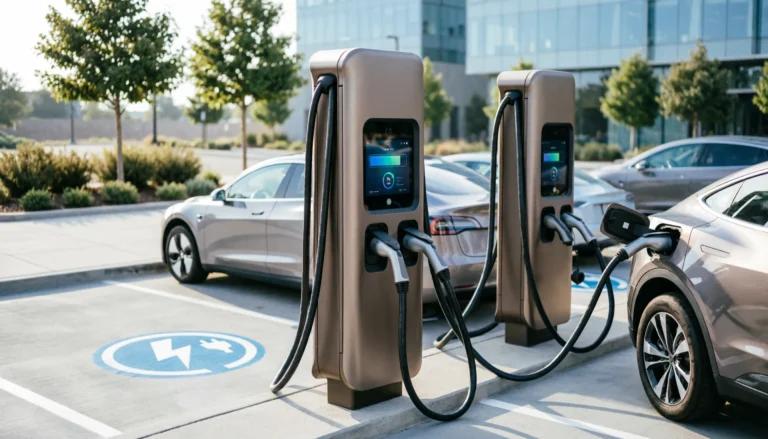
Fuel Cell Vehicle-to-Grid (V2G) Market Accelerates Toward 2034 as Hydrogen Infrastructure Expands and Smart Grid Adoption Surges
The Fuel Cell Vehicle-to-Grid (V2G) Global Market Report 2025, newly released by ResearchAndMarkets.com, reveals a rapidly expanding market riding the combined momentum of hydrogen infrastructure growth, decarbonization mandates, and smart grid integration. The market, valued at $0.94 billion in 2024, is forecast to rise sharply to $3.26 billion by 2029, delivering an impressive 28.2% compound annual growth rate (CAGR). With subsequent long-term projections extending to 2034, the fuel cell V2G ecosystem is poised to transform how energy is stored, distributed, and consumed across global grids.
This momentum underscores a global shift in how transportation and energy systems intersect. Fuel cell electric vehicles (FCEVs), supported by the expanding hydrogen economy, are emerging as mobile energy assets—capable not only of driving emissions reductions on roads but also of stabilizing and supplementing electricity grids. As governments and utilities intensify the push for renewable energy adoption and grid modernization, the fuel cell V2G segment is becoming a critical enabler of the distributed, bidirectional, and intelligent energy systems of the future.
Market Growth Driven by Policy Support, Clean Energy Demand, and Hydrogen Network Expansion
The explosive growth of the fuel cell V2G market is anchored firmly in global clean energy transitions. Governments worldwide are promoting zero-emission transportation, incentivizing hydrogen production and distribution, and investing heavily in next-generation grid technologies. These converging initiatives are driving adoption of FCEVs and supporting the infrastructure required for vehicle-to-grid energy exchange.
At the center of this expansion is the rapid rollout of hydrogen refueling stations (HRS)—a fundamental requirement for large-scale FCEV deployment. Nations such as Japan, South Korea, Germany, the United States, and China are investing billions in hydrogen corridors and refueling networks. As these facilities proliferate, FCEVs become more viable for both consumer and commercial fleets, boosting the volume of vehicles capable of participating in V2G programs.
Another major driver is the global push toward energy decentralization. Traditional centralized grid models are being replaced with distributed energy resources (DERs), which include solar arrays, stationary fuel cells, home battery systems, and—critically—electric vehicles. Fuel cell vehicles provide a unique DER asset: they offer long range, rapid refueling, and stable energy output characteristics, making them well-suited for grid services such as peak shaving, frequency regulation, and emergency power supply.
Technological Innovation Accelerates V2G Maturity
The transformation of the fuel cell V2G landscape is strongly influenced by rapid innovation in charging technologies, hydrogen storage, communication standards, and energy management systems.
1. Bidirectional Charging Innovations
Bidirectional DC charging is the backbone of V2G functionality. Systems enabling vehicle-to-home (V2H), vehicle-to-building (V2B), vehicle-to-everything (V2X), and full V2G power transfer are becoming commercially viable.
A leading example is Star Charge’s Halo bidirectional DC charger, launched in Australia. This system supports multiple operational modes and allows users to harness clean energy from their vehicles for backup power, cost optimization, or grid support. Such technologies are critical for mainstreaming V2G applications, particularly in regions emphasizing energy resilience and off-grid capability.
2. Hydrogen Storage and Fuel Cell Advancements
Improved fuel cell stack durability, optimized membrane design, and lightweight hydrogen storage systems are reducing costs and improving the feasibility of FCEVs in heavy-duty and high-utilization applications. These enhancements increase the lifespan and deployment potential of vehicles participating in V2G programs.
3. Communication Protocol Development
For vehicles to interact seamlessly with smart grids, strong communication frameworks are essential. Advanced communication standards—encompassing cybersecurity, load balancing, and interoperability—are enabling more sophisticated management of bidirectional energy flow.
4. Smart Grid and Energy Management Integration
Fuel cell V2G solutions rely on increasingly intelligent grid infrastructures. The International Energy Agency (IEA) reports significant global investment in smart grids, digital monitoring systems, and AI-enabled demand management platforms. These smart systems are crucial to absorbing fluctuating renewable energy supplies and stabilizing peak loads.
Strategic Moves Strengthen Industry Positioning
Companies across the mobility, energy, and technology sectors are rapidly expanding their presence in the V2G domain. Strategic partnerships, acquisitions, and product launches illustrate the sector’s evolving competitive landscape.
A notable development is Nuvve Holding Corporation’s acquisition of Fermata Energy LLC, a pioneer in V2G technology. This move consolidates expertise in intelligent charging solutions and expands Nuvve’s scale and technological depth. By combining energy management software with proven bidirectional charging hardware, the acquisition positions Nuvve at the forefront of the emerging V2G services market.
Meanwhile, global automotive and energy technology giants—including Toyota, Hyundai, Honda, Nissan, Ford, and TotalEnergies—are heavily investing in hydrogen ecosystems, fuel cell development, and pilot V2G programs. Their involvement underscores the strategic significance of V2G technologies in next-generation mobility and energy architectures.
Regional Market Overview: North America Leads, Asia-Pacific Accelerates
The current market landscape is geographically diverse, with North America emerging as the leading region in terms of technological maturity, V2G pilots, and grid digitalization. The U.S., in particular, is witnessing strong momentum fueled by government incentives, large-scale hydrogen hubs, and utility-led V2G trials.
However, the Asia-Pacific region—led by Japan, South Korea, and China—is rapidly expanding its hydrogen infrastructure and fuel cell vehicle deployments. Strong government backing and early adoption of hydrogen mobility solutions are positioning APAC as a major growth engine for the V2G sector.
Western Europe, with its aggressive decarbonization policies, also remains a critical market. Germany, the UK, France, and the Netherlands are among the leading countries investing heavily in hydrogen production, FCEV deployment, and grid modernization.
Market Challenges: Trade Tensions and Cost Pressures
Despite strong growth prospects, the fuel cell V2G market faces several challenges. Trade tensions, tariffs, and supply chain disruptions have increased production and operational costs across the transportation and energy industries. These pressures are prompting companies to rethink sourcing strategies, improve energy efficiency, and accelerate innovation to remain competitive.
Costs associated with hydrogen production, distribution, and fueling infrastructure also remain a significant hurdle. While green hydrogen production is expanding, achieving cost parity with fossil fuels will require continued investment and supportive policy frameworks.
Comprehensive Report Scope and Analysis
The Fuel Cell Vehicle-to-Grid Global Market Report 2025 offers a detailed breakdown of key market dimensions, including:
Market Characteristics
- Overview of fuel cell V2G technologies
- Functional and operational explanations
- Emerging applications across residential, commercial, industrial, and utility sectors
Market Size and Forecasts
- Historical performance analysis
- Growth projections from 2025 to 2029 and extension to 2034
Segmentation
Vehicle Types
- Passenger vehicles (sedans, SUVs, hatchbacks)
- Commercial vehicles (delivery vans, light/heavy trucks, pickups)
- Buses (city, intercity, shuttles, tourist coaches)
- Other vehicles (two/three-wheelers, off-road, specialty vehicles)
Technologies
- Proton Exchange Membrane (PEM) Fuel Cells
- Phosphoric Acid Fuel Cells (PAFC)
- Solid Oxide Fuel Cells (SOFC)
- Additional emerging fuel cell types
Applications
- Peak power supply
- Emergency backup
- Frequency regulation
- Energy trading and optimization
End-Users
- Residential
- Commercial
- Industrial
- Utility-scale operations
Competitive Landscape
Key companies shaping the global market include:
- Toyota Motor Corporation
- TotalEnergies SE
- Ford Motor Company
- BMW Group
- Honda Motor Co. Ltd.
- Mitsubishi Corporation
- Hyundai Motor Company
- Nissan Motor Corporation
- Kia Corporation
- Panasonic Corporation
- Renault Group
- CATL (Contemporary Amperex Technology Co. Limited)
- Toshiba Corporation
- GS Yuasa International Ltd.
- Doosan Fuel Cell Co. Ltd.
- SFC Energy AG
- Ballard Power Systems Inc.
- Nuvera Fuel Cells LLC
- AFC Energy plc
- Automotive Energy Supply Corporation
Geographic Coverage
The report includes in-depth analysis across:
- North America
- Asia-Pacific
- Europe
- South America
- Middle East & Africa
With country-specific insights for the U.S., China, Germany, Japan, South Korea, and more.
Available in PDF, Word, and Excel formats, the report provides data-rich insights designed to support investors, policymakers, OEMs, utilities, and technology developers in making informed strategic decisions.
Key Attributes at a Glance
| Attribute | Detail |
|---|---|
| Pages | 250 |
| Forecast Period | 2025–2029 |
| Market Size 2025 | $1.21 billion |
| Market Size 2029 | $3.26 billion |
| CAGR | 28.2% |
| Regions Covered | Global |
Source Link:https://www.businesswire.com/