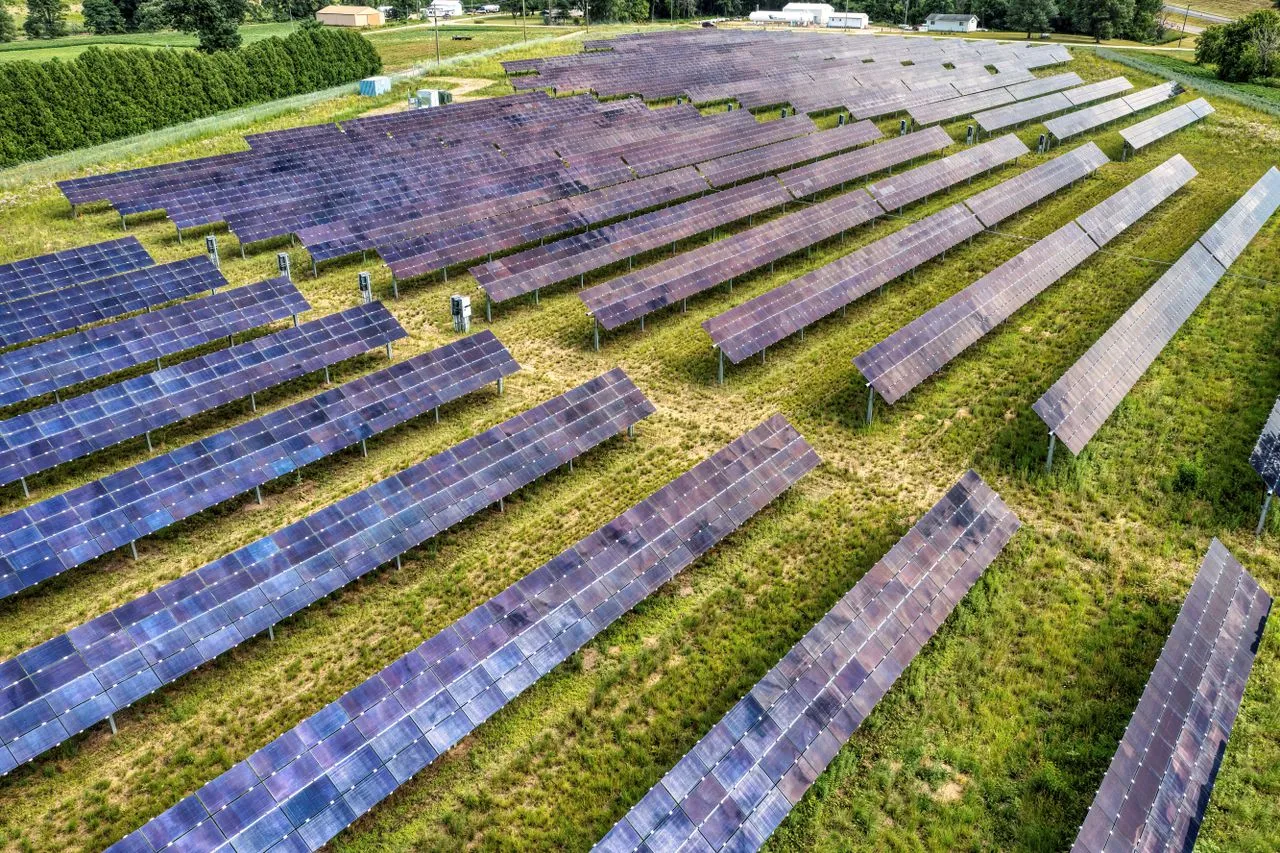
General Motors (GM) is expanding its commitment to renewable energy with the development of two major utility-scale solar generation projects in Michigan. The projects, located in Branch County and St. Clair County, represent the company’s largest clean-energy investment to date and are designed to support the growing electricity requirements of its manufacturing operations while advancing its long-term sustainability objectives.
The two facilities, the Branch County solar generation project and the Lake Iris solar project in St. Clair County, are being developed by NorthStar Clean Energy, with General Motors serving as the primary customer through a virtual power purchase agreement (VPPA). The projects will add renewable electricity generation to Michigan’s energy network and support GM’s broader efforts to reduce the environmental impact of its operations.
The announcement comes as the automotive industry experiences significant changes driven by vehicle electrification, artificial intelligence (AI), battery manufacturing, advanced production technologies, and increasingly sophisticated manufacturing systems. These developments are creating additional electricity requirements for automakers, making reliable and cost-effective energy supplies an increasingly important part of long-term business planning.
For GM, investing in renewable energy is not only an environmental initiative but also a strategic business decision intended to strengthen manufacturing operations, improve energy cost predictability, and support the company’s future growth.
Modern vehicle manufacturing depends on an extensive network of people, materials, equipment, technologies, and energy infrastructure. Every vehicle produced at GM’s Michigan facilities requires electricity throughout different stages of production, including component manufacturing, assembly, material processing, battery-related operations, testing, and facility management.
As automotive production becomes increasingly technology-driven, electricity is playing an even more important role in manufacturing efficiency and operational performance.
The expansion of electric vehicles, battery technologies, automation, and artificial intelligence is changing how automotive manufacturers approach their energy requirements. Manufacturing facilities must increasingly accommodate advanced equipment, digital production systems, data-intensive technologies, and new industrial processes.
These developments are expected to place additional pressure on electricity infrastructure. Consequently, automakers are exploring long-term energy strategies that can provide greater supply stability while reducing exposure to changing energy prices.
GM’s latest solar investment reflects this changing business environment. By supporting additional renewable electricity generation in Michigan, the company aims to strengthen the energy foundation behind its manufacturing activities and create greater predictability for one of its significant operating expenses.
Long-term renewable energy agreements can also help companies manage financial risks associated with conventional fuel markets and changing electricity prices. For a large manufacturing organization, improved energy cost visibility can support investment decisions, production planning, and long-term operational budgeting.
The newly announced clean-energy initiative includes two utility-scale solar generation facilities in Michigan.
The first project is located in Branch County, while the second, known as the Lake Iris solar project, is situated in St. Clair County. Both developments are being managed by NorthStar Clean Energy, with GM participating as the primary customer through a virtual power purchase agreement.
The projects will contribute renewable electricity generation to Michigan’s grid, supporting the availability of cleaner energy within the regional electricity system.
A virtual power purchase agreement is a financial arrangement that allows a company to support renewable energy generation without necessarily receiving electricity directly from a specific solar facility. Instead, the agreement generally involves financial settlements linked to the project’s electricity market performance and the purchase of associated renewable energy attributes.
For GM, this arrangement provides an opportunity to support renewable energy development while advancing its electricity-related emissions reduction objectives.
The company plans to apply the renewable energy credits generated by the projects toward the emissions associated with electricity purchased for its manufacturing operations.
This approach allows GM to connect its renewable energy strategy with its broader environmental commitments while supporting new clean-energy infrastructure in its home state.
The two Michigan solar projects build on an important renewable energy milestone achieved by General Motors in 2025.
Earlier this year, the company announced that it had secured sufficient renewable energy to match 100% of its electricity consumption across all its U.S. facilities. According to GM, this achievement made it the first U.S. automaker to reach this target.
The milestone represents a significant development in the company’s efforts to reduce emissions associated with its manufacturing operations.
GM has also reported a 52% reduction in operational emissions, covering Scope 1 and Scope 2 emissions, since 2018.
Scope 1 emissions generally refer to direct greenhouse gas emissions from sources owned or controlled by an organization, such as fuel combustion at manufacturing facilities.
Scope 2 emissions are indirect emissions associated with the generation of purchased electricity, heating, cooling, and steam consumed by a company.
For automotive manufacturers operating large production facilities, electricity consumption represents an important part of their environmental footprint. Increasing the use of renewable energy can therefore contribute to reducing emissions associated with manufacturing activities.
GM’s latest investment is intended to strengthen this progress by supporting additional renewable generation capacity in Michigan.
The company views clean-energy development as part of a broader strategy to build a more sustainable automotive business while maintaining the operational capabilities needed to manufacture vehicles, batteries, and advanced technologies.
Energy costs are an important consideration for companies operating large manufacturing networks. Changes in fuel prices, electricity market conditions, and energy supply availability can influence production expenses and long-term financial planning.
For automakers, these challenges are becoming more significant as manufacturing facilities adopt additional electrification technologies and advanced production systems.
GM’s investment in renewable energy is intended to improve the predictability of its long-term electricity costs. Securing renewable energy through long-term agreements can help reduce exposure to certain forms of conventional energy market volatility.
This approach can support more consistent financial planning while strengthening the company’s ability to make long-term investments in manufacturing facilities and new vehicle technologies.
Renewable energy projects can also contribute to broader electricity system resilience by diversifying the sources of power generation available to the grid.
The Branch and Lake Iris projects will add solar generation capacity to Michigan’s electricity network, supporting the state’s evolving energy infrastructure.
For GM, this represents an investment in the systems that support its manufacturing operations and future automotive technologies.
Beyond their contribution to renewable electricity generation, the Branch and Lake Iris projects are expected to deliver economic benefits to the communities surrounding the facilities.
According to GM, the two developments together created more than 550 full-time local construction jobs during their development.
These employment opportunities supported workers and businesses involved in project development and construction. Solar energy projects typically require a wide range of services, including site preparation, construction, electrical installation, equipment transportation, engineering, and project management.
The economic benefits can also extend to local suppliers, contractors, service providers, and other businesses that support construction activities.
GM highlighted the wider economic contribution of its renewable energy investments across the United States. The company’s renewable energy projects have generated nearly $2 billion in economic impact and support approximately 1,500 construction jobs annually in communities where GM operates.
These investments demonstrate how renewable energy development can contribute to both environmental objectives and regional economic growth.
For communities, large-scale renewable energy facilities can create employment opportunities while generating additional economic activity during development and construction.
The Branch County solar development has also contributed to local community initiatives.
Through the project, Bethel Township received a $1 million Renewables Ready Communities Award. The funding is intended to support local priorities, including the expansion of the township hall and improvements to local roads.
These investments provide an example of how renewable energy developments can generate benefits beyond the electricity they produce.
Community funding can help local authorities address infrastructure requirements, improve public facilities, and support projects that contribute to residents’ quality of life.
Road improvements are particularly important in areas experiencing construction activity, while investments in public buildings can help local governments expand their services and improve community facilities.
By connecting renewable energy development with local infrastructure priorities, the Branch County project demonstrates the potential for clean-energy investments to support economic and community development simultaneously.
For GM, supporting these initiatives is part of a broader approach to building relationships with the communities where its operations and energy investments are located.
The Lake Iris solar project in St. Clair County is also expected to deliver environmental benefits beyond renewable electricity generation.
One of the planned features of the development is the incorporation of pollinator habitat across the solar facility grounds.
The project intends to use native plantings to create an environment that supports pollinators and contributes to local biodiversity.
Pollinator habitats are important because insects such as bees and butterflies play a significant role in the reproduction of many flowering plants and the functioning of natural ecosystems.
Establishing native vegetation around solar installations can also provide practical advantages for facility management.
Native plants are often better adapted to local environmental conditions and may require less maintenance once established. Appropriate vegetation management can help reduce the need for frequent mowing and other maintenance activities.
Carefully managed plant growth may also help support solar facility operations by reducing certain maintenance requirements while maintaining suitable conditions around the panels.
GM is supporting the habitat initiative and sees an opportunity to work with researchers to study the environmental and regional value created by the project.
Research into pollinator habitats at solar facilities can provide useful information about biodiversity, vegetation management, and the potential for combining renewable electricity generation with ecological improvements.
The Lake Iris initiative therefore represents an approach that considers both energy production and the surrounding natural environment.
The automotive industry is undergoing a major transformation as manufacturers invest in electric vehicles, battery technologies, software-defined vehicles, artificial intelligence, and increasingly automated production facilities.
These developments are changing not only the products automakers manufacture but also the infrastructure required to support their operations.
Electric vehicle production, battery manufacturing, advanced robotics, and digital manufacturing systems require dependable energy supplies. As these technologies expand, electricity planning is becoming a central part of automotive business strategy.
GM’s latest solar investment reflects the company’s recognition that its long-term competitiveness depends partly on building a reliable and economically sustainable energy foundation.
Renewable energy agreements can help manufacturers align their electricity procurement strategies with environmental targets while supporting the development of additional clean-energy generation.
The Michigan projects also demonstrate how major automotive companies can work with energy developers to support regional renewable infrastructure.
Through its partnership with NorthStar Clean Energy, GM is contributing to the development of solar generation capacity while supporting employment opportunities and community initiatives.
GM’s announcement of the Branch County and Lake Iris solar projects represents another step in its efforts to connect environmental progress with business performance.
The two facilities will support renewable electricity generation in Michigan, contribute to the company’s emissions reduction strategy, and provide economic opportunities for local communities.
The investment also reinforces the importance of energy management as automotive manufacturers respond to increasing electricity demand from electrification, artificial intelligence, and advanced manufacturing technologies.
By securing renewable energy resources and supporting additional generation capacity, GM aims to improve long-term energy cost predictability while strengthening the operations behind its vehicles, batteries, and technologies.
The company’s renewable energy strategy also highlights the relationship between industrial development, environmental responsibility, and regional economic growth.
The Branch County and Lake Iris projects demonstrate that clean-energy investments can deliver several benefits at the same time: supporting manufacturing operations, creating construction employment, improving local infrastructure, and encouraging biodiversity.
As the automotive sector continues to evolve, reliable and sustainable electricity supplies will remain essential to manufacturing competitiveness.
For General Motors, the message behind these projects is clear: investing in renewable energy is not simply an environmental commitment but also a practical business decision. By combining operational efficiency, clean-energy development, and community investment, GM is working to build a more resilient business while supporting Michigan’s transition toward a more sustainable energy future.
Source Link:https://news.gm.com/