For decades, pickup trucks have built a reputation for toughness by hauling heavy loads, navigating rough terrain, and enduring years of demanding work. Yet long before these vehicles make it to dealerships or job sites, they face a far more punishing reality behind closed gates at Ford’s testing facilities. Deep inside Ford’s durability program, engineers and test operators spend months deliberately pushing trucks to extremes, compressing years of wear and tear into an accelerated timeline designed to expose weaknesses before customers ever encounter them.
At the center of this effort is Ford’s testing team at the Michigan Proving Grounds in Romeo, Michigan, where some of the company’s most recognizable trucks undergo severe durability trials. The objective is straightforward but demanding: ensure trucks meet the expectations behind the “Built Ford Tough” promise by proving they can withstand years of punishment under real-world conditions.
According to Susan Regalia, operations supervisor at Michigan Proving Grounds (MPG), most consumers have little idea of the intensity of the testing process vehicles endure before reaching public roads.
Regalia, who oversees durability testing for several of Ford’s best-known truck models, believes customers would likely be surprised by the extent of the punishment engineered into every testing cycle.
The company’s well-known “Built Ford Tough” slogan has been part of Ford’s identity since 1979, but inside the proving grounds it represents much more than a marketing message. For durability teams, it acts as a benchmark and daily challenge. Engineers and operators aim to validate whether vehicles can genuinely survive the demands of heavy-duty ownership across years of operation.
To accomplish this, Ford condenses what would normally amount to approximately ten years or 150,000 miles of wear into a period of only four months. Instead of allowing trucks to experience gradual aging over years, testers remove ordinary driving conditions and focus almost exclusively on punishing environments that mimic the harshest use cases customers might encounter.
The philosophy behind this accelerated durability process is simple: test trucks the way the most demanding owners would use them.
That means vehicles spend nearly every hour in operation during the testing period. Trucks rotate through a combination of laboratory-based analysis and physically punishing track conditions that stress everything from suspension systems and chassis components to powertrains and electronics.
One of the key parts of the evaluation process involves dynamometer, or dyno, testing. These tests measure engine and drivetrain performance by evaluating critical metrics such as power output, torque delivery, and revolutions per minute (RPM). Engineers use this data to assess consistency and durability under repeated stress.
But mechanical performance in controlled environments is only one part of the equation.
Outside on Ford’s proving grounds, trucks encounter road surfaces intentionally designed to punish vehicles in ways ordinary roads rarely do. Engineers have built specialized tracks loaded with potholes, aggressive rumble strips, uneven terrain, and high-impact obstacles. The goal is not comfort but accelerated degradation—forcing weaknesses to emerge rapidly.
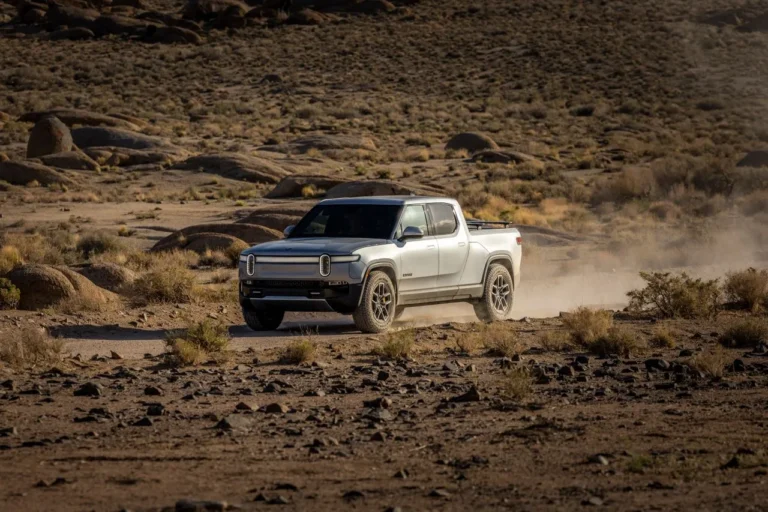
Some test routes simulate severe off-road conditions. Vehicles climb stair-step obstacles, crawl across rocks, and plunge into water pits intended to replicate harsh environmental conditions. Each challenge is engineered to reveal how a truck performs under sustained abuse and how individual systems respond to repeated stress.
Historically, Ford’s field testing teams often transported vehicles to remote western regions of the United States to drive through actual creek beds and rugged natural landscapes. These tests offered realistic environments but introduced inconsistencies caused by changing terrain and environmental conditions.
To create more repeatable testing standards, Ford built a controlled version of a creek environment at Michigan Proving Grounds called Silver Creek. The facility recreates many of the same harsh challenges found in natural waterways while allowing engineers to maintain consistency across test cycles. By standardizing terrain variables, teams can generate more reliable performance comparisons and identify durability concerns with greater accuracy.
Another demanding area inside the proving grounds is a feature known as Power Hop Hill. The incline subjects vehicles to intense vibrations and suspension punishment as trucks climb over severe bumps while carrying substantial weight. These repeated jolts place enormous stress on structural systems and drivetrain components.
Durability testing is not limited to different terrains alone. Engineers also challenge trucks under a variety of loading conditions.
Vehicles are tested at curb weight, reflecting a more typical scenario involving passengers and light cargo. But the evaluation quickly escalates to gross vehicle weight conditions, where trucks carry the heaviest loads they are designed to support.
Testing teams also simulate real-world work applications by placing maximum safe loads at various positions on the vehicle. Weight may be concentrated at the rear to imitate hauling cargo or shifted toward the front to replicate tasks such as snow plowing. This allows engineers to study how stress patterns shift depending on vehicle usage and loading distribution.
Throughout testing, trucks endure punishing cycles around the clock.
Drivers operate vehicles 24 hours a day, exposing them to constant vibration, severe shocks, heavy loads, and repetitive impacts. The testing environment itself can be physically exhausting, filled with the rattling sounds of chained weights, suspension strain, and the unrelenting noise of rough surfaces.
Despite advances in data collection and automation, human observation remains a critical part of the process.
Test drivers are tasked with evaluating subtle aspects of vehicle performance that sensors alone may not fully capture. They pay attention to steering feel, unusual sounds, vibrations, responsiveness, and handling behavior. Minor changes in driving feel may signal developing mechanical concerns or reveal areas requiring engineering refinement.
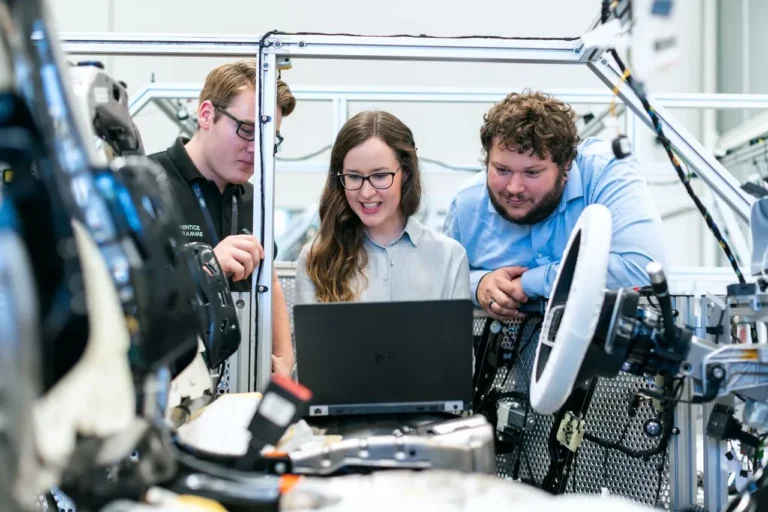
Yet repeatedly driving punishing routes can take a toll on human operators, especially when tests require absolute consistency over long periods. To address this challenge, Ford has increasingly incorporated robotics into its durability program.
Robotic drivers now tackle some of the harshest surfaces at Michigan Proving Grounds, taking over repetitive tests that require extreme precision. In recent years, the robotic fleet has expanded significantly, even graduating to Ford’s high-speed test track.
At times, as many as 20 robotic-driven vehicles can be seen circulating simultaneously around the racetrack, conducting carefully programmed routes.
The advantage of robotics lies in consistency. Unlike human drivers, robots can repeat the same procedure at exactly the same speed and with nearly identical inputs every time. This precision helps engineers isolate variables and compare performance results more effectively.
Still, Ford does not rely exclusively on automation.
Human drivers introduce natural variation into testing—an important factor because customers do not drive with robotic precision. Real-world conditions involve inconsistent steering, acceleration, braking, and reactions to road surfaces. By blending robotic consistency with human perception, Ford attempts to replicate the broad range of driving behaviors customers will ultimately bring to their vehicles.
Meanwhile, the trucks themselves continuously communicate performance data.
Throughout durability testing, onboard data loggers monitor and transmit detailed information back to engineers and operators. Sensors collect insights on everything from shock absorber temperatures and suspension movement to wheel speeds and mechanical stress levels.
This flow of information helps teams identify patterns and investigate abnormalities as they arise.
For Ford engineers, discovering a problem during testing is viewed as a success rather than a setback. Catching issues before a vehicle reaches customers allows teams to address weaknesses early and avoid larger quality concerns later.
Andrew Kernahan, Ford’s vehicle programs director for heavy-duty trucks and platforms, emphasized that uncovering defects during durability trials is considered a positive outcome because it means the issue was identified internally rather than through customer complaints.
Once engineers identify a concern, teams apply rigorous and standardized problem-solving methods to determine root causes. Corrective actions are developed, tested, and implemented as quickly as possible to strengthen vehicle durability and improve long-term reliability.
Ford’s durability efforts are also informed by customer behavior.
Testing teams regularly collaborate with customer-facing departments to gather feedback and analyze how trucks are being used in the real world. Usage trends evolve over time as customer demands change, and durability standards are adjusted to reflect those realities.
For example, shifts in towing habits, payload expectations, recreational off-roading, or commercial fleet applications may influence how engineers structure future test cycles. The goal is to ensure testing reflects not just theoretical use cases but the genuine ways owners operate their trucks.
Importantly, durability validation does not end once prototypes are approved.
Ford repeats extensive testing during the production phase to verify that improvements identified during prototype development perform as intended in manufacturing vehicles. This additional round of validation helps confirm that changes introduced during development continue to meet quality standards when vehicles enter mass production.
The process reflects a broader philosophy within vehicle engineering: no simulation or computer model can fully replace real-world punishment.
While digital tools and predictive software have become increasingly advanced, engineers still rely heavily on physically testing vehicles under harsh conditions to understand how systems behave over time.
For Ford’s durability teams, there remains a fundamental belief that exposing trucks to relentless punishment before customers ever sit behind the wheel is one of the most reliable ways to validate performance and build confidence in product quality.
In an industry where expectations for capability continue to rise, durability testing has become both more technical and more intense. Customers expect trucks to tow heavier loads, tackle tougher environments, and remain dependable for years.
Meeting those expectations requires more than engineering theory. It requires months of grinding tests, punishing terrain, robotic precision, human judgment, and a willingness to deliberately break things in pursuit of better vehicles.
Before customers ever receive the keys, Ford’s trucks have already survived challenges most owners will never witness—and often conditions far harsher than they may ever encounter themselves.
Source Link:https://www.fromtheroad.ford.com/