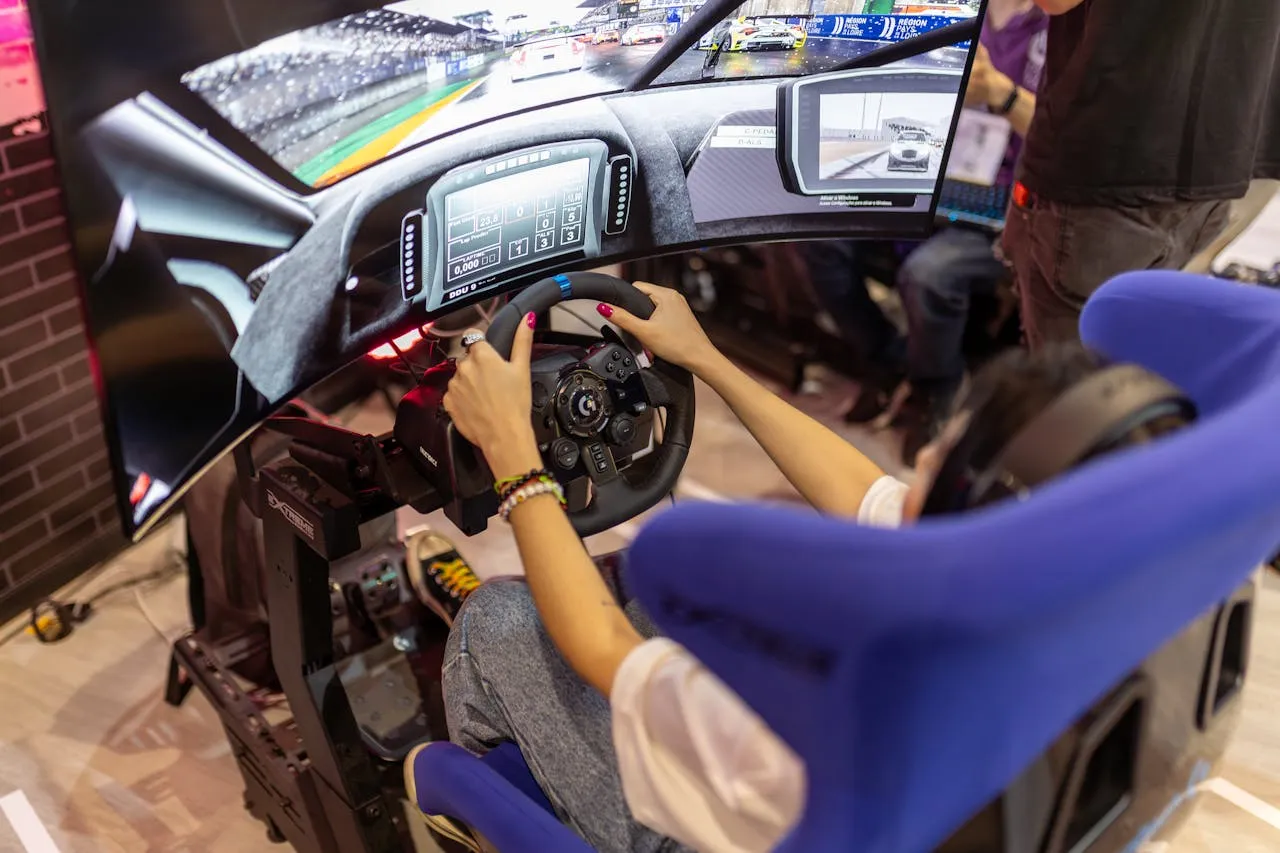
As the automotive industry accelerates toward a future shaped by advanced driver-assistance systems (ADAS) and automated driving technologies, vehicle validation has become more demanding than ever before. For automakers developing intelligent mobility systems, testing no longer revolves solely around miles driven on public roads or closed tracks. Instead, one of the most powerful tools reshaping vehicle development today is simulation — a technology that allows engineers to test millions of scenarios long before a vehicle ever enters real-world traffic.
At General Motors (GM), simulation has become a central pillar in validating advanced driver-assistance and automated driving systems at scale. The company’s efforts to expand autonomous vehicle (AV) capabilities involve evaluating countless driving situations, from everyday traffic patterns to unpredictable edge cases that drivers may encounter only once in a lifetime. Achieving this level of readiness through physical road testing alone would be nearly impossible. That is where simulation-driven development steps in.
Helping drive this transformation is Aamir Ali, a technology leader whose experience spans software infrastructure, safety systems, and autonomous vehicle development. His work at GM focuses on scaling simulation capabilities across the company’s AV organization, ensuring automated driving technologies can be validated faster, more efficiently, and with a strong emphasis on safety.
Aamir Ali’s journey into the world of autonomous driving did not follow a traditional route. Beginning his career in India as a mechanical engineering student, Ali initially built expertise in engineering fundamentals before transitioning into large-scale software systems.
His professional path eventually led him to Google, where he spent more than a decade building internal software platforms supporting some of the world’s largest digital services. During his tenure, Ali contributed to infrastructure powering products such as AdWords and YouTube, gaining experience in building highly scalable systems capable of supporting millions of users.
Working at Google exposed him to the challenges of designing reliable, resilient platforms that operate under immense scale — skills that would later become highly relevant in autonomous vehicle development.
Following his time at Google, Ali joined Zoom Communications during one of the company’s most significant growth periods. There, he focused on trust and safety systems, helping ensure platform integrity at a time when remote communication tools became essential across industries worldwide.
However, Ali’s transition into autonomous vehicle technology came during his time at Cruise, where he played an important role in developing simulation environments for validating self-driving systems.
At Cruise, simulation increasingly became the foundation for testing autonomous software. Instead of relying predominantly on physical vehicle testing, engineers began shifting major portions of validation into virtual environments.
This transition represented a significant milestone in autonomous development.
Rather than waiting for real-world conditions to occur naturally, simulation enabled engineers to create and test countless traffic scenarios digitally. This included rare, dangerous, or highly unpredictable situations that would be difficult — or unsafe — to reproduce on public roads. By enabling virtual testing at scale, teams could evaluate software behavior more quickly, identify weaknesses earlier, and iterate development faster while maintaining a strong commitment to safety.
The lessons learned from that transition continue to shape Ali’s work today at GM.
Developing advanced driving systems is fundamentally different from traditional automotive engineering. Conventional vehicle systems can often be validated through structured mechanical testing and finite real-world trials. Automated driving systems, however, must interpret and respond to a nearly infinite number of real-world variables.
A pedestrian crossing unexpectedly. A vehicle suddenly changing lanes. Poor weather conditions reducing visibility. Construction zones, erratic drivers, damaged road markings, and countless unforeseen circumstances all contribute to the complexity of validating automated systems.
For GM, whose vehicle portfolio spans multiple brands and millions of customers, the challenge becomes even larger.
The company is not building a single autonomous product for a niche market. Instead, it develops technologies that must function reliably across different vehicle types, geographic regions, road conditions, and driving behaviors.
According to Ali, this diversity is precisely what makes the work so exciting.
GM’s vast vehicle lineup presents an opportunity to bring advanced driver-assistance and automation technologies to a broad customer base. From mainstream vehicles to premium and performance-oriented products, automated driving systems have the potential to benefit millions of drivers.
Brands such as Chevrolet, Cadillac, and the iconic Corvette stand to benefit from increasingly sophisticated driver-assistance capabilities.
Yet delivering those technologies safely requires far more than road testing alone.
Simulation enables engineers to test systems at a pace and scale that would otherwise be impossible. Through virtual environments, developers can validate features rapidly, assess software performance under thousands of variations, and strengthen confidence in how systems respond before vehicles ever reach public roads.
This capability becomes particularly important when developing safety-critical technologies where reliability is essential.
Ali’s experience at Cruise highlighted the power of shifting development workflows toward simulation-first testing.
When he first joined Cruise, a substantial amount of validation still depended on real-world vehicle testing. Over time, however, the company expanded simulation infrastructure significantly, allowing engineers to move a large portion of development into virtual environments.
The impact was substantial.
Testing became more scalable. Engineering cycles accelerated. Teams could evaluate larger numbers of scenarios in shorter periods of time. Most importantly, developers gained the ability to safely examine situations that could be too dangerous or impractical to recreate in physical settings.
Rare crashes, unusual interactions, sudden hazards, and unexpected road events could all be simulated repeatedly to understand how self-driving systems would react.
At GM, the challenge becomes even more complex because of the company’s broader product portfolio and larger operational scale.
Validating automated driving systems across many vehicle categories and driving conditions requires simulation platforms capable of supporting massive testing volumes. The objective is not only to replicate ordinary road experiences but to stress-test systems against long-tail scenarios — uncommon events that nevertheless require safe responses.
Ali emphasizes that effective simulation allows engineers to validate features earlier in the development process, even before physical test vehicles become widely available.
That capability significantly shortens development timelines and helps improve system maturity before on-road testing begins.
One of the greatest challenges in autonomous and driver-assistance system development lies in preparing vehicles for the unexpected.
Routine situations are relatively straightforward to test. Everyday lane changes, stoplights, highway merges, and standard intersections occur frequently and generate abundant real-world data.
The real complexity lies in edge cases.
These are rare scenarios that may happen infrequently but still demand flawless system performance. For example, unusual pedestrian behavior, unexpected debris, rapidly changing traffic conditions, or unconventional vehicle movements may only occur occasionally, yet automated systems must still handle them safely.
Ali identifies this “unknown” factor as one of the industry’s biggest engineering hurdles.
To tackle it, GM combines real-world driving data with proactive simulation testing.
Simulation environments enable engineers to create diverse situations, introduce variables, and observe how systems behave under different circumstances. These environments serve as controlled laboratories where software can be pushed to its limits without exposing people to risk.
Additionally, machine learning increasingly plays a role in generating new scenarios.
Rather than relying only on previously observed road events, intelligent systems can help create hypothetical situations that automated driving software might eventually encounter. This enables engineers to test against conditions beyond those already experienced in the real world.
The result is a more comprehensive validation framework that extends beyond traditional testing limitations.
Achieving equivalent levels of confidence through road miles alone would require extraordinary amounts of time, cost, and resources.
Simulation helps close that gap.
GM enters the automated driving race with several notable advantages.
One of the company’s strongest assets is its extensive vehicle presence on roads across North America and beyond. A large customer base provides access to broad real-world driving insights, helping engineers better understand system performance under varied conditions.
This data becomes invaluable when refining advanced driver-assistance technologies and identifying opportunities for improvement.
GM also benefits from already having sophisticated hands-free driving technologies in market today.
Its Super Cruise system — a hands-free driver assistance technology available on compatible roads — provides a foundation for future automation efforts. With customers already using the technology extensively, GM gains meaningful operational feedback that can inform the next generation of driver-assistance capabilities.
By learning from real-world usage, the company can continue refining active safety features while simultaneously advancing toward more sophisticated automated driving systems.
Ali sees this combination of scale, data, and deployed technology as a major advantage for GM’s future roadmap.
Rather than starting from scratch, the company can evolve existing systems while investing in simulation capabilities that accelerate innovation.
For Ali, the motivation behind autonomous technology development extends beyond engineering challenges.
The larger vision centers on improving transportation safety, efficiency, and predictability.
Advanced driver-assistance and automated systems have the potential to reduce human error, improve traffic flow, and create safer driving experiences for everyone on the road. As technologies mature, they could fundamentally reshape how vehicles are designed and how people move through cities.
Automation may eventually influence urban planning, infrastructure design, and broader mobility ecosystems.
While significant challenges remain, simulation is helping move the industry closer to that future.
By enabling engineers to test millions of scenarios quickly and safely, virtual validation is becoming indispensable to modern vehicle development.
At GM, leaders like Aamir Ali are helping ensure that autonomous and advanced driving technologies are not only innovative but rigorously tested before reaching customers.
As simulation capabilities continue expanding, the future of automated mobility may arrive faster — and safer — than previously imagined.
Source Link:https://news.gm.com/