Kiwi Charge Debuts Autonomous EV Charging Initiative Backed by $1.7 Million Funding
Robotics and artificial intelligence startup Kiwi Charge has announced the launch of an ambitious autonomous electric vehicle charging initiative backed by the Government of Ontario through the Ontario Vehicle Innovation Network (OVIN), with additional support from General Motors Canada and Pfaff Automotive. The project marks a significant step forward in addressing one of the most persistent barriers to widespread electric vehicle adoption: access to flexible, affordable, and scalable charging infrastructure in dense urban and commercial environments. With a total investment of $1.7 million, the initiative brings together public funding, private-sector collaboration, and advanced technologies in robotics, AI, and electrification to redefine how and where EV charging can be deployed.
Strategic Investment Driving Autonomous EV Charging Innovation
The $1.7 million investment underpinning Kiwi Charge’s autonomous EV charging project is structured to accelerate development while reducing the financial burden typically associated with deep-tech innovation. Of the total amount, $500,000 comes from the OVIN R&D Partnership Fund, a provincial program designed to strengthen Ontario’s automotive and mobility innovation ecosystem by supporting research, development, and commercialization. The remaining $1.2 million is being contributed by industry partners, including General Motors Canada and Pfaff Automotive, both of which bring real-world automotive expertise, operational insight, and validation to the project. This blended funding model enables Kiwi Charge to move more rapidly from concept to prototype and from prototype to pilot deployment, shortening development timelines that would otherwise require significantly more capital and time.
OVIN’s Role in Strengthening Ontario’s Mobility Ecosystem
The Ontario Vehicle Innovation Network plays a central role in fostering collaboration between startups, established automakers, technology companies, and research institutions. By backing Kiwi Charge’s project, OVIN reinforces Ontario’s position as a hub for next-generation mobility solutions, particularly those that integrate software, automation, and electrification. The funding reflects provincial priorities around climate action, clean transportation, and innovation-led economic growth. Through OVIN’s support, Kiwi Charge gains not only financial resources but also access to networks, test environments, and credibility within the broader automotive and technology ecosystem. This support is particularly valuable for startups developing hardware-intensive solutions, where pilot programs and industry validation are critical to commercialization.
Industry Collaboration with General Motors Canada and Pfaff Automotive
The involvement of General Motors Canada and Pfaff Automotive underscores the practical relevance of Kiwi Charge’s technology to real-world automotive operations. GM Canada brings the perspective of a global OEM navigating large-scale EV production, distribution, and customer adoption challenges, while Pfaff Automotive contributes hands-on experience from the dealership and retail side of the industry. These partners provide insight into how autonomous mobile charging solutions can be deployed in dealership lots, service centers, and fleet operations without disrupting daily workflows. Their participation also helps ensure that Kiwi Charge’s solutions are designed with scalability, safety, and operational efficiency in mind, rather than remaining purely experimental technologies.
Public Debut at the Canadian International AutoShow
As part of the project’s launch, Kiwi Charge will unveil the latest iteration of its autonomous EV charging robot at the Canadian International AutoShow, taking place from February 13 to 22. The showcase represents a major milestone for the company, placing its technology in front of policymakers, automakers, suppliers, investors, and the general public. The robot will be displayed alongside Project Arrow, Canada’s first zero-emissions concept vehicle developed by the Automotive Parts Manufacturers’ Association (APMA). Being featured in this context positions Kiwi Charge as part of a broader national effort to advance clean mobility and automotive innovation, while also highlighting the role of enabling infrastructure in making zero-emission vehicles viable at scale.
Addressing the EV Charging Gap in Urban and Multi-Tenant Buildings
One of the core challenges Kiwi Charge aims to solve is the lack of accessible EV charging in older condominiums, rental properties, and dense urban buildings. In many cities, a significant share of EV owners live in multi-tenant residential buildings where installing fixed charging stations can be prohibitively expensive. These buildings often lack sufficient electrical capacity, require complex permitting, or need extensive rewiring to support hardwired chargers. As a result, residents may be discouraged from purchasing EVs despite broader policy incentives and environmental awareness. Kiwi Charge’s autonomous mobile charging units are designed to bypass many of these obstacles by delivering on-demand charging without permanent infrastructure upgrades.
Reimagining EV Charging Through Robotics and AI
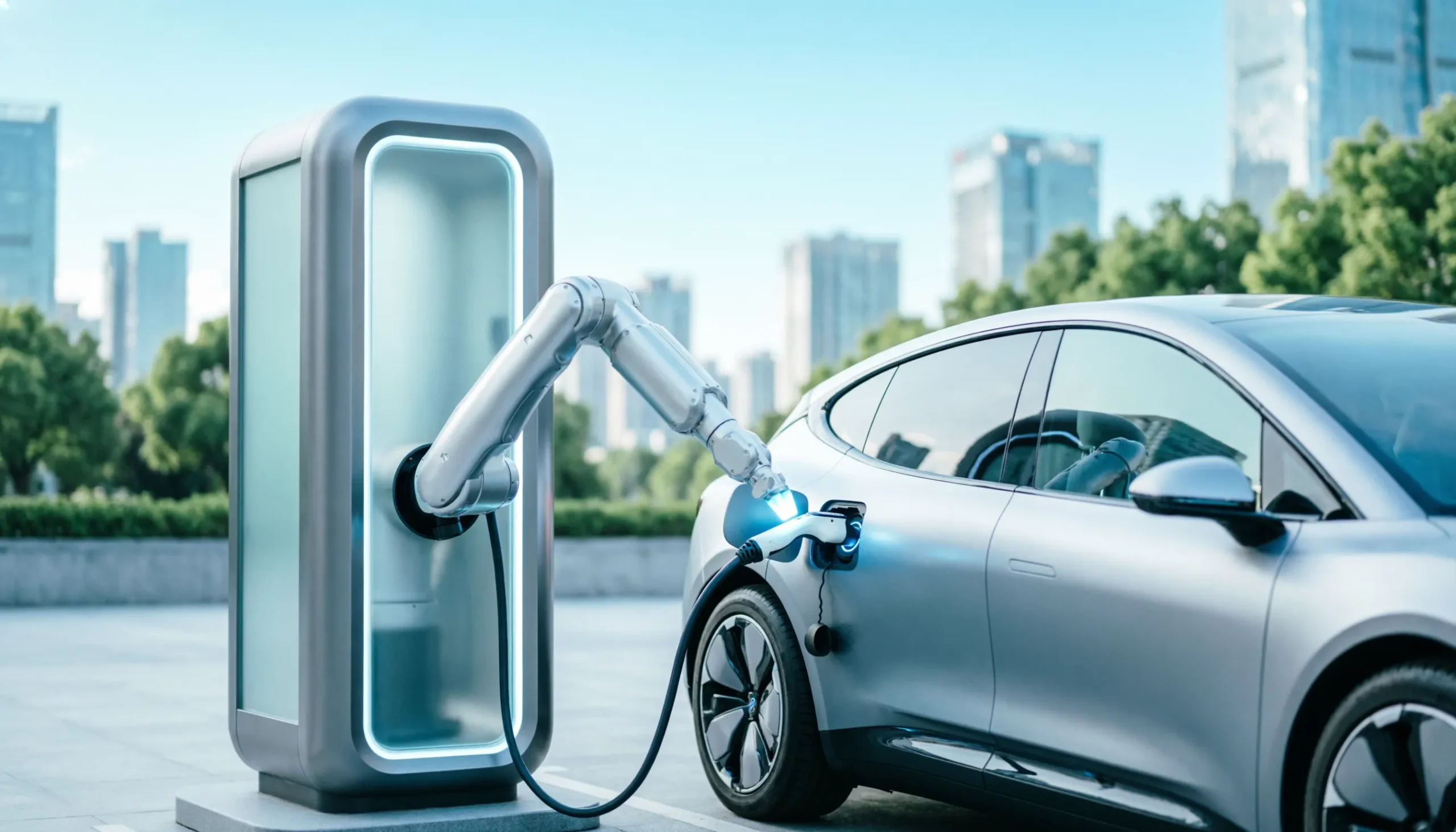
At the heart of Kiwi Charge’s solution is the integration of robotic mobility, artificial intelligence, and electrification into a compact autonomous charging unit. Rather than relying on stationary chargers tied to specific parking spaces, Kiwi Charge’s robots can navigate parking garages and lots, identify vehicles that require charging, and deliver energy where it is needed. AI-driven fleet intelligence allows these units to optimize routing, scheduling, and utilization, ensuring that multiple vehicles can be served efficiently over time. This approach not only reduces installation costs but also maximizes the value of each charging unit by enabling shared use across many vehicles.
Reducing Grid Strain and Improving Energy Utilization
Beyond convenience and cost savings, Kiwi Charge’s mobile charging model offers potential benefits for energy management and grid stability. By dynamically allocating charging based on demand, battery state, and time-of-use considerations, the system can help smooth peak loads and reduce strain on local electrical infrastructure. This is particularly important in older buildings where electrical systems were not designed to accommodate widespread EV charging. The ability to deploy charging capacity flexibly also opens the door to integrating renewable energy sources and energy storage solutions in the future, further aligning the technology with broader decarbonization goals.
Accelerating Prototyping, Testing, and Pilot Deployments
The funding secured through OVIN and industry partners enables Kiwi Charge to rapidly prototype and test its flagship autonomous charging units. Hardware-focused startups often face long development cycles due to the cost and complexity of building, testing, and refining physical systems. With this financial support, Kiwi Charge can iterate more quickly, validate performance in real-world environments, and address technical challenges early in the development process. The company plans to run pilot programs with real estate partners and automotive dealerships, gathering data and feedback that will inform further refinements and support future commercialization efforts.
Supporting Automotive Dealership Operations
In addition to residential applications, Kiwi Charge is developing a manual mobile charging unit tailored for automotive dealerships. Dealerships increasingly manage growing inventories of electric vehicles, many of which require regular charging to remain customer-ready. Fixed chargers can create bottlenecks, disrupt lot layouts, or limit flexibility during peak periods. A mobile charging solution allows staff to move chargers to vehicles as needed, keeping EVs charged without interrupting sales or service operations. This capability can improve vehicle turnover efficiency, streamline fleet management, and enhance the overall customer experience at dealerships transitioning to electric mobility.
Leveraging Ontario’s Growing AI Talent Pool
Ontario’s rapidly expanding artificial intelligence ecosystem provides a strong foundation for Kiwi Charge’s technology development. The province is home to world-class AI research institutions, startups, and talent, particularly in areas such as machine learning, robotics, and autonomous systems. Kiwi Charge plans to leverage this ecosystem by hiring skilled engineers and researchers who can contribute to both the software and hardware aspects of its platform. Access to local talent not only accelerates innovation but also supports the creation of high-value jobs within the province, aligning economic development with technological advancement.
Aligning with Provincial Climate and Housing Priorities
Kiwi Charge’s autonomous EV charging project aligns closely with the Province of Ontario’s climate, housing, and innovation objectives. Electrifying transportation is a key component of reducing greenhouse gas emissions, but achieving this goal requires infrastructure solutions that work within existing urban environments. By enabling faster and more affordable electrification of older buildings, Kiwi Charge’s technology supports housing affordability and sustainability simultaneously. The ability to deploy charging without major renovations also minimizes disruption for residents and property managers, making EV adoption more practical for a broader segment of the population.
Building Credibility Through Public-Private Collaboration
The combination of government support and industry backing provides Kiwi Charge with a level of credibility that is essential for scaling a new infrastructure technology. Partnerships with OVIN, GM Canada, and Pfaff Automotive signal confidence in the company’s approach and reduce perceived risk for future customers, investors, and partners. This credibility can be particularly important when working with property owners, municipalities, and large organizations that require proven, reliable solutions before committing to deployment. By demonstrating successful pilots and partnerships early, Kiwi Charge positions itself for broader adoption in Canada and beyond.
An Ontario-Made Solution with Global Relevance
While the project is rooted in Ontario’s innovation ecosystem, the challenges Kiwi Charge addresses are global in nature. Cities around the world face similar issues related to aging infrastructure, dense housing, and the rapid growth of electric vehicles. Autonomous mobile charging solutions that reduce costs and increase flexibility could play a significant role in accelerating EV adoption across diverse markets. By developing and validating its technology in Ontario, Kiwi Charge aims to create a scalable model that can be adapted to international contexts, exporting Canadian innovation to address worldwide sustainability challenges.
Leadership Perspective on Transforming Urban Infrastructure
Reflecting on the project’s significance, Kiwi Charge emphasized that the initiative goes beyond simply delivering electricity to vehicles. The company views its work as part of a broader effort to reshape urban infrastructure through the application of robotics and artificial intelligence. Support from OVIN and industry partners provides not only funding but also a platform to demonstrate how advanced technologies can help cities leapfrog outdated models and adopt cleaner, more flexible solutions. By focusing on real-world constraints and user needs, Kiwi Charge seeks to bridge the gap between ambitious climate goals and practical implementation.
Commercialization and Scale
As Kiwi Charge moves forward with development, testing, and pilot deployments, the focus will increasingly shift toward commercialization and scaling. Insights gained from early deployments will inform product design, pricing models, and service strategies. The company’s ability to demonstrate reliability, safety, and cost-effectiveness will be critical to securing additional partnerships and expanding into new markets. With strong support from government and industry, Kiwi Charge is positioning itself as a key player in the evolving EV infrastructure landscape, offering a novel approach that complements traditional charging networks rather than replacing them.
By combining autonomous robotics, AI-driven intelligence, and a clear understanding of urban infrastructure challenges, Kiwi Charge’s autonomous EV charging project represents a meaningful step toward more inclusive and adaptable electric mobility. The initiative highlights how targeted public investment, strategic industry collaboration, and local talent can come together to create solutions that address pressing environmental and economic needs while laying the groundwork for a more sustainable transportation future.
Source Link:https://www.businesswire.com/