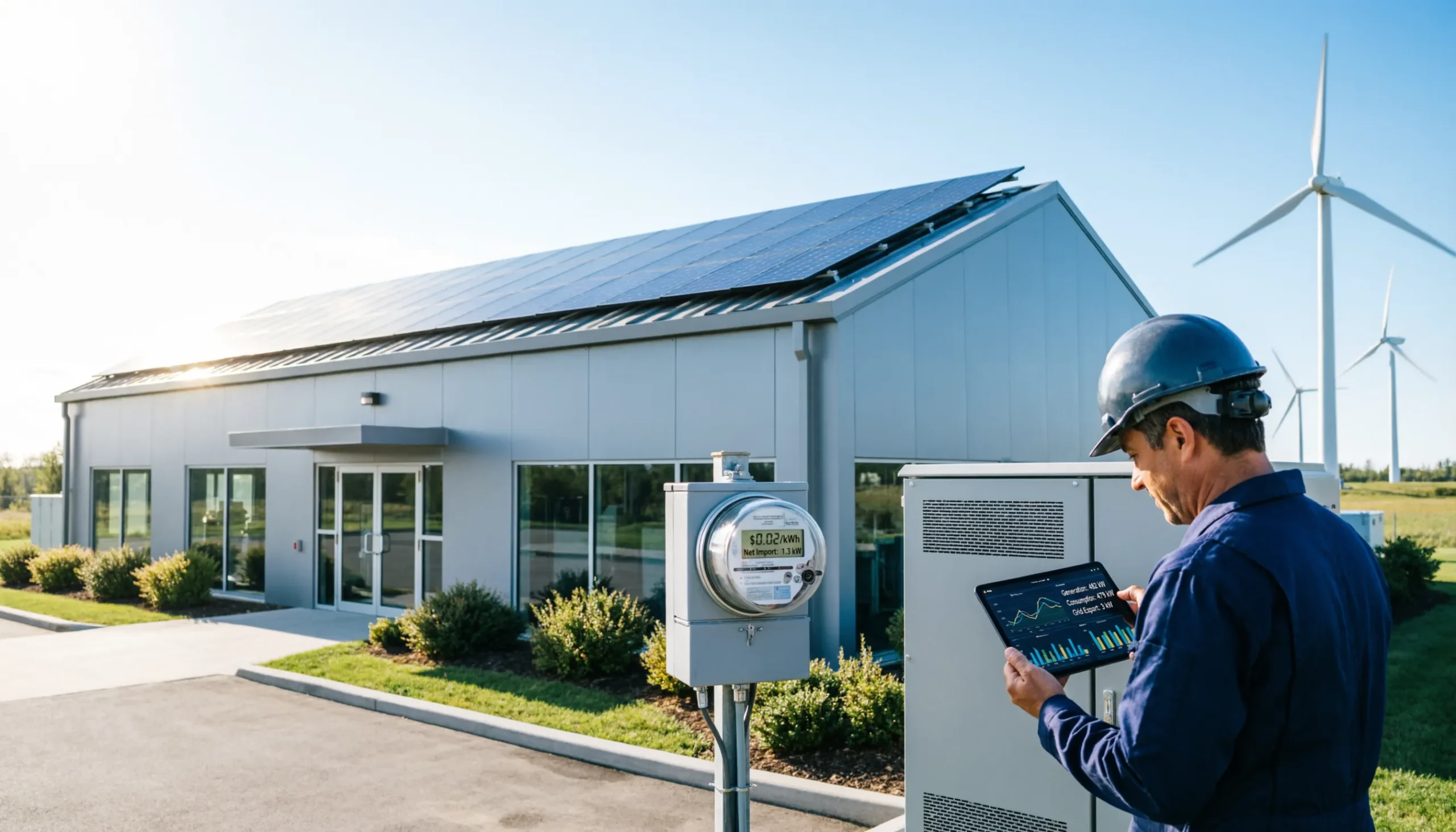
Canada’s Energy Landscape Is Shifting Toward the Age of the Prosumer
Across Canada, households are rapidly redefining their relationship with electricity, moving beyond the traditional role of passive consumers and embracing a more active identity as energy producers, managers, and contributors to the grid. Canadians are no longer simply turning lights on and off; they are installing rooftop solar panels, charging electric vehicles at home, investing in battery storage, and in some cases exporting surplus electricity back into the system. New Canada-wide research from Schneider Electric reveals that this transformation toward “energy prosumers” is unfolding faster than many industry observers anticipated, signaling a structural shift in how residential energy fits into the national electricity ecosystem. By analyzing real household-level data rather than hypothetical models, the study paints a detailed picture of how modern homes are becoming integral nodes in Canada’s energy transition rather than end points at the edge of the grid.
A Data-Driven Look at Household Energy Across Major Canadian Cities
The Schneider Electric analysis is grounded in 100 percent Canadian data, focusing on residential energy patterns in four of the country’s largest and most diverse urban centers: Toronto, Montréal, Vancouver, and Edmonton. These cities represent a broad range of climates, electricity rate structures, grid carbon intensities, and regulatory environments, allowing the study to capture how local conditions influence the prosumer experience. By examining how households adopt and combine technologies such as rooftop solar, electric vehicles, smart chargers, and energy management systems, the research evaluates both financial performance and broader system benefits. Early findings demonstrate that the economic and environmental outcomes of prosumer participation vary meaningfully by region, reinforcing the idea that a one-size-fits-all approach will not unlock Canada’s full residential energy potential.
Combining Technologies Unlocks Stronger Financial Outcomes
One of the clearest signals from the research is that households realize the greatest value when energy technologies are deployed together rather than in isolation. Pairing rooftop solar with an electric vehicle consistently delivers the strongest financial performance across the cities studied, particularly when smart charging strategies are applied. Instead of drawing power during expensive peak hours, EVs can be charged when electricity prices are lower or when rooftop solar generation is abundant, significantly improving household economics. The study shows that these integrated systems allow homeowners to maximize self-consumption of locally generated power while reducing reliance on the grid at the most expensive and carbon-intensive times, creating a compelling value proposition that strengthens as electricity prices and peak demand pressures continue to rise.
Selling Power Back to the Grid Changes the Equation
The ability to export excess electricity back to the grid emerges as one of the most influential factors in determining whether a household prosumer investment delivers attractive returns. In nearly every scenario that includes solar generation, access to sell-back mechanisms improves overall financial outcomes, sometimes dramatically. Jurisdictions with clear, transparent pathways for net metering or similar compensation structures allow households to monetize surplus generation rather than curtailing it, turning rooftops into productive assets. The research indicates that even modest export rates can shift project economics from marginal to favorable, underscoring how policy and regulatory design play a critical role in accelerating or constraining prosumer adoption across Canada.
Rate Design Has an Outsized Impact on Household Economics
Electricity rate structures strongly influence how much value households can extract from distributed energy resources, and the Schneider Electric study highlights just how sensitive prosumer economics are to rate design. Wider gaps between on-peak and off-peak pricing, as well as meaningful tier differentials, substantially improve household returns by rewarding flexible consumption and local generation. When price signals accurately reflect system costs, prosumers are incentivized to shift usage, charge EVs strategically, and export power during periods of high demand. Conversely, flatter rate structures diminish the financial rationale for investing in smart energy solutions, even when those solutions deliver real benefits to the grid. The findings suggest that modernizing rate design may be one of the most effective levers available to utilities and regulators seeking to integrate prosumers at scale.
Local Conditions Shape the Prosumer Experience
While the overall trend toward residential energy participation is national, the study reveals that the prosumer journey differs meaningfully from city to city. Solar resources, grid emissions intensity, electricity pricing, and regulatory frameworks all influence which technologies deliver the strongest returns. In some cities, rooftop solar alone provides compelling value, while in others the economics improve only when paired with EVs, storage, or advanced energy management. Certain jurisdictions exhibit larger gaps between current technology costs and potential savings under existing rates, indicating untapped opportunity if policies evolve. These regional differences highlight the importance of localized strategies that reflect specific market conditions rather than assuming uniform outcomes across Canada.
Beyond the Utility Bill: The Hidden Value of Prosumers
Financial savings on monthly electricity bills represent only part of the value that residential prosumers bring to the energy system. The Schneider Electric analysis quantifies a range of unpriced or under-priced benefits that significantly enhance the overall impact of distributed energy adoption. These include avoided greenhouse gas emissions, reduced strain on transmission and distribution infrastructure, and increased system flexibility during peak demand periods. When emissions reductions are valued using Canada’s Social Cost of Carbon, estimated at $271 per tonne, the societal benefits of prosumer participation grow substantially. These broader impacts suggest that household energy investments deliver value far beyond individual consumers, supporting national climate and infrastructure objectives.
Resilience and Reliability Are Increasingly Valued by Households
Another critical dimension highlighted by the research is the growing importance Canadians place on energy resilience. As extreme weather events, wildfires, and grid disruptions become more frequent, the ability for homes to remain powered during outages has become a tangible benefit rather than a theoretical one. The study estimates that residential customers value outage resilience at approximately $4.50 to $4.94 per kilowatt hour, a figure that rivals or exceeds many direct energy savings. Backup power from solar and storage systems provides peace of mind and continuity during emergencies, reinforcing the appeal of prosumer technologies even in regions where pure cost savings may be more modest.
Canada Has the Ingredients for a Strong Prosumer Economy
According to Frederick Morency, Vice President of Sustainability, Strategic Initiatives, and Innovation at Schneider Electric Canada, the country is well positioned to unlock a robust prosumer economy but remains in the early stages of that journey. Canada benefits from abundant renewable resources, growing EV adoption, advanced grid infrastructure, and increasing public awareness of climate and energy issues. The data shows that households can play a much larger role in supporting the energy transition, reducing emissions, and enhancing grid performance. What is needed now is a coherent framework that allows utilities, regulators, and technology providers to integrate prosumers at scale without creating unnecessary complexity or friction.
Smart Rates and Simple Rules Can Turn Prosumers into Grid Assets
A recurring theme in the research is that prosumers do not need overly complex incentives to deliver system value. Instead, clear sell-back rules, transparent interconnection processes, and well-designed rate structures can unlock participation while aligning household behavior with grid needs. When price signals reflect real system costs and benefits, prosumers naturally respond in ways that support reliability and efficiency. Morency emphasizes that with the right mix of smart rates and straightforward compensation mechanisms, residential energy participants become assets to the grid rather than burdens, helping defer infrastructure upgrades and smooth demand peaks.
Measuring What Was Previously Invisible
One of the most important contributions of the Schneider Electric analysis is its ability to measure benefits that have historically been difficult to quantify. By assigning values to emissions reductions, resilience, and avoided infrastructure costs, the study provides a more complete picture of how distributed energy resources contribute to Canada’s energy system. This evidence-based approach moves the conversation beyond ideology or speculation and grounds it in real, measurable outcomes. It also offers policymakers and utilities a clearer foundation for designing programs that reflect the true value of residential participation.
A Practical Pathway Toward Canada’s Climate Goals
As Canada continues to modernize its electricity systems and pursue ambitious climate targets, expanding the prosumer model emerges as a practical and scalable pathway forward. Empowering households to generate, manage, and share energy aligns individual incentives with national objectives, creating a decentralized but coordinated approach to decarbonization. Rather than relying solely on large-scale infrastructure projects, Canada can harness millions of homes as contributors to a cleaner, more resilient grid. The Schneider Electric findings make it clear that the opportunity is not theoretical but real, measurable, and increasingly urgent, positioning residential prosumers as a cornerstone of Canada’s energy future.
Source Link:https://www.businesswire.com/