Stellantis and Leapmotor are preparing to take their strategic alliance to a new level as both companies explore broader industrial cooperation aimed at accelerating electric vehicle production, strengthening European manufacturing, and expanding the global reach of affordable battery electric vehicles.
The announcement marks another major milestone in the evolving partnership between the global automotive giant and the rapidly growing Chinese new energy vehicle manufacturer. The companies revealed that they are evaluating several initiatives that could significantly expand production capabilities, improve supply chain efficiency, and reinforce their position in the fast-growing global EV market.
The proposed expansion comes after the early success of their collaboration through Leapmotor International (LPMI), the joint venture established in 2023 that has quickly become a central pillar of both companies’ international electric mobility ambitions.
The relationship between Stellantis and Leapmotor began in October 2023 when Stellantis acquired approximately a 21% stake in Leapmotor, becoming the company’s single largest shareholder. The investment represented one of the most notable collaborations between a Western automotive manufacturer and a Chinese EV company during a period of rapid transformation across the automotive industry.
At the same time, the two companies launched Leapmotor International, a joint venture structured with Stellantis holding a 51% share and Leapmotor owning the remaining 49%. The venture received exclusive rights to manufacture and distribute Leapmotor vehicles outside Greater China.
The creation of LPMI was designed to combine Leapmotor’s electric vehicle technologies and cost-efficient engineering with Stellantis’ extensive global manufacturing footprint, distribution network, and established automotive expertise.
In less than three years, the partnership has already expanded into multiple global markets, demonstrating strong momentum and validating the companies’ strategic direction.
One of the strongest indicators of the venture’s early success has been the rapid growth of Leapmotor International in Europe.
Since introducing the Leapmotor T03 city car and the C10 SUV in 2024, the joint venture has rapidly expanded its commercial and service network throughout the region. The business now operates through more than 850 sales and service points across Europe, providing customers with broader access to the brand’s electric vehicles and aftersales support.
The companies also revealed that LPMI shipped more than 40,000 vehicles in Europe during 2025, a notable achievement for a relatively new automotive brand competing in an increasingly crowded EV landscape.
The T03 and C10 models helped establish Leapmotor’s presence by targeting different segments of the market. The compact T03 appealed to urban drivers seeking affordable electric mobility, while the C10 SUV positioned the brand in one of Europe’s fastest-growing vehicle categories.
The rapid dealer and service network expansion has also been critical in building customer trust and strengthening market penetration, particularly in regions where new EV brands often struggle to gain traction.
The partnership’s ambitions are no longer limited to Europe.
During 2025, Leapmotor International expanded its operations into South America, the Asia-Pacific region, and the Middle East and Africa. These moves signaled the companies’ broader global strategy to position Leapmotor as an international EV brand capable of competing in multiple markets simultaneously.
The companies further expanded their international footprint in April 2026 with the official launch of the Leapmotor brand in Mexico. The Mexican market is increasingly becoming an important growth area for electric vehicles due to rising consumer interest, supportive government policies, and growing investment in EV infrastructure.
By entering diverse regional markets, Stellantis and Leapmotor are seeking to build a scalable international EV business that leverages Stellantis’ global operational capabilities while benefiting from Leapmotor’s technology-driven and cost-competitive vehicle lineup.
A major component of the newly proposed expansion involves significantly increasing manufacturing activity in Spain.
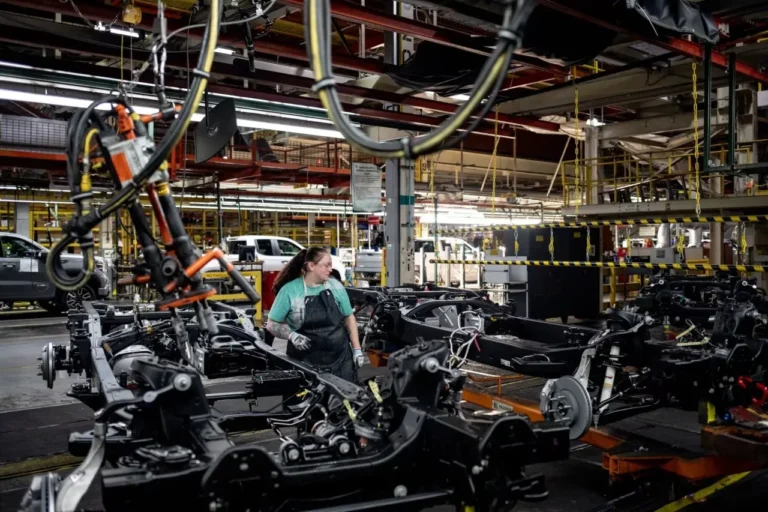
The companies are currently evaluating plans to add a new production line at Stellantis’ Figueruelas plant in Zaragoza. The facility, one of Spain’s most important automotive manufacturing centers, already produces several Stellantis vehicles including the Peugeot 208 and the Lancia Ypsilon.
Under the proposed expansion, the plant could eventually manufacture Opel’s all-new C-segment electric SUV model. Production timing is still under evaluation, but the companies indicated that manufacturing could potentially begin in 2028.
The move would represent a substantial investment in European electric vehicle production and reinforce Spain’s role in the continent’s automotive transition toward electrification.
The Figueruelas facility has deep historical significance for Opel and Stellantis. More than 10 million Opel Corsa vehicles have been produced at the site since 1982, making it one of the company’s most experienced and established manufacturing operations.
In addition to the potential Opel EV production, Leapmotor is also considering manufacturing its B10 C-segment SUV at the Figueruelas plant.
According to the companies, production of the Leapmotor B10 could begin as early as 2026, well ahead of the potential Opel model launch.
This would provide Stellantis and Leapmotor with an opportunity to localize EV production within Europe more rapidly while reducing reliance on imports from China. European production could also help the companies respond more effectively to changing regulatory requirements, trade policies, and customer demand for locally manufactured vehicles.
The B10 is expected to play an important role in Leapmotor’s international product portfolio, particularly in Europe where affordable electric SUVs continue to experience strong consumer demand.
One of the central goals of the partnership expansion is to improve the affordability of electric vehicles for European consumers.
The companies explained that the planned Opel C-SUV would benefit from highly competitive components sourced through Leapmotor International. By leveraging Leapmotor’s supply chain advantages and access to China’s advanced EV ecosystem, Stellantis aims to reduce production costs while maintaining high quality standards.
Affordability remains one of the biggest challenges for EV adoption across Europe. Although demand for electric vehicles continues to grow, many consumers still view battery electric vehicles as expensive compared with traditional internal combustion models.
By combining European manufacturing with cost-efficient sourcing strategies, Stellantis and Leapmotor hope to create vehicles that appeal to mainstream buyers rather than only premium-market customers.
The strategy aligns with Stellantis’ broader efforts to accelerate EV adoption while remaining competitive against both established automakers and emerging Chinese EV brands.
Another important area of collaboration involves purchasing and supply chain operations.
The companies announced plans to cooperate more closely through Leapmotor International in procurement activities. By leveraging their combined scale, Stellantis and Leapmotor intend to negotiate more competitive pricing for components and materials.
This approach could help both companies improve margins, lower vehicle prices, and accelerate development timelines for future models.
The partnership is also expected to benefit from China’s mature new energy vehicle ecosystem, which has become one of the world’s most advanced supply chain environments for batteries, semiconductors, electric drivetrains, and related technologies.
At the same time, the companies emphasized the importance of strengthening European supply chain capabilities to improve resilience and reduce exposure to geopolitical and logistical disruptions.
This balanced strategy aims to combine the cost advantages of Chinese EV manufacturing expertise with the stability and localization benefits of European industrial operations.
The proposed partnership expansion could also have a major impact on Stellantis’ Villaverde plant in Madrid.
The companies are discussing the possibility of assigning production of a new Leapmotor vehicle to the facility beginning in the first half of 2028. Such a move would help secure the future of the plant at a time when production of the Citroën C4 is expected to conclude there.
The transition would represent an important industrial transformation for the facility, potentially shifting it toward next-generation EV manufacturing under the Leapmotor International framework.
In addition, Stellantis and Leapmotor are evaluating the possibility of transferring ownership of the plant to LPMI’s Spanish subsidiary. This would further integrate the facility into the joint venture’s long-term European manufacturing strategy.
Vehicles produced at Villaverde would reportedly be sold across Europe as well as Middle East and Africa markets, helping support the partnership’s broader international growth ambitions.
The initiative would also align with upcoming “Made in Europe” requirements that are increasingly influencing automotive production strategies across the region.
Stellantis CEO Antonio Filosa described the planned expansion as a mutually beneficial step that strengthens both companies’ long-term positions in the EV market.
According to Filosa, the partnership with Leapmotor has already demonstrated strong results and reflects Stellantis’ commitment to localizing affordable electric vehicle production in Europe.
He emphasized that the collaboration supports world-class EV manufacturing while helping meet real-world customer needs through accessible pricing and scalable production.
Leapmotor founder and CEO Zhu Jiangming also highlighted the strategic value of combining Leapmotor’s advanced technologies with Stellantis’ global automotive presence.
Jiangming noted that the partnership has enabled Leapmotor to expand rapidly across five continents within a short period, significantly increasing the company’s international visibility and reputation.
The comments from both executives underscore the broader strategic logic behind the alliance: combining Chinese EV innovation and efficiency with European manufacturing expertise and global market access.
The expanding relationship between Stellantis and Leapmotor reflects larger trends reshaping the global automotive industry.
As electrification accelerates worldwide, traditional automakers are increasingly seeking partnerships with Chinese EV companies that have developed strong capabilities in battery technology, software integration, and cost-efficient manufacturing.
At the same time, Chinese EV manufacturers are looking for international expansion opportunities, particularly in Europe and other global markets where established distribution networks and local production capabilities are essential.
The Stellantis-Leapmotor alliance represents one of the clearest examples of this evolving industry dynamic.
Rather than competing directly in every market, the companies are pursuing a collaborative model that allows both sides to benefit from shared expertise, scale, and infrastructure.
While the proposed initiatives are ambitious, Stellantis and Leapmotor emphasized that discussions are still ongoing.
The companies confirmed that feasibility studies and pre-development work are currently underway under existing agreements. Any future industrial cooperation remains subject to definitive agreements, regulatory approvals, and customary conditions.
Even so, the announcement signals strong momentum behind the partnership and suggests that both companies see substantial long-term opportunities in working together more closely.
If finalized, the expanded collaboration could play a significant role in shaping the next phase of affordable electric vehicle production in Europe and beyond, while strengthening both companies’ competitive positions in the rapidly evolving global EV industry.
Source Link:https://www.stellantis.com/