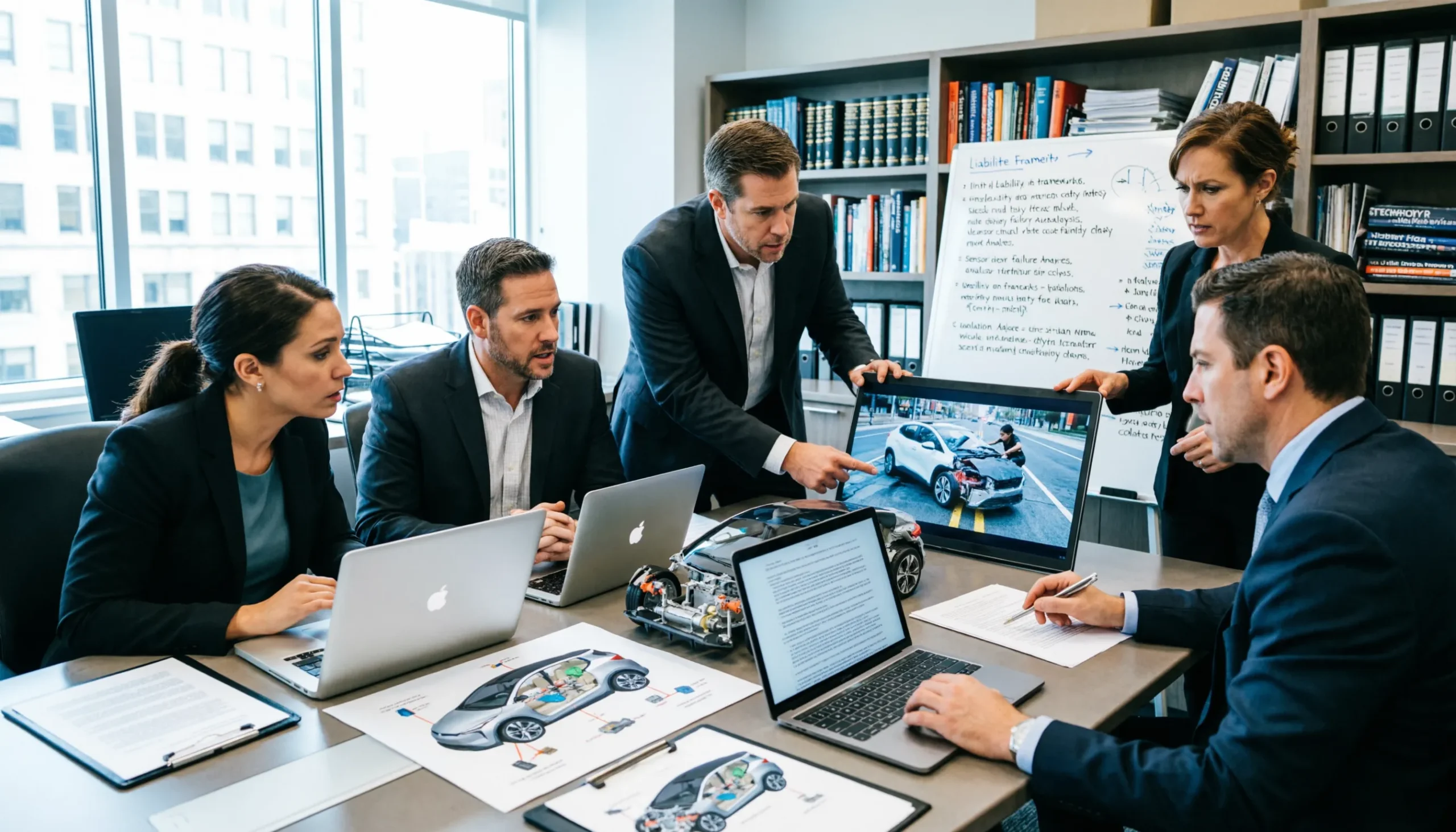
Autonomous Vehicle Expansion Signals a New Era of Complex Injury Litigation
As autonomous vehicles and robotaxis expand rapidly across Texas and other U.S. roadways, plaintiff attorneys are preparing for a fundamentally different type of injury litigation—one shaped by artificial intelligence, proprietary software systems, remote vehicle operators, and a web of technology vendors that collectively power self-driving platforms. The growth of autonomous fleets in urban corridors has accelerated the shift from human-operated transportation to algorithm-driven mobility, introducing new legal challenges that extend far beyond traditional car accident claims. Law firms with deep experience in catastrophic injury and transportation litigation are recognizing that these cases will demand not only courtroom strategy but also technical fluency in software architecture, sensor systems, and data analytics.
Witherite Law Group Positions for the Autonomous Liability Shift
Among the firms preparing for this transition is Witherite Law Group, a veteran Texas trial firm with more than two decades of experience handling complex auto and truck accident litigation nationwide. Founded by Amy Witherite, the firm has built its practice representing individuals and families in high-stakes injury cases involving commercial vehicles, catastrophic harm, and disputed liability. As autonomous systems become more prevalent on public roads, the firm is expanding its technical resources and expert networks to address the distinctive investigative and evidentiary demands of self-driving vehicle crashes. According to Witherite, autonomous vehicles are changing not only how crashes occur but also how responsibility is determined. She emphasizes that when someone is injured, accountability cannot be obscured by algorithms, distributed computing systems, or overseas data servers. The firm anticipates that future cases will involve a broader range of potential defendants, heightened efforts by each party to shift blame, and significantly more discovery disputes as litigation unfolds.
The Disappearance of the Traditional Driver and the Rise of Distributed Responsibility
Unlike conventional automobile accidents where fault is typically assessed between identifiable human drivers, autonomous vehicle collisions may involve no human operator at all. In many instances, the vehicle is controlled by integrated systems that rely on artificial intelligence models, sensor arrays, and real-time mapping software. Liability may therefore extend across multiple layers of entities, including fleet operators managing the vehicles, manufacturers producing the hardware, software developers designing perception and decision-making algorithms, sensor suppliers providing LiDAR or radar components, and remote support teams monitoring vehicle performance. Some of these entities may operate outside the United States, adding further jurisdictional complexity. This distributed responsibility model creates intricate legal questions regarding who controlled the vehicle at the time of impact, who maintained or updated the software, and whether system design decisions contributed to the incident. The absence of a single human driver fundamentally alters the structure of negligence analysis and requires courts to evaluate product liability, software performance, and operational oversight simultaneously.
Jurisdictional Challenges and Cross-Border Discovery
As autonomous vehicle ecosystems often involve multinational technology providers and cloud-based infrastructure, plaintiff attorneys may confront cross-border discovery challenges rarely encountered in traditional traffic cases. Critical data relevant to a collision—such as decision logs, sensor inputs, or system override communications—may be stored on servers located in foreign jurisdictions or controlled by third-party vendors. Establishing jurisdiction over these entities can require complex legal maneuvering, particularly when companies assert contractual limitations, arbitration clauses, or data privacy protections. Additionally, litigators must navigate evolving legal frameworks governing digital evidence preservation and cybersecurity. The allocation of responsibility across domestic and international actors raises questions about venue selection, applicable law, and enforcement of subpoenas beyond U.S. borders. For firms like Witherite Law Group, preparing for this environment involves building relationships with international discovery specialists, technical consultants, and digital forensics experts capable of analyzing high-volume data sets.
The Central Role of Vehicle Data and Proprietary Systems
Attorneys handling autonomous vehicle cases consistently emphasize that data is the cornerstone of accountability. Access to vehicle decision logs, perception-system recordings, sensor calibration histories, software update records, and communications between the vehicle and remote operators can determine how an autonomous system interpreted its surroundings and executed driving maneuvers in the seconds leading up to a collision. Unlike traditional accident reconstruction that relies on skid marks, eyewitness accounts, and physical damage patterns, autonomous vehicle litigation often hinges on digital reconstruction of algorithmic decision-making processes. However, much of this information is considered proprietary by manufacturers and technology partners. Companies may argue that source code, neural network models, and system architecture designs constitute trade secrets deserving heightened protection. This dynamic increases the likelihood of discovery disputes early in litigation, as plaintiffs seek transparency while defendants aim to limit disclosure. Early, disciplined discovery strategies become critical to preserving relevant data before it is overwritten, deleted, or shielded behind confidentiality barriers.
Increased Defendant Pool and Strategic Finger-Pointing
With multiple corporate stakeholders potentially implicated in a single crash, autonomous vehicle injury cases are expected to feature more defendants than typical auto accident litigation. Each entity—whether a fleet operator, vehicle manufacturer, or software developer—has a financial and reputational incentive to shift responsibility to another party within the technology chain. A manufacturer may argue that the fleet operator failed to maintain hardware components properly, while a software developer may contend that sensor calibration errors caused inaccurate environmental perception. Remote monitoring teams could assert that system alerts were insufficiently specific to warrant intervention. This complex web of contractual relationships and indemnification agreements often leads to extensive pretrial motions and allocation disputes. For plaintiff attorneys, developing a cohesive narrative that clarifies how system failures converged to cause injury is essential to overcoming fragmented defenses and technical complexity.
Corporate Resources and the Evolving Legal Landscape
Industry observers note that defendants in autonomous vehicle litigation are frequently backed by substantial corporate resources, advanced engineering teams, and experienced defense counsel. These organizations may invest heavily in expert testimony, simulation modeling, and proprietary technical explanations to support their positions. Plaintiff firms must therefore be prepared to litigate in an evolving legal environment where precedent is still emerging and judicial familiarity with autonomous systems varies widely. Courts are gradually establishing standards for admissibility of AI-related evidence, interpretation of algorithmic decision-making, and assessment of comparative fault in the absence of a human driver. As jurisprudence develops, early cases may shape nationwide standards for how liability is assigned in AI-driven transportation incidents. Firms that proactively build technical literacy and retain subject-matter experts are better positioned to navigate these uncharted legal territories.
Strengthening Technical Resources and Expert Networks
Recognizing the technical sophistication required, Witherite Law Group has indicated that it is broadening its internal capabilities and cultivating partnerships with experts in artificial intelligence, automotive engineering, cybersecurity, and digital forensics. These resources are intended to help the firm analyze vehicle telemetry, interpret sensor fusion outputs, and understand how perception models classify roadway objects. By integrating technical expertise with traditional trial advocacy, the firm aims to ensure that injured clients receive representation capable of confronting complex technological defenses. The approach reflects a broader shift within the plaintiffs’ bar toward multidisciplinary litigation strategies that blend legal argumentation with advanced data analysis.
The Future of Accountability in AI-Driven Mobility
As autonomous vehicle deployment continues to expand across metropolitan areas in Texas and throughout the United States, injury litigation will likely become a defining component of the industry’s maturation. Public confidence in self-driving technology depends in part on transparent accountability when accidents occur. Legal scrutiny may influence how companies design safety redundancies, document system updates, and communicate operational limitations to regulators and consumers. For plaintiff attorneys, the challenge lies in translating highly technical evidence into clear, persuasive narratives that juries can understand. The evolving liability landscape underscores that innovation does not eliminate responsibility; rather, it redistributes it across a network of technological and operational actors. With decades of experience in complex transportation litigation, Witherite Law Group is positioning itself to address this new frontier, anticipating that autonomous vehicle injury cases will require rigorous discovery, technical fluency, and steadfast advocacy to ensure that accountability remains visible even in an era governed by algorithms.
Source Link:https://www.businesswire.com/