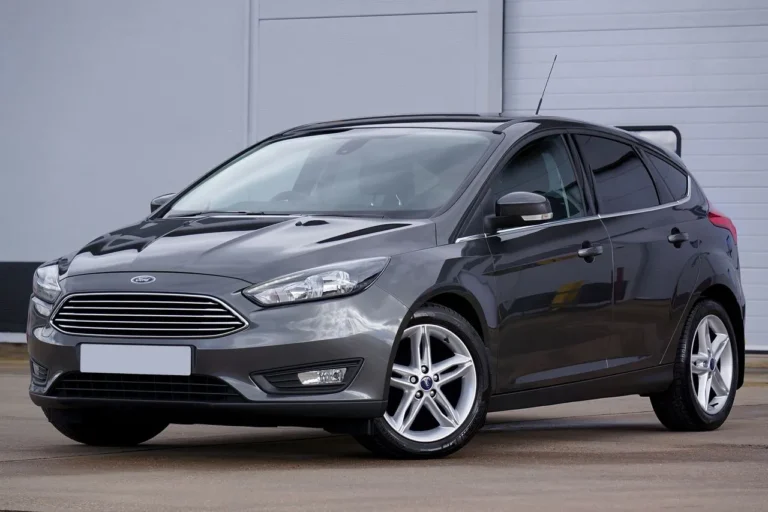
Ford Motor Company has unveiled a sweeping organizational transformation aimed at accelerating the development and delivery of next-generation vehicles, software platforms, and digital services. At the center of this shift is the creation of a new, unified division called Product Creation and Industrialization—an end-to-end structure designed to streamline how the company designs, engineers, manufactures, and continuously improves its products.
This move represents one of the most significant structural changes in Ford’s modern history and reflects the automaker’s ambition to compete in an increasingly software-driven, electrified, and customer-centric mobility landscape. By integrating previously separate teams—including its Electric Vehicle, Digital and Design organization—with its global Industrial System, Ford aims to eliminate silos, improve execution speed, and bring innovative technologies to market more efficiently.
The newly established organization is a cornerstone of Ford’s broader Ford+ strategy, which focuses on profitable growth through electrification, digital services, and operational excellence. One of the company’s key financial targets under this strategy is achieving an adjusted EBIT margin of 8% by 2029—a goal that depends heavily on reducing complexity, improving cost efficiency, and scaling high-margin digital services.
According to Ford President and CEO Jim Farley, the formation of this integrated team marks the culmination of years of internal transformation. He emphasized that Ford is now positioned as a unified, modern enterprise capable of delivering high-quality, software-defined vehicles across multiple propulsion systems.
Farley highlighted that the company’s vision goes beyond traditional automotive manufacturing. Ford intends to offer vehicles that evolve over time through software updates, deliver distinctive digital experiences, and provide personalized ownership journeys that improve continuously.
One of the central goals of the Product Creation and Industrialization organization is to transform Ford’s high-volume vehicles into scalable digital platforms. This shift enables the company to unlock new revenue streams through connected services, over-the-air updates, and advanced driver-assistance features.
Ford plans a massive renewal of its vehicle portfolio over the next several years. By 2029, approximately 80% of its North American lineup by volume will be refreshed, along with 70% of its global portfolio. This overhaul will include key models such as the next-generation F-150 and F-Series Super Duty trucks, as well as a new mid-sized pickup built on the company’s upcoming Universal Electric Vehicle (UEV) platform.
The scale of this transformation underscores Ford’s commitment to staying competitive in a market increasingly shaped by electrification, connectivity, and software innovation.
A major highlight of Ford’s future product strategy is the Universal Electric Vehicle (UEV) platform, developed under a “skunkworks” model that prioritizes speed, creativity, and breakthrough thinking. This platform represents a step-change in efficiency, affordability, and digital capability.
The UEV architecture incorporates an ultra-efficient powertrain and a fully zonal electrical system, enabling centralized control of vehicle functions through in-house software. This design not only simplifies the vehicle’s electrical complexity but also supports advanced driver-assistance systems (ADAS) and future autonomous driving capabilities.
In addition, the platform leverages innovative manufacturing techniques such as “unicastings,” which reduce the number of components, lower vehicle weight, and streamline assembly processes. These advancements contribute to both cost savings and improved performance.
Beyond product innovation, the UEV program serves as a testing ground for modernizing Ford’s development ecosystem. The company is deploying advanced computer-aided design tools and physics-based cost modeling to optimize engineering decisions and reduce expenses across its broader portfolio. The initiative has also introduced new suppliers from outside the traditional automotive industry, bringing fresh perspectives and capabilities into Ford’s supply chain.
Ford is making a strong push toward software-defined vehicles that can be continuously updated and enhanced over time. By 2030, the company expects that 90% of its vehicles by volume will feature next-generation electrical architectures, proprietary user experiences, and advanced over-the-air update capabilities.
This foundation will enable rapid deployment of features such as BlueCruise, Ford’s hands-free highway driving system, as well as the Ford Digital Experience platform. These technologies are designed to deliver ongoing value to customers, improve safety and convenience, and create opportunities for recurring revenue through subscription-based services.
The shift to software-defined vehicles also positions Ford to pursue higher levels of automation, including the eventual rollout of Level 3 autonomous driving capabilities.
Electrification remains a central pillar of Ford’s long-term strategy. By 2030, nearly 90% of the company’s global nameplates will offer electrified powertrains, ranging from advanced hybrids and extended-range electric vehicles to fully battery-electric models.
The UEV platform has already contributed to significant advancements in electric propulsion and energy storage. For example, it has enabled the development of high-efficiency electric motors that can also enhance hybrid systems. Additionally, Ford has established expertise in Lithium Iron Phosphate (LFP) battery technology, which is now being leveraged not only for vehicles but also for stationary energy storage solutions under its Ford Energy business.
This integrated approach to electrification and energy management reflects Ford’s broader ambition to participate in the evolving energy ecosystem, extending its reach beyond traditional automotive markets.
To lead the new Product Creation and Industrialization organization, Ford has appointed Chief Operating Officer Kumar Galhotra. In this expanded role, Galhotra will oversee the integration of advanced technologies with Ford’s global manufacturing and engineering operations.
Galhotra emphasized that the company’s recent progress in areas such as quality, cost management, and software delivery has fundamentally reshaped how Ford operates. By bringing together technology development and industrial execution under a single structure, the company aims to accelerate decision-making, reduce complexity, and deliver superior products more efficiently.
As part of this transition, Doug Field, who has played a pivotal role in driving Ford’s transformation toward electrified and software-defined vehicles, will be leaving the company after a brief transition period. During his tenure, Field helped build a world-class team, introduced high-tech capabilities, and fostered collaboration across previously siloed functions.
Field expressed confidence in Ford’s future, noting that the company now has a clear technology roadmap and a strong pipeline of innovative products. He highlighted the upcoming mid-sized pickup on the UEV platform as a key milestone and emphasized the strength of Ford’s engineering and software teams.
Before joining Ford, Field held leadership roles at Apple and Tesla, giving him a unique perspective on innovation and disruption across industries.
Ford also announced several additional leadership updates. Alan Clarke has been promoted to vice president of Advanced Development Projects. Clarke will continue to lead the Advanced Electric Vehicle Development team, which operates under the “skunkworks” model to drive breakthrough innovation.
This approach—small, agile teams with the autonomy to experiment and iterate rapidly—has proven effective in developing next-generation technologies and will continue to be used for select high-impact programs.
Meanwhile, Kieran Cahill, vice president of manufacturing for Europe and the International Markets Group, will retire after a distinguished 37-year career with the company. Cahill has been instrumental in transforming Ford’s global manufacturing operations, delivering significant improvements in quality and efficiency.
Galhotra praised Cahill’s contributions, noting that his leadership has set new benchmarks for manufacturing excellence across Ford’s global footprint.
The creation of the Product Creation and Industrialization organization marks a pivotal moment in Ford’s evolution. By aligning its product development, digital innovation, and manufacturing capabilities under a single, cohesive structure, the company is positioning itself to compete more effectively in an industry undergoing rapid transformation.
As automakers increasingly transition toward electrified, connected, and software-defined vehicles, Ford’s strategy reflects a recognition that success will depend not only on engineering excellence but also on the ability to deliver integrated, continuously improving customer experiences.
With a renewed focus on scale, efficiency, and innovation, Ford is aiming to redefine its role in the mobility ecosystem—transforming from a traditional automaker into a technology-driven company capable of delivering value across the entire lifecycle of its products.
The road ahead will undoubtedly present challenges, but with its new organizational framework and clear strategic direction, Ford appears determined to lead in the next era of automotive innovation.
Source Link:https://www.businesswire.com/