In a significant move that underscores the rapid evolution of software-defined vehicles, Mercedes-Benz has announced a multi-year strategic partnership with Liquid AI aimed at scaling embedded, on-device intelligence across its vehicle lineup in North America. The collaboration will focus on enhancing real-time, private, and locally processed artificial intelligence capabilities within Mercedes-Benz models equipped with third- and fourth-generation MBUX systems.
This partnership represents a major step forward in redefining the in-car experience, shifting the paradigm from cloud-dependent services to intelligent, self-contained systems capable of delivering faster, more secure, and highly personalized interactions. By integrating advanced AI directly into vehicle hardware, Mercedes-Benz is positioning itself at the forefront of next-generation automotive intelligence.
At the core of this collaboration is the deployment of Liquid AI’s proprietary Liquid Foundation Models (LFMs), which are specifically designed to operate efficiently on embedded systems. Unlike traditional large language models that rely heavily on cloud infrastructure, LFMs are optimized for low-latency, on-device performance. This allows vehicles to process speech, interpret commands, and respond in real time without requiring continuous connectivity.
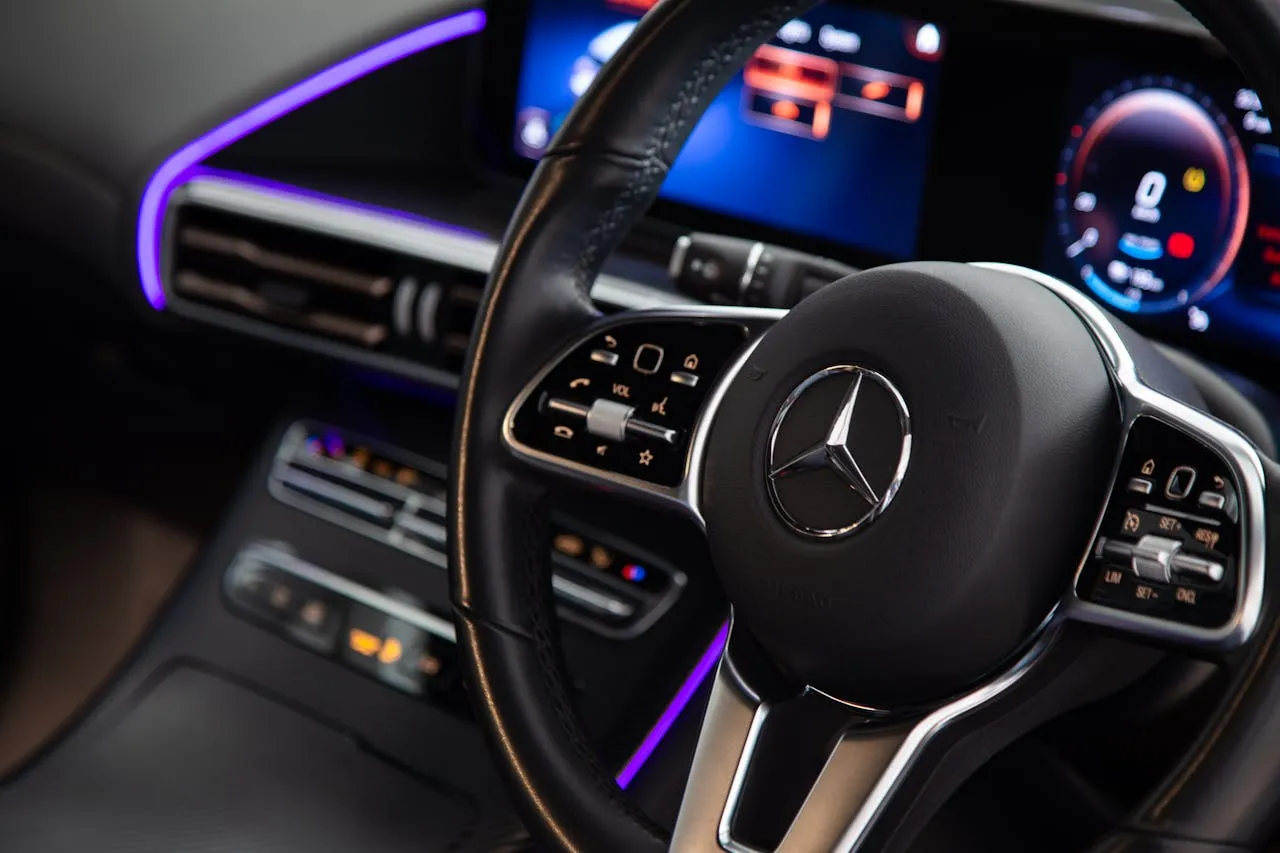
The integration of LFMs into Mercedes-Benz vehicles will significantly enhance the capabilities of the MBUX Virtual Assistant. Drivers and passengers will benefit from a more intuitive and natural interaction experience, where voice commands are understood in context and executed seamlessly. Whether adjusting vehicle settings, navigating routes, or accessing infotainment features, the system will respond with greater accuracy and speed.
By minimizing reliance on cloud processing, the partnership also addresses growing concerns around data privacy and security. Sensitive user data can be processed locally within the vehicle, reducing exposure to external networks and ensuring a more secure user experience.
The collaboration builds upon the existing strengths of the Mercedes-Benz User Experience (MBUX) platform, which has been a cornerstone of the brand’s digital innovation strategy. With the addition of embedded AI capabilities, MBUX is set to evolve into a more intelligent and adaptive system.
Central to this transformation is the integration of advanced speech recognition, natural language understanding, and reasoning capabilities. These enhancements will allow the system to interpret complex commands, maintain conversational context, and deliver more human-like interactions. For example, instead of issuing rigid commands, users will be able to engage in fluid conversations with the virtual assistant, making the driving experience more engaging and less distracting.
The partnership also leverages the Mercedes-Benz Operating System (MB.OS), the company’s in-house software architecture that underpins its software-defined vehicle strategy. MB.OS provides a scalable and flexible platform for integrating new technologies, enabling seamless updates and continuous improvement over time.
Mercedes-Benz has outlined a clear path toward bringing this advanced technology to market. The first production deployment of the enhanced in-car intelligence system is targeted for the second half of 2026. This timeline reflects the company’s commitment to rigorous testing and validation, ensuring that the technology meets the highest standards of performance, safety, and reliability.
According to Jörg Burzer, Member of the Board of Management of Mercedes-Benz Group AG and Chief Technology Officer for Development & Procurement, the partnership is a crucial step in scaling embedded intelligence across the company’s vehicle portfolio.
He emphasized that advancing on-device speech, language understanding, and reasoning capabilities will lay the foundation for intuitive, multimodal in-car experiences. These innovations are expected to transform how drivers interact with their vehicles, making the experience more seamless and user-centric.
For Liquid AI, the partnership with Mercedes-Benz represents a major milestone in bringing its technology to one of the most demanding and high-impact application domains: the automotive industry. The company specializes in developing efficient AI models that can operate within the constraints of embedded systems, making them ideal for use in vehicles.
Ramin Hasani, CEO of Liquid AI, highlighted the significance of deploying AI within physical systems such as cars. He noted that the software-defined vehicle is one of the most consequential applications of artificial intelligence, requiring a high level of rigor and precision.
Liquid AI’s models are designed to run directly on existing vehicle hardware, eliminating the need for extensive cloud infrastructure. This approach not only improves performance but also ensures that the system remains operational even in areas with limited connectivity. By delivering intelligence that is fast, private, and independent, Liquid AI aligns closely with Mercedes-Benz’s vision for the future of automotive technology.
While the focus of the partnership is on embedded intelligence, it is important to note that this approach complements, rather than replaces, existing cloud-based AI systems. Mercedes-Benz continues to leverage cloud computing for certain applications, particularly those requiring large-scale data processing or continuous updates.
By combining on-device AI with cloud-based capabilities, the company aims to deliver a hybrid model that maximizes the strengths of both approaches. Embedded AI ensures real-time responsiveness and privacy, while cloud systems provide scalability and access to broader datasets.
This balanced strategy enables Mercedes-Benz to deliver a comprehensive and versatile in-car experience, catering to a wide range of user needs and preferences.
One of the primary goals of the partnership is to make the interaction between driver and vehicle more natural and effortless. As vehicles become increasingly complex, the ability to interact with them in an intuitive manner becomes essential.
With advanced AI capabilities, the vehicle can better understand user intent, anticipate needs, and provide proactive assistance. For instance, the system could suggest routes based on traffic conditions, adjust climate settings based on user preferences, or provide reminders for scheduled appointments.
These enhancements contribute to a more personalized driving experience, where the vehicle acts as an intelligent companion rather than just a mode of transportation.
The announcement of this partnership comes during a milestone year for Mercedes-Benz, as the company celebrates 140 years of automotive innovation. Since Carl Benz patented the first automobile in 1886 and Gottlieb Daimler developed his motorized carriage, the brand has been synonymous with technological advancement and engineering excellence.
Over the decades, Mercedes-Benz has consistently pushed the boundaries of what is possible in the automotive industry. From pioneering safety features to leading the transition toward electric mobility, the company has remained at the forefront of innovation.
Today, this legacy continues with the development of intelligent, software-defined vehicles that integrate cutting-edge technologies such as artificial intelligence, connectivity, and electrification.
As part of Mercedes-Benz Group AG, Mercedes-Benz AG plays a central role in the global automotive market. With approximately 164,000 employees worldwide, the company is responsible for the development, production, and sales of passenger cars and vans under the Mercedes-Benz brand.
The company’s portfolio includes high-performance and luxury sub-brands such as Mercedes-AMG and Mercedes-Maybach, as well as the iconic G-Class lineup. In 2025, Mercedes-Benz sold more than 2.1 million vehicles globally, reinforcing its position as one of the world’s leading manufacturers of premium automobiles.
With a production network spanning around 30 sites across four continents, Mercedes-Benz continues to expand its global footprint while maintaining a strong focus on sustainability and innovation.
The partnership between Mercedes-Benz and Liquid AI marks a pivotal moment in the evolution of automotive technology. By prioritizing embedded intelligence and on-device processing, the companies are setting a new standard for in-car experiences.
As the automotive industry transitions toward software-defined vehicles, the ability to deliver fast, secure, and intelligent interactions will become a key differentiator. Mercedes-Benz’s collaboration with Liquid AI positions it to lead this transformation, offering customers a glimpse into the future of mobility.
With production deployment expected as early as 2026, the next generation of Mercedes-Benz vehicles will not only be smarter but also more responsive, intuitive, and aligned with the needs of modern drivers.
Source Link:https://www.businesswire.com/