Sensata Technologies has announced that its brake force sensors are now being used in electromechanical braking (EMB) systems in leading electric vehicles (EVs). The development marks an important milestone in the automotive industry’s transition from conventional hydraulic braking systems to fully electric, brake-by-wire technologies. As vehicle manufacturers continue to invest in electrification, autonomous driving and software-defined vehicles, advanced sensing solutions are becoming increasingly important for improving braking precision, safety and performance.
The company’s brake force sensing technology is designed to provide real-time measurements of the clamping force applied within a brake caliper. This information enables electronic control systems to manage braking force accurately at individual wheels. The technology supports the development of next-generation braking architectures that replace traditional hydraulic components with electrically controlled mechanisms.
For automotive original equipment manufacturers (OEMs), the transition to electromechanical braking represents an opportunity to simplify vehicle architectures, improve control capabilities and support advanced vehicle functions. Sensata’s sensors are designed to address one of the central engineering requirements of these systems: obtaining reliable, accurate feedback about the force being applied during braking.
Traditional automotive braking systems generally rely on hydraulic pressure to transfer force from the driver’s brake pedal to the brakes at each wheel. When the driver presses the pedal, hydraulic fluid transmits pressure through brake lines, activating the braking mechanism and slowing the vehicle.
Although hydraulic braking has been used successfully for decades, the automotive industry is increasingly exploring alternatives that offer greater electronic control and integration with modern vehicle architectures.
Electromechanical braking systems use electric actuators to apply braking force instead of relying on conventional hydraulic actuation. These systems can integrate more directly with electronic control units, allowing braking operations to be coordinated with other vehicle functions.
This transition is particularly relevant to electric vehicles, software-defined vehicles and future autonomous driving platforms. As vehicles incorporate more advanced electronic systems, manufacturers are looking for technologies that can deliver faster responses, precise control and greater flexibility in vehicle design.
However, removing hydraulic pressure as the primary measurement reference introduces new technical requirements. Electromechanical braking systems need accurate information about the actual force applied at the brake caliper. Without reliable feedback, the control system may find it more difficult to deliver consistent braking performance across different operating conditions.
Sensata Technologies’ brake force sensors are designed to address this requirement by measuring clamping force directly.
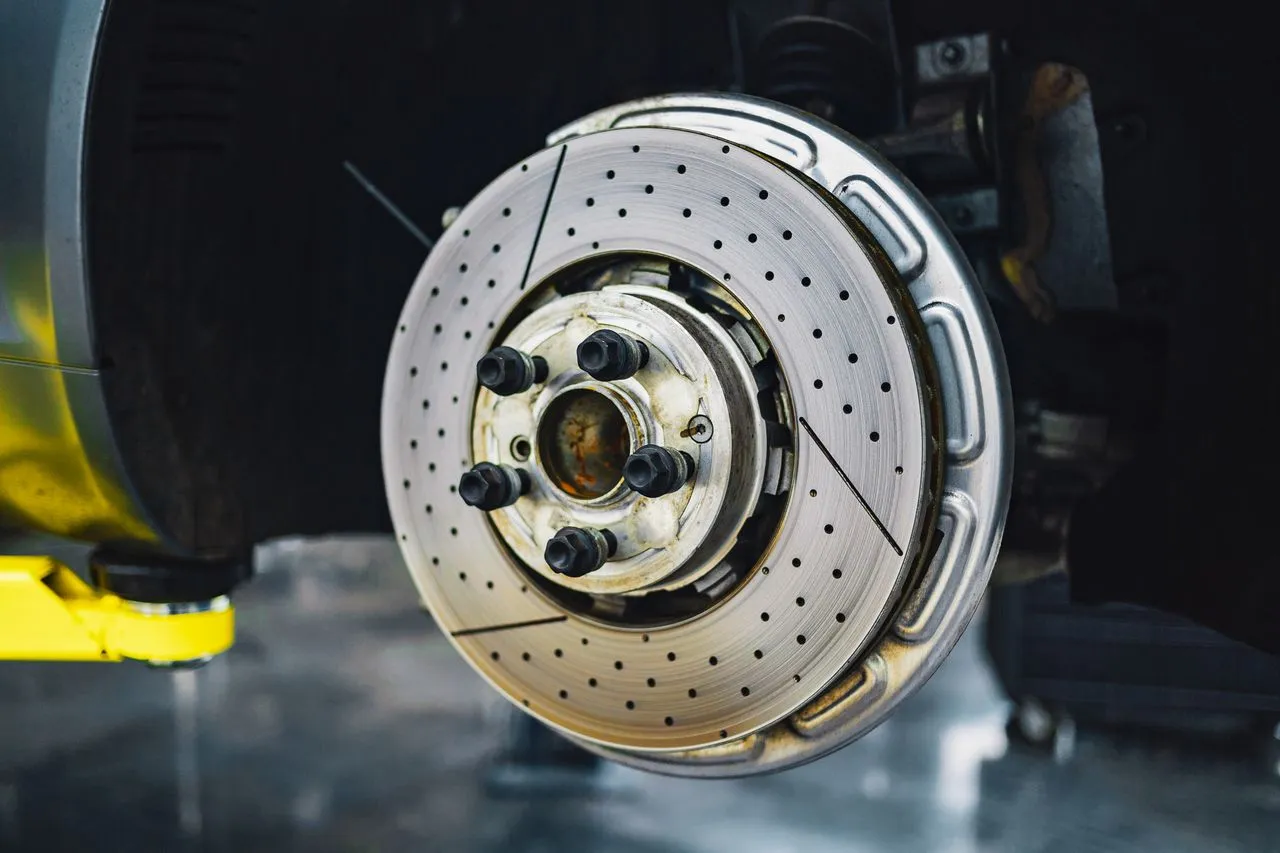
A key feature of Sensata’s technology is its ability to measure clamping force inside the brake caliper rather than relying on hydraulic pressure measurements. This distinction is important because electromechanical braking systems use electric actuators to generate the force required to press the brake pads against the disc.
The sensor measures this force in real time and transmits the information to the associated control unit at a high frequency. The control system can then use the feedback to regulate braking force according to the vehicle’s requirements.
This closed-loop control approach allows the system to compare the desired braking force with the force actually being applied. By continuously monitoring the difference, the controller can adjust actuator operation to achieve more accurate and consistent braking.
The capability is useful across a wide range of driving situations. During gentle deceleration, for example, the system needs to apply small amounts of braking force smoothly to maintain passenger comfort. During emergency braking, it must respond rapidly and deliver the required force reliably.
Direct force measurement can help the system manage these different conditions with greater precision.
The technology also supports independent control at each wheel. This allows vehicle manufacturers to develop braking strategies that account for changing road conditions, vehicle dynamics and driving requirements.
Sensata’s brake force sensor builds on its Micro Strain Gauge (MSG) technology, which the company says has been proven in safety-critical braking applications for more than 25 years.
The technology is being applied in a new configuration to measure force directly within an electromechanical brake caliper. Instead of measuring hydraulic pressure, the sensor provides information about the mechanical force involved in braking.
This direct measurement approach is intended to support the high precision required by modern brake-by-wire architectures.
The sensor’s design combines signal accuracy with a compact form factor. This is important because braking components must operate within the limited space available around the wheel assembly while withstanding demanding automotive operating conditions.
Automotive suppliers must also ensure that components remain reliable throughout a vehicle’s service life. Braking systems are safety-critical, making sensor accuracy, durability and integration important considerations for manufacturers evaluating new technologies.
By adapting its established sensing technology to electromechanical braking, Sensata aims to support OEMs as they introduce advanced braking architectures into production vehicles.
Sensata identifies several advantages associated with its brake force sensing technology.
The sensor measures clamping force directly at the brake caliper, providing real-time feedback for the electronic control system. This information helps the controller regulate braking force more accurately and respond to changes in driving conditions.
Precise feedback is particularly important in fully electric braking architectures, where the control system must manage the operation of electric actuators.
High-accuracy force measurement can help support consistent braking performance across different driving scenarios. From low-force deceleration to emergency stops, the system can use sensor feedback to adjust braking operation.
More controlled application of force can also contribute to smoother braking behavior and improved driver comfort.
Sensata’s sensor connects directly to the caliper control unit without requiring additional connectors, according to the company. This integration approach can help reduce component complexity and simplify the design of the overall braking system.
For manufacturers developing new vehicle platforms, reducing unnecessary connections and components can help streamline packaging and system integration.
The sensor is designed to fit within electromechanical braking architectures without adding unnecessary size or weight at the wheel end.
Compact components are important in modern vehicles because engineers must balance performance, packaging, manufacturing requirements and vehicle efficiency. These considerations are especially relevant to EVs, where vehicle weight and energy consumption influence driving range.
Braking is among the most important safety-related functions in a vehicle. Sensata’s caliper-level force feedback is designed to support the stringent functional safety requirements associated with automotive braking applications.
Reliable force measurement provides the electronic control system with information needed to manage braking operations. The sensor’s role is therefore an important part of the broader engineering effort required to develop dependable brake-by-wire systems.
Accurate braking force control has implications beyond the basic ability to slow a vehicle. It can also influence passenger comfort, vehicle stability and overall system efficiency.
At low braking forces, detecting the point at which the brake pads contact the disc is important for managing smooth engagement. Poorly controlled contact can affect pedal feel, braking transitions and passenger comfort.
Sensata says its patented force-sensing design provides high signal accuracy across the full range of braking scenarios. This includes low-force conditions, where detecting pad-to-disc contact is important, and high-force situations associated with emergency braking.
At higher braking forces, accurate feedback can help the controller deliver the required braking response more consistently. The company states that precise clamping force control can contribute to shorter stopping distances and more consistent braking behavior. Actual stopping performance, however, also depends on factors such as tires, road surfaces, vehicle speed, brake design and control-system calibration.
Electromechanical braking can also support advanced vehicle dynamics functions. Since each wheel can be controlled independently, braking commands can be coordinated with other vehicle systems to help manage stability and response.
For electric vehicles, reducing unnecessary brake drag may offer further efficiency benefits. Brake drag occurs when residual friction remains between braking components when active braking is not required. Better actuator control and accurate force feedback can help manufacturers develop strategies to minimize this effect.
These benefits depend on the complete system design, including actuators, control algorithms, brake hardware and vehicle integration.
The introduction of electromechanical braking is closely connected to the broader transformation of vehicle electronics.
Software-defined vehicles increasingly rely on centralized computing, electronic control systems and software updates to manage vehicle functions. In these architectures, braking is not simply a mechanical operation; it is also part of a wider network of systems that coordinate motion, stability and driver assistance.
Brake-by-wire technologies can make it easier for braking functions to communicate with other electronic vehicle systems. This can support more sophisticated control strategies and help manufacturers integrate braking with advanced driver assistance systems and future autonomous driving capabilities.
Accurate sensors are essential to this approach because software-based control depends on reliable information from the physical vehicle.
By measuring force directly at the caliper, Sensata’s technology is designed to provide a useful input for electronic braking controllers. The information can help the system determine whether the commanded force is being delivered and make adjustments where necessary.
As vehicle manufacturers continue to develop software-driven platforms, sensing technologies that provide accurate, real-time data are likely to remain an important part of automotive engineering.
One potential advantage of electromechanical braking is the opportunity to eliminate hydraulic components such as brake lines and fluid systems from the primary actuation architecture.
Removing these components can create opportunities to simplify vehicle packaging and manufacturing processes. It may also reduce certain maintenance requirements associated with hydraulic systems, although electromechanical brakes introduce their own inspection, servicing and component-replacement needs.
For OEMs, these changes could affect vehicle assembly, component sourcing and platform development. Manufacturers may be able to integrate braking systems more closely with electronic control architectures, potentially creating opportunities for more flexible vehicle designs.
Nevertheless, replacing hydraulic braking requires comprehensive engineering and validation. Manufacturers must address reliability, redundancy, fault detection, power availability and safe operation under abnormal conditions.
Because braking is a safety-critical function, the transition to electromechanical systems requires careful assessment of hardware and software performance. Sensors play an important role in this process by supplying the measurements used for control and monitoring.
Sensata’s brake force sensor is intended to support this development by providing accurate force feedback within the caliper.
Commenting on the announcement, Markus Schwabe, executive vice president and president of Automotive at Sensata Technologies, described electromechanical braking as a fundamental shift in vehicle architecture.
He emphasized the need for a higher level of precision in sensing and control as manufacturers move toward these systems. Sensata’s technology is intended to help OEMs achieve accurate, real-time braking force control at each wheel while supporting performance, comfort and safety requirements for next-generation electric vehicles.
The announcement reflects a broader industry trend in which automotive suppliers are developing components for increasingly electrified and electronically controlled vehicle platforms.
For suppliers, the move toward brake-by-wire systems creates opportunities to provide sensing technologies, actuators, electronic controls and integrated safety solutions. For vehicle manufacturers, these technologies can help enable new approaches to braking performance and vehicle integration.
The automotive industry’s shift toward electrification, advanced driver assistance and autonomous driving is increasing interest in braking systems that can be controlled electronically and integrated with wider vehicle architectures.
Electromechanical braking offers the possibility of precise wheel-level control, reduced dependence on hydraulic components and closer integration with software-defined vehicle platforms. However, broader adoption will depend on system reliability, cost, manufacturing readiness, regulatory requirements and successful safety validation.
Accurate force sensing is a critical element of this transition. By measuring the actual clamping force within the brake caliper, sensors can provide the feedback required for closed-loop control and consistent braking operation.
Sensata Technologies’ announcement that its brake force sensors are enabling electromechanical braking systems in production electric vehicles represents progress toward bringing these technologies into real-world automotive applications.
As OEMs continue to develop next-generation EV platforms, sensing solutions that combine accuracy, compact packaging and safety-focused engineering will remain important. Sensata’s technology is positioned to support manufacturers seeking to advance brake-by-wire architectures and integrate more intelligent control into future vehicles.
The longer-term significance of electromechanical braking will depend on how effectively the industry combines advanced sensors, dependable electronic controls and robust system design. Together, these technologies could help shape the next generation of vehicle braking systems, supporting the automotive industry’s continuing move toward electrified, connected and software-defined mobility.
Source Linkhttps://www.businesswire.com/: