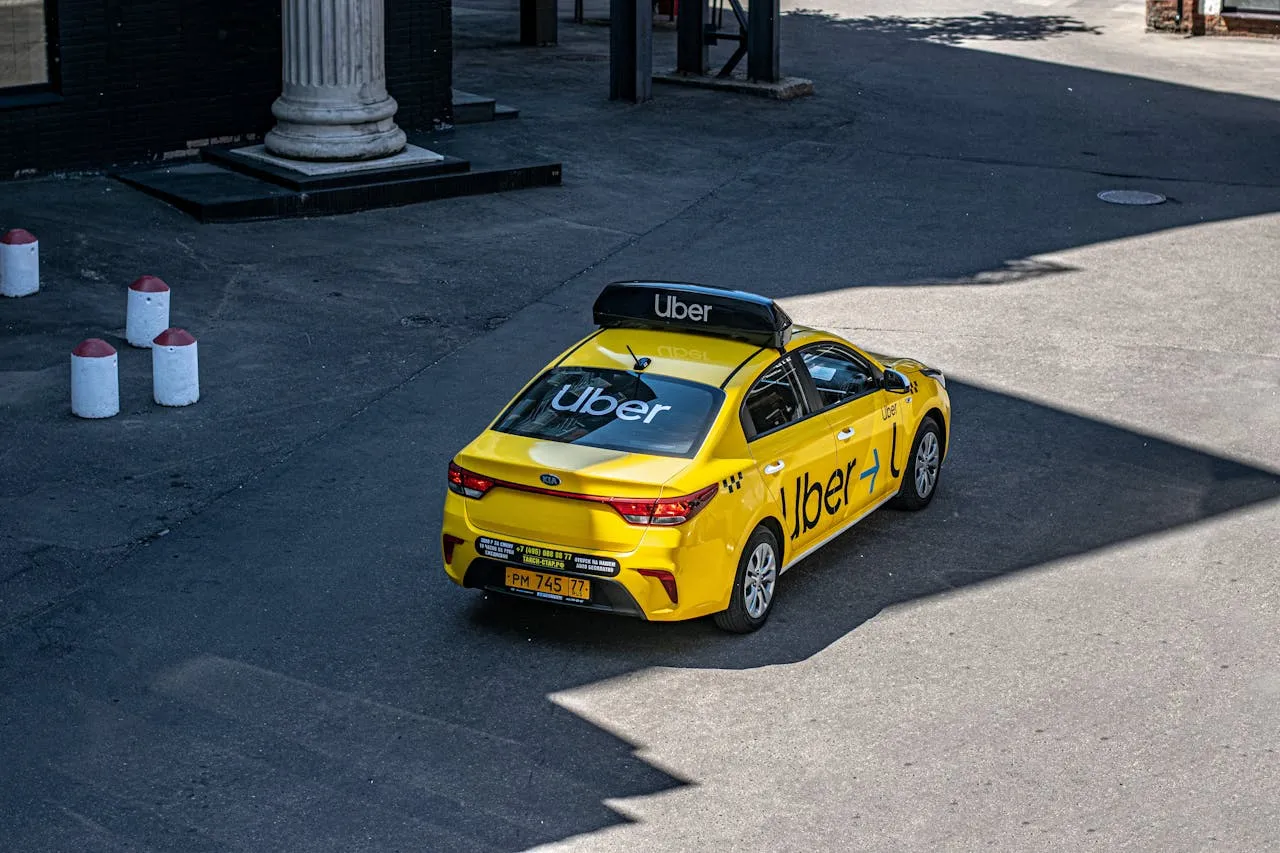
A new chapter in autonomous mobility is taking shape in Europe as ride-hailing giant Uber, autonomous driving technology company Autobrains, and AI computing leader NVIDIA have unveiled plans to collaborate on a robotaxi initiative in Munich, Germany. Announced during GTC Taipei, the partnership aims to combine advanced autonomous driving intelligence, scalable computing infrastructure, and an established mobility platform to bring commercially viable robotaxi services closer to reality.
The proposed initiative will unite Uber’s extensive ride-hailing network, Autobrains’ agentic artificial intelligence-driven autonomous technology, and NVIDIA’s DRIVE Hyperion platform to create a Level 4 robotaxi ecosystem designed for commercial deployment. If regulatory approvals are secured, Munich will become the first city to host the program, serving as a launchpad for broader expansion into other cities and vehicle ecosystems.
The collaboration represents a strategic effort to address one of the biggest hurdles facing autonomous transportation today: how to transition from experimental pilot projects to scalable, commercially sustainable robotaxi operations.
Munich has been chosen as the first deployment location for the planned robotaxi initiative due to its unique combination of automotive heritage, infrastructure, and regulatory environment. Widely recognized as one of Europe’s major automotive centers, the city offers a blend of dense urban traffic, complex road systems, and access to high-speed transportation corridors that can help validate autonomous systems in real-world conditions.
Germany’s structured and evolving regulatory framework for autonomous mobility is also viewed as an important factor supporting the city’s suitability for such a deployment. As governments and transportation authorities continue shaping rules for self-driving vehicles, Munich provides an environment where companies can test and potentially commercialize autonomous ride-hailing services while working within established legal standards.
The companies involved believe the city offers the right mix of operational complexity and regulatory readiness to prove whether autonomous ride-hailing can move beyond niche deployments and into mainstream urban transportation.
Unlike earlier autonomous driving pilots that often relied on purpose-built vehicles or narrowly controlled operational zones, the Munich initiative is being developed as a scalable, repeatable deployment model that could eventually expand into other cities and across different vehicle manufacturers.
The autonomous vehicle sector has long struggled with a key challenge: scaling commercially.
Many robotaxi systems introduced over the past decade have depended on expensive hardware configurations, specialized vehicles, extensive sensor arrays, and highly customized computing architectures. While technically impressive, these approaches have often raised questions about long-term cost efficiency and commercial feasibility.
Autobrains believes it has developed an alternative strategy.
At the center of the collaboration is the company’s Agentic AI framework, an autonomous driving approach designed to improve flexibility, efficiency, and adaptability while reducing reliance on overly complex vehicle configurations.
Instead of depending on custom-designed robotaxi platforms with oversized hardware requirements, Autobrains says its technology can function using standard automotive sensor setups paired with optimized compute systems. This, according to the company, could lower barriers to deployment and make autonomous driving more practical for large-scale fleet operations.
The company’s strategy also supports compatibility across multiple automotive brands and vehicle platforms, an important advantage as ride-hailing operators and automakers seek more flexible paths into autonomous transportation.
One of the most distinctive aspects of Autobrains’ technology is its agentic AI architecture.
Traditional autonomous driving systems often rely on a large end-to-end AI model that attempts to process every driving scenario through a single framework. Such systems are tasked with interpreting environmental conditions, predicting hazards, making navigation choices, and executing vehicle behavior simultaneously.
Autobrains is taking a different route.
Its autonomous platform breaks the driving process into smaller specialized AI agents, each responsible for a particular driving context or decision-making layer. Rather than relying on one monolithic intelligence system, these agents work together continuously to analyze changing road situations and determine the most appropriate action.
For example, different agents may focus on lane changes, pedestrian movement, traffic behavior, route decisions, or environmental conditions. By separating tasks into specialized areas of focus, the company believes the system can respond more effectively in unpredictable environments.
The architecture is designed to continuously assess context, compare multiple potential outcomes, and make real-time decisions under uncertainty—something developers say is essential for urban driving environments filled with sudden changes and unexpected events.
Complex urban streets, dynamic traffic conditions, cyclists, pedestrians, roadworks, and erratic driver behavior all present challenges that robotaxi systems must address before widespread commercial deployment becomes possible.
Autobrains argues that an agentic approach may create a more robust and adaptable system capable of handling these scenarios without requiring excessive computational resources.
The robotaxi initiative will rely on NVIDIA’s DRIVE Hyperion platform, a hardware and software architecture developed to support Level 4 autonomous driving systems.
The platform is designed specifically for autonomous vehicles requiring high-performance artificial intelligence processing, sensor fusion, and real-time decision-making capabilities.
In autonomous mobility, computational power plays a critical role because vehicles must continuously process massive amounts of data generated by cameras, radar, lidar, mapping systems, and environmental sensors. Vehicles must interpret this information instantly while maintaining passenger safety and operational reliability.
NVIDIA’s platform is intended to provide the computational backbone for these operations, enabling real-time performance while supporting software-defined vehicle architectures.
The use of DRIVE Hyperion may also simplify integration across different vehicle models, helping support the OEM-agnostic strategy that sits at the core of the Munich deployment plan.
By combining efficient AI processing with autonomous software intelligence, the collaboration hopes to create a system capable of operating at commercial scale rather than remaining confined to limited demonstration projects.
While autonomous technology often receives the most attention, commercial success depends on more than engineering breakthroughs.
Uber’s involvement introduces a critical piece of the puzzle: marketplace access and fleet operations.
As one of the world’s largest ride-hailing companies, Uber brings years of operational experience managing urban transportation networks, rider demand, logistics, pricing systems, and mobility services across cities worldwide.
The planned robotaxi service will be designed to operate directly within Uber’s ride-hailing ecosystem, allowing autonomous vehicles to function as part of an existing transportation marketplace rather than requiring users to adopt a separate platform.
This integration could provide advantages in rider acquisition and operational efficiency, enabling autonomous fleets to access a built-in customer base.
For automakers, the partnership may also open new opportunities to participate in robotaxi operations without needing to independently develop every component of the ecosystem.
Instead of building an end-to-end ride-hailing platform from scratch, automakers could potentially integrate their vehicles into a broader network that combines autonomous technology, fleet management capabilities, and rider demand.
The companies involved see this as a practical path toward commercial participation in autonomous mobility.
A key element of the Munich initiative is its emphasis on an OEM-agnostic model.
Historically, many autonomous vehicle programs have been tied closely to a single vehicle manufacturer or custom-built platform. This has often limited flexibility and slowed broader adoption.
The new program seeks to remove those constraints by creating a deployment framework capable of working across multiple vehicle platforms and manufacturers.
In theory, this could allow different automakers to integrate compatible autonomous systems into their vehicles while leveraging Uber’s mobility infrastructure and NVIDIA-powered computing systems.
Such flexibility may help accelerate deployment timelines while reducing development costs for companies entering autonomous ride-hailing.
By focusing on interoperability and scalability, the partnership aims to transform robotaxi operations from isolated pilot programs into repeatable fleet models that can be replicated across cities.
Executives from the three companies described the collaboration as an important milestone in the evolution of autonomous transportation.
Igal Raichelgauz, founder and CEO of Autobrains, emphasized the importance of intelligent systems capable of adapting to unpredictable real-world driving conditions rather than relying solely on one generalized AI model.
According to Raichelgauz, scalable autonomous driving requires systems capable of reasoning, adapting, and making decisions under uncertainty. He noted that the collaboration combines autonomous intelligence, mobility infrastructure, and automotive-grade compute to help support robotaxi operations across cities and vehicle ecosystems.
Uber also highlighted the importance of commercialization.
Sarfraz Maredia, Uber’s Global Head of Autonomous Mobility and Delivery, noted that autonomous vehicle development alone is insufficient if vehicles cannot operate within a functioning commercial network capable of serving passengers at scale.
He suggested that the partnership offers a new model for connecting autonomous vehicles to riders through a scalable ecosystem that blends autonomy, computing, and mobility services.
Meanwhile, NVIDIA underscored the importance of high-performance AI systems in enabling safe autonomous transportation.
Rishi Dhall, vice president of automotive at NVIDIA, stated that robotaxi deployment depends on strong computing performance, dependable autonomous architecture, and practical deployment pathways across real vehicles.
He noted that the collaboration could help speed up the development of software-defined autonomous ride-hailing fleets.
The Munich robotaxi initiative signals a broader shift in how autonomous mobility companies are approaching commercialization.
Rather than focusing exclusively on futuristic prototypes or isolated demonstrations, the partnership is centered on creating repeatable infrastructure capable of supporting real-world fleet operations.
Challenges remain, including regulatory approvals, public acceptance, operational safety validation, and technological maturity. However, the companies involved appear focused on building an ecosystem designed not just for technical demonstrations, but for commercial scalability.
If successful, Munich could become a proving ground for a new generation of autonomous transportation—one where AI-driven vehicles, efficient computing systems, and global mobility networks combine to reshape urban ride-hailing.
For now, all eyes will be on Germany as Uber, Autobrains, and NVIDIA work to turn their autonomous mobility ambitions into reality.
About Uber
Uber’s mission is to create opportunity through movement. We started in 2010 to solve a simple problem: how do you get access to a ride at the touch of a button? More than 75 billion trips later, we’re building products to get people closer to where they want to be. By changing how people, food, and things move through cities, Uber is a platform that opens up the world to new possibilities.
Source Link:https://www.businesswire.com/