Chevrolet has put its next-generation 2027 Silverado 1500 ZR2 through one of the toughest off-road tests in North America, using the 2026 Casey Folks Vegas to Reno race to demonstrate the pickup’s capability in demanding desert conditions. The new Silverado 1500 ZR2 made its competitive debut in the Stock Production Truck Full class, while the Colorado ZR2 represented Chevrolet in the Stock Production Mini/Mid category.
The race, held on August 14 as part of the 30th anniversary edition of the Casey Folks Vegas to Reno competition, covered approximately 505 miles of Nevada desert terrain. The event challenged competitors with rocky sections, dry lake beds, rough mountain areas, desert valleys and rapidly changing surfaces. For Chevrolet, the race provided an opportunity to evaluate two production-based ZR2 pickups under conditions that place extreme demands on engines, suspension systems, drivetrains, tires and drivers.
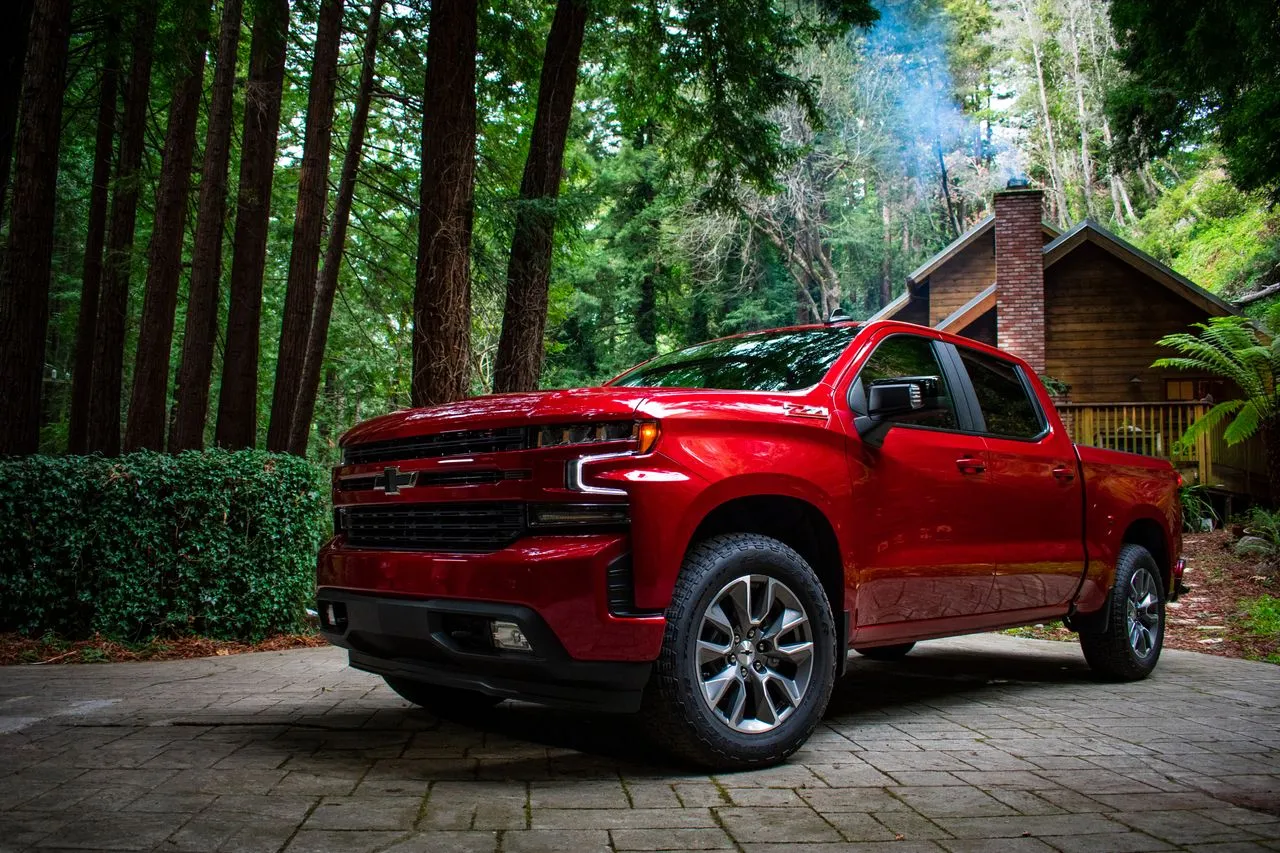
The 2027 Silverado 1500 ZR2 arrived at the event with an all-new 6.6-liter V8 engine. The naturally aspirated engine produces 481 horsepower and 501 lb.-ft. of torque, giving the full-size pickup substantial power for high-speed desert driving and difficult terrain.
Chevrolet positions the Silverado ZR2 as the off-road flagship of its full-size Silverado lineup. For the 2027 model year, the truck builds on the established ZR2 formula with additional capability while retaining the comfort and everyday usability expected from a production pickup.
Among the Silverado ZR2’s standard off-road equipment are 35-inch mud-terrain tires, a two-inch suspension lift, front and rear electronic locking differentials and a dedicated off-road hood featuring an enhanced power dome. Together, these features are designed to improve ground clearance, traction and vehicle control when the truck is operating away from paved roads.
The Nevada race offered a particularly demanding environment in which to test those systems. Unlike a conventional road test, desert racing subjects a vehicle to continuous impacts, rapid changes in terrain and extended periods of high-speed operation. Components must withstand repeated compression and rebound events while the driver maintains control across surfaces that can change dramatically within seconds.
Chevrolet entered the Silverado ZR2 with a focus on maintaining a close relationship between the production vehicle and the race truck. According to Nicole McKinnon, Chevrolet’s Program Manager for Offroad Racing Performance and Race Integration, the race vehicles were prepared with nearly all stock parts.
The approach allows Chevrolet engineers to evaluate the capabilities of production hardware in a genuine competitive environment rather than relying on heavily modified components that may not represent what customers receive from a dealership.
Before entering the Vegas to Reno event, the Silverado ZR2 was tested during the Legends Rally in July. Chevrolet used that event as a shakedown opportunity, allowing the team to evaluate the truck and identify areas requiring additional attention before tackling the full 505-mile race.
McKinnon said the preparation process pushed the Silverado ZR2 extensively and gave the team confidence that the vehicle was ready for the desert competition.
The race also brought significant experience behind the wheel. Veteran drivers Chad Hall and Chris Woo represented Chevrolet, bringing years of experience in off-road competition. Their ability to interpret terrain and adjust speed accordingly was an important part of Chevrolet’s strategy.
Off-road racing is not simply a matter of driving a powerful vehicle as quickly as possible. Drivers must constantly assess the surface ahead and determine how the truck should respond to obstacles. A depression, rock section, rise or series of whoops may require completely different approaches depending on its size, shape and speed of approach.
Tim Demetrio, Performance Engineering Group Manager, emphasized the importance of keeping the vehicle within its capability. The Silverado ZR2 has substantial power, but experienced drivers must know when to use that power and when to reduce speed to protect the vehicle and maintain control.
Terrain awareness becomes especially important in a race that stretches for hundreds of miles. A driver who attacks every obstacle aggressively may gain time in one section but risk mechanical damage that could ultimately prevent the vehicle from finishing. Successful desert racing therefore requires a balance between speed, vehicle capability and mechanical preservation.
The 2026 Casey Folks Vegas to Reno race presented an additional challenge because of its unusual direction. Traditionally, the competition runs from Las Vegas toward Reno. For its 30th anniversary, however, the race reversed the direction and ran from Reno to Las Vegas.
That change affected the character of the opening sections. Instead of beginning in the flatter terrain around Las Vegas, competitors started near Dayton, Nevada, where the initial stages featured slower and rockier terrain.
For the Silverado ZR2, the different race direction provided another opportunity to test its suspension, traction systems and chassis behavior in challenging conditions.
Driver Chris Woo, who also owns a Silverado, said the new truck retained the characteristics he appreciated in the previous-generation ZR2 while introducing additional capability. One feature that particularly impressed him was the truck’s new Baja drive mode, which is designed specifically for high-speed off-road conditions.
Suspension performance was another major focus of the Chevrolet race effort.
Both Chevrolet race trucks were equipped with Multimatic Dynamic Suspensions Spool Valve, or DSSV, dampers. Multimatic has worked with Chevrolet for more than a decade, developing suspension technology intended to provide strong control in demanding off-road environments while maintaining acceptable road manners.
The technology is particularly important for ZR2 models because these vehicles are designed to serve two roles. They need to perform effectively on trails, dirt roads and desert terrain, but they also need to remain comfortable and controlled when driven on public roads.
For the 2027 Silverado ZR2, Chevrolet has enhanced the DSSV damper system and paired it with jounce control dampers. These components are intended to provide additional control when the truck encounters large impacts, deep compressions and uneven terrain.
Jounce control dampers were previously introduced on the Colorado ZR2 Bison. Their integration into the Silverado ZR2 reflects Chevrolet’s effort to transfer lessons from its off-road development and racing programs into production vehicles.
The objective is not simply to make the suspension softer or stiffer. Instead, engineers seek to give the truck greater capacity to absorb and control large impacts while maintaining predictable handling.
That balance becomes especially important in desert racing. Long stretches of rough terrain can generate repeated suspension cycles, and the truck must maintain composure while the driver works to identify the safest and fastest route.
The Silverado ZR2’s performance during the race provided an early indication of the potential of the new platform.
The next-generation Silverado completed the approximately 505-mile competition in 11 hours and 43 minutes. It maintained an average speed of 43.1 mph, despite making a pit stop approximately 300 miles into the event for a complete brake-pad change.
The result marked a successful first competitive outing for the next-generation Silverado ZR2 and demonstrated that the production-based pickup could withstand an extended desert race while maintaining a strong pace.
The Colorado ZR2 also played an important role in Chevrolet’s race program. The midsize pickup was powered by the established 2.7-liter turbocharged four-cylinder engine and competed in the Stock Production Mini/Mid category.
Its off-road equipment included 17-inch wheels fitted with mud-terrain tires, Multimatic DSSV dampers, a three-inch lift and front and rear locking differentials.
The Colorado ZR2’s smaller dimensions and midsize configuration give it a different set of characteristics from the full-size Silverado. However, the two trucks share the broader ZR2 philosophy of combining production-based equipment with serious off-road capability.
The Nevada competition therefore allowed Chevrolet to showcase two different approaches to off-road pickup performance. The Silverado ZR2 brought full-size dimensions, a new 6.6-liter V8 and increased power, while the Colorado ZR2 demonstrated the capabilities of a midsize platform equipped with specialized suspension and traction systems.
For Chevrolet, the significance of the Vegas to Reno program extends beyond a single race result. Desert competition provides engineers with a harsh development environment where vehicles are exposed to stresses that are difficult to reproduce during ordinary road testing.
The nearly 505-mile course demands sustained performance rather than short bursts of capability. Engine cooling, braking, suspension durability, tire performance, traction and driver ergonomics all become important over the course of many hours.
The experience also highlights the relationship between racing development and production vehicles. Technologies tested and refined through off-road competition can influence future production models, while production components can provide a foundation for competition vehicles.
Driver comfort was another notable aspect of the Silverado ZR2’s performance. Although desert racing is an extreme environment, the truck retained many of the characteristics expected from a production Chevrolet pickup.
Woo noted that the cabin remained comfortable during the race, including the use of air conditioning. The spacious cabin and familiar production-vehicle features helped reduce some of the physical and mental strain associated with spending more than 11 hours behind the wheel.
Driver fatigue can become a significant factor in long-distance off-road competition. Maintaining concentration while traveling across rough terrain for hundreds of miles requires both physical endurance and mental focus. A comfortable cabin can therefore contribute to the overall driving experience even when the vehicle is being pushed in a highly demanding environment.
The 2027 Silverado 1500 ZR2’s Nevada debut ultimately served as a comprehensive demonstration of the pickup’s new capabilities. Its 6.6-liter V8 supplied 481 horsepower and 501 lb.-ft. of torque, while its 35-inch mud-terrain tires, two-inch lift, locking differentials and upgraded suspension hardware were designed to address the specific demands of off-road driving.
Completing the Vegas to Reno race in 11 hours and 43 minutes gave Chevrolet an encouraging first competitive benchmark for the next-generation truck. More importantly, the race demonstrated how closely the Silverado ZR2’s production configuration can be connected to serious off-road competition.
The Colorado ZR2’s participation further reinforced Chevrolet’s broader ZR2 strategy, showing that the company is applying off-road engineering principles across both full-size and midsize pickup segments.
With the 2027 Silverado 1500 ZR2, Chevrolet is combining a new-generation V8 powertrain with specialized suspension technology, aggressive tires, locking differentials and dedicated off-road driving systems. Its first appearance at the 2026 Casey Folks Vegas to Reno race provided a demanding real-world test and an early demonstration of how the next-generation pickup performs when subjected to hundreds of miles of extreme desert terrain.
The Nevada competition also underscored the importance of engineering beyond headline horsepower figures. In an off-road race, the ability to control power, manage suspension movement, maintain traction and protect mechanical components can be just as important as outright engine output.
For Chevrolet, the successful completion of the event gives the next-generation Silverado ZR2 an important milestone as it moves toward the 2027 model year. The race provided engineers and drivers with valuable experience with the new truck, while giving off-road enthusiasts an early look at what the latest ZR2 generation can deliver in one of the most demanding environments available to a production-based pickup.
Source Link:https://news.gm.com/