Yamaha Motor Co., Ltd. is taking another step toward reducing the environmental impact of its manufacturing operations by introducing recycled aluminum alloy into its proprietary all-aluminum DiASil Cylinder technology. The company announced that it will progressively replace conventional virgin aluminum used for DiASil Cylinders with a specially developed recycled aluminum alloy.
The transition is planned to cover all Yamaha products equipped with DiASil Cylinders by 2030. Once the conversion is completed, Yamaha estimates that the initiative could reduce carbon dioxide emissions by approximately 47,000 tons annually.
The move represents an important development in Yamaha Motor’s efforts to increase the use of sustainable materials while maintaining the performance, durability and manufacturing standards required for motorcycle and scooter components. It also demonstrates how material innovation can contribute to emissions reductions without requiring fundamental changes to established production processes.
Aluminum is widely used throughout the automotive and motorcycle industries because it combines low weight, strength, heat conductivity and recyclability. However, producing primary or virgin aluminum generally requires significantly more energy than producing aluminum from recycled material.
For manufacturers producing large volumes of vehicles and components, replacing virgin aluminum with recycled alternatives can therefore provide an opportunity to reduce the environmental impact associated with raw-material production.
Yamaha Motor has been working to increase the use of sustainable materials as part of its broader environmental strategy. Under the Yamaha Motor Group Environmental Plan 2050, the company is targeting carbon neutrality throughout its entire supply chain by 2050.
One of the intermediate objectives is to transition 100% of the aluminum raw materials used in Yamaha’s own manufacturing operations to sustainable alternatives by 2030.
The recycled aluminum alloy developed for DiASil Cylinders is one of the measures supporting that objective.
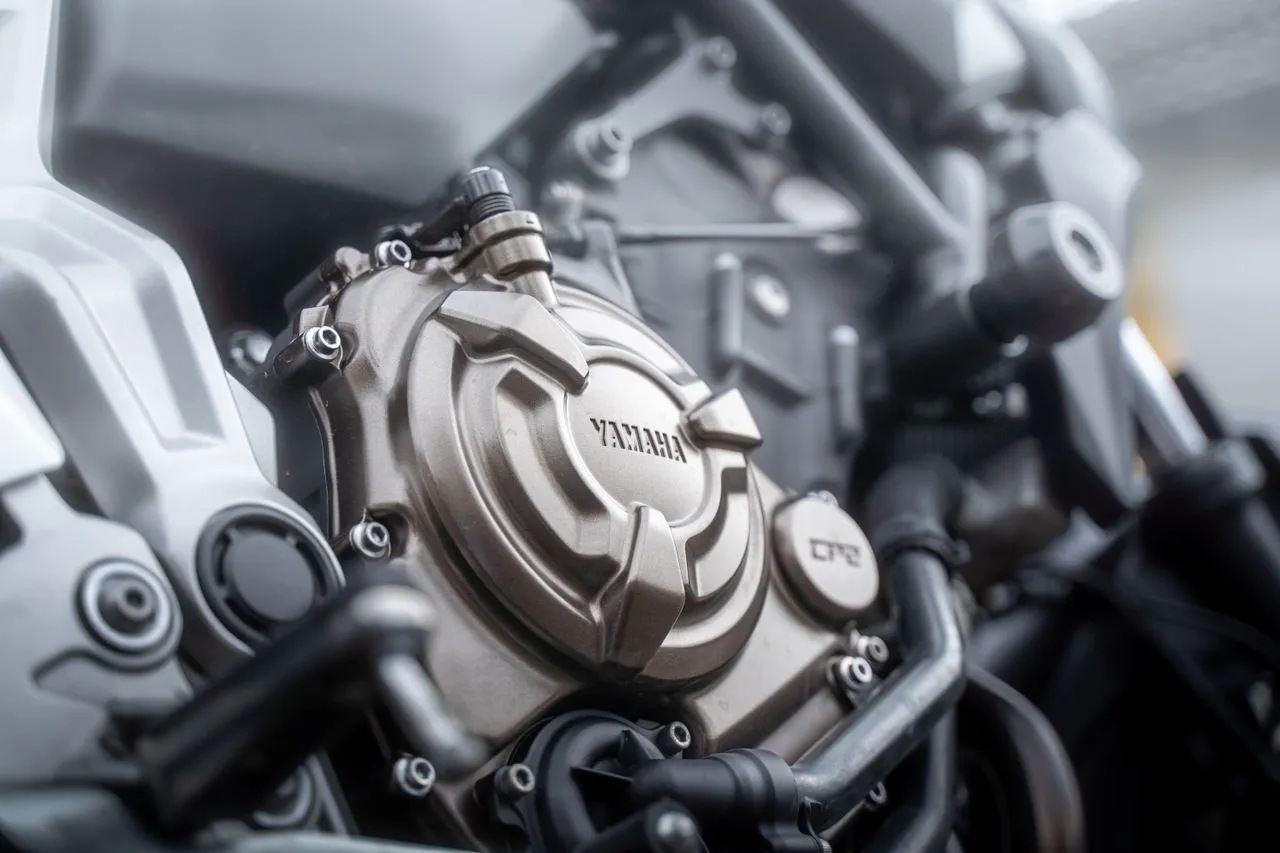
The DiASil Cylinder is one of Yamaha Motor’s proprietary engine technologies. Unlike conventional cylinder designs that use an iron sleeve or require a plated surface, the DiASil Cylinder uses an all-aluminum construction.
Yamaha successfully developed and commercialized the technology in 2002, making it the first company in the world to successfully develop and deploy this type of all-aluminum cylinder design, according to the company.
The technology has subsequently been incorporated into a range of Yamaha motorcycle and scooter models.
The cylinder’s all-aluminum construction provides several engineering and manufacturing advantages. Aluminum has strong heat-conduction characteristics, allowing heat generated during engine operation to be transferred away from the cylinder more effectively.
The design also offers wear resistance and seizure resistance, which are important characteristics for components exposed to high temperatures, friction and continuous mechanical loads.
Another important advantage is weight reduction. Because the cylinder does not require a conventional iron sleeve, the component can contribute to a lighter engine design.
For motorcycles and scooters, reducing weight can support improvements in fuel efficiency, handling and overall vehicle performance.
Although aluminum is highly recyclable, incorporating recycled material into high-performance engine components is not as straightforward as simply replacing one material with another.
Recycled aluminum can contain trace amounts of impurities introduced during previous manufacturing and recycling processes. Even relatively small differences in material composition can influence characteristics such as microstructure, surface behavior, corrosion resistance and mechanical performance.
These characteristics are particularly important for an engine cylinder.
A cylinder must operate under demanding thermal and mechanical conditions while maintaining dimensional stability and surface performance over an extended service life. Any change in the raw material therefore needs to be carefully evaluated before it can be introduced into mass production.
Yamaha previously relied on virgin aluminum alloy for DiASil Cylinders because conventional recycled aluminum did not consistently meet the company’s material requirements.
The challenge was to develop a recycled alloy capable of delivering characteristics comparable to virgin aluminum while also being suitable for the existing DiASil Cylinder manufacturing process.
To overcome the material challenges, Yamaha Motor began developing a recycled aluminum alloy specifically designed for use in DiASil Cylinders.
The development process combined material engineering, theoretical calculations, laboratory testing and vehicle evaluations.
Yamaha used thermodynamic calculations as part of its material-design process. These calculations helped the company evaluate how different material compositions could influence the resulting alloy and its characteristics.
The company then conducted repeated bench tests to assess whether the newly developed alloy could satisfy the functional requirements of DiASil Cylinder applications.
Testing was followed by evaluations on actual vehicles. These evaluations were important because a material that performs adequately under controlled laboratory conditions must also demonstrate appropriate performance under real operating conditions.
According to Yamaha, the recycled aluminum alloy successfully met all of the required functional specifications.
This validation allowed the company to move from research and development toward practical application.
One of the notable aspects of Yamaha’s approach is the development of a recycled alloy that can be used to manufacture components using the same production processes.
Maintaining compatibility with established manufacturing methods can be important for large-scale industrial implementation.
Instead of completely redesigning production lines or introducing an entirely separate manufacturing system, the company can progressively incorporate the new material into its existing DiASil Cylinder production processes.
This approach can help reduce the complexity associated with the transition and provide a pathway for expanding recycled-material use across additional products and production locations.
It also demonstrates that sustainability initiatives in manufacturing do not necessarily have to depend exclusively on completely new production technologies. Material innovation can also play a significant role.
Yamaha Motor plans to begin the transition with commuter motorcycle models produced in Indonesia.
Indonesia represents an important motorcycle market and manufacturing location, making it a significant starting point for the implementation of the recycled aluminum alloy.
The initial application will provide Yamaha with an opportunity to introduce the material into production while continuing to monitor manufacturing performance and product quality.
Following the initial implementation, Yamaha plans to expand the use of the recycled aluminum alloy globally.
The company has not indicated that the transition will be limited to a particular motorcycle segment. Instead, the stated goal is to progressively switch the raw material used in DiASil Cylinders across products, with completion targeted for 2030.
The environmental impact of the initiative could be significant once the transition is completed.
Yamaha estimates that replacing virgin aluminum with recycled aluminum alloy across all products using DiASil Cylinders could reduce CO₂ emissions by approximately 47,000 tons every year.
The projected reduction highlights the importance of raw-material selection in vehicle manufacturing.
While attention is often focused on tailpipe emissions and vehicle electrification when discussing transportation-sector decarbonization, emissions also occur during the production of raw materials and vehicle components.
Reducing emissions associated with material production can therefore complement other efforts aimed at improving vehicle efficiency and reducing the carbon footprint of manufacturing.
For Yamaha, the recycled aluminum initiative forms part of a broader strategy that addresses emissions across the company’s supply chain rather than focusing exclusively on vehicle operation.
Increasing the use of recycled aluminum can also support a more circular approach to manufacturing.
In a conventional linear production model, raw materials are extracted, processed into components and eventually discarded or recycled. A circular approach seeks to keep materials in productive use for longer by recovering and reusing them.
Aluminum is particularly suited to this approach because it can be recycled and returned to manufacturing processes.
By developing a recycled alloy that meets the demanding requirements of engine components, Yamaha is effectively working to increase the amount of recycled material that can be incorporated into high-value applications.
This is significant because recycled material is not necessarily limited to lower-demand applications. With appropriate material engineering and quality control, it can potentially be used in technically demanding components.
For Yamaha, sustainability does not replace the engineering requirements of its engine components.
The recycled alloy needed to demonstrate performance comparable with the material it replaces. Yamaha specifically evaluated factors associated with the DiASil Cylinder’s required metal microstructure, surface properties, corrosion resistance and other functional characteristics.
This is particularly important because the cylinder operates as a core component of the engine.
The transition therefore illustrates an approach in which environmental improvements are integrated into product development while maintaining existing performance requirements.
The company’s testing and vehicle evaluation process was intended to confirm that the recycled alloy could satisfy these requirements before entering practical production.
Yamaha’s move could have implications beyond its own motorcycle and scooter products.
Automakers, motorcycle manufacturers and component suppliers are increasingly examining recycled metals as they seek to reduce manufacturing-related emissions.
Aluminum is used extensively in vehicles because of its favorable strength-to-weight ratio and thermal properties. Finding ways to increase the recycled content of aluminum components while maintaining quality could therefore become an increasingly important area of research and manufacturing development.
The challenge is especially relevant for components where material properties directly influence durability and performance.
Yamaha’s development of a recycled aluminum alloy for DiASil Cylinders demonstrates how manufacturers can approach that challenge through customized material design rather than relying solely on commercially available recycled alloys.
The DiASil Cylinder initiative is closely connected to Yamaha Motor’s 2030 sustainability objective.
The company aims to transition all aluminum raw materials used in its own manufacturing operations to sustainable alternatives by 2030.
Achieving such a target requires multiple initiatives across products and production facilities.
The DiASil Cylinder program provides a concrete example of how that target can be pursued at the component level.
Beginning with commuter models in Indonesia and subsequently expanding globally allows Yamaha to build the transition progressively.
The company’s approach also emphasizes the importance of research and development in achieving sustainability goals. Rather than treating recycled materials as a simple substitute, Yamaha developed a specific alloy capable of meeting the requirements of an established engine technology.
Yamaha Motor’s planned transition of DiASil Cylinders from virgin aluminum to recycled aluminum alloy represents a combination of material innovation, manufacturing development and environmental strategy.
The DiASil Cylinder itself has been part of Yamaha’s engine technology portfolio since 2002, providing benefits including heat dissipation, wear resistance, seizure resistance, lower weight and recyclability.
The challenge was to retain those characteristics while changing the source material used in production.
Through thermodynamic material design, repeated bench testing and vehicle evaluations, Yamaha says it developed a recycled aluminum alloy that meets the necessary functional requirements.
The first applications are scheduled for commuter models produced in Indonesia, with a broader global rollout planned.
If Yamaha completes the planned transition across all products using DiASil Cylinders by 2030, the company estimates that the initiative will reduce CO₂ emissions by approximately 47,000 tons annually.
More broadly, the project reflects the growing role of sustainable materials in the automotive and motorcycle industries. As manufacturers work toward long-term carbon-neutrality targets, reducing emissions from raw-material production is becoming an increasingly important part of the overall strategy.
Source Link:https://www.businesswire.com/