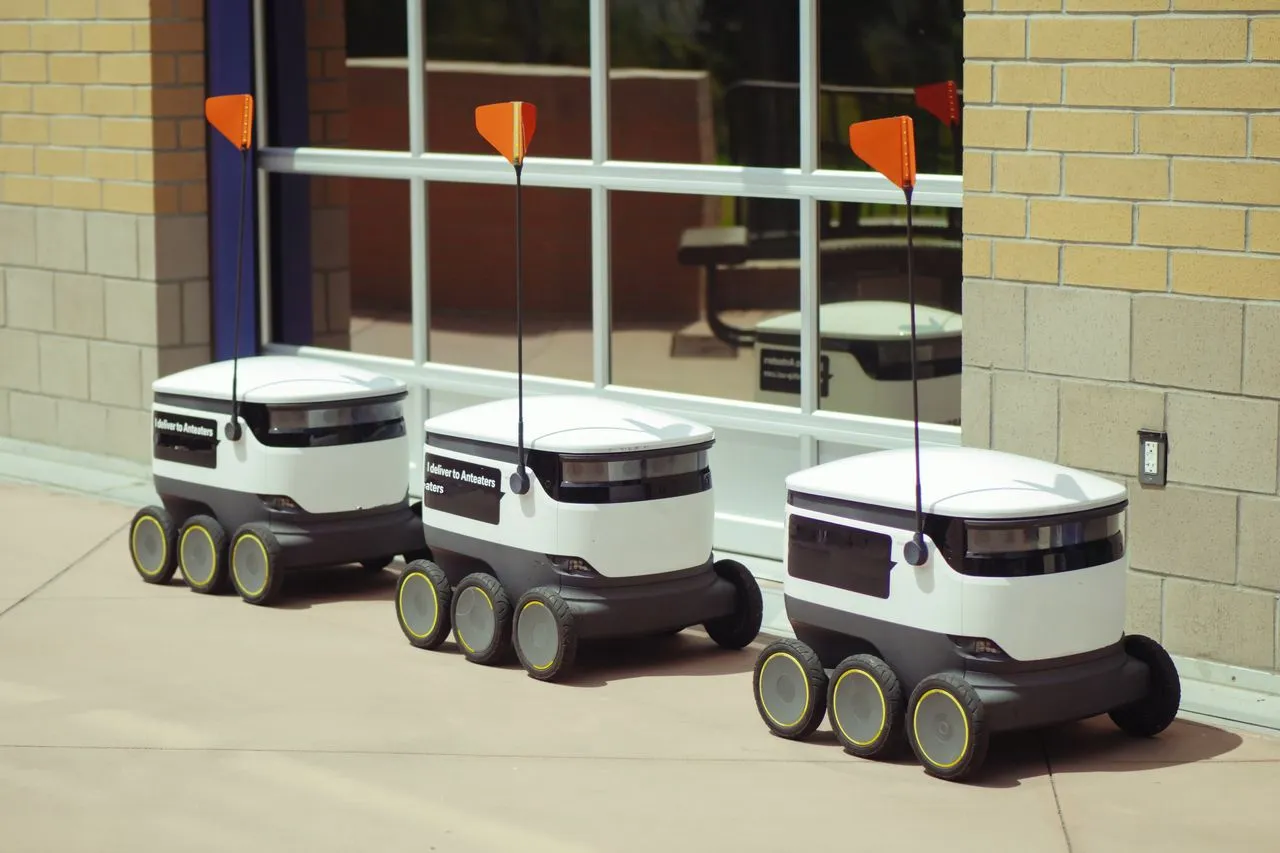
Autonomous delivery technology is becoming an increasingly important part of the modern campus experience, and a new agreement between Avride and Sodexo Campus aims to accelerate its adoption across colleges and universities in the United States. The two companies have announced a strategic agreement designed to make autonomous robot delivery more accessible to Sodexo Campus partner institutions, combining Avride’s autonomous delivery technology with Sodexo Campus’s extensive higher education network.
The agreement is intended to provide participating colleges and universities with a streamlined path to adopting autonomous delivery services. Rather than requiring institutions to spend months evaluating and building an implementation process from the ground up, the companies say the new framework can help campuses move from initial interest to deployment in a matter of weeks.
The initiative comes as universities continue to look for ways to improve convenience, modernize dining operations and provide students with more flexible access to food and other campus services. With students frequently moving between residence halls, classrooms, libraries, recreational facilities and other buildings, campus environments present a particularly strong use case for autonomous delivery.
Avride is an autonomous mobility company focused on developing technologies for transportation and delivery applications. Its delivery robots are designed to operate in environments where pedestrians, bicycles and other forms of campus traffic are common.
Sodexo Campus, meanwhile, works with approximately 425 higher education institutions across the United States. Its national presence gives the partnership an opportunity to introduce autonomous delivery technology to a broad range of campuses with different sizes, layouts and operational requirements.
By combining the two companies’ capabilities, the agreement creates a framework intended to simplify the adoption of autonomous delivery for participating institutions. Universities can potentially use the technology to extend the reach of existing dining operations without relying entirely on conventional delivery methods.
For campuses, this could mean giving students and employees additional options for ordering meals and having them delivered directly to convenient locations. Instead of requiring customers to visit a dining hall, restaurant or retail location, autonomous robots can transport orders across designated campus pathways.
The approach is particularly relevant to large university environments, where dining locations may be separated from residence halls, academic buildings and other high-traffic areas.
Convenience has become an increasingly important factor in higher education dining. Students often have demanding schedules that include classes, studying, work, extracurricular activities and other commitments. Finding time to visit a dining facility during traditional service periods can therefore be challenging.
Autonomous delivery provides another option.
Students can place an eligible food order and have it transported to a designated location without requiring a traditional delivery driver to navigate the campus. Depending on the implementation, the service can potentially support deliveries during busy periods while reducing some of the logistical challenges associated with conventional delivery.
Dmitry Polishchuk, CEO of Avride, said colleges are environments where delivery has become part of everyday life. He highlighted the combination of Sodexo Campus’s knowledge of higher education dining and Avride’s experience operating autonomous delivery technology as an opportunity to establish a new approach to moving food around university campuses.
The partnership reflects a broader shift in how autonomous technology is being evaluated. Instead of focusing only on autonomous vehicles operating on public roads, companies are increasingly developing systems for controlled or semi-controlled environments such as university campuses, business parks and other pedestrian-heavy locations.
One of the key considerations for campus delivery technology is navigation. University campuses are fundamentally different from traditional urban streets. Robots must operate around pedestrians, navigate sidewalks and pathways, respond to changing traffic patterns and work around buildings, landscaping and other physical obstacles.
Avride says its robots are designed specifically to operate in pedestrian-heavy environments. The technology combines sensors and machine learning to autonomously navigate sidewalks and pathways while supporting order fulfillment.
Potential delivery routes can include areas near residence halls, academic buildings, libraries and campus dining facilities. These environments can present complex operating conditions because pedestrian traffic can change significantly throughout the day.
For example, a pathway that is relatively quiet early in the morning may become heavily congested between classes. Similarly, dining locations can experience sharp increases in demand during lunch and dinner periods.
Autonomous delivery systems must therefore be capable of responding to changing conditions while maintaining reliable operations.
Avride’s experience in real-world deployments is intended to support that requirement. The company says its autonomous delivery technology has already completed more than 600,000 autonomous deliveries across campuses and cities under a range of operating conditions.
Avride’s technology is already operating at several major U.S. universities, providing the company with experience in campus-specific delivery environments.
Existing deployments include The Ohio State University, Indiana University Bloomington, the University of Arizona and Salisbury University.
These deployments provide practical experience with the challenges associated with autonomous delivery in higher education environments. Campus layouts can vary substantially from one institution to another, meaning a system that works effectively in one location may need to be adapted for another.
Factors such as campus size, sidewalk configuration, pedestrian density, weather, building locations and dining operations can all influence how autonomous delivery services are implemented.
The experience gained from existing operations could help Avride and Sodexo Campus support additional universities as the partnership expands.
The agreement is also significant from an operational perspective. Autonomous delivery is not simply about moving food from one location to another. For universities and their dining partners, the technology can potentially become part of a larger digital dining ecosystem.
Campus dining operations must balance customer demand, staffing, order volume, delivery logistics and service quality. During peak periods, demand can rise rapidly, placing pressure on dining facilities and delivery operations.
Autonomous robots can provide another method for moving orders between dining locations and customers.
This could help campuses expand the geographical reach of their dining services without necessarily requiring additional traditional delivery capacity for every order. It can also give students greater flexibility in determining where they receive their meals.
Roberta Frierson, Vice President of Digital, Campus, Sodexo North America, said technology has the greatest impact when it addresses a practical need. She described autonomous delivery as a way to expand access, improve convenience and support more flexible campus operations.
The agreement with Avride is intended to make it easier for institutions to adopt this type of technology while focusing on potential benefits for students and campus communities.
Traditional food delivery on college campuses can involve several logistical challenges. Drivers may need to find parking, navigate crowded campus roads, locate buildings and walk significant distances to reach customers.
On large campuses, these processes can add time and complexity to individual deliveries.
Autonomous delivery robots can approach the problem differently. By operating on sidewalks and designated pathways, robots can potentially travel closer to destinations that are difficult for conventional vehicles to access.
This is especially relevant for pedestrian-focused campuses where automobiles have limited access to central areas.
Autonomous delivery could therefore complement existing transportation and delivery services rather than completely replacing them. Conventional vehicles may remain more appropriate for certain routes, larger orders or locations outside the campus environment, while smaller autonomous robots can handle short-distance deliveries within campus boundaries.
The national reach of Sodexo Campus is one of the most important elements of the agreement. With approximately 425 higher education institutions in its network, the company has relationships across a wide variety of university environments.
That creates the potential for autonomous delivery to expand beyond a handful of early-adopter campuses.
For Avride, working with a major higher education services organization could provide a structured pathway for introducing its technology to additional institutions. Instead of approaching each university as an entirely separate opportunity, the agreement establishes a broader framework for participating Sodexo Campus partners.
The companies say the framework is designed to help campuses move from interest to implementation in weeks rather than months.
If successful, this could reduce some of the barriers that often slow the adoption of emerging technologies. Universities typically need to consider safety, operations, technology integration, student experience and campus-specific requirements before introducing new services.
A standardized approach can potentially make that process more manageable.
The partnership also reflects a larger transformation taking place in campus mobility. Universities are increasingly experimenting with technology that can make transportation and services more efficient while reducing friction for students and staff.
Autonomous robots represent one part of this broader trend.
As autonomous technology continues to improve, universities could potentially use robotic systems for additional applications beyond food delivery. These could include transporting small retail orders, packages, supplies or other items across campus environments.
However, food delivery remains a particularly visible application because it directly affects students and provides a clear example of how autonomous systems can become part of everyday life.
The ability to order food digitally and receive it through an autonomous robot combines several technologies, including mobile ordering, logistics software, autonomous navigation, sensors, machine learning and fleet management.
Despite the potential benefits, successful deployment will depend on how effectively autonomous delivery systems operate within individual campus environments.
Universities must consider pedestrian safety, accessibility, weather conditions, pathway design and interactions between robots and people. Campuses also need clear operating procedures to ensure that the technology complements existing services rather than disrupting them.
Avride’s existing operational experience could be important in addressing these challenges. Having completed more than 600,000 autonomous deliveries, the company has accumulated experience across different environments and operating conditions.
That experience can provide a foundation for expanding autonomous delivery to additional locations.
For Sodexo Campus, the technology offers another potential tool for modernizing its approach to higher education dining. For universities, it provides an opportunity to explore a delivery model that could improve convenience while supporting the changing expectations of students.
From a broader mobility industry perspective, the agreement demonstrates how autonomous technology is moving into specialized environments.
The automotive and mobility sectors have traditionally focused heavily on autonomous passenger vehicles, commercial trucks and robotaxis. Delivery robots represent another important segment of the autonomous mobility market, particularly for short-distance transportation.
Campus environments can serve as valuable deployment locations because they offer defined geographic areas, high demand for short-distance services and frequent interactions between users and delivery systems.
As companies gain more operational experience, technologies developed for these environments could contribute to broader advances in autonomous mobility.
The partnership between Avride and Sodexo Campus therefore represents more than a new campus dining service. It is also an example of how autonomous mobility companies are finding practical applications for their technology in everyday environments.
The agreement between Avride and Sodexo Campus provides a framework for expanding autonomous delivery across participating colleges and universities in the United States. By combining Avride’s autonomous robot technology with Sodexo Campus’s higher education footprint, the companies aim to make autonomous delivery easier for campuses to adopt.
With existing deployments at universities including The Ohio State University, Indiana University Bloomington, the University of Arizona and Salisbury University, Avride enters the partnership with experience in real-world campus environments.
The company’s reported milestone of more than 600,000 autonomous deliveries also highlights the growing operational scale of delivery robotics.
For students, faculty and staff, the most visible benefit could be simple: easier access to food without having to travel to a dining location. For universities, the technology could offer another way to extend dining services, respond to peak demand and modernize campus operations.
As higher education institutions continue to embrace digital services and autonomous technologies, partnerships such as this could help shape the next generation of campus mobility. The expansion of autonomous delivery also demonstrates how robotics and machine learning are increasingly moving from experimental demonstrations into practical services used in everyday environments.
Source Link:https://www.businesswire.com/