Global mobility and delivery platform inDrive has announced a strategic collaboration with NVIDIA and Pony.ai to explore the potential of autonomous ride-hailing services in Kazakhstan. The three companies have signed a memorandum of understanding (MOU) to evaluate how driverless vehicles could be integrated into the inDrive platform, with Kazakhstan selected as the initial market for the initiative.
The collaboration brings together inDrive’s established ride-hailing platform, Pony.ai’s autonomous driving technology and NVIDIA‘s artificial intelligence (AI) computing infrastructure. The companies intend to assess the technical, operational, regulatory and commercial feasibility of introducing Level 4-ready autonomous vehicles for passengers through the inDrive application.
Astana, the capital of Kazakhstan, is expected to serve as the first potential deployment location. However, the planned launch remains subject to further evaluation and an agreement with the government of Kazakhstan. The initiative represents an important step in examining how autonomous mobility could be introduced in emerging markets and adapted to local transportation requirements.
Kazakhstan has been selected as the starting point for the proposed autonomous mobility project because of its developing regulatory framework for driverless transportation. The country has taken steps to establish a structured legal environment for autonomous vehicles as part of its broader focus on digitalization and artificial intelligence.
A clear regulatory framework is an important requirement for testing and potentially deploying autonomous ride-hailing services. Driverless vehicles must operate within applicable transportation laws, safety requirements and local operating conditions. By evaluating the technology in a market that is developing regulations for autonomous transport, the companies aim to understand the requirements for introducing these services responsibly.
Kazakhstan’s position as a major economy in Central Asia also makes it a relevant location for assessing the future commercial potential of robotaxis. The market could provide insights into how autonomous transportation technology performs outside established deployment markets.
The project will examine whether autonomous vehicles can operate effectively within the country’s transportation environment, including its road infrastructure, traffic patterns, weather conditions and passenger mobility needs.
The findings could help the participating companies determine whether autonomous ride-hailing can become a practical addition to existing transportation services in Kazakhstan.
The collaboration combines three distinct areas of expertise: ride-hailing operations, autonomous vehicle development and AI computing infrastructure.
inDrive will contribute its ride-hailing platform and operational capabilities. The company plans to assess how autonomous vehicles could be incorporated into its existing application and how customers might access robotaxi services through the platform.
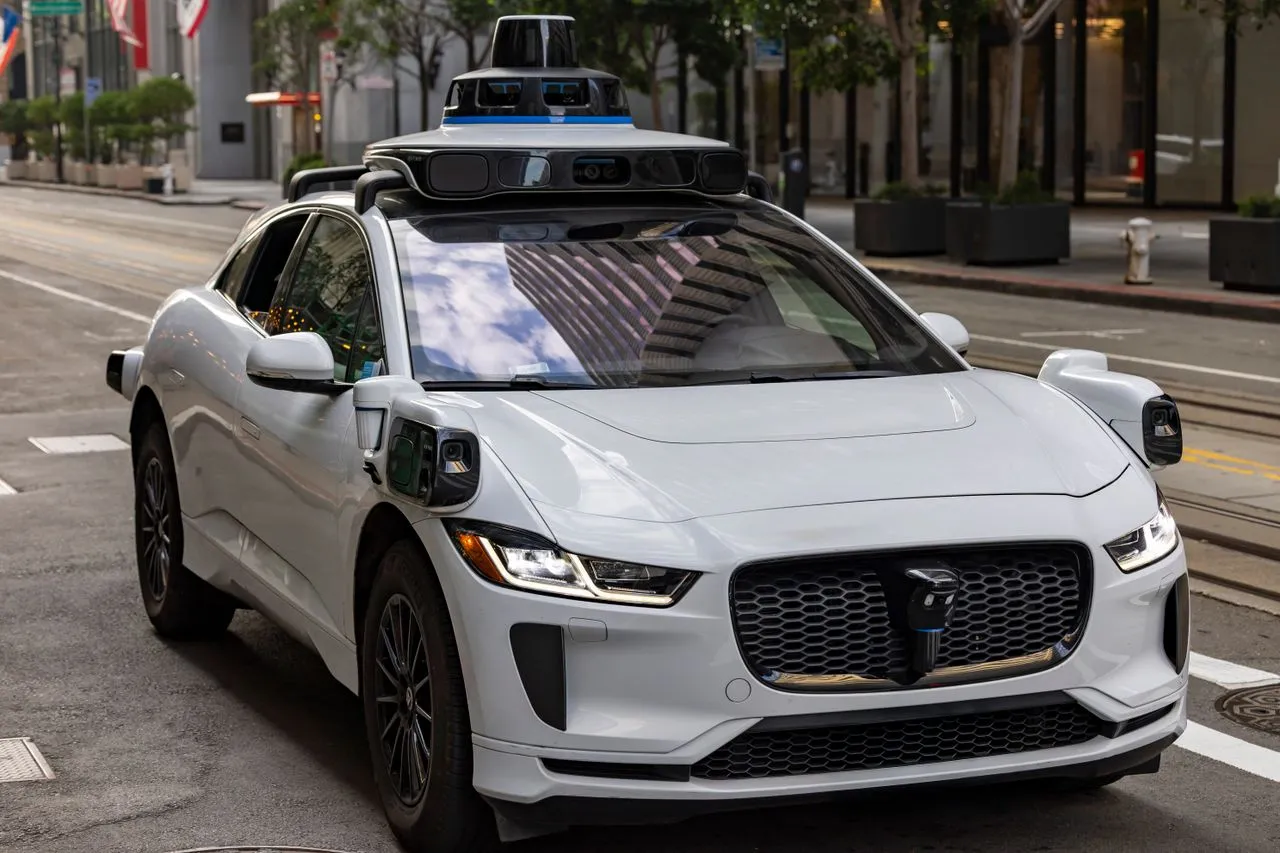
Pony.ai will provide its seventh-generation autonomous robotaxis, known as Gen-7. The company’s technology is designed to support Level 4 autonomous driving, allowing vehicles to perform driving tasks within defined operational conditions without requiring continuous human control.
NVIDIA will support the initiative through its AI infrastructure and autonomous vehicle technology ecosystem. Its NVIDIA Hyperion platform is designed to provide a reference architecture for sensors and computing systems used in Level 4 autonomous vehicles.
By combining these capabilities, the companies intend to evaluate the requirements for a potential robotaxi service, from vehicle technology and computing systems to passenger access and day-to-day operations.
The MOU establishes a framework for exploring the opportunity. It does not, by itself, confirm a completed commercial launch or a final decision to deploy autonomous vehicles.
Artificial intelligence is central to the development of autonomous vehicles. Driverless cars must process information from their surroundings, recognize other road users, interpret road conditions and make driving decisions in real time.
NVIDIA Hyperion is a reference sensor and computing platform designed for Level 4 autonomous vehicles and robotaxis. It provides a framework for integrating sensing technologies and computing capabilities that support autonomous driving systems.
The NVIDIA robotaxi platform combines Hyperion with the Alpamayo software stack and the NVIDIA Halos full-stack safety system. Together, these technologies are intended to support the development and deployment of autonomous driving solutions.
For the Kazakhstan initiative, NVIDIA’s AI infrastructure is expected to support the companies as they assess the feasibility of integrating autonomous vehicles into a ride-hailing operation.
The broader challenge is to ensure that autonomous vehicles can interpret complex and changing driving environments while maintaining appropriate safety standards. This includes responding to surrounding traffic, pedestrians, road markings, obstacles and unexpected situations.
The evaluation will help the companies understand how the proposed technology and vehicle architecture could be adapted to local operating conditions.
Pony.ai will contribute its seventh-generation robotaxis to the planned initiative. The vehicles are designed around autonomous driving technology intended to support driverless commercial transportation.
According to the companies, Pony.ai’s Level 4 autonomous driving technology has been validated through fully driverless commercial operations in major Chinese cities. The company has also pursued real-world deployments in international markets across Europe, the Middle East and Asia.
Its experience in these environments could help inform the assessment of autonomous transportation in Kazakhstan.
The Gen-7 robotaxi incorporates several technologies intended to support reliable autonomous operation. These include multi-sensor fusion, system-level redundancy and fail-operational capabilities.
Multi-sensor fusion enables a vehicle to combine information from different sensors to build an understanding of its surroundings. Using multiple sources of information can help autonomous systems identify vehicles, pedestrians, road conditions and other objects.
System-level redundancy involves providing backup capabilities for critical vehicle functions. Fail-operational capabilities are designed to help systems maintain appropriate functionality when certain faults occur, subject to the vehicle’s safety architecture and operating limitations.
These features are important considerations when assessing vehicles intended to transport passengers without a human driver actively controlling the vehicle.
Nevertheless, the successful operation of autonomous vehicles in one country does not automatically establish their suitability for every market. Local validation, regulatory approval and testing under Kazakhstan’s specific road and weather conditions will remain important.
Astana is expected to be the first city considered for the planned robotaxi service. With a population of approximately 1.7 million, the city has growing transportation needs and offers an opportunity to evaluate autonomous mobility in an urban environment.
The proposed initiative could explore how robotaxis might complement conventional ride-hailing services and other forms of public and private transportation.
For passengers, autonomous ride-hailing could eventually provide another way to arrange urban journeys through a familiar digital application. For mobility platforms, it could introduce new operational models involving autonomous vehicle fleets and technology-supported transportation services.
However, the feasibility of such services depends on several factors, including passenger demand, vehicle availability, operating costs, infrastructure readiness and local transportation regulations.
Astana also presents a distinctive technical challenge because of its severe winter climate. The city experiences prolonged periods of cold weather, snow and ice, which can affect road surfaces, visibility and vehicle operation.
These conditions make the city a potentially valuable environment for evaluating autonomous driving technology in difficult weather.
Snow-covered roads may obscure lane markings, while ice can reduce traction and change braking and handling characteristics. Snowfall and winter road spray can also affect the visibility of cameras and other sensing equipment.
The companies will therefore need to consider how the autonomous driving system performs under the conditions relevant to any proposed deployment.
Speaking about the project, Arsen Tomsky, founder and CEO of inDrive, highlighted the importance of evaluating autonomous mobility carefully and responsibly.
He explained that autonomous technology could potentially make transportation more affordable and accessible in the cities where the company operates. He also emphasized that Kazakhstan’s regulatory approach offers an opportunity to examine how the technology could fit local roads and communities.
Tomsky noted that Astana’s winter conditions could provide valuable insights into autonomous driving performance, particularly for markets that experience similarly demanding weather.
The proposed collaboration could have implications for passengers, ride-hailing platforms and the broader transportation industry.
One potential area of evaluation is passenger accessibility. Integrating robotaxis into an existing mobility application could allow customers to explore autonomous transportation through a digital platform they already use.
Another consideration is operational efficiency. Autonomous vehicle technology may create opportunities for new fleet-management approaches, although the commercial benefits will depend on vehicle costs, maintenance requirements, utilization rates and the expenses associated with operating and supervising the service.
The project may also provide insights into how autonomous mobility can coexist with conventional ride-hailing. Rather than immediately replacing existing transportation options, robotaxis could be evaluated as a complementary service for suitable routes and operating conditions.
Safety will remain a central consideration. Autonomous vehicles must be evaluated against relevant standards and regulatory requirements, and the companies will need to establish that the proposed service can operate appropriately in its intended environment.
The commercial feasibility assessment will also need to consider passenger acceptance, service reliability, insurance, vehicle servicing, fleet deployment and the responsibilities associated with autonomous transportation.
The collaboration is therefore broader than a technology demonstration. It is intended to explore the practical requirements for introducing a new mobility model into a local transportation market.
The initial assessment in Astana could provide a foundation for considering future deployment opportunities in other cities in Kazakhstan and potentially other countries where inDrive operates.
Any expansion would depend on the outcome of the initial evaluation, applicable regulations, local infrastructure and the commercial requirements of each market.
Different cities can present substantially different challenges for autonomous vehicles. Traffic density, road design, driving behavior, weather conditions and regulatory expectations can all influence how a robotaxi service must be developed and operated.
A phased approach could help the companies identify these differences before considering broader deployment.
For Pony.ai, the initiative offers an opportunity to evaluate how its autonomous driving technology could be adapted to a new Central Asian market. For inDrive, the collaboration could help the company assess whether autonomous vehicles can become part of its wider mobility offering. NVIDIA’s involvement provides access to an AI computing and safety technology ecosystem designed for autonomous driving applications.
Dr. James Peng, founder and CEO of Pony.ai, described Kazakhstan as an opportunity to bring autonomous mobility to a new market in Central Asia. He highlighted the company’s experience scaling fully driverless robotaxi operations in China and expanding internationally, while expressing the intention to work with inDrive and NVIDIA to assess how the technology could be adapted to local needs.
The collaboration aligns with the broader development of autonomous transportation, as companies seek to expand beyond initial markets and understand the technical and regulatory requirements of operating in different regions.
Despite advances in autonomous driving, commercial deployment requires more than sophisticated software and computing hardware.
The companies must consider vehicle certification, operational permissions, safety procedures, emergency response arrangements and the management of unexpected situations. Authorities may also require evidence that vehicles can operate safely under defined conditions before allowing passenger services to begin.
Kazakhstan’s developing legal framework could provide a basis for these discussions, but the proposed service will still require the necessary government agreements and approvals.
Winter operations will be another important consideration. Autonomous driving systems must be able to recognize when environmental conditions exceed their safe operating limits and respond appropriately. Sensor performance, road traction and visibility can change significantly during severe weather.
The collaboration’s evaluation phase should help clarify which operating conditions are suitable for the technology and what additional safeguards may be necessary.
NVIDIA Vice President of Automotive Rishi Dhall emphasized the importance of developing AI for the complexity of real-world driving, with safety as a foundational priority. He said NVIDIA Hyperion and the NVIDIA Halos safety system could help inDrive and Pony.ai explore a path toward scalable robotaxi services in Kazakhstan.
His comments reflect a central challenge for the autonomous vehicle industry: combining advanced AI capabilities with safety-focused engineering and practical operating models.
The collaboration between inDrive, Pony.ai and NVIDIA marks a new step in exploring autonomous ride-hailing in Central Asia. By evaluating Pony.ai’s Gen-7 robotaxis, NVIDIA’s autonomous vehicle technology ecosystem and inDrive’s established ride-hailing platform, the companies aim to determine whether a robotaxi service could be introduced in Kazakhstan.
Astana’s growing transportation needs, evolving regulatory environment and challenging winter climate make it a distinctive market for assessing autonomous mobility.
The initiative remains subject to technical, operational, regulatory and commercial evaluation, as well as the required agreement with the Kazakhstan government. Its outcome could help clarify the opportunities and limitations of introducing driverless transportation in markets with different infrastructure and environmental conditions.
If the assessment proves successful, the project could provide a starting point for considering autonomous ride-hailing in additional cities and international markets. For now, the collaboration represents an exploratory effort to understand how AI-powered autonomous vehicles could become part of future urban mobility while keeping safety, local requirements and passenger needs at the center of deployment decisions.
Source Link:https://www.businesswire.com/