Faraday Future Intelligent Electric Inc. widely known as Faraday Future or simply FF, has taken a significant step forward in the evolution of embodied artificial intelligence (EAI) by hosting its EAI Developer Ecosystem Forum and officially launching the FF EAI Brain & Open Developer Platform. The landmark event, held in San Francisco on April 25, represents more than just a product unveiling—it signals the company’s ambition to reshape how robots are developed, deployed, and integrated into everyday life. With this move, Faraday Future is positioning 2026 as the foundational year for embodied AI robotics education while opening its doors to a global community of developers eager to co-create the next generation of intelligent machines.
At the heart of the announcement is the introduction of a developer platform specifically designed for what the company calls “AI natives”—a new generation of learners, creators, and engineers who are growing up in a world where artificial intelligence is deeply embedded in daily experiences. By making robotics development more accessible and collaborative, Faraday Future aims to democratize innovation in a field that has traditionally required significant technical expertise and resources. The platform is built to lower barriers, enabling participants ranging from school students to experienced professionals to design, test, and deploy robotic capabilities known as “Agent Skills.”
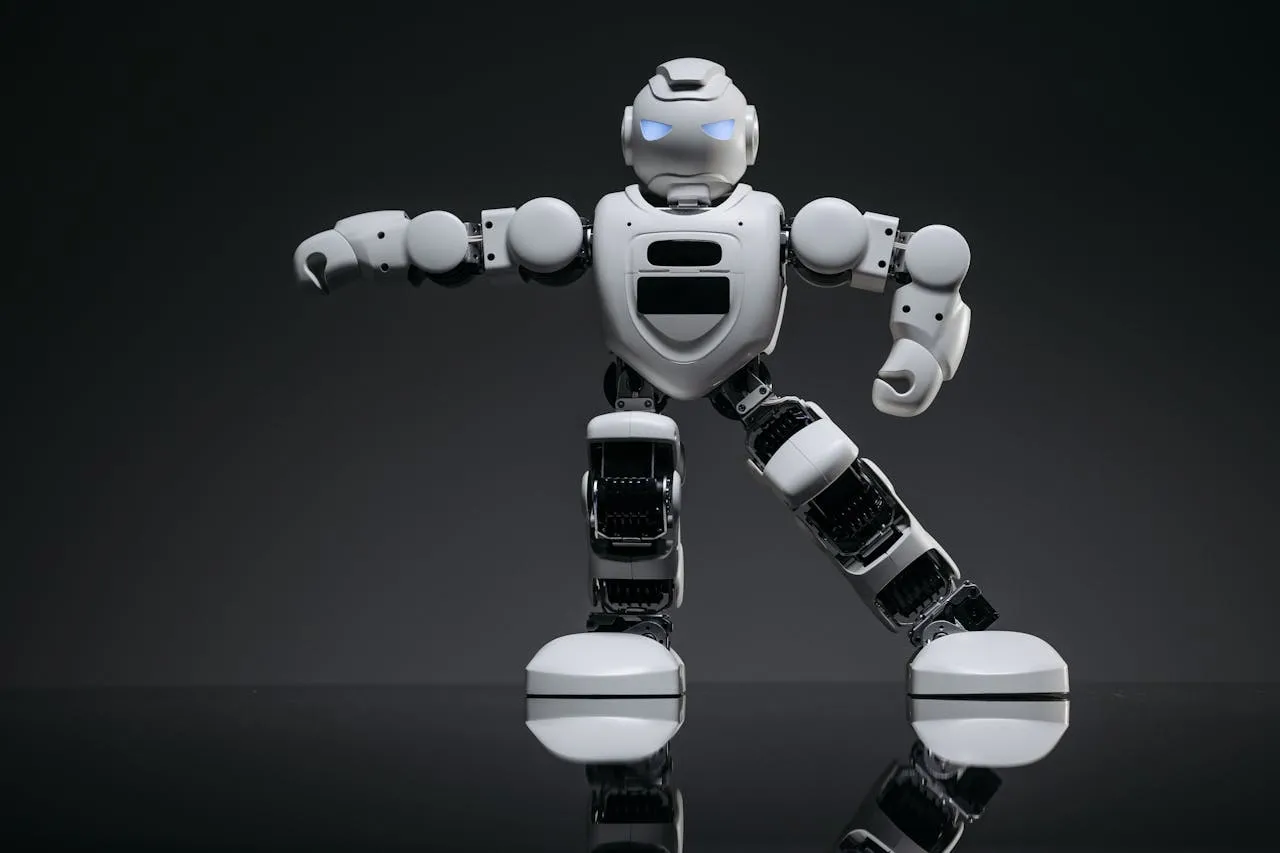
The forum itself served as a dynamic showcase of Faraday Future’s technological progress and vision for embodied AI. One of the most compelling highlights was a live demonstration featuring FF Futurist, the company’s full-size professional humanoid robot. During the presentation, FF Futurist executed nine complete end-to-end Agent Skills across a variety of real-world applications. These included roles such as a home assistant, a commercial security agent, a pet companion, and a hospitality and reception assistant. Each scenario demonstrated how embodied AI can bridge the gap between digital intelligence and physical interaction, bringing robots closer to practical, everyday use.
In addition to the humanoid robot demonstration, Faraday Future also previewed an integrated home security solution that combines FX Aegis, its quadruped robot, with advanced smart home automation systems. This integration illustrates the company’s broader vision of interconnected intelligent devices working seamlessly together to enhance safety, convenience, and efficiency in residential environments. By blending robotics with existing smart home ecosystems, FF is moving toward a future where AI-powered machines are not isolated tools but integral components of a unified digital-physical infrastructure.
A central pillar of this initiative is the FF EAI Brain & Open Developer Platform itself, which is designed to function as a comprehensive toolkit for building and scaling embodied AI applications. The platform includes six major developer tools: Brain Blocks, Create Studio, EAI Soul, EAI Scribe, EAI Studio, and a robust SDK and API framework. These tools are complemented by four foundational infrastructure layers, including a unified developer portal, a Sim-to-Real evolution field that enables virtual-to-physical testing, a data closed-loop engine for continuous learning, and an agile development and release toolchain.
Together, these components aim to simplify the robotics development process to a level comparable with modern software development. This shift is critical because it allows developers to focus more on creativity and problem-solving rather than being hindered by complex hardware constraints. By enabling users to create executable Agent Skills, the platform encourages rapid experimentation and iteration, fostering a culture of innovation that could accelerate the adoption of embodied AI technologies across industries.
To support this ecosystem, Faraday Future has introduced a structured developer recruitment program that spans three distinct categories. The Young Futurist program targets K–12 students between the ages of 6 and 18, providing an early introduction to robotics and AI concepts. The EAI Futurist category is designed for scenario experts and creative professionals who can contribute domain-specific knowledge and innovative use cases. Meanwhile, the EAI Builder program is tailored for professional engineers, research institutions, and original equipment manufacturer (OEM) partners who bring technical expertise and industrial experience.
Each of these categories follows a four-tier progression system, allowing participants to advance from beginner to leader status as they gain experience and contribute to the ecosystem. This structured pathway not only encourages skill development but also helps build a sense of community and shared purpose among developers. By creating clear growth opportunities, Faraday Future aims to nurture long-term engagement and foster a new generation of robotics innovators.
Complementing the recruitment initiative is a comprehensive incentive program designed to reward contributors and sustain ecosystem growth. The program includes revenue-sharing opportunities, research and development grants, hackathons, and a dedicated Campus Program aimed at educational institutions. Additionally, a tier-based seniority system and global exposure opportunities ensure that developers receive recognition and tangible benefits for their contributions. This approach reflects FF’s commitment to building a collaborative ecosystem where value is shared among all participants.
The forum attracted a diverse group of leaders and experts from across the embodied AI landscape, highlighting the growing interest and investment in this emerging field. Attendees included executives, researchers, and entrepreneurs representing robotics companies, academic institutions, and technology organizations. The event concluded with a panel discussion titled “The Robotics Education Revolution: How Embodied AI Is Raising the Next Generation of Builders,” which explored the transformative impact of AI-driven education and the role of collaborative platforms in shaping future talent.
According to Chris Chen, Co-CEO of FF AI-Robotics, the launch of the FF EAI Brain & Open Developer Platform marks a pivotal moment not only for the company but for the broader AI and robotics industry. He emphasized that the initiative is about more than introducing new technology—it is about creating an inclusive ecosystem where individuals from diverse backgrounds can contribute to and benefit from the development of embodied AI. By designating 2026 as the inaugural year of EAI robotics education, FF is setting a clear timeline for the expansion of this vision and inviting global participation.
Looking ahead, the platform is expected to serve as the backbone of Faraday Future’s expanding embodied AI ecosystem. By connecting devices, data, and intelligent systems at scale, the company aims to enable seamless collaboration between hardware and software components. This integrated approach is essential for realizing the full potential of embodied AI, as it allows robots to learn, adapt, and operate effectively in complex real-world environments.
Faraday Future’s strategy also emphasizes partnerships across education, research, and industry. By collaborating with academic institutions, the company can help shape curricula that prepare students for careers in AI and robotics. Partnerships with research organizations can drive innovation in core technologies, while collaborations with industry players can accelerate commercialization and deployment. This multi-faceted approach positions FF as a central hub in the global embodied AI ecosystem.
The implications of this initiative extend beyond technology development. By making robotics more accessible and fostering a global community of AI-native developers, Faraday Future is contributing to a broader cultural shift in how people interact with machines. As embodied AI becomes more integrated into daily life, it has the potential to transform industries ranging from healthcare and education to hospitality and security.
In conclusion, the launch of the FF EAI Brain & Open Developer Platform represents a bold step toward a future where robotics development is open, collaborative, and accessible to all. By combining advanced tools, a structured developer ecosystem, and a clear educational mission, Faraday Future is laying the groundwork for widespread adoption of embodied AI technologies. As 2026 unfolds as the inaugural year of EAI robotics education, the company’s vision of a global, AI-native developer community is set to play a crucial role in shaping the next era of intelligent machines.
Source Link:https://www.businesswire.com/