For more than a century, one principle has remained constant at Ford Motor Company: investing in America is not just the right thing to do—it’s a strategy that delivers lasting value. Through economic cycles, industry disruptions, and evolving global competition, the company has consistently returned to a simple belief: when you build in America, you build strength that extends far beyond the factory walls.
That belief has shaped Ford’s identity for over 120 years. Since its earliest days, the company has chosen to manufacture vehicles in the United States, even as the automotive industry became increasingly globalized. While many competitors have shifted production overseas in pursuit of lower costs, Ford has repeatedly reaffirmed its commitment to domestic manufacturing. This decision is not driven by convenience or short-term gains, but by a long-term understanding of the role manufacturing plays in building resilient communities and a strong national economy.
The results of this strategy were clearly visible in 2025, when Ford once again emerged as a leader in U.S. automotive manufacturing. The company led the industry in vehicle assembly, exports, and hourly autoworker employment in the United States—benchmarks that highlight both its scale and its sustained commitment to American industry.
During the year, Ford assembled more than two million vehicles in the United States, a figure that placed it ahead of all other automakers operating in the market. This achievement marked the ninth consecutive year in which the company led in light-duty vehicle assembly volume, producing nearly 350,000 more units than its closest competitor. Such consistency underscores the company’s ability to maintain high levels of production while navigating supply chain challenges, shifting consumer demand, and rapid technological change.
Equally significant is the proportion of vehicles Ford builds domestically. Approximately 83% of the vehicles it sells in the United States are assembled within the country. This high domestic production ratio distinguishes Ford from many of its global peers and reinforces its position as a cornerstone of American manufacturing.
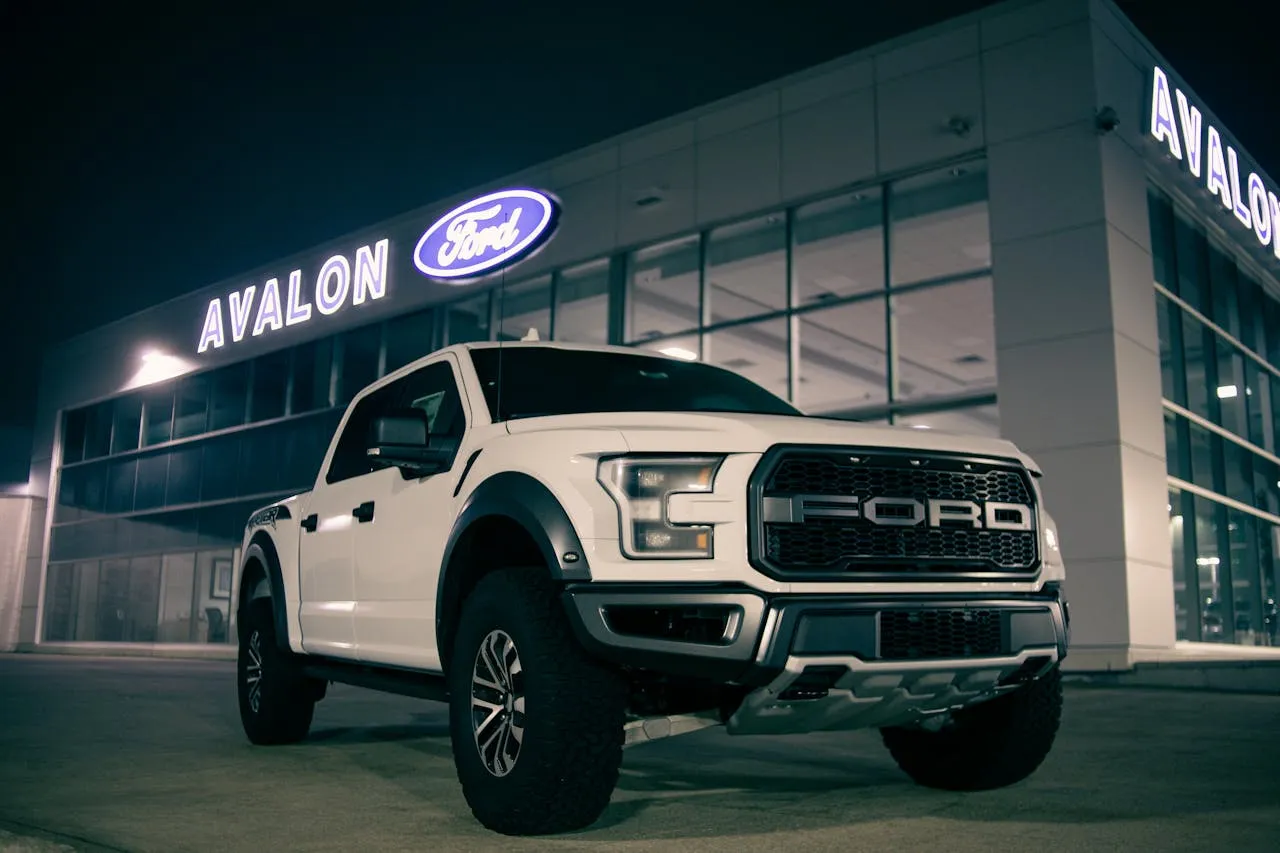
Another key aspect of Ford’s contribution lies in exports. In 2025, the company shipped approximately 311,000 U.S.-assembled vehicles to more than 60 international markets. These exports included some of Ford’s most iconic nameplates, such as the Ford F-150, Ford Bronco, and Ford Mustang. By exporting vehicles built in American plants to customers around the world, Ford not only strengthens its global presence but also reinforces the reputation of U.S. manufacturing on the international stage.
Behind these production and export figures is a vast workforce that forms the backbone of Ford’s operations. The company employs approximately 56,300 hourly manufacturing workers in the United States—more than any other automaker. These jobs are not just numbers on a balance sheet; they represent stable, well-paying careers that support families and sustain communities across the country.
The impact of these jobs extends far beyond the factory floor. Each manufacturing facility acts as an economic engine, generating ripple effects throughout the surrounding region. Local businesses benefit from increased demand, schools receive funding through tax revenues, and public services such as police and fire departments gain critical support. In this way, every vehicle assembled in America contributes to a broader ecosystem that strengthens the social and economic fabric of the nation.
This understanding of manufacturing’s broader impact is central to Ford’s philosophy. The company recognizes that a strong economy cannot rely solely on service industries or consumption. Instead, it requires a balanced foundation that includes robust industrial production. Manufacturing creates tangible value, drives innovation, and provides opportunities for upward mobility—qualities that are essential for long-term economic resilience.
Ford’s commitment to American manufacturing is also reflected in its forward-looking investments. As the automotive industry undergoes a transformation toward electrification, connectivity, and advanced technologies, the company is positioning itself at the forefront of this evolution while keeping its manufacturing base rooted in the United States.
In the coming years, Ford plans to hire thousands of additional workers across the country to support the launch of new gasoline, hybrid, and electric vehicles, as well as battery and energy storage systems. These investments are aimed at ensuring that the next generation of automotive innovation is developed and produced domestically.
Several major projects are already underway. In Kentucky, preparations continue for a large-scale battery plant in Glendale, which will play a critical role in supporting the company’s electric vehicle ambitions. In Michigan, the BlueOval Battery Park is being developed as a hub for advanced battery production and research. Meanwhile, upgrades and expansions at facilities such as the Ohio Assembly Plant and the Tennessee Truck Plant are paving the way for future vehicle launches.
These initiatives highlight Ford’s commitment not only to maintaining its leadership in traditional vehicle manufacturing but also to shaping the future of mobility. By investing in advanced technologies and infrastructure within the United States, the company is helping to ensure that the country remains a global leader in the automotive industry.
Ford’s long-standing dedication to American manufacturing is further underscored by its track record of leadership. The company has been the top auto assembler in the United States for 16 of the past 17 years, a remarkable achievement that reflects both its scale and its consistency. This sustained leadership is a testament to the company’s ability to adapt to changing market conditions while staying true to its core values.
Importantly, Ford’s commitment has remained steadfast regardless of external factors such as policy changes, trade dynamics, or economic pressures. The company has consistently prioritized domestic production, even when alternative options may have offered short-term financial advantages. This approach reflects a broader vision that values long-term stability and national economic strength over immediate gains.
At its core, Ford’s strategy is rooted in a deep understanding of what it means to be more than just a participant in the American market. For the company, the United States is not simply a place to sell vehicles—it is home. This perspective shapes its decisions and drives its investments, ensuring that its success is closely tied to the prosperity of the communities it serves.
Looking ahead, Ford remains confident that the best days of American manufacturing are still to come. With ongoing investments in technology, workforce development, and infrastructure, the company is well-positioned to continue leading the industry while contributing to the nation’s economic growth.
As the automotive landscape continues to evolve, Ford’s commitment to America serves as a powerful reminder of the enduring value of domestic manufacturing. By building vehicles in the United States, supporting local communities, and investing in the future, the company is not only preserving its legacy but also helping to shape a stronger, more resilient economy for generations to come.
In an era defined by rapid change and global competition, Ford’s message is clear: betting on America is not just a tradition—it is a strategy that continues to pay off.
Source Link:https://www.fromtheroad.ford.com/