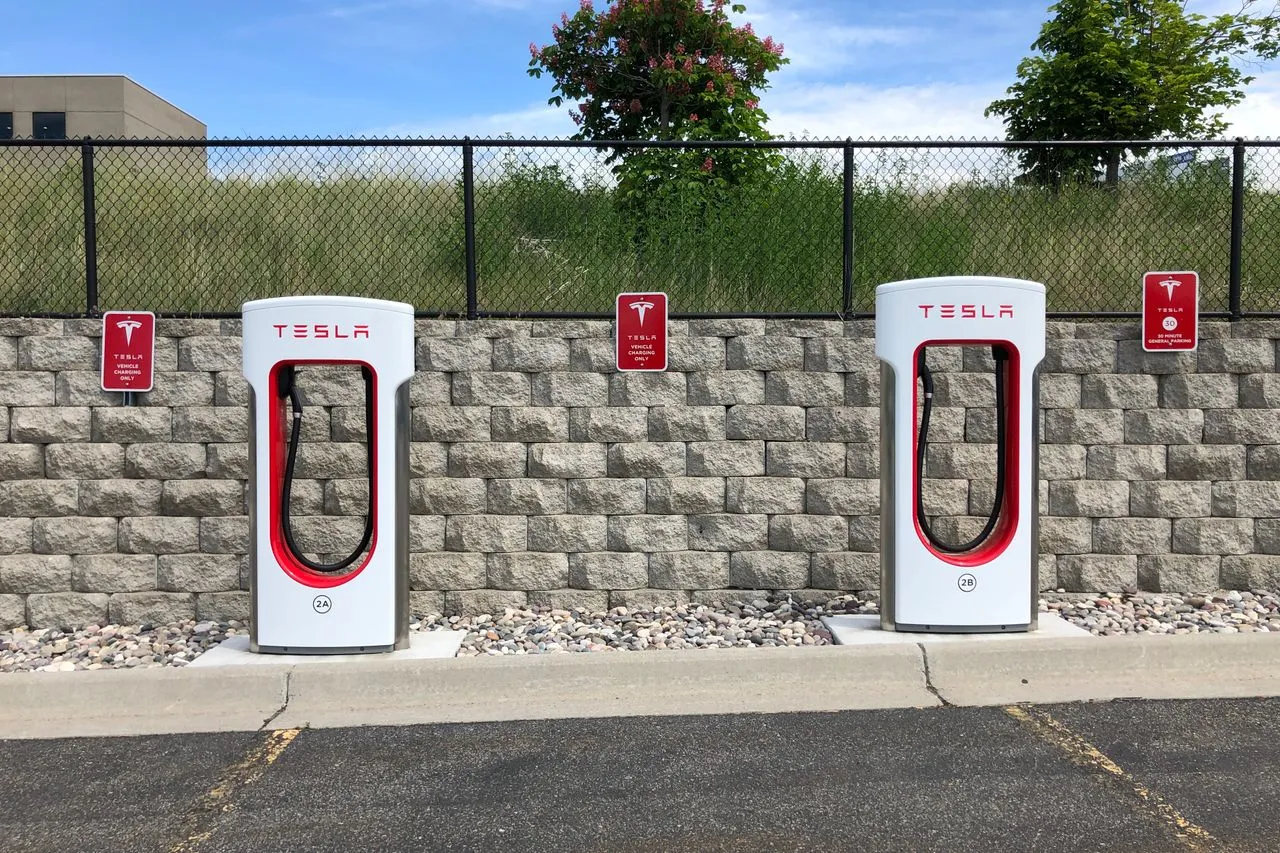
Pilot and Tesla have officially opened their first Tesla Megacharger site at a Pilot travel center in Ellabell, Georgia, marking an important step toward expanding charging infrastructure for heavy-duty electric trucks in the United States. The new facility represents the beginning of a broader charging network planned for selected Pilot travel centers along major freight corridors, helping trucking companies explore electric transportation for long-distance operations.
The launch brings together Pilot’s extensive travel center network and Tesla’s high-power charging technology to address one of the major challenges facing the commercial transportation industry: providing reliable, convenient and powerful charging infrastructure for electric heavy-duty vehicles. As fleet operators increasingly evaluate lower-emission transportation solutions, the availability of strategically located charging facilities is becoming an important factor in the adoption of electric trucks.
The Ellabell location is the first operational site in the partnership’s planned network. Pilot and Tesla have also announced three additional locations that are nearing completion and are expected to open soon, while construction continues at other planned sites across the country.
The first operational Tesla Megacharger facility is located at Pilot Travel Center #1390, at 130 Interstate Exchange Way in Ellabell, Georgia. The site currently features six heavy-duty charging stalls designed to support electric trucks travelling along major transportation routes.
The location is intended to provide trucking companies with access to high-power charging while allowing drivers to use the services and amenities typically available at a Pilot travel center. These facilities can play an important role in making electric trucking more practical by combining vehicle charging with convenient stopping points along freight routes.
Long-haul trucking operations depend on careful scheduling, efficient vehicle utilization and predictable travel times. Charging infrastructure must therefore be positioned where trucks can access power without creating unnecessary detours or disrupting delivery schedules. By integrating Megachargers into existing travel centers, Pilot and Tesla aim to make charging more accessible to commercial fleets.
The opening also demonstrates how established fuel and travel center operators are adapting their facilities to accommodate changes in vehicle technology. Traditional diesel-powered trucks continue to play a major role in freight transportation, but electric trucks are emerging as an additional option for fleet operators seeking to diversify their energy sources.
Pilot views the new charging network as part of its wider strategy to support the changing energy requirements of the transportation industry.
Shannon Sturgil, senior vice president of alternative fuels at Pilot, said the company is proud to introduce heavy-duty charging infrastructure directly along important trucking routes. She highlighted the importance of combining charging services with the amenities and support that drivers already expect from Pilot travel centers.
According to Sturgil, the initial locations are intended to make fleet electrification more accessible to long-haul transportation operators. She also emphasized the company’s continued collaboration with Tesla to develop infrastructure that reflects customer requirements and adoption preferences.
For Pilot, the initiative extends its role beyond conventional fuel distribution. The company operates a large travel center network across North America, serving professional truck drivers, commercial fleets and other travellers. Adding high-power electric truck charging to selected sites allows the company to support different vehicle technologies as transportation requirements evolve.
The strategy also recognizes that fleet electrification will depend on more than the availability of electric trucks. Commercial operators need access to suitable charging locations, sufficient power capacity and facilities that fit their operating schedules. Partnerships between vehicle manufacturers and established travel center operators can help address these requirements.
Following the Ellabell launch, Pilot and Tesla are preparing to bring three additional heavy-duty charging facilities into operation. The sites are located in California, Texas and Nevada, extending the network into several important freight transportation markets.
The announced locations include:
These locations are part of a larger construction programme involving 12 additional heavy-duty charging sites. The three near-completion facilities are expected to become operational as work progresses, while construction continues at the remaining locations.
The expansion is significant because California, Texas and Nevada are important markets for commercial road transportation. Establishing charging infrastructure in these areas can help create additional options for fleets operating across regional and interstate freight networks.
However, the practical value of each location will depend on factors such as its connection to major routes, available electrical capacity, charging reliability and compatibility with the vehicles using the facility.
The planned Megacharger locations will feature between four and eight high-power charging stalls, using Tesla’s V4 cabinet technology.
According to the announcement, each charging stall can deliver up to 1.2 megawatts of power. This level of output is designed to support the charging requirements of heavy-duty electric trucks, which generally require substantially more energy than passenger vehicles because of their size, weight and demanding operating cycles.
Tesla’s charging technology is intended to reduce the time electric trucks need to spend connected to a charger. The companies state that a Tesla Semi can recover approximately 60% of its battery charge in 30 minutes under the specified charging conditions.
Fast charging is particularly important for commercial fleets because vehicle downtime can affect delivery schedules, driver planning and the overall economics of transportation operations. A charging system capable of replenishing a substantial amount of battery energy during a planned stop could help operators incorporate charging into their existing routes.
Nevertheless, actual charging performance can vary according to battery state of charge, temperature, vehicle configuration, power availability and other operating conditions. Charging times should therefore be evaluated in the context of individual fleet requirements rather than treated as identical in every situation.
The use of high-power charging equipment also highlights the importance of electrical infrastructure at commercial sites. Megawatt-scale charging requires suitable power delivery systems, equipment integration and reliable site operations. These requirements can influence construction timelines and the pace at which heavy-duty charging networks expand.
Pilot and Tesla announced their collaboration in January 2026, outlining plans to establish a network of Tesla Megachargers at selected Pilot locations.
The initiative focuses on major freight corridors, including Interstate 5 and Interstate 10, as well as other important transportation routes. The initial geographic plan covers California, Georgia, Indiana, Nevada and Texas.
These states provide access to significant commercial transportation routes and freight activity. Connecting charging facilities across multiple markets could eventually give fleet operators more flexibility when planning longer journeys with compatible electric trucks.
The network is intended to support the growing interest in electric heavy-duty vehicles, particularly among operators evaluating how charging infrastructure, energy costs and vehicle performance fit into their business models.
For Tesla, the partnership offers an opportunity to expand access to charging infrastructure for its Semi programme. For Pilot, it provides a way to introduce heavy-duty electric charging into an established network of travel centers.
The collaboration also reflects a wider industry trend in which vehicle manufacturers, infrastructure providers, energy companies and commercial property operators work together to develop charging networks. Building an effective heavy-duty charging ecosystem requires coordination between these groups because vehicles, charging equipment, electrical connections and route planning must work together.
Heavy-duty trucking is an essential part of the U.S. economy, transporting goods between manufacturing facilities, distribution centres, ports, warehouses and retail locations. However, conventional diesel-powered trucks rely on petroleum-based fuel and contribute to transportation-related greenhouse gas emissions.
Battery-electric trucks offer an alternative for certain commercial applications. Their potential benefits include reduced tailpipe emissions and opportunities to simplify some aspects of vehicle maintenance. The overall environmental and financial benefits depend on electricity sources, vehicle utilization, battery production, energy prices and the specific route being operated.
For long-haul trucking, one of the principal challenges is ensuring that electric vehicles can travel the required distances while maintaining commercially acceptable operating schedules. Heavy loads, highway speeds, weather conditions and terrain can all influence energy consumption.
Charging networks positioned along major freight corridors can help address the infrastructure side of this challenge. However, widespread adoption will also depend on vehicle availability, purchase costs, charging tariffs, grid capacity and the ability of fleets to incorporate charging stops into their operations.
Pilot and Tesla’s initiative represents one approach to addressing these interconnected requirements. By placing high-power chargers at existing travel centers, the companies aim to connect charging infrastructure with locations already familiar to commercial drivers.
The success of this model will depend on how effectively the network serves fleet requirements as additional facilities become operational.
The Megacharger launch forms part of Pilot’s broader efforts to support the future energy needs of the transportation sector. In addition to heavy-duty electric truck charging, the company has invested in a coast-to-coast passenger electric vehicle charging network and offers lower-carbon fuel options, including renewable diesel and biodiesel.
This approach reflects the variety of technologies being considered across the transportation industry. Battery-electric vehicles may be suitable for some applications, while alternative liquid fuels can provide other options for existing vehicles and particular operating conditions.
For commercial fleets, the most appropriate energy solution can vary depending on vehicle type, journey length, payload, infrastructure availability and operating costs. Maintaining access to multiple energy options can help transportation businesses evaluate alternatives as technologies and regulations evolve.
By expanding its infrastructure portfolio, Pilot is positioning its travel centers to serve a wider range of vehicle technologies. The company’s existing locations provide a foundation for introducing new services without requiring drivers to rely exclusively on purpose-built charging facilities outside established travel networks.
For trucking companies, the launch provides an additional example of how public-facing heavy-duty charging infrastructure is developing in the United States. The opening of the Georgia site and the planned addition of locations in California, Texas and Nevada could create further charging opportunities for compatible electric trucks.
Fleet managers considering electric vehicles will need to assess the availability of chargers along their regular routes, the time required to recharge, the cost of electricity and the impact on driver schedules. They will also need to evaluate vehicle range under real operating conditions and the availability of backup charging options.
A geographically connected network may become increasingly valuable as more heavy-duty electric trucks enter commercial service. However, a handful of operational sites will not by themselves resolve every infrastructure challenge associated with long-distance electric trucking. Continued investment and reliable operation across multiple corridors will be necessary to support wider adoption.
The Pilot and Tesla partnership represents an early step in that process. The companies’ plans to establish charging sites across several states indicate an effort to link high-power charging technology with established transportation infrastructure.
Pilot and Tesla’s first Megacharger site in Ellabell, Georgia, marks a milestone in the development of charging infrastructure for heavy-duty electric trucks. Equipped with six charging stalls, the facility introduces Tesla’s high-power charging technology at a Pilot travel center and establishes the starting point for a wider network along major U.S. freight corridors.
Three additional locations in Tulare, Fort Stockton and North Las Vegas are expected to join the network, while construction continues at other planned facilities. With charging power of up to 1.2 megawatts per stall, the sites are designed to support the demanding energy requirements of vehicles such as the Tesla Semi.
As the commercial transportation industry explores alternatives to conventional diesel operations, partnerships that combine vehicle technology with established travel center networks could help improve charging access. The long-term impact will depend on continued network expansion, dependable charging performance and the commercial needs of fleet operators.
For Pilot and Tesla, the opening is an important first step toward making heavy-duty electric truck charging more accessible across key U.S. freight routes.
About Pilot
Pilot Travel Centers LLC (“Pilot”) keeps North America’s drivers moving as the leading energy and experience provider people rely on to fuel their journeys. Founded in 1958 and headquartered in Knoxville, Tennessee, Pilot is a wholly owned subsidiary of Berkshire Hathaway Inc. and employs approximately 30,000 team members. As the largest network of travel centers, Pilot has more than 900 locations in 43 states and five Canadian provinces, serving an average of 1.2 million guests per day. In addition to travel center services, Pilot and its partners offer trucking fleets a variety of solutions for fuel, credit, factoring, maintenance and rewards. The company operates the third largest fuel tanker fleet in North America and supplies approximately 12 billion gallons of fuel per year. Pilot is committed to shaping the future of energy as one of the largest providers of biodiesel and renewable fuels and through the development of its EV charging network and low carbon fueling alternatives.
Source Link:https://www.businesswire.com/