Chinese electric vehicle manufacturer XPENG has officially introduced XPENG YOYO, the new brand name for its Robotaxi service, marking a significant step toward commercialising its autonomous driving technology. Alongside the brand announcement, the company has opened online registration to the public in China through an invitation-code system and launched a dedicated page on its official website.
The announcement represents a transition for XPENG Robotaxi from technology development and validation toward real-world user operations. By establishing a dedicated brand identity and expanding access beyond its employees, XPENG is preparing to test its autonomous mobility capabilities with external users and potential commercial partners.
XPENG describes its Robotaxi as China’s first fully in-house-developed system to achieve pre-loaded mass production. The company is pursuing an integrated development strategy that combines proprietary artificial intelligence hardware, advanced AI models and vehicle engineering. Through this approach, XPENG aims to build a pathway from intelligent driver-assistance systems to more advanced autonomous driving applications.
The launch of the XPENG YOYO name provides the company’s Robotaxi programme with a distinct identity as it moves closer to commercial deployment. The opening of online registration is an important milestone because it allows the experience to gradually extend from internal testing to a broader group of potential users.
Registration is currently being introduced through invitation codes in China. This approach allows XPENG to expand participation in a controlled manner while evaluating the performance of its technology and the practical requirements of operating an autonomous ride-hailing service.
For a Robotaxi programme, real-world operations involve more than developing a vehicle that can navigate roads without continuous human intervention. The service must also manage booking requests, passenger pickup and drop-off, route execution, payment processing and the overall customer experience.
XPENG’s expansion into public registration provides an opportunity to assess these elements under real operating conditions. Feedback and operational data can help the company identify areas requiring further development before expanding the service to additional users or locations.
The announcement does not, by itself, establish that XPENG YOYO is available as a fully unrestricted commercial ride-hailing service throughout China. Instead, the invitation-based registration marks a step toward wider user access and continued validation of its operating model.
XPENG YOYO is built on the company’s existing artificial intelligence and intelligent vehicle technology. Its technical foundation includes XPENG’s proprietary Turing AI chips, the VLA 2.0 large model and supporting AI infrastructure.
These technologies form part of XPENG’s broader strategy to develop intelligent vehicles and autonomous driving systems using an integrated hardware and software architecture. By developing important components internally, the company aims to coordinate computing hardware, AI models, vehicle systems and driving functions within a unified technology platform.
The Turing AI chips provide the computing foundation for supported AI workloads, while the VLA 2.0 model forms part of XPENG’s approach to interpreting driving environments and supporting intelligent driving capabilities. The wider AI infrastructure connects these technologies with the development and deployment of intelligent vehicle functions.
For autonomous driving, the relationship between hardware and software is particularly important. Vehicles must process information from their surroundings, interpret road conditions, identify other road users and respond appropriately to changing situations. These tasks require computing resources, reliable software and extensive testing across different operating scenarios.
XPENG’s integrated approach is intended to help it develop these capabilities while maintaining greater control over the underlying technology stack.
The company is also seeking to extend its experience in intelligent driver assistance into more advanced autonomous driving applications. This strategy connects Level 2 intelligent driver-assistance technology with the longer-term development of Level 4 autonomous driving systems.
However, these levels represent different degrees of driving automation. Level 2 systems can assist with steering and acceleration or braking while requiring the human driver to supervise the driving task. Level 4 systems are designed to perform the driving task without human intervention within their defined operational conditions and areas.
Moving from one level to another requires substantial engineering, validation and operational development. XPENG’s Robotaxi programme is intended to advance this process by applying its AI capabilities to a dedicated autonomous mobility service.
XPENG has reported several milestones in the development of its Robotaxi programme during 2026. These milestones illustrate the company’s effort to move beyond research and development toward vehicle production, system validation and user-facing operations.
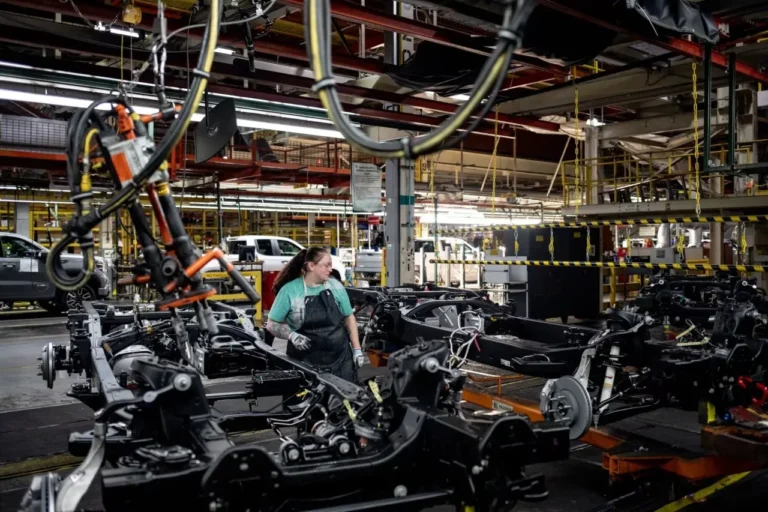
In May 2026, XPENG’s mass-produced Robotaxi rolled off the production line in Guangzhou. This milestone demonstrated progress toward translating the company’s autonomous driving technology into a vehicle designed for production rather than limiting the programme to experimental prototypes.
Mass production is an important consideration for autonomous mobility businesses. A technology platform may perform successfully in controlled demonstrations, but commercial deployment also requires a repeatable manufacturing process, consistent vehicle configurations and the ability to support vehicles throughout their operating lives.
Production readiness can help establish a foundation for fleet deployment, maintenance planning and the development of service operations. It also allows manufacturers to assess how their technology performs when integrated into vehicles intended for practical use.
In July 2026, XPENG completed what it described as the full operational chain, covering online ride-hailing through to automated passenger pickup and drop-off. These functions are essential to the operation of an autonomous transport service because they connect the vehicle’s driving capabilities with the customer’s journey.
The process begins when a user requests a ride. The system must then coordinate the booking with an available vehicle, determine the appropriate pickup location and navigate to the passenger. After pickup, the vehicle must follow the planned route and complete the journey at the designated destination.
Automated pickup and drop-off also introduce practical challenges, including selecting suitable stopping locations, handling changing traffic conditions and providing a clear passenger experience.
Completing this operational chain represents progress toward demonstrating how an autonomous vehicle can function as part of a transport service rather than simply as a self-driving vehicle.
Another important milestone came in August 2026, when XPENG obtained remote-testing qualification for intelligent connected vehicles in Guangzhou.
According to the company, the qualification enables it to conduct road tests without a safety operator sitting in the driver’s seat on the relevant Class I, II and III test roads in Guangzhou.
This development is significant for the continued evaluation of autonomous driving technology. Traditional road testing often relies on a safety operator positioned inside the vehicle to monitor system behaviour and intervene when necessary. Remote testing can change how supervision is organised, allowing designated personnel to monitor vehicle operations remotely under the conditions authorised for testing.
Such arrangements may help developers evaluate autonomous vehicles across relevant road environments while improving the flexibility of testing operations.
Nevertheless, remote-testing permission should not be confused with unrestricted permission to operate driverless vehicles on every public road or provide fully commercial autonomous transportation services. Testing qualifications remain subject to applicable routes, operating conditions, regulatory requirements and safety procedures.
For XPENG, the Guangzhou qualification forms part of a broader sequence of milestones involving vehicle production, operational validation and expanding user access.
Together, these developments provide the foundation for the next stage of XPENG YOYO’s development as the company evaluates the technology in increasingly practical settings.
Before opening registration to external users, XPENG Robotaxi introduced paid internal testing at a price of just RMB 1 per ride.
The company said the initial programme was primarily designed to validate the payment process and service workflow. Although the price was nominal, the testing addressed an important part of the Robotaxi business model: connecting autonomous driving technology with a functioning ride-hailing transaction.
A commercial mobility service requires several systems to work together. Users must be able to access the service, request journeys, receive vehicle assignments and complete payments. The operator must also monitor service availability, vehicle performance and the reliability of the passenger experience.
Testing these functions with employees provides an opportunity to identify technical and operational issues before the service expands to a wider audience.
The transition from internal testing to invitation-based public registration introduces another layer of validation. External users may interact with the service differently from employees, bringing a wider range of expectations and practical requirements.
Their participation can help XPENG evaluate how effectively the service communicates pickup instructions, manages bookings and delivers a consistent journey experience.
The RMB 1 internal testing price should not be interpreted as confirmation of the future standard fare for XPENG YOYO. The company has not established in the supplied announcement what its eventual commercial pricing structure will be.
As the programme develops, pricing, service availability and the geographic scope of operations will be important factors in determining its commercial appeal.
XPENG selected the English name YOYO to improve brand recognition in international markets. The short name is intended to be easy to pronounce and recognisable across different language environments.
A dedicated brand can help distinguish the Robotaxi service from the company’s existing passenger vehicles and intelligent driving features. It can also provide a consistent identity for future marketing, customer communication and partnerships.
For autonomous mobility services, branding is only one element of building customer confidence. Passengers must also understand how the service works, where it operates, how to request a ride and what safety measures are in place.
Nevertheless, a recognisable name can help establish a clearer identity as a technology programme moves toward customer-facing operations.
The selection of YOYO also reflects XPENG’s intention to prepare the Robotaxi programme for potential international recognition. A unified name could support future communications as the company explores opportunities beyond its domestic market.
However, the brand announcement does not confirm a launch date, service area or commercial availability outside China. Any international expansion would depend on factors such as local regulations, operational readiness, infrastructure and market conditions.
XPENG positions Robotaxi as a key application of its Physical AI strategy, which seeks to bring artificial intelligence beyond digital environments and into real-world systems.
In passenger vehicles, AI already supports functions such as driver assistance, environmental perception and vehicle control. Robotaxi development extends these capabilities into a service where the vehicle is expected to perform the driving task within its authorised operating conditions.
This requires AI to interact with the physical environment continuously. The system must interpret road layouts, respond to other vehicles and pedestrians, account for traffic signals and manage changing conditions during a journey.
Unlike applications that operate primarily in digital environments, autonomous driving must contend with unpredictable real-world situations. Weather, roadworks, unusual traffic behaviour and unexpected obstacles can all affect vehicle operation.
Consequently, the development of a Robotaxi service requires more than a capable AI model. It also depends on vehicle integration, computing hardware, system reliability, extensive testing and operational processes designed around passenger transportation.
XPENG’s strategy is to use its experience in intelligent electric vehicles as a foundation for advancing these capabilities. By integrating proprietary chips, AI models and vehicle systems, the company aims to develop a consistent technology platform that can support increasingly sophisticated autonomous driving applications.
Robotaxi operations may also provide valuable information about the performance of autonomous driving systems in practical environments. The ability to evaluate a complete service, from booking to drop-off, can help developers understand both the technical and operational requirements of deployment.
The introduction of XPENG YOYO marks a new phase in the company’s autonomous mobility programme. The progression from mass production in May to operational-chain validation in July, remote-testing qualification in August and public registration in October demonstrates a series of development milestones achieved during 2026.
The next challenge will be to translate these achievements into a dependable and commercially sustainable service.
Important considerations include the consistency of autonomous driving performance, the ability to manage passenger journeys, vehicle availability, maintenance requirements and compliance with local regulations. The company will also need to establish how the service can operate economically as the number of vehicles and users grows.
Customer confidence will be another important factor. Passengers evaluating an autonomous ride-hailing service are likely to consider convenience, reliability, safety information, pricing and the ease of booking.
The invitation-based registration programme provides XPENG with an opportunity to assess these factors before any broader expansion. Its results may help determine how quickly the service can progress toward more extensive commercial operations.
For the wider automotive industry, XPENG YOYO reflects the growing effort by vehicle manufacturers to apply their software, computing and AI capabilities to mobility services. Rather than treating autonomous driving solely as a feature within a privately owned vehicle, Robotaxi programmes seek to use automation as part of a dedicated transportation business.
Whether this approach achieves large-scale adoption will depend on technology maturity, regulatory frameworks, operational economics and customer acceptance.
For now, XPENG’s announcement establishes YOYO as the official brand for its Robotaxi initiative and signals its intention to move from development and validation toward real-world user operations.
As part of its Physical AI strategy, the programme represents a further step in XPENG’s ambition to extend artificial intelligence from intelligent vehicles into more advanced autonomous mobility applications. The opening of public registration is an important milestone in that process, although sustained commercial deployment will depend on the company’s ability to demonstrate reliable performance and deliver a service that meets users’ expectations.
About XPENG
XPENG is a leading global Physical AI company, dedicated to bringing artificial intelligence into the physical world to reshape future mobility and smart living. Through in-house R&D, XPENG has developed a full-stack Physical AI architecture spanning Turing AI chips, world foundation models, and highly integrated software and hardware applications. This unified technology foundation of XPENG powers an expansive product portfolio of smart EVs, robotaxis, and humanoid robots, advancing the deployment of Physical AI at scale. Headquartered in Guangzhou, China, XPENG is dual-primary listed on the New York Stock Exchange and the Hong Kong Stock Exchange. With global capabilities across R&D, manufacturing, sales, and services, XPENG drives continuous technological innovation and fosters an open Physical AI ecosystem, making life smarter, safer, and better for users worldwide.
Source Link:https://www.xpeng.com/