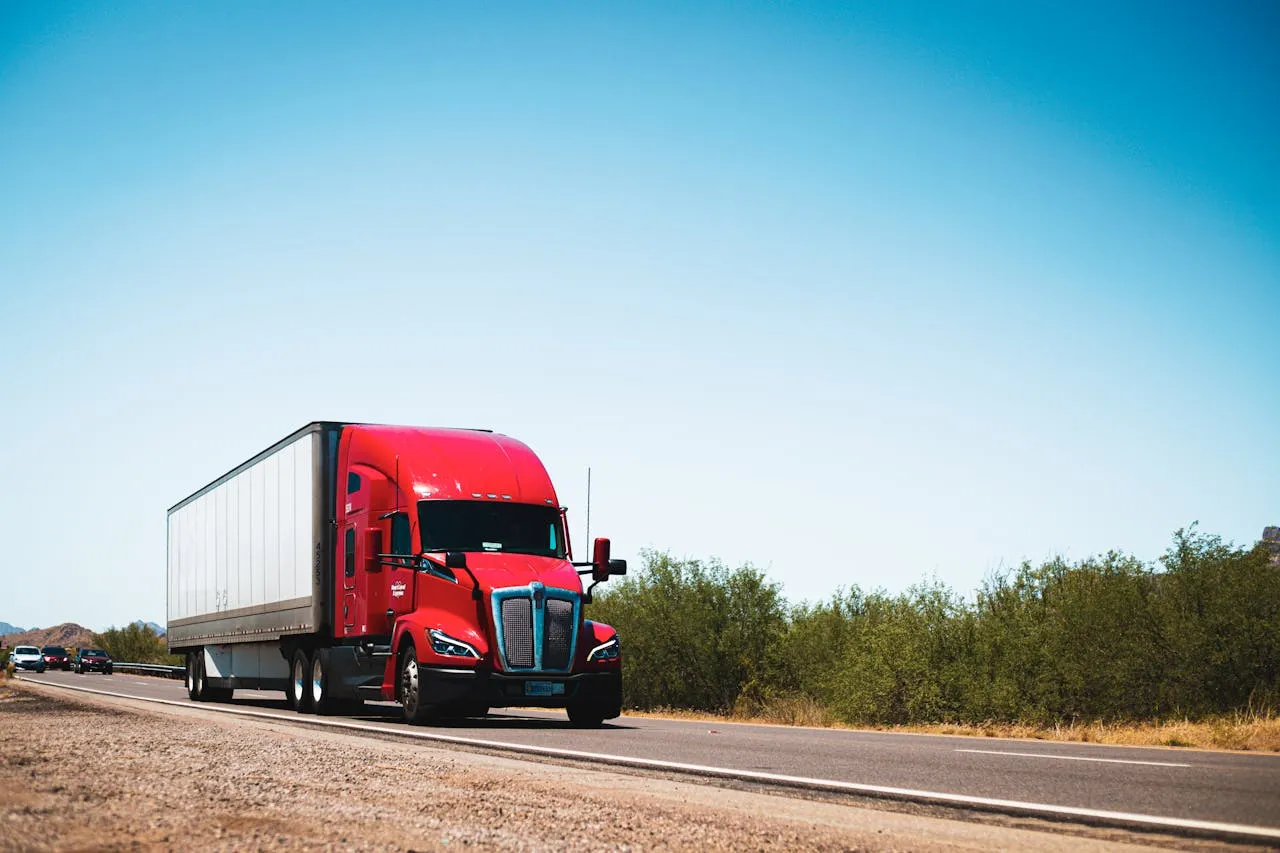
Autonomous trucking technology company Torc Robotics is expanding its artificial intelligence research efforts through a new strategic partnership with the Mila – Quebec Artificial Intelligence Institute, a globally recognized center for machine learning and advanced AI research. The collaboration marks a significant step in Torc’s long-term strategy to accelerate innovation in autonomous freight transportation by deepening its expertise in physical AI systems and strengthening ties with leading academic institutions.
The partnership positions Torc within Mila’s research ecosystem in Montreal, creating opportunities for closer collaboration with researchers, professors, and emerging talent working at the forefront of artificial intelligence. Through the initiative, Torc becomes the only autonomous trucking-focused organization to join Mila’s ecosystem, highlighting the company’s focus on applying advanced AI models to real-world transportation challenges.
As competition intensifies in the autonomous mobility landscape, companies developing self-driving systems are increasingly turning to research institutions to bridge the gap between theoretical advancements and commercial deployment. Torc’s latest move reflects a broader industry trend in which partnerships between academia and private industry are becoming critical to advancing next-generation autonomous technologies.
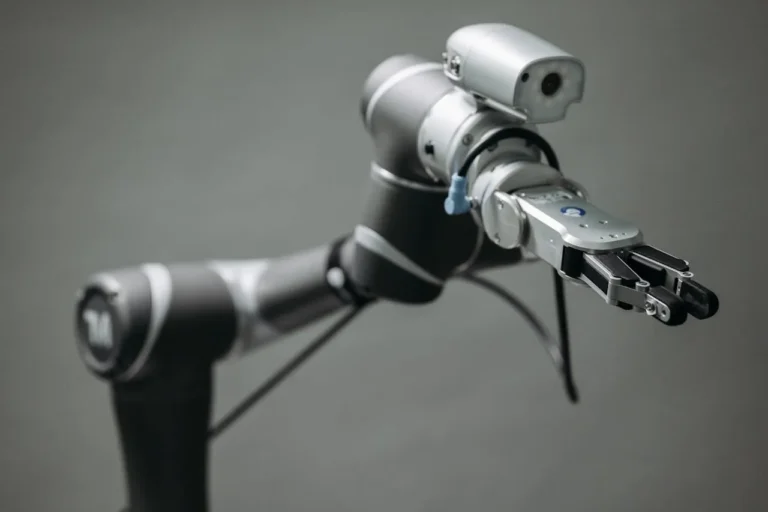
The partnership is expected to strengthen Torc’s ability to develop more sophisticated physical AI technologies—systems designed to interpret and interact with real-world environments in complex and unpredictable situations.
Unlike conventional AI models focused primarily on digital tasks such as language generation or data analysis, physical AI seeks to enable machines to operate safely and intelligently in dynamic physical spaces. For autonomous trucking companies, this capability is especially important because vehicles must continuously interpret road conditions, anticipate the actions of other drivers, navigate traffic patterns, and respond to changing environmental conditions.
Through its integration within Mila’s Montreal-based ecosystem, Torc will gain access to dedicated research facilities and collaborate directly with students, researchers, and faculty members specializing in machine learning, robotics, and autonomous systems.
The initiative builds upon Torc’s ongoing investments in artificial intelligence research and is designed to deepen the company’s expertise in emerging technologies that could improve the safety, efficiency, and scalability of autonomous freight systems.
Researchers involved in the collaboration are expected to explore a wide range of advanced topics, including generative world models, reinforcement learning, multi-agent behavior modeling, and foundation models tailored for physical AI applications.
These research areas are becoming increasingly relevant in autonomous driving development because they can help self-driving systems improve decision-making in uncertain or highly dynamic scenarios.
For example, generative world models may allow autonomous vehicles to simulate and anticipate different road situations before they happen, while reinforcement learning techniques could enable systems to continuously refine driving strategies based on real-world experience.
Similarly, multi-agent behavior modeling can help autonomous trucks better predict and respond to the actions of surrounding vehicles, pedestrians, and infrastructure systems.
The decision to expand Torc’s presence in Montreal underscores the city’s growing influence as a center for artificial intelligence innovation.
Over the past decade, Montreal has established itself as one of North America’s leading AI ecosystems, attracting researchers, startups, and multinational technology companies seeking access to top academic talent and cutting-edge research.
Mila has played a major role in shaping that ecosystem. Widely recognized for its contributions to machine learning research, the institute has developed strong relationships with leading Canadian universities and cultivated a reputation as a training ground for some of the world’s top AI professionals.
Many former researchers and affiliates associated with Mila have gone on to leadership positions at major technology organizations, including firms involved in artificial intelligence, robotics, and advanced computing.
For Torc, embedding itself in this environment offers opportunities not only for research collaboration but also for long-term talent acquisition. Access to highly specialized students and researchers could prove valuable as the company continues scaling efforts aimed at commercializing autonomous trucking systems.
The partnership also strengthens Torc’s existing footprint in Montreal. The company has maintained connections with Mila since 2020, and the latest agreement formalizes and expands that relationship into a deeper strategic alliance focused on accelerating innovation in autonomous transportation.
Torc executives view advances in physical AI as a critical requirement for bringing autonomous trucking to commercial scale.
Developing self-driving freight vehicles requires more than traditional software systems or rule-based automation. Trucks operating without human intervention must be capable of perceiving their surroundings, reasoning through uncertain conditions, and making safe decisions in real time.
This challenge becomes particularly complex in long-haul trucking environments where vehicles encounter varying weather conditions, highway traffic, construction zones, lane closures, and unpredictable driver behavior.
According to company leadership, the partnership with Mila is intended to support the development of AI technologies that can improve autonomous vehicle adaptability and reliability.
Felix Heide, Torc’s head of artificial intelligence, described physical AI advancement as an essential component of the company’s broader mission to build scalable and safe autonomous trucking systems.
He emphasized that combining academic research expertise with real-world deployment experience can accelerate innovation in meaningful ways, especially as autonomous trucking companies move closer to commercial implementation.
Heide, who has maintained ties with Mila over the years, noted that direct collaboration with researchers offers an opportunity to transform theoretical AI advances into practical applications for freight transportation.
By leveraging Mila’s research environment, Torc hopes to improve how autonomous trucks understand and respond to increasingly complex operating conditions while maintaining high safety standards.
One of the most significant aspects of the partnership is its emphasis on connecting academic discovery with real-world implementation.
Research institutions often focus on pushing scientific boundaries, while industry organizations concentrate on practical deployment and commercialization. Collaborations between the two can help accelerate technological progress by aligning theoretical innovation with operational challenges.
Mila leadership sees the partnership as an opportunity to create meaningful research applications while also providing valuable opportunities for students and faculty.
Christopher Pal, a core academic member at Mila, highlighted the importance of combining academic expertise with industry-driven deployment efforts.
He said the collaboration would allow researchers and students to work on impactful challenges in physical AI while contributing to advancements in autonomous systems development.
The arrangement may also help expose researchers to large-scale transportation problems that require practical, real-world solutions rather than purely experimental research.
This industry-academic dynamic has become increasingly important in fields such as robotics and autonomous systems, where translating laboratory breakthroughs into operational technologies often requires access to commercial testing environments and deployment infrastructure.
For Torc, integrating research insights directly into autonomous truck development could help shorten innovation cycles and improve system performance over time.
Torc’s expanded AI efforts come as the autonomous trucking sector continues progressing toward commercialization.
Over the past several years, major transportation technology firms and freight operators have increased investments in autonomous systems aimed at addressing long-standing logistics challenges, including driver shortages, efficiency pressures, and freight capacity demands.
Autonomous trucking is widely viewed as one of the most commercially promising applications of self-driving technology because long-haul highway environments are often more structured and predictable than urban passenger transportation settings.
However, despite ongoing progress, substantial technical and regulatory hurdles remain before large-scale deployment becomes commonplace.
Safety validation, edge-case handling, infrastructure readiness, and public trust continue to be major areas of focus for companies developing autonomous vehicle technologies.
Advanced AI systems capable of reasoning through unfamiliar situations are expected to play a key role in overcoming these barriers.
The Torc-Mila partnership reflects growing recognition across the industry that breakthroughs in artificial intelligence will likely determine how quickly autonomous transportation reaches widespread adoption.
Academic experts involved with Mila believe partnerships such as this will become increasingly important as autonomous technologies approach real-world deployment.
Liam Paull, a core academic member at Mila and co-leader of Montreal’s Robotics and Embodied AI Lab, emphasized the significance of stronger connections between research institutions and companies developing commercial autonomous systems.
As self-driving vehicle technology advances toward broader implementation, he suggested that collaborations between universities, research labs, and technology firms are essential for translating scientific advances into deployable products.
Such partnerships also create opportunities for students and researchers to contribute directly to emerging technologies with practical societal and economic impact.
In areas such as autonomous freight transportation, advancements in robotics and embodied AI could eventually help improve logistics efficiency, reduce operational costs, and strengthen transportation safety.
For Torc Robotics, the partnership with Mila represents more than a research initiative—it signals a deeper commitment to shaping the future of autonomous freight through advanced artificial intelligence.
By embedding itself within one of the world’s leading AI ecosystems, the company is positioning itself to tap into new ideas, recruit specialized talent, and accelerate technological development in areas essential to commercial autonomy.
As autonomous trucking edges closer to mainstream deployment, the ability to combine cutting-edge research with operational expertise may prove decisive in determining which companies successfully scale their technology.
The collaboration between Torc and Mila reflects a shared ambition to advance physical AI systems that can safely operate in complex environments while bringing autonomous transportation closer to commercial reality.
With increasing industry momentum and growing interest in embodied AI technologies, partnerships linking research excellence with deployment experience are expected to play a defining role in the next phase of autonomous vehicle development.
About Torc
Torc is driving the future of freight with autonomous technology. Torc has more than 20 years of experience in pioneering safety-critical, self-driving applications. Torc offers an AI-forward, self-driving vehicle software and integration solution and is currently focusing on commercializing autonomous trucks for long-haul applications in the U.S. In addition to its Blacksburg headquarters and engineering offices in Ann Arbor, MI, and Montreal, Torc has a fleet operations facility in Dallas-Fort Worth, to support the company’s productization and commercialization efforts for our customers. As an independent subsidiary of Daimler Truck AG, a global leader and pioneer in trucking, Torc is empowering exceptional employees, delivering a customer-focused autonomous truck product, and providing the safest, most reliable, and cost-efficient solution to the market.
Source Link:https://www.businesswire.com/