Venti Technologies, a global leader in autonomous vehicle (AV) solutions for industrial logistics, has announced a landmark long-term commercial agreement with one of North America’s leading Class 1 freight railroads to introduce AI-powered autonomous container trucks across multiple intermodal terminals in the United States. The collaboration represents a major milestone in the evolution of rail logistics, marking the first full-scale production deployment of autonomous container-moving vehicles at a large U.S. intermodal rail facility.
The agreement reflects the growing adoption of artificial intelligence and autonomous mobility technologies in heavy industrial environments, where improving operational efficiency, enhancing worker safety, and reducing long-term operating costs have become strategic priorities. Although financial terms of the partnership have not been disclosed, both companies described the agreement as a long-term collaboration designed to transform container handling operations at some of the nation’s busiest freight terminals.
Intermodal rail terminals play a critical role in the North American supply chain. These facilities serve as transfer hubs where shipping containers move between trains and trucks, enabling freight to travel efficiently across the continent. Every day, thousands of containers are transported through these terminals, requiring highly coordinated vehicle movement, precise positioning, and continuous operations.
Historically, container movement within rail yards has relied heavily on manually operated trucks and specialized equipment. While effective, these operations can be labor-intensive, subject to labor shortages, and exposed to safety risks associated with busy industrial environments.
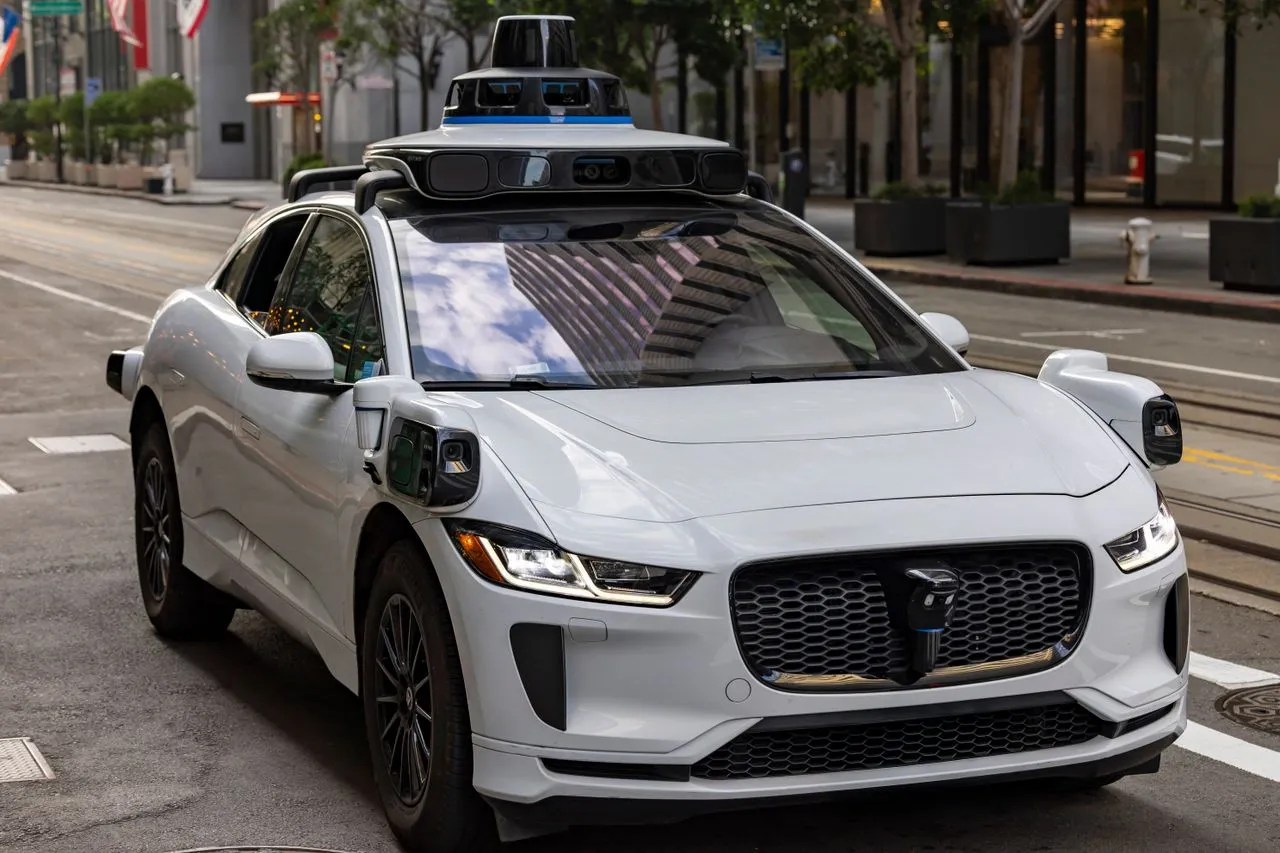
Venti Technologies aims to address these challenges by introducing autonomous container trucks capable of performing routine transportation tasks without a driver inside the vehicle. Powered by advanced artificial intelligence, precision navigation systems, sensors, and proprietary software, these vehicles are designed to operate safely and efficiently within complex logistics facilities.
The deployment signals a significant step toward fully autonomous freight handling, allowing rail operators to modernize their infrastructure while maintaining uninterrupted cargo movement.
One of the most significant aspects of the agreement is that it represents the first full-production implementation of autonomous container trucks in a major U.S. intermodal rail facility.
Unlike pilot projects or limited demonstrations that have characterized many autonomous vehicle initiatives over the past decade, this deployment is intended for live commercial operations. The autonomous trucks will participate in everyday terminal activities, moving shipping containers between loading points, rail tracks, storage areas, and transfer locations without requiring a driver onboard.
The technology will initially be introduced at two of the busiest intermodal terminals in the United States. These high-volume facilities handle enormous amounts of freight daily, making them ideal locations to demonstrate the scalability and reliability of autonomous logistics solutions.
Once operational, the vehicles will perform complete production tasks including:
This level of automation represents a major advancement for industrial transportation.
At the heart of Venti’s autonomous platform is its proprietary precision-navigation technology.
Unlike autonomous vehicles designed for public roads, industrial autonomous trucks operate within structured but highly dynamic environments. Rail terminals contain moving trains, heavy machinery, cranes, workers, trailers, shipping containers, and constantly changing cargo layouts.
To navigate safely through these environments, Venti combines multiple technologies, including advanced sensors, onboard computing systems, artificial intelligence algorithms, and high-precision localization software.
The autonomous platform continuously monitors its surroundings, identifying obstacles, calculating optimal travel paths, and making real-time driving decisions. This enables the vehicles to safely maneuver through narrow lanes, loading zones, intersections, and container storage areas while maintaining operational efficiency.
The company’s proprietary software also enables centimeter-level positioning accuracy, which is particularly important when aligning containers with cranes and loading equipment.
As part of the partnership, the Class 1 railroad will deploy trucks specially customized with Venti’s autonomous technology stack.
Each vehicle will incorporate:
Rather than functioning as independent vehicles, the autonomous trucks will operate as part of an integrated logistics ecosystem capable of coordinating movement across the rail yard.
This fleet-based approach enables centralized management, optimized routing, and continuous operational monitoring.
While the initial rollout will focus on two major intermodal facilities, the long-term deployment plan is substantially larger.
According to Venti, the company expects to deploy more than 100 autonomous container-moving trucks across eight railroad facilities by 2027.
The expansion does not stop there.
By the end of the decade, the deployment is expected to exceed 600 autonomous trucks operating throughout the railroad’s network.
Such a large-scale rollout would represent one of the world’s most extensive commercial deployments of autonomous industrial vehicles outside China.
The phased implementation allows both organizations to refine operations, validate performance metrics, and gradually expand the autonomous fleet while maintaining uninterrupted freight operations.
Safety remains one of the primary motivations behind the adoption of autonomous logistics technologies.
Rail yards are inherently busy environments where workers, heavy equipment, trains, and transport vehicles operate simultaneously. Reducing human exposure to repetitive driving tasks can significantly lower the likelihood of accidents caused by fatigue, distraction, or limited visibility.
Autonomous trucks are designed to continuously monitor their surroundings using multiple sensors that never become tired or distracted. The vehicles maintain consistent awareness of nearby obstacles and respond instantly to changing conditions.
By automating repetitive container transportation tasks, terminal operators can allow employees to focus on higher-value responsibilities involving supervision, maintenance, planning, and equipment management.
This combination of automation and human oversight creates opportunities for safer and more efficient industrial operations.
Efficiency improvements are another major benefit expected from the collaboration.
Intermodal terminals operate under constant pressure to move freight quickly while minimizing delays. Even small improvements in container handling efficiency can produce substantial operational savings across large logistics networks.
Autonomous trucks can operate continuously with highly predictable performance, maintaining consistent speeds, following optimized routes, and reducing idle time.
Additional operational benefits include:
Because autonomous systems generate detailed operational data, terminal operators can also gain valuable insights into traffic patterns, equipment usage, and workflow optimization.
The announcement comes at a time when supply chain resilience has become a strategic priority across North America.
Recent disruptions have highlighted the importance of improving logistics efficiency while reducing operational bottlenecks. Rail transportation continues to play an essential role in moving consumer goods, industrial materials, agricultural products, and imported merchandise across the continent.
By introducing AI-powered autonomous vehicles into daily operations, railroads can modernize cargo handling without requiring major changes to existing infrastructure.
This approach allows operators to improve productivity while supporting growing freight demand in the coming years.
To ensure successful implementation, Venti and the railroad will establish a joint steering committee responsible for overseeing deployment milestones and long-term program governance.
The committee will coordinate rollout schedules, monitor system performance, evaluate operational metrics, and guide future expansion phases.
Collaborative governance is expected to play an important role in maintaining safety standards, ensuring regulatory compliance, and integrating autonomous operations into existing logistics workflows.
Such oversight also allows both organizations to adapt deployment strategies based on operational experience and evolving business requirements.
Venti highlighted that it is currently the only company outside China to have successfully operationalized physical AI autonomy for moving goods in heavy-logistics customer environments.
While many autonomous vehicle companies have focused on passenger transportation or highway trucking, Venti has concentrated on industrial logistics applications where autonomous technology can deliver immediate commercial value.
Industrial sites such as ports, distribution centers, manufacturing facilities, mining operations, and rail terminals provide structured environments that are well suited to autonomous operations.
Success in these sectors demonstrates the growing maturity of autonomous driving technology beyond traditional public-road applications.
Commenting on the agreement, Heidi Wyle, PhD, Founder and Chief Executive Officer of Venti Technologies, emphasized the broader significance of the partnership.
She noted that the collaboration represents an opportunity to fundamentally reinvent supply chain operations while advancing shared commitments to innovation, efficiency, workforce safety, and long-term sustainability.
According to Wyle, the deployment reflects a common vision between Venti and its rail partner to harness artificial intelligence in ways that create lasting benefits for both businesses and the broader logistics industry.
Her remarks underscore the company’s belief that autonomous technologies will become an increasingly important component of future freight transportation systems.
Source Link:https://www.businesswire.com/