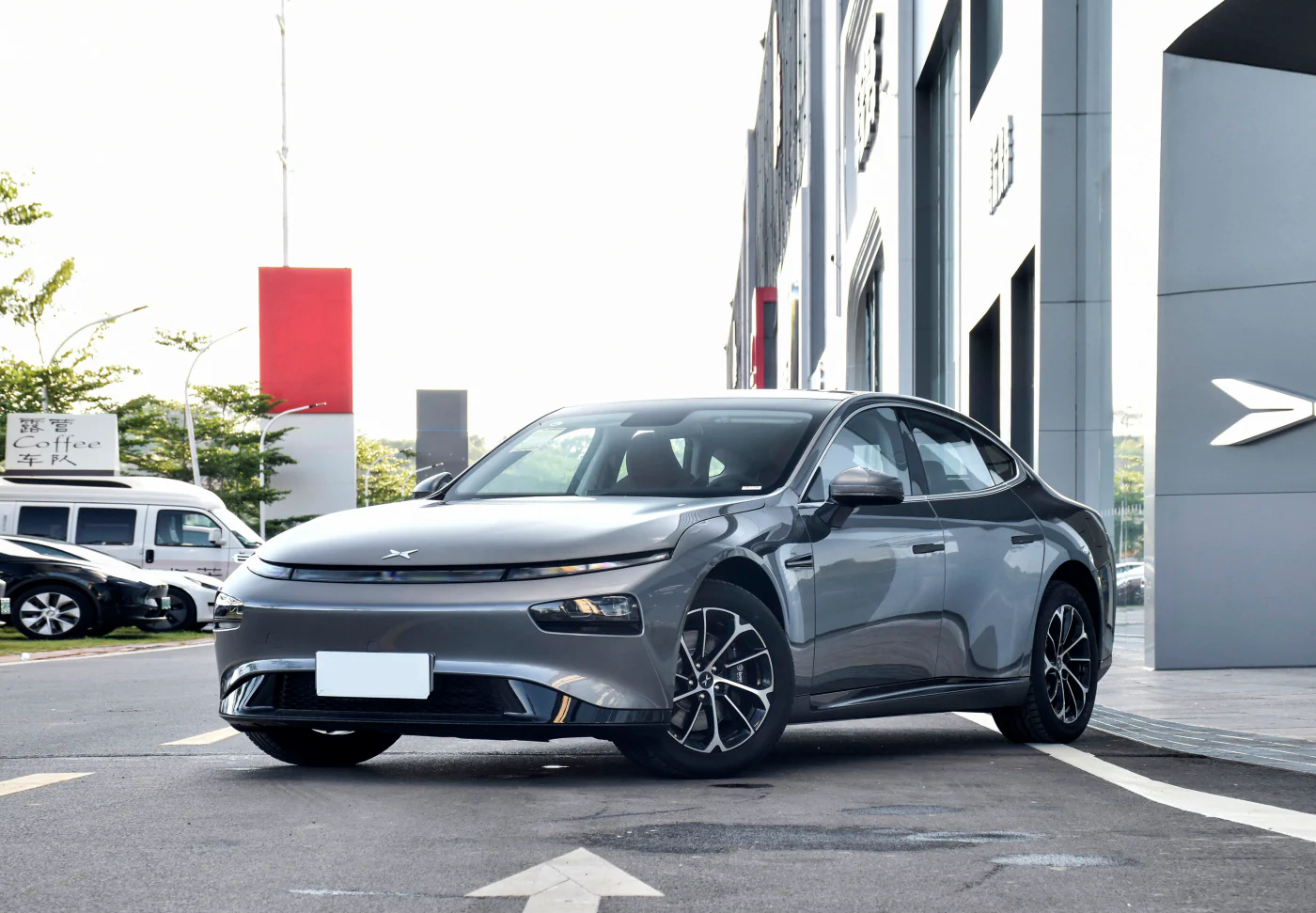
XPENG Motors has taken a decisive step toward reshaping the global intelligent mobility landscape, announcing a major milestone in the evolution of autonomous driving technology. The company confirmed that worldwide deliveries of its next-generation VLA 2.0 intelligent driving system will begin in 2027, marking a significant advancement in full-scenario, AI-driven autonomy. The announcement was made during XPENG’s “The Future” VLA Media Experience Day, where the company unveiled both the technical architecture and global deployment roadmap for VLA 2.0, signaling a new chapter in the race toward fully autonomous transportation.
A 2027 Global Rollout Anchored by Strategic Partnership
As part of its carefully structured expansion strategy, XPENG revealed that Volkswagen will serve as the inaugural launch partner for VLA 2.0 in the Chinese market. This collaboration underscores growing industry recognition of XPENG’s AI leadership and highlights the convergence of traditional global automakers and next-generation EV innovators in shaping the autonomous era.
By designating Volkswagen as the first customer for VLA 2.0 in China, XPENG strengthens a partnership that combines advanced software intelligence with large-scale automotive manufacturing expertise. The alliance is expected to accelerate commercialization while reinforcing XPENG’s technological credibility on a global stage.
Global road testing will expand progressively ahead of the 2027 delivery target. Public road testing has already begun in China through XPENG’s Robotaxi fleet, and international validation programs are scheduled to commence soon. Trial operations are planned for later this year, laying the groundwork for regulatory approvals, real-world validation, and consumer readiness.
From Modular Stacks to Unified AI Intelligence
At the core of VLA 2.0 lies a radical architectural shift. Traditional autonomous driving systems rely on modular stacks composed of separate perception, planning, and control modules. These systems frequently depend on high-definition maps, rigid rule-based programming, and layered translation pipelines to interpret the driving environment.
VLA 2.0 replaces this conventional structure with a unified AI foundation model that integrates perception, reasoning, and action within a single framework. Instead of processing vision into language representations before generating driving commands, XPENG’s system leverages an end-to-end vision-to-action architecture. This eliminates intermediate translation layers, reducing latency and improving decision-making speed.
The result is a more fluid and adaptive system capable of interpreting complex environments with a higher degree of contextual understanding. By reducing dependence on HD maps and fixed rules, VLA 2.0 enhances cross-scenario generalization—an essential capability for real-world autonomy where unpredictability is the norm rather than the exception.
Real-World Validation in Complex Urban Environments
XPENG’s Robotaxi fleet equipped with VLA 2.0 has already entered public road testing, offering valuable insight into the system’s real-world performance. Early trials demonstrate robust capabilities in dense urban centers, mixed-traffic conditions, and dynamic road environments.
During measured evaluations conducted in Guangzhou’s evening rush hour traffic, VLA 2.0 delivered impressive results. Traffic efficiency improved by 23% compared to earlier intelligent driving systems. Notably, its performance exceeded traditional Level 2 (L2) assisted driving systems and even surpassed certain existing Robotaxi models under similar conditions.
These gains were not merely theoretical. In real-world congestion scenarios involving lane merges, erratic drivers, sudden obstacles, and unpredictable pedestrian movements, VLA 2.0 maintained smooth trajectory planning and human-like behavioral responses. This ability to navigate complexity with composure represents a critical step toward consumer trust in autonomous technology.
Toward True “Driving-Anywhere” Capability
According to XPENG Chairman and CEO He Xiaopeng, VLA 2.0 is the company’s first version designed with full autonomous driving as its ultimate objective. He emphasized that the system will iterate at an unprecedented pace, with the company anticipating that full autonomy could become a natural part of daily life within the next one to three years.
One of the defining characteristics of VLA 2.0 is its full-scenario coverage. Unlike systems limited to well-mapped urban centers or highways, XPENG’s solution is engineered to operate across diverse environments. These include campus lanes, rural dirt roads, and non-navigable routes—areas traditionally considered challenging for automated systems.
The system handles narrow lane passages, pothole avoidance, uneven road surfaces, and unpredictable traffic flows with enhanced confidence. Importantly, VLA 2.0 supports operation from a complete standstill, delivering a genuine “full-process assisted driving” experience. From ignition to parking, the system remains continuously engaged, minimizing driver intervention.
Enhancing Safety, Comfort, and Confidence
While autonomy often centers on technical metrics, XPENG has placed strong emphasis on user experience. VLA 2.0 is designed not only to improve safety but also to enhance ride comfort and passenger confidence.
The AI model is trained to recognize complex scenarios such as accident scenes, stalled vehicles, sudden braking events, and construction zones. Rather than reacting abruptly, it anticipates potential hazards and adjusts driving behavior proactively. This predictive intelligence reduces harsh braking, unnecessary lane changes, and abrupt maneuvers.
Passengers benefit from smoother acceleration curves, more natural lane positioning, and more intuitive responses in congested environments. The aim is to replicate—and in certain cases exceed—the capabilities of experienced human drivers while eliminating fatigue and distraction.
A Leap in AI Architecture
The technical breakthrough behind VLA 2.0 lies in its end-to-end AI foundation model. Traditional VLA systems operate in a sequential pipeline: vision input is translated into language-based reasoning, which then generates action commands. While functional, this structure introduces computational overhead and response delays.
XPENG’s updated architecture bypasses this layered translation. Perception feeds directly into driving decision outputs, dramatically improving reaction time. This streamlined approach enhances efficiency, reduces system complexity, and supports faster model iteration cycles.
The architecture also enables continuous learning across diverse environments. As the system accumulates more real-world driving data, it refines its predictive capabilities and strengthens cross-domain adaptability. This data-driven evolution forms the backbone of XPENG’s rapid development roadmap.
Expanding Beyond Passenger Vehicles
XPENG’s ambitions extend well beyond traditional automobiles. The AI foundation model powering VLA 2.0 is part of a broader Physical AI strategy aimed at unifying intelligent capabilities across multiple embodied AI platforms.
The same underlying architecture is being applied to Robotaxi fleets, humanoid robotics, and modular flying vehicle systems. By leveraging a common AI core, XPENG aims to accelerate cross-industry innovation while maintaining architectural consistency.
Robotaxi fleets serve as large-scale data generators, feeding real-world insights back into the AI model. Humanoid robots represent the next frontier of embodied intelligence, translating perception into action in human environments. Meanwhile, modular flying vehicle systems signal XPENG’s long-term vision of multidimensional mobility ecosystems.
This integrated approach positions XPENG not merely as an EV manufacturer but as a full-spectrum AI mobility technology company.
Strengthening Global Competitive Positioning
The announcement of VLA 2.0’s 2027 global delivery timeline reinforces XPENG’s position among leading innovators in intelligent driving. As the industry accelerates toward software-defined vehicles, companies capable of integrating advanced AI with scalable production will hold strategic advantages.
By initiating international road testing ahead of commercial launch, XPENG demonstrates readiness for global regulatory environments and diverse traffic ecosystems. This proactive validation strategy aims to ensure smoother deployment across markets once deliveries commence.
The partnership with Volkswagen further enhances global credibility. Combining German automotive engineering heritage with XPENG’s AI-first philosophy creates a powerful synergy capable of competing across established and emerging markets.
Accelerating the Path to Full Autonomy
He Xiaopeng’s projection that full autonomy could arrive within one to three years reflects the rapid pace of AI evolution. VLA 2.0’s architecture is intentionally designed for fast iteration cycles, enabling frequent software updates and continuous improvement.
Unlike incremental upgrades layered onto legacy systems, VLA 2.0 represents a foundational reset. Its unified AI model reduces structural bottlenecks and supports scalable enhancements. This flexibility ensures that performance gains can be deployed efficiently across fleets.
The vision is clear: transform autonomous driving from a premium feature into a mainstream mobility standard. By improving safety, efficiency, and comfort simultaneously, XPENG aims to make intelligent driving not just functional—but indispensable.
Shaping the Future of Intelligent Mobility
XPENG’s unveiling of VLA 2.0 marks more than a technological upgrade; it signals a strategic shift toward AI-centric mobility ecosystems. With public road testing underway, international expansion imminent, and global deliveries scheduled for 2027, the roadmap is both ambitious and methodical.
By merging perception, reasoning, and action into a unified AI foundation model, XPENG is redefining how vehicles interpret and interact with the real world. The emphasis on cross-scenario generalization, reduced map dependency, and human-like driving behavior sets a new benchmark for the industry.
As VLA 2.0 advances from testing to commercialization, it stands poised to influence not only passenger vehicles but also the broader landscape of intelligent machines operating in complex environments. In doing so, XPENG is positioning itself at the forefront of the next mobility revolution—where autonomy becomes seamless, ubiquitous, and deeply integrated into everyday life.
Source Link:https://www.xpeng.com/