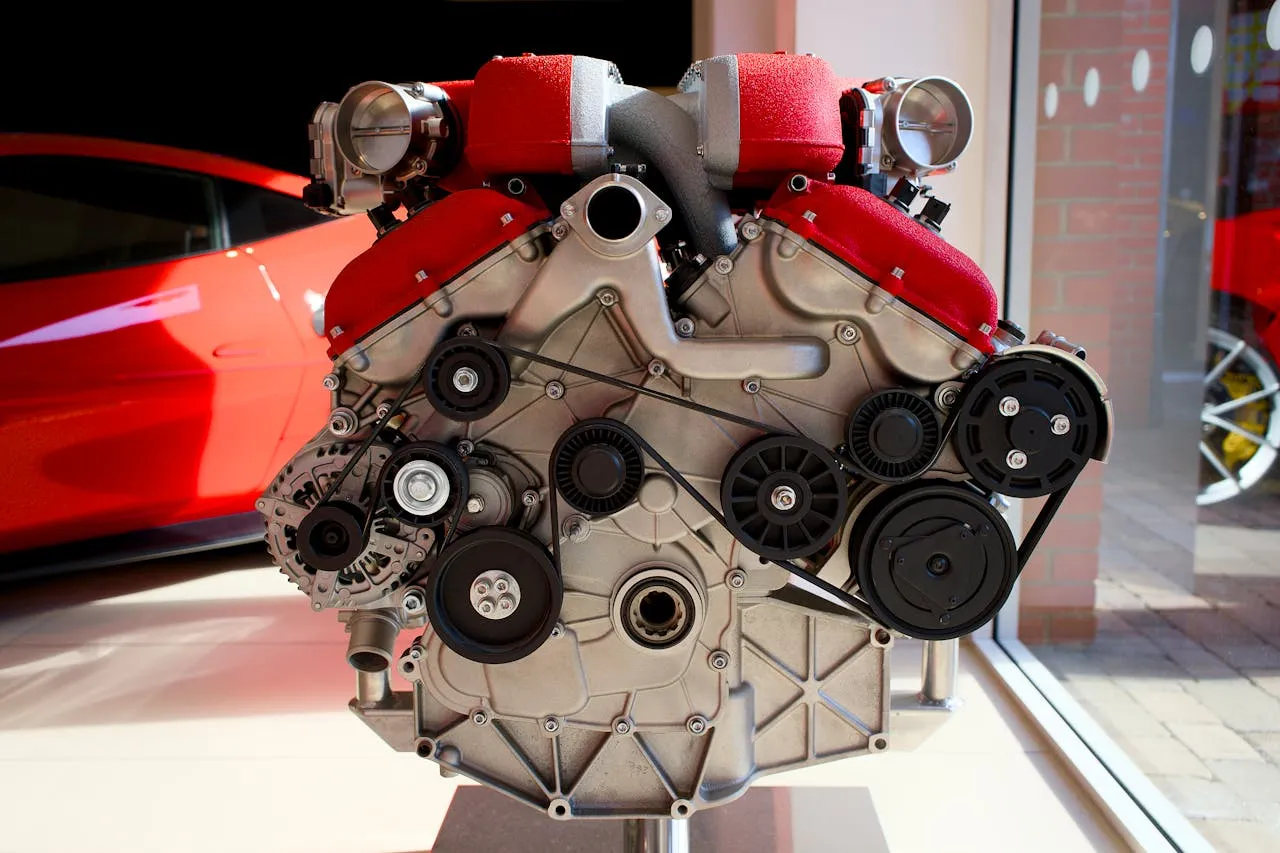
Horse Powertrain has taken a decisive step into the next generation of electrified propulsion with the unveiling of its all-new HORSE W30 engine, a lightweight, hybrid-focused V6 system introduced ahead of the Beijing Auto Show 2026. The debut signals not only the company’s entry into the V6 segment, but also a broader shift in how traditional internal combustion architectures are being reimagined for a hybrid-first future.
For years, Horse Powertrain has built its reputation on efficient and compact three- and four-cylinder engines designed to meet tightening global emissions standards while maintaining performance. The introduction of the HORSE W30 represents a natural evolution of that expertise. By scaling its engineering philosophy to a six-cylinder configuration, the company is addressing a key gap in the market: a high-performance engine that remains lightweight, efficient, and inherently compatible with hybrid systems.
Unlike conventional V6 engines that were originally designed for standalone combustion use and later adapted for electrification, the HORSE W30 has been engineered from the ground up with hybrid integration in mind. This “hybrid-first” philosophy allows the engine to work seamlessly with electric motors, improving overall system efficiency and enabling automakers to meet increasingly strict environmental regulations without sacrificing driving dynamics.
One of the most striking aspects of the HORSE W30 is its weight. At just 160 kilograms, it is approximately 10 kilograms lighter than the next closest competitor in the V6 category. This reduction is not merely a technical achievement—it has significant real-world implications.
A lighter engine contributes directly to improved vehicle efficiency, handling, and fuel economy. Reduced mass allows for better weight distribution, which enhances driving dynamics, while also lowering overall energy consumption. In hybrid vehicles, where every kilogram matters for maximizing electric range and minimizing emissions, this advantage becomes even more critical.
The lightweight design has been achieved through advanced material selection, optimized structural architecture, and the integration of multiple components into compact assemblies. Horse Powertrain’s experience in building smaller displacement engines has clearly influenced the W30’s design, enabling the company to strip away unnecessary bulk without compromising durability or performance.
Another key strength of the HORSE W30 lies in its versatility. The 3.0-liter engine can be installed in both transverse and longitudinal configurations, making it suitable for a wide range of vehicle types—from front-wheel-drive crossovers to rear-wheel-drive performance sedans and even all-wheel-drive SUVs.
This flexibility is increasingly important in today’s automotive landscape, where modular platforms and shared architectures are becoming the norm. Automakers are under pressure to reduce development costs while offering diverse product lineups, and a powertrain that can adapt to multiple configurations provides a significant advantage.
The engine features a 90-degree cylinder bank angle, which lowers the center of gravity and enhances vehicle stability. This design also improves packaging efficiency, making it easier to integrate the engine into different vehicle platforms. Additionally, the layout optimizes the positioning of catalytic converters, helping to improve emissions performance and reduce exhaust system complexity.
Despite its focus on efficiency and hybrid compatibility, the HORSE W30 does not compromise on performance. The engine delivers an impressive output ranging from 350 to 400 kilowatts, along with torque figures between 600 and 700 Newton-meters. These numbers place it firmly in the high-performance category, making it suitable for premium and performance-oriented vehicles.
The engine is capable of reaching speeds of up to 8,000 revolutions per minute, a characteristic more commonly associated with sports engines. This high-revving capability ensures responsive acceleration and a dynamic driving experience, even when paired with hybrid systems.
To further enhance efficiency, the W30 incorporates integrated exhaust manifolds with turbochargers mounted directly on the cylinder heads. This design reduces thermal losses and improves turbocharger response, resulting in better fuel economy and lower emissions. By minimizing the distance between the exhaust valves and the turbochargers, the system can harness exhaust energy more effectively, boosting overall engine performance.
The unveiling of the HORSE W30 was accompanied by the introduction of the HORSE 4LDHT four-speed hybrid transmission, underscoring the company’s commitment to delivering a complete electrified powertrain solution.
Weighing 199 kilograms, the 4LDHT transmission has been designed to work in a P1 + P3 motor configuration. In this setup, the P1 motor is connected to the engine crankshaft and serves multiple functions, including assisting the engine during acceleration and charging the battery. This motor is capable of producing between 250 and 300 kilowatts of power.
The P3 motor, on the other hand, is positioned to directly support vehicle propulsion. With an output ranging from 350 to 450 kilowatts, it provides significant electric driving capability, enabling both performance boosts and extended electric-only operation in hybrid vehicles.
This dual-motor configuration allows for a high degree of flexibility in how power is delivered. The system can operate in purely electric mode, hybrid mode, or engine-only mode, depending on driving conditions. Such adaptability is essential for meeting the diverse needs of global markets, where driving patterns and regulatory requirements can vary significantly.
The development of the HORSE W30 also reflects a broader trend in the automotive industry toward shared powertrain solutions. As the cost of developing new technologies continues to rise, collaboration and consolidation are becoming increasingly important.
According to Matias Giannini, the company aims to provide automakers with access to cutting-edge technologies while reducing duplication of effort across the industry. By centralizing powertrain development, Horse Powertrain can achieve economies of scale that benefit multiple original equipment manufacturers (OEMs).
This approach not only lowers costs but also accelerates the adoption of advanced technologies. Instead of each automaker developing its own hybrid systems from scratch, they can leverage a proven, production-ready solution like the HORSE W30, allowing them to focus on other areas such as design, software, and customer experience.
Fortune Zhao emphasized the technological sophistication behind the W30, highlighting its compact design and superior performance. The engine’s ability to deliver both power and efficiency demonstrates the company’s engineering capabilities and its commitment to innovation.
Moreover, the W30’s adaptability ensures that it can meet the needs of different markets. In regions where full electrification is progressing rapidly, the engine can serve as part of advanced hybrid systems that bridge the gap between internal combustion and fully electric vehicles. In other markets where infrastructure challenges remain, it offers a practical and efficient alternative to traditional powertrains.
Horse Powertrain has confirmed that both the HORSE W30 engine and the 4LDHT transmission will enter production and be available in vehicles starting in 2028. This timeline aligns with the industry’s broader transition toward electrification, as automakers prepare to meet stricter emissions standards and evolving consumer expectations.
The introduction of the W30 represents more than just a new engine—it is a statement about the future of hybrid technology. By combining lightweight design, high performance, and seamless electrification, Horse Powertrain is positioning itself as a key player in the next phase of automotive innovation.
As the automotive industry moves toward electrification, the role of the internal combustion engine is being redefined. Rather than serving as the sole source of propulsion, engines like the HORSE W30 are becoming integral components of hybrid systems, working in harmony with electric motors to deliver optimal efficiency and performance.
This shift requires a new approach to engine design—one that prioritizes integration, adaptability, and sustainability. The HORSE W30 embodies this approach, offering a glimpse into how traditional powertrain technologies can evolve to meet the demands of a rapidly changing industry.
In unveiling the W30 at the Beijing Auto Show 2026, Horse Powertrain has not only showcased a groundbreaking product but also reinforced its vision for the future. As the countdown to 2028 begins, the industry will be watching closely to see how this innovative V6 system shapes the next generation of hybrid vehicles.
Source Link:https://www.businesswire.com/