Faraday Future Intelligent Electric Inc., a California-based global player focused on embodied artificial intelligence (EAI), continues to advance its ambitious vision of integrating robotics, data, and intelligent systems into a unified ecosystem. In its latest weekly update, Founder and Global Co-CEO YT Jia reflected on the company’s progress across robotics, education, partnerships, and capital engagement, while marking an important milestone—the one-year anniversary of his weekly investor communication series.
Jia opened the update with a note of gratitude, acknowledging the continued support of investors, partners, and users who have followed the company’s journey. Over the past year, these updates have served as both a transparency tool and an internal discipline mechanism, encouraging continuous reflection and operational improvement within the organization.
A major highlight of the week was the continued progress of Faraday Future’s EAI Robotics engine, which forms a core pillar of its broader “Three-in-One” strategy—Device, Data, and Brain. On the device front, the company reported that it added 46 new robot sales and shipments in April. Combined with March figures, cumulative deliveries have reached 68 units, marking steady progress toward its near-term target of 200 units by the end of June.
This growth is not just about volume—it also reflects improving economics. According to Jia, each product model is now achieving a positive gross margin, a critical milestone for any emerging hardware-driven business. More importantly, each deployed robot contributes to what the company describes as an “evolutionary flywheel,” where devices generate real-world data, which in turn enhances AI models, leading to smarter systems and better products.
Faraday Future positions itself as the first U.S. company to deliver both humanoid and bionic robots at scale. Each unit delivered effectively becomes a node in its “Device–Data–Brain” architecture, reinforcing a feedback loop that is central to the company’s long-term competitive strategy. With deployment expected to accelerate further in May, the company is betting heavily on this flywheel effect to drive both innovation and market adoption.
The April shipments were distributed across both business-to-consumer (B2C) and business-to-business (B2B) segments. On the consumer side, buyers such as Falrano represent early adopters exploring the integration of robotics into everyday environments. Meanwhile, institutional customers—including Triple I and Boston International Business School—play a dual role as both users and development partners.
These collaborations are particularly important because they contribute to the creation of real-world applications under what Faraday Future calls the “6-3-3” industry framework. Through these partnerships, robots are not just being deployed—they are being actively tested, refined, and adapted to practical use cases in education, business, and beyond.
On the software side, the company has begun laying the foundation for its EAI Brain and Developer Platform. This includes the launch of a youth-focused developer program aimed at AI-native generations, as well as incentive structures to encourage third-party innovation. By nurturing a developer ecosystem early, Faraday Future hopes to replicate the success of platform-driven industries, where external contributors significantly enhance the value of core technologies.
Complementing its hardware and software initiatives is the development of an EAI Data Factory—another key element of the Three-in-One strategy. The company has already established an initial framework for data collection and model training, which will underpin future AI capabilities.
The importance of this effort cannot be overstated. In the age of AI, data is the fuel that powers intelligent systems. By systematically collecting and processing real-world data from deployed robots, Faraday Future aims to create a self-improving ecosystem where each iteration of its products becomes more capable than the last.
One of the most promising areas of expansion for Faraday Future is education. The company is actively integrating its robotics solutions into academic environments, from universities to K–12 institutions.
A notable milestone was the launch of the BIBS–FF AI and Robotics Institute in Omaha, coinciding with the annual meeting of Berkshire Hathaway. This initiative represents the first step in bringing Faraday Future’s EAI education ecosystem into U.S. universities. The institute aims to serve as a hub for research, development, and hands-on learning in AI and robotics.
In addition, the company co-hosted the World Youth Leaders Forum and Junior Leadership Forum, where participants engaged in discussions on the future of AI, global business, and educational innovation. Feedback from attendees was overwhelmingly positive, reinforcing the relevance of Faraday Future’s approach in shaping the next generation of leaders.
The company is also exploring potential collaborations with University of California, Los Angeles, where both faculty and students have shown strong interest in its robotics platforms. These discussions highlight the growing academic demand for practical, hands-on AI tools.
At the K–12 level, Faraday Future partnered with BrainBuilders STEM Education to host an immersive robotics class. The session attracted over 30 students and parents, providing a real-world testing ground for the company’s curriculum and teaching methodologies. The enthusiastic response from participants suggests strong potential for scaling these programs.
Looking ahead, Faraday Future plans to deepen its engagement with educational institutions and accelerate product adoption. On the B2B side, the company will prioritize partnerships with schools and universities, aiming to drive robot procurement and launch EAI-focused summer camps.
On the consumer side, the focus will shift toward integrating educational robots into households. By targeting families, the company hopes to build a scalable ecosystem where children grow up interacting with AI-powered systems, effectively nurturing a generation of AI-native users and developers.
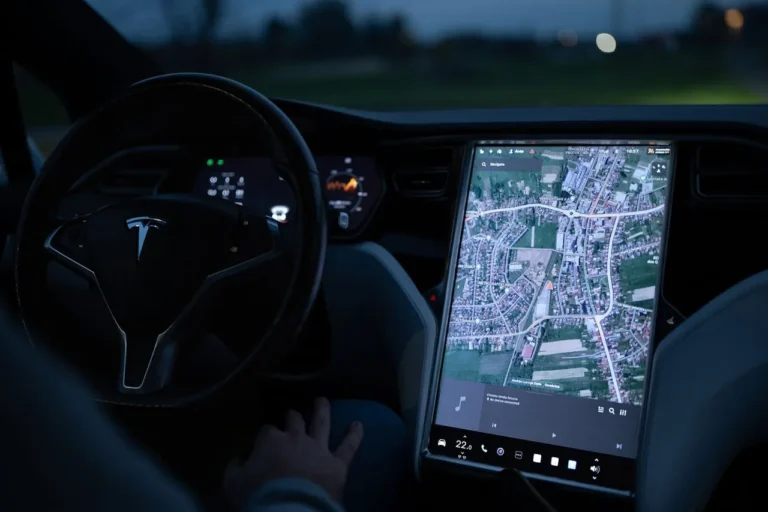
Beyond robotics, Faraday Future continues to advance its EAI Electric Vehicle (EV) engine. The company’s unique positioning lies in its “EAI Industry Bridge Strategy,” which connects robotics and automotive technologies into a unified ecosystem.
This strategy recently gained recognition in a report by The Wall Street Journal, which highlighted the evolving dynamics of the automotive industry in both China and the United States. The mention underscores the growing relevance of Faraday Future’s approach, particularly as global markets increasingly converge around AI-driven mobility solutions.
By integrating robotics, data, and EV technologies, the company aims to create a holistic platform that delivers value across multiple industries. This cross-sector approach could prove to be a key differentiator in an increasingly competitive landscape.
Investor engagement remains another priority for Faraday Future. The company recently hosted an exchange session in New York City, bringing together institutional and individual investors. The event received positive feedback, reflecting growing interest in the company’s strategy and progress.
This week, executive Jerry Wang is set to participate in the Global Family Office Investment Summit in Miami. The event will bring together over 300 family offices, sovereign wealth funds, and leading investment institutions. For Faraday Future, this represents an opportunity to secure long-term capital partnerships and strengthen its financial foundation.
The update concluded on a more personal and forward-looking note. Jia shared that early users, including individuals named Kerr and Lerr, have begun receiving their EAI robots. Their excitement and eagerness to explore these systems reflect a broader trend: the emergence of a new generation of AI-native users who will interact with technology in fundamentally different ways.
These early adopters are not just consumers—they are creators. As they experiment with robotics, they contribute to the evolution of the ecosystem, shaping how AI is used and understood in everyday life.
Faraday Future’s latest weekly update paints a picture of a company in transition—from a traditional EV manufacturer to a broader AI-driven ecosystem player. Through its Three-in-One strategy, expanding partnerships, and focus on education, the company is laying the groundwork for a future where robotics, data, and intelligent systems are deeply integrated into society.
While challenges remain, particularly in scaling production and achieving sustained profitability, the progress outlined in this update suggests that Faraday Future is steadily moving toward its long-term vision. With growing recognition from industry observers, increasing investor engagement, and a rapidly expanding ecosystem, the company appears well-positioned to play a significant role in the evolving landscape of embodied AI.
As Jia hinted, the coming weeks may bring even more insights—especially as new users begin to share their experiences. If current momentum continues, Faraday Future’s journey could offer a compelling glimpse into the future of AI-driven innovation.
Source Link:https://www.businesswire.com/