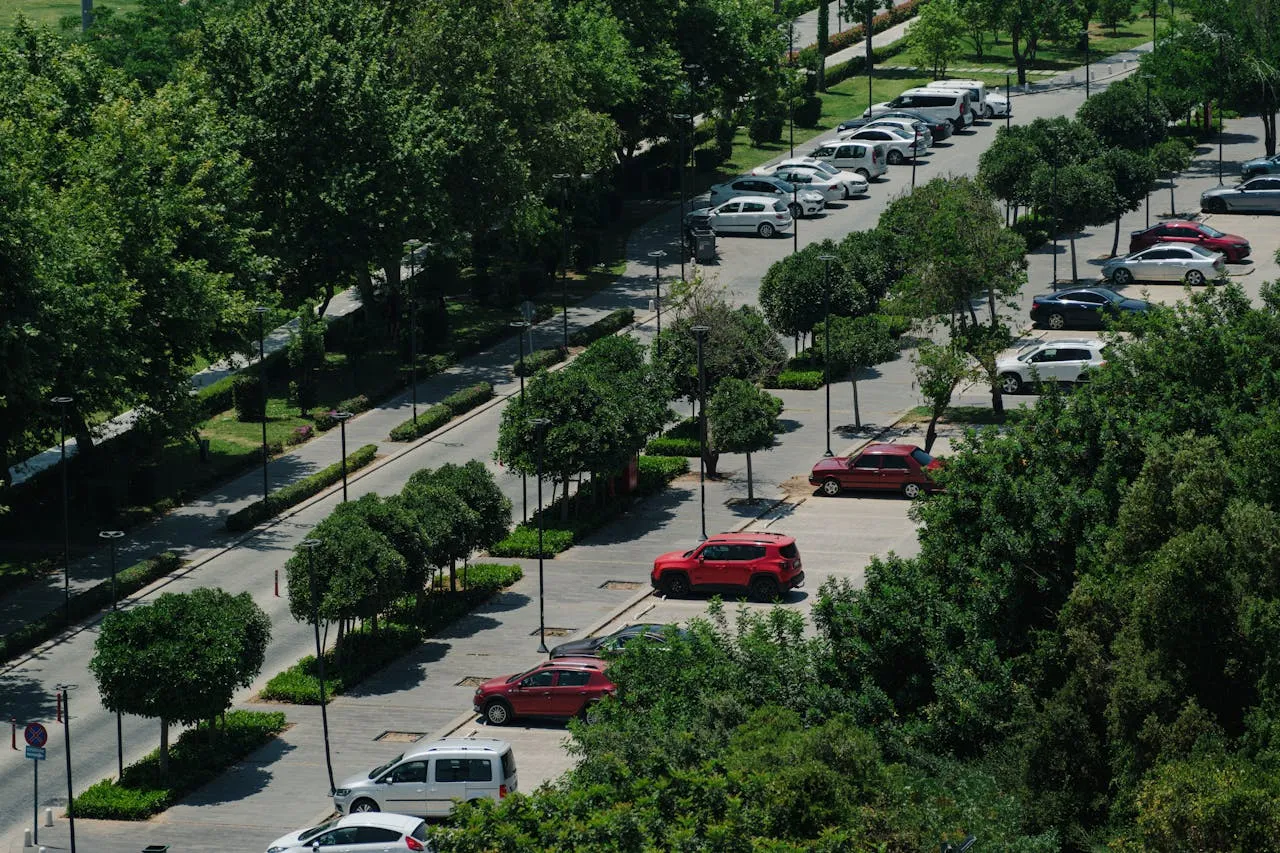
Transportation intelligence company INRIX, Inc. has announced a major expansion of its predictive parking and curb intelligence platform, further strengthening its standing as one of the most advanced parking intelligence providers for automotive original equipment manufacturers (OEMs), city planners, and mobility platforms across the globe. The move highlights INRIX’s broader strategy to reshape how drivers, vehicles, and cities understand and manage parking in increasingly connected urban environments.
As mobility systems evolve with the growth of smart cities, autonomous vehicles, and connected transportation ecosystems, the limitations of traditional parking databases are becoming increasingly apparent. Conventional parking data platforms have largely focused on listing parking locations or cataloging static information about parking lots and curbside spaces. However, INRIX argues that the future of mobility requires something far more dynamic and predictive.
The company says its parking intelligence platform goes beyond simply counting parking spots. Instead, it seeks to understand how parking actually functions in real-world environments—factoring in dynamic curb regulations, real-time availability, historical usage patterns, and connected vehicle insights to provide a clearer picture of parking ecosystems.
Historically, parking intelligence has been measured by the quantity of parking locations available in a database or by the number of details attached to each location. While those metrics once served mobility providers reasonably well, they are no longer sufficient in modern transportation environments where traffic congestion, curb regulations, and parking demand change constantly.
INRIX is repositioning parking intelligence around practical usability and predictive decision-making rather than volume alone. According to the company, its expanded platform focuses on four major pillars that differentiate it from legacy parking systems.
The first is verified, real-world usable parking inventory. Instead of merely cataloging all possible parking locations, INRIX prioritizes spaces that drivers can actually access and legally use. This distinction helps eliminate misleading guidance that could direct drivers toward restricted, inaccessible, or unavailable parking options.
The second pillar involves dynamic curb and regulation intelligence. Urban curb spaces are becoming increasingly complex as cities introduce loading zones, pickup and drop-off spaces, bus lanes, bike lanes, and time-based restrictions. INRIX integrates these constantly changing regulations into its platform to provide accurate guidance.
Third, the company has introduced predictive availability based on estimated arrival times. Rather than simply displaying whether parking is currently available, INRIX models the likelihood that parking will still be accessible when a driver actually arrives at the destination.
The fourth focus area is continuous validation through connected vehicle data. By leveraging signals from millions of vehicles and devices, the system constantly updates and refines parking predictions to reflect changing conditions on the ground.
“Parking intelligence is no longer about static maps,” said Ahmed Darrat, Chief Product Officer at INRIX. “It’s about helping drivers, vehicles, and cities make confident decisions before arrival based on real-world conditions, regulations, and probability of availability.”
At the center of INRIX’s expanded capabilities is an enormous global transportation dataset designed to provide highly granular parking insights across major urban environments.
The company revealed that its platform now processes more than 50 petabytes of transportation data. This massive data infrastructure supports a global network of over seven million parking locations and approximately 48 million mapped parking spaces worldwide.
INRIX’s coverage spans more than 22,000 cities across 145 countries, with a strong emphasis on urban centers where parking demand and curbside activity are most complex. To support on-street parking intelligence, the company has digitized approximately 500,000 street segments globally.
Real-time intelligence is powered by a vast ecosystem of roughly 300 million connected vehicles and devices that collectively generate around 44 billion transportation-related data points each day. These signals help INRIX build predictive models capable of identifying parking availability trends with a high degree of precision.
The company noted that its forecasting systems are trained using trillions of connected vehicle events. This extensive dataset enables real-time parking updates every 15 minutes while also allowing forecasts of parking demand up to seven days into the future.
Beyond parking locations themselves, INRIX has also amassed millions of curb-level observations that include critical details such as pricing, parking restrictions, curbside regulations, and usage patterns.
This detailed understanding of curb environments is increasingly important as cities seek to optimize space for delivery vehicles, rideshare services, cyclists, and public transportation while simultaneously reducing congestion.
Accuracy remains one of the most significant challenges in parking intelligence, especially when relying on constantly changing urban environments. INRIX says it has built a transparent and statistically rigorous framework to ensure reliability.
The company reports achieving at least 95 percent coverage fidelity across its mapped parking ecosystem, alongside attribution accuracy of 90 percent or greater for key driver-facing details such as parking rules, rates, and restrictions.
According to INRIX, its predictive models also significantly outperform random probability estimates by incorporating real-world transportation behavior and historical trends.
To maintain consistency, the company continuously validates its platform using statistically robust methodologies. These validation processes include randomized sample sets conducted across entire cities and benchmarked at a 95 percent confidence level with a margin of error of plus or minus five percent.
INRIX also employs monthly benchmark testing using satellite imagery, municipal datasets, and third-party APIs to identify discrepancies or changes in parking infrastructure.
Additionally, the company performs quarterly real-world ground-truth validation exercises to ensure parking intelligence aligns with live urban conditions.
Between January and April 2026, INRIX conducted performance validation across 46 city instances in 12 countries. During these evaluations, the company reported achieving roughly 99 percent coverage and accuracy in real-world testing scenarios.
Major metropolitan areas across North America and Europe—including Berlin, London, San Diego, Los Angeles, and Boston—served as examples demonstrating INRIX’s ability to provide highly actionable parking intelligence under diverse urban conditions.
One of the key differentiators of INRIX’s parking intelligence platform is its emphasis on practical usability rather than data accumulation.
Many parking platforms simply aggregate large inventories of spaces without accounting for accessibility, legality, or changing conditions. INRIX instead filters and validates parking data to ensure recommendations align with real-world driving experiences.
Its parking inventory is verified using real-world probe data gathered through connected vehicles and validated via partnerships with automakers, cities, and parking operators.
Importantly, INRIX excludes parking areas that may technically exist but are inaccessible or restricted for ordinary drivers. This helps avoid situations where navigation systems direct motorists to spaces reserved for commercial vehicles, permit holders, or restricted time periods.
Continuous updates driven by live telemetry, curbside activity, and system integrations further enhance usability.
The result is a platform designed not to overwhelm users with options, but to identify the right parking opportunities based on real-world conditions and contextual intelligence.
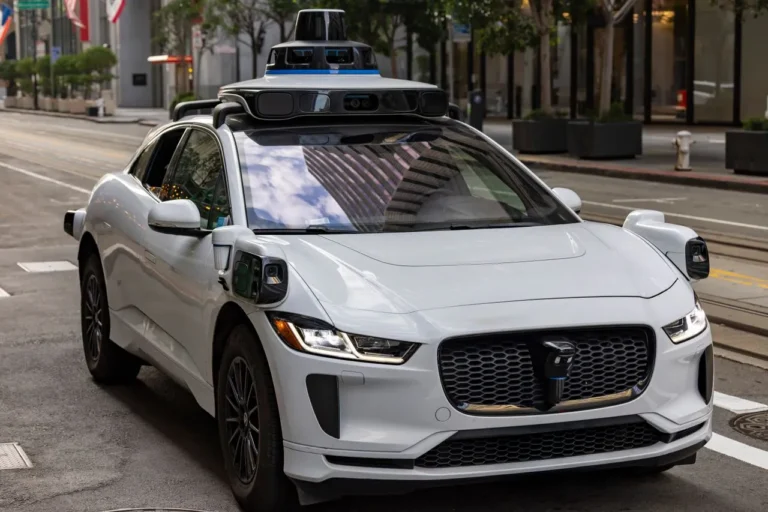
The rise of autonomous vehicles and connected mobility services is creating new demands for parking intelligence.
Traditional parking systems, built around static databases and manual searches, are increasingly inadequate for automated transportation systems that require real-time situational awareness.
INRIX believes predictive parking intelligence will become a foundational layer of future mobility ecosystems.
By combining connected vehicle data, real-time curb activity, traffic conditions, and historical parking demand patterns, the company’s AI-powered platform can estimate the probability of parking availability at the moment of arrival.
This predictive capability unlocks several important mobility applications.
For autonomous vehicles, parking predictions can support more efficient arrival and drop-off planning. Instead of circling city blocks in search of available parking, vehicles can proactively route toward likely available spaces.
Parking-aware navigation also enables smarter routing decisions close to destinations, potentially reducing unnecessary traffic congestion caused by vehicles cruising for parking.
Additionally, predictive curb intelligence can support more orderly and predictable curbside interactions—an increasingly important requirement in cities experiencing rapid growth in rideshare activity, e-commerce deliveries, and autonomous transportation pilots.
INRIX’s ambitions extend beyond parking intelligence alone.
The company describes itself as a broader mobility intelligence platform that integrates multiple transportation layers into a unified ecosystem.
Its technology acts as an intelligence bridge connecting navigation systems, mapping platforms, OEM vehicle systems, municipal curb management technologies, and traffic monitoring infrastructure.
By combining parking data with traffic conditions, curbside intelligence, and incident reporting, INRIX aims to support seamless end-to-end mobility experiences—from trip planning and route selection to arrival and parking.
This integrated approach could prove increasingly valuable as cities and automakers work toward more connected transportation ecosystems that require continuous data exchange between infrastructure and vehicles.
As cities modernize and connected vehicles become more sophisticated, INRIX believes static parking information will no longer meet user expectations or operational needs.
Urban mobility systems are becoming increasingly dynamic, requiring intelligence that adapts in real time and anticipates future conditions rather than simply documenting the present moment.
Ahmed Darrat emphasized that predictive certainty—not guesswork—will define the next generation of transportation experiences.
“The future of mobility depends on knowing, not guessing, what will be available when you arrive,” Darrat said. “INRIX is defining that standard with predictive, validated, and globally deployed parking intelligence.”
With its expanded deployment, INRIX is positioning itself at the center of this transformation, offering automakers, city authorities, and mobility providers a more intelligent way to manage parking and curbside operations in an increasingly connected world. As demand for smarter mobility infrastructure continues to grow, predictive parking intelligence may soon become as essential to navigation as maps themselves.
Source Link:https://www.businesswire.com/