As autonomous vehicle technology continues to expand into cities across the United States, concerns over how driverless vehicles interact with emergency responders are receiving renewed scrutiny. Amy Witherite, founding attorney of Witherite Law Group and a longtime advocate for traffic safety in Texas, is calling attention to what she describes as a troubling disconnect between public safety messaging and the real-world operational challenges faced by first responders when autonomous vehicles malfunction during emergencies.
The concerns come as Waymo, the autonomous driving company owned by Alphabet, launched a new national television campaign promoting its driverless vehicle technology with messaging that positions autonomous cars as safer than traditional human-operated vehicles. According to Witherite, however, public confidence in autonomous transportation should be supported by stronger safeguards, transparent accountability, and practical emergency response procedures that work in high-pressure situations.
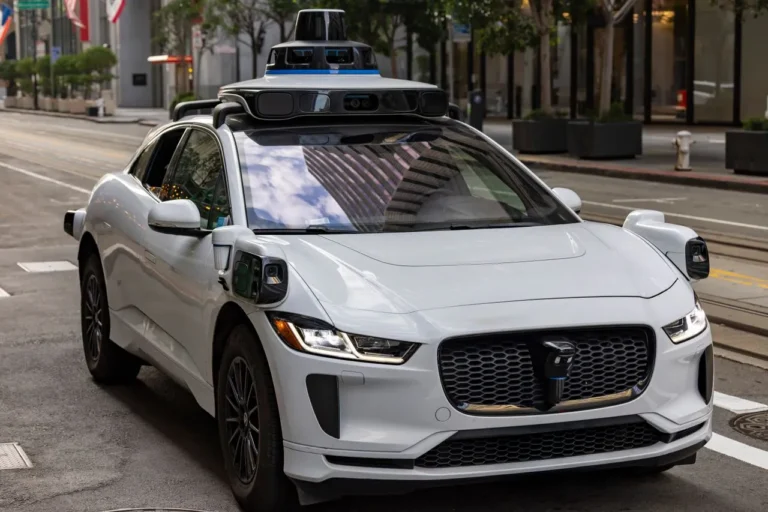
The latest criticism follows an incident involving a Waymo vehicle during a deadly emergency response in Dallas, Texas. Dallas County Precinct 5 Deputy Constable Jonathan Banda encountered an unoccupied Waymo robotaxi positioned in a manner that appeared to obstruct roadway access while emergency personnel were responding to a fatal gas explosion.
The incident occurred on May 28, 2025, at an apartment complex in Dallas where a gas explosion resulted in significant destruction, killing three people and injuring five others. More than 100 firefighters and multiple emergency response teams were dispatched to the scene as officials worked to secure the area, protect residents, and provide aid to victims.
Deputy Constable Banda, who was assigned to help manage the emergency response and secure the surrounding area, described encountering a Waymo vehicle stopped sideways in the roadway during the active emergency operation. According to Banda, the vehicle’s position created concern because it occupied more than half of the roadway and had the potential to interfere with incoming fire trucks and emergency personnel moving toward the disaster site.
“The vehicle was not moving and was blocking over half of the road,” Banda explained while reflecting on the experience. “I was hoping the car would move before other first responders arrived.”
For emergency personnel working under time-sensitive and often dangerous conditions, roadway access can be critical. Firefighters, ambulances, law enforcement vehicles, and utility crews frequently require unobstructed movement during major incidents, particularly when public safety risks continue to evolve.
Banda described the interaction with the autonomous vehicle as unexpectedly difficult. Unlike a conventional vehicle that could potentially be repositioned by a responding officer or driver, the robotaxi required communication with a remote support system before action could be taken.
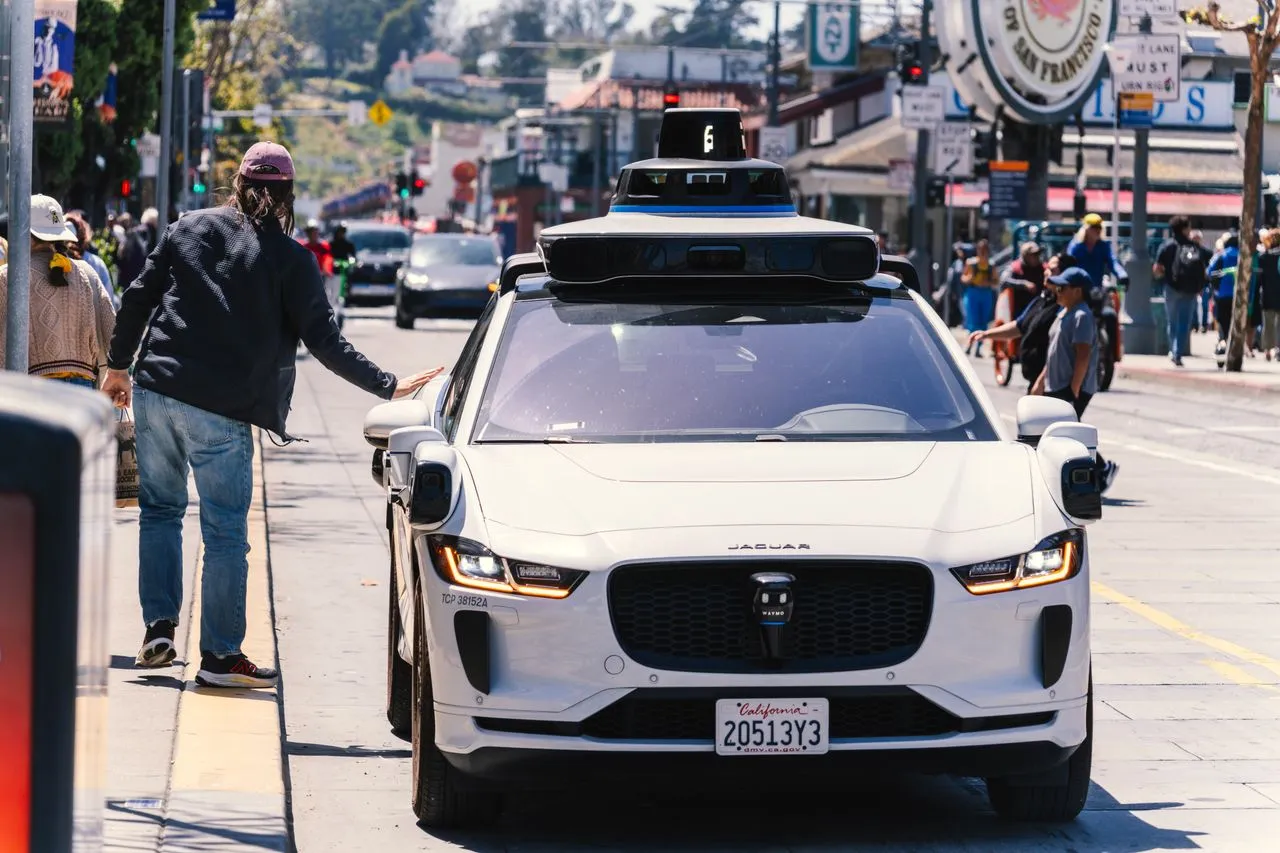
According to Banda, he first attempted to interact with the vehicle but discovered that the door would not open through a standard handle system. Instead, he reportedly had to scan a QR code before the vehicle lowered its windows and enabled communication with a remote Waymo representative through an onboard speaker system.
“It was not easy,” Banda stated, emphasizing the additional complications created during an already chaotic emergency response.
The deputy constable also raised concerns about preparedness and coordination between autonomous vehicle companies and public safety agencies. Banda noted that he was unaware of any formal training provided by Waymo for law enforcement officers or first responders in the region.
“I was not aware that Waymo provided any training for law enforcement or first responders,” he said.
Banda recalled informing the remote dispatcher that the incident constituted an emergency situation. However, he expressed frustration over what he described as a lengthy process before gaining access to the vehicle and obtaining a resolution.
After contacting the dispatcher, Banda said he was uncertain how many questions would need to be answered before the vehicle could be unlocked or moved.
“I had to shift my focus to the autonomous vehicle instead of keeping citizens away and safe from the scene,” Banda explained.
For first responders managing life-threatening emergencies, every second matters. Public safety officials often face rapidly changing hazards while balancing crowd management, rescue coordination, and communication with other agencies. Banda’s experience has raised broader concerns about whether autonomous vehicle systems are sufficiently equipped to adapt to unpredictable emergency situations.
When asked what he would want autonomous vehicle companies such as Waymo to address moving forward, Banda raised several practical concerns surrounding accountability and emergency management.
“What would happen to the vehicle if a first responder moved it themselves?” he asked. “How would it react after being moved? Why should a first responder have to correct the problems an autonomous vehicle is having during an emergency, no less?”
For Amy Witherite, the Dallas incident represents more than a one-time operational issue. She argues that the event reflects a larger pattern involving autonomous vehicles and emergency responders, particularly as robotaxi deployments increase across major urban areas.
According to Witherite, similar concerns have surfaced in other cities where Waymo vehicles reportedly interfered with emergency response operations. She pointed to incidents in Austin and San Francisco as examples that illustrate ongoing challenges for autonomous vehicle systems operating in dynamic public safety environments.
One widely discussed case involved a fatal mass shooting response in Austin, where autonomous vehicles reportedly created complications for emergency operations. In another incident in San Francisco, Waymo vehicles experienced disruptions linked to a power outage, prompting the company to apologize and later implement software updates intended to improve vehicle behavior.
Witherite argues that such recurring incidents should prompt closer examination of the standards governing autonomous vehicles before expansion into additional communities.
“Waymo is spending millions this week to tell Americans its vehicles are safer than human drivers,” Witherite said. “But when Deputy Constable Banda asked a Waymo dispatcher to move a car blocking fire trucks racing to a deadly explosion, the first question wasn’t ‘Where do you need us to go?’ it was ‘What’s your name and badge number?’”
She continued by questioning whether national safety campaigns align with the experiences of emergency responders operating in the field.
“You can’t run a national safety campaign and then interrogate a cop at a mass casualty scene,” Witherite stated.
The criticism also extends to Waymo’s public safety claims. Witherite questioned the basis for promotional messaging that positions autonomous vehicles as significantly safer than human drivers.
According to Witherite, claims that autonomous systems are “10 times safer” are based primarily on company-led analysis of insurance liability data rather than independently verified crash outcomes or universally accepted safety benchmarks.
“Waymo’s ‘10 times safer’ claim comes from its own analysis of insurance liability data, not independent crash outcomes, and is not a peer-reviewed safety standard,” Witherite said.
She further argued that regulatory oversight surrounding autonomous vehicle deployment remains inconsistent and insufficiently enforced, especially as companies scale operations in densely populated communities.
“Regulations are weak, and no penalty has been announced despite incident after incident,” she said. “Our communities deserve enforceable standards, not talking points, before these vehicles operate in more communities.”
As autonomous driving technology continues to evolve, the debate surrounding safety, accountability, and emergency response coordination is expected to intensify. Supporters of autonomous vehicles argue that the technology has the potential to reduce crashes caused by distracted or impaired driving while improving transportation accessibility. Critics, however, maintain that real-world emergency conditions often expose limitations that require additional safeguards and oversight.
The Dallas incident involving Deputy Constable Banda has now become part of a larger conversation surrounding how autonomous vehicles should behave in unpredictable, high-risk situations involving police officers, firefighters, and emergency medical teams.
Witherite Law Group says the focus should remain on ensuring that emerging transportation technologies can operate safely alongside emergency response systems without creating additional risks during moments when lives are already at stake.
Amy Witherite remains available to discuss the legal and regulatory implications surrounding autonomous vehicle emergency response concerns, while Deputy Constable Jonathan Banda is also available for media interviews through Witherite Law Group representatives.
Source Link:https://www.businesswire.com/