Apple and Ford Motor Company have announced a new technology partnership that will bring Apple Maps directly into Ford’s upcoming Universal Electric Vehicle (UEV) Platform, creating a deeply integrated navigation experience for future electric vehicles. The collaboration will use Apple’s new MapKit for Automotive SDK, allowing Ford to embed Apple Maps technology directly into the vehicle rather than relying solely on a smartphone-based navigation experience.
The integration is scheduled to arrive with Ford’s UEV Platform in 2027 and is expected to play an important role in the automaker’s strategy to make advanced electric vehicle technology more accessible to a broader range of customers. The platform is being developed around a new midsize electric vehicle that Ford has indicated will be priced at approximately $30,000, positioning the model as a more attainable entry point into next-generation EV technology.
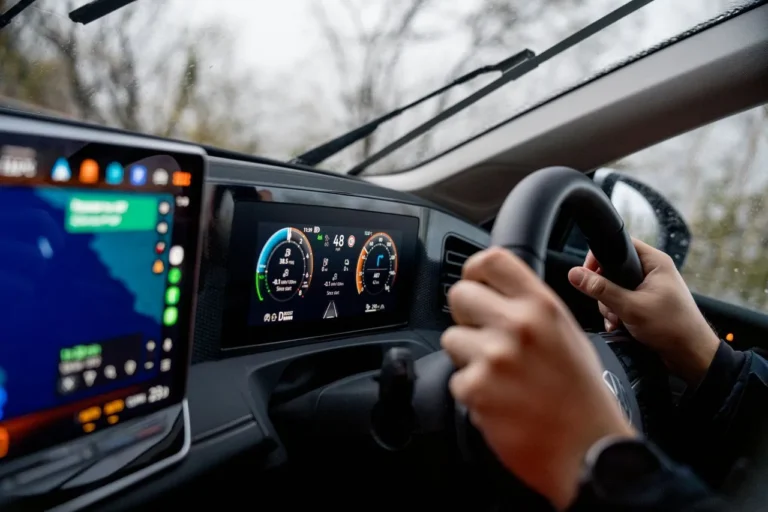
Through the partnership, drivers will be able to access Apple Maps directly through the vehicle’s displays. The experience will provide turn-by-turn navigation, natural-language directions, real-time traffic updates, incident information, detailed place information, and multiple routing options. By integrating these capabilities directly into the vehicle, Ford and Apple aim to create a more seamless experience between navigation, vehicle systems, and driver-assistance technologies.
The partnership also highlights the growing importance of mapping data in the development of modern electric vehicles. Navigation systems are no longer limited to simply showing drivers how to reach a destination. In today’s connected vehicles, mapping technology can influence energy management, charging strategy, driver-assistance functions, and even the way vehicles understand and respond to roads and traffic environments.
Apple’s MapKit for Automotive SDK is designed to allow automakers to integrate Apple Maps capabilities into their own vehicle systems. For Ford, the technology will become part of the UEV Platform’s broader software ecosystem, alongside Ford’s own applications, connected services, and advanced driver-assistance technologies.
The integration will give Ford customers access to Apple Maps features without requiring them to depend entirely on a connected smartphone. Drivers will be able to interact with navigation information directly through the vehicle’s displays, helping create a more cohesive digital experience inside the cabin.
Among the key features will be natural-language turn-by-turn directions. Rather than relying only on traditional visual instructions, the system is designed to provide directions in a more intuitive and human-friendly format. Drivers will also receive real-time information about traffic conditions and incidents, helping them make better-informed decisions while travelling.
Search functionality will also be an important part of the experience. Drivers will be able to search for destinations and locations using detailed place cards, giving them additional information about points of interest and destinations. Multiple routing options will help users compare different ways to reach their destination and select the route that best fits their needs.
For electric vehicle owners, the integration will offer additional benefits through intelligent EV routing.
Electric vehicle navigation requires a different approach from traditional vehicle routing. An EV driver must consider not only distance and traffic but also battery range, charging availability, energy consumption, weather conditions, and the location of charging stations.
Apple Maps integration into Ford’s UEV Platform is expected to support intelligent EV routing, helping drivers plan journeys with electric vehicle requirements in mind. One of the key capabilities will be battery preconditioning.
Battery preconditioning prepares the EV battery for charging before the vehicle reaches a compatible charging station. By bringing the battery to an optimal temperature, the system can help improve charging performance and reduce the time required to add energy to the vehicle.
The ability to connect navigation information with battery management represents an important step in the development of more intelligent EV systems. Instead of treating navigation and vehicle energy systems as separate functions, the UEV Platform will be able to use route information to support a more efficient and predictable driving experience.
This type of integration could become increasingly important as electric vehicles become more mainstream. Drivers who are new to EV ownership often have concerns about range and charging. Intelligent routing systems that automatically consider energy requirements can help reduce those concerns and make electric vehicle travel easier and more convenient.
Apple Maps will also play a role in Ford’s efforts to advance its hands-free driving technologies. Ford plans to use road-level information from Apple Maps as part of the development of its next-generation BlueCruise system.
BlueCruise is Ford’s hands-free highway driving technology, and the company is working to expand the capabilities of its advanced driver-assistance systems. The use of detailed road-level mapping information could help support a more seamless experience as vehicles travel through different sections of a journey.
Ford and its autonomy subsidiary, Latitude AI, are working towards an improved hands-free driving experience that can provide smoother transitions from highway on-ramps to off-ramps. Road-level information can help a vehicle better understand the characteristics of the road ahead, including road geometry, highway layouts, and other important environmental details.
The objective is to create a more integrated relationship between mapping and driving assistance. Navigation data can help the vehicle understand where it is travelling, while sensor information and artificial intelligence can help the system respond to changing conditions around the vehicle.
However, the use of mapping information will be part of a broader technology architecture. Ford’s advanced driving systems are being developed using a combination of hardware, software, artificial intelligence, machine learning, and real-world driving data.
Ford CEO Jim Farley described the UEV Platform as an important part of the company’s effort to make advanced electric vehicle technology more accessible.
The planned midsize electric vehicle, expected to be priced at around $30,000, is designed to bring a combination of electric propulsion, advanced software, connected features, and driver-assistance technologies to a larger customer base.
Ford believes that advanced technology should not be limited to premium vehicles. The UEV Platform is being developed with a focus on making sophisticated capabilities simpler and more practical for everyday drivers.
The direct integration of Apple Maps is an example of this strategy. Instead of requiring customers to use separate systems for navigation, EV routing, vehicle software, and driver assistance, Ford is building a more unified technology environment.
The platform is also expected to feature Ford’s own mobile application and a broader suite of connected services. These technologies will operate alongside Apple Maps and next-generation BlueCruise, creating an ecosystem designed to connect the vehicle, driver, smartphone, and cloud-based services.
Ford says the UEV Platform will be enabled by a new zonal architecture. Zonal vehicle architectures are designed to simplify vehicle electrical and electronic systems by grouping functions into specific zones rather than relying on a large number of individual electronic control units.
This approach can help reduce wiring complexity, improve system efficiency, and create a more flexible foundation for software-defined vehicle technologies.
Ford’s next-generation self-driving and advanced driving technology development is being led by Latitude AI, the automaker’s wholly owned autonomy subsidiary.
Latitude AI has a team of approximately 600 experts working across machine learning, robotics, and software development. The company is responsible for developing Ford’s proprietary in-house advanced driving system.
The organisation is also developing the Ford Large Driving Model, an artificial intelligence system designed to support a broad spectrum of self-driving capabilities.
The Ford Large Driving Model is being trained and developed using millions of miles of real-world driving data. This data is intended to help the system understand a wide range of driving environments and situations.
Ford and Latitude AI are taking an integrated approach to autonomy by developing both the hardware and software that support the driving system. According to the company, this approach can help make the technology more efficient and scalable across different Ford vehicle models.
The company’s long-term objective is to expand advanced driving capabilities beyond high-end vehicles and make them available at more attainable price points.
The Apple-Ford collaboration reflects a broader transformation taking place across the automotive industry. Modern vehicles are increasingly becoming software-defined platforms, with navigation, entertainment, energy management, connectivity, and driver assistance working together through integrated digital systems.
In this environment, mapping technology is becoming an important part of the vehicle’s overall intelligence.
A digital map can provide information about roads, intersections, traffic patterns, charging locations, and destinations. When combined with real-time vehicle data and artificial intelligence, this information can support a range of functions beyond basic navigation.
For an electric vehicle, the map can help determine when and where the vehicle should charge. For a driver-assistance system, detailed road information can support improved awareness of the driving environment. For the driver, the system can provide a more intuitive and connected experience.
Ford’s decision to integrate Apple Maps directly into the UEV Platform demonstrates the importance of these connections.
Apple Senior Vice President of Services and Health Eddy Cue said the company was pleased to bring Apple Maps technology into Ford’s Universal Electric Vehicle Platform. He described the partnership as a way to bring Maps more deeply into drivers’ everyday lives while delivering a navigation system that is accurate, easy to use, and integrated into the vehicle.
Ford, meanwhile, sees the partnership as an opportunity to combine Apple’s mapping capabilities with its own software, electric vehicle technology, BlueCruise system, and autonomy development.
The Apple Maps integration is expected to become available with Ford’s Universal Electric Vehicle Platform in 2027. The launch will represent an important milestone for Ford as the company continues developing a new generation of electric vehicles built around advanced software and electronic architecture.
The UEV Platform is expected to combine an affordable electric vehicle with intelligent navigation, EV-specific route planning, battery preconditioning, connected services, and advanced driver assistance.
For consumers, the biggest benefit may be the ability to access these technologies through a more unified experience. Rather than switching between multiple systems, drivers will be able to use navigation and vehicle functions through a platform designed to work together.
The collaboration also gives Apple an opportunity to expand the reach of Apple Maps into the automotive environment. Through MapKit for Automotive SDK, the company is positioning its mapping technology as a more deeply integrated part of the next generation of connected vehicles.
As the automotive industry moves toward software-defined vehicles, partnerships between automakers and technology companies are likely to become increasingly important. Ford’s UEV Platform illustrates how electric vehicles are evolving beyond traditional transportation products into connected digital platforms.
By combining Apple Maps, Ford’s EV technology, its software ecosystem, next-generation BlueCruise, and Latitude AI’s autonomy development, Ford is seeking to create a vehicle experience that is more connected, intelligent, and accessible.
The ultimate test will come when the first UEV Platform vehicles reach customers in 2027. If Ford succeeds in delivering the promised combination of affordability, intelligent navigation, EV convenience, and advanced hands-free driving, the platform could become an important part of the company’s strategy to bring next-generation automotive technology to a much broader audience.
Source Link:https://www.fromtheroad.ford.com/