GM Motorsports is giving high school students an opportunity to experience the world of motorsport engineering from a completely different perspective by bringing classroom STEM concepts directly into a professional racing environment. During last weekend’s Lone Star Le Mans at Circuit of the Americas (COTA) in Austin, Texas, GM Motorsports hosted “Driven to Explore,” a two-day hands-on STEM program designed to introduce students to the technical, creative and business opportunities available across the motorsports industry.
The program brought together 78 ninth-grade students from Del Valle High School, Texas, for an immersive experience that combined structured educational activities with behind-the-scenes exposure to professional sports car racing. Delivered in partnership with the Austin Community College Make It Center and supported by the World Endurance Championship (WEC), the initiative was designed to demonstrate how science, technology, engineering and mathematics are applied in real-world racing environments.
Rather than limiting STEM education to traditional classroom instruction, GM Motorsports used the racing circuit as a working laboratory. Students were able to explore subjects such as tire science, vehicle inspection, engineering problem-solving, teamwork, media, marketing and business strategy while seeing professional racing operations at close range.
The initiative is part of GM Motorsports’ broader K-12 STEM IMPACT program, which is co-led by Robert Binns and Kenna Edwards. The group has been developing programs intended to encourage younger students to explore STEM careers and understand the wide range of professional opportunities connected to motorsports.
“We started over three years ago as a small team with a clear mission: execute student outreach events, technical activities, and strategic partnerships that expose K-12 students to real-world motorsports engineering,” Binns said.
According to Binns, the motivation behind the program is deeply connected to the experiences of the people involved in it. Members of the STEM IMPACT group have their own stories of how educational programs, mentors and early exposure to technical careers influenced their professional journeys.
“Each team member has a personal story of how a camp or mentor inspired their own STEM career,” Binns said. “The IMPACT group is our opportunity to give back and inspire the next generation to follow.”
The “Driven to Explore” program was structured around five educational modules. Each activity was designed to complement concepts students encounter in school while demonstrating how those principles are used by engineers, technicians, business professionals and racing teams.
The modules included Tires Science, presented by Michelin; Mini-Scrutineering; the Sphero Pit Lane Challenge; Media Moguls; and a Paddock/Scrutineering Tours module featuring access to Cadillac Hertz Team JOTA, TF Sport and WEC officials.
The variety of activities was intentional. Motorsport is often viewed primarily as a mechanical or engineering discipline, but professional racing requires expertise across numerous fields. Engineers and technicians work alongside data analysts, strategists, marketers, communications specialists, business managers and other professionals.
For students, the program offered an opportunity to see this multidisciplinary environment firsthand.
The Tires Science module, presented by Michelin, introduced students to the science behind one of the most important components of a racing vehicle. Tires have a direct influence on grip, braking, cornering and overall vehicle performance, making them an ideal example of how physics, materials science, temperature management and engineering interact in motorsport.
Mini-Scrutineering provided another technical learning opportunity. Scrutineering is an essential part of organized racing, with vehicles and equipment checked to ensure compliance with technical and safety regulations. By introducing students to the inspection process, the program demonstrated how precision, measurement and attention to detail can influence competitive motorsport.
These activities transformed abstract concepts into practical challenges. Instead of simply learning about forces, materials or engineering processes, students could see how those principles affect an actual racing vehicle.
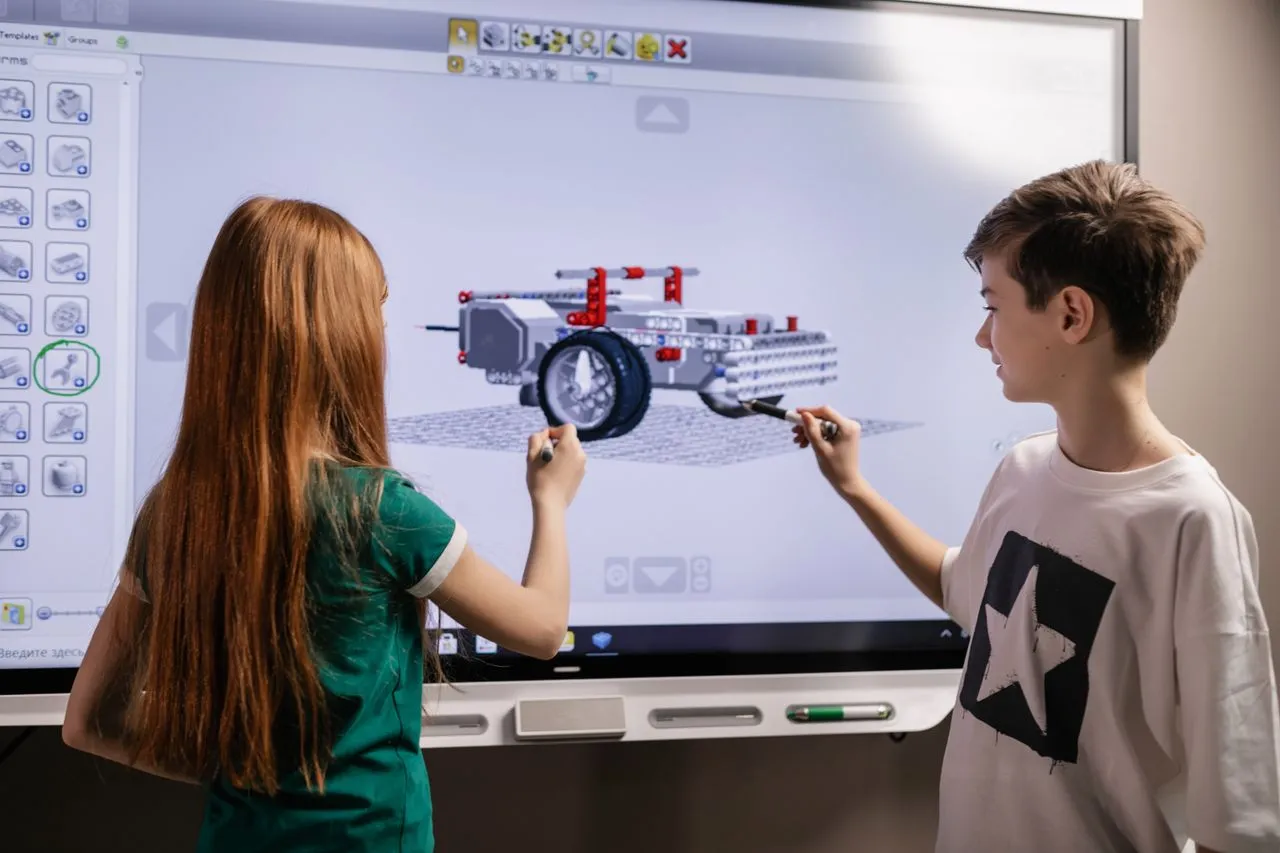
One of the central elements of the COTA experience involved students working together to build a competitive car while operating under a defined set of rules.
The challenge required participants to consider engineering constraints while also thinking about performance, strategy and teamwork. Such exercises can help students understand that engineering is rarely about finding a single perfect solution. Instead, successful engineering often requires balancing multiple requirements within limited resources and strict specifications.
The students were also challenged to execute a pit stop. Professional endurance racing depends heavily on efficient pit-lane operations, where teams must work quickly and accurately while coordinating multiple tasks.
For students, recreating that environment offered a practical lesson in communication and collaboration. A successful pit stop requires every team member to understand their role and perform it at the appropriate moment. The exercise therefore combined physical activity with lessons in organization, timing, leadership and teamwork.
The Sphero Pit Lane Challenge added another technology-focused component to the program. Using programmable robotic devices, students could explore concepts involving coding, control systems, problem-solving and autonomous movement.
The activity provided a way to introduce robotics and programming through a motorsport-themed challenge, potentially helping students recognize connections between computer science and automotive engineering.
The program also emphasized that STEM careers are not limited to designing or repairing vehicles.
Through the Media Moguls module, students were challenged to develop and pitch a business and sponsorship plan to GM program leadership. This activity introduced them to the commercial side of motorsport and demonstrated how racing teams depend on business development, marketing, communication and sponsorship.
Students therefore had to think beyond the technical performance of a vehicle. They were asked to consider how a racing program can communicate its value to potential partners and audiences.
This reflects the reality of professional motorsport, where successful teams require a combination of engineering excellence and strong commercial operations.
The activity also encouraged students to develop presentation and communication skills. Being able to explain an idea clearly, work with a team and persuade an audience are valuable abilities across engineering, technology and business careers.
By including these elements, GM Motorsports demonstrated that the automotive and motorsports industries provide career opportunities for people with a wide range of interests and skills.
The educational activities were complemented by direct exposure to the professional racing environment at COTA.
Students participated in paddock and scrutineering tours that provided access to teams including Cadillac Hertz Team JOTA and TF Sport, as well as WEC officials. They were able to see racing vehicles, garages and personnel operating in the highly demanding environment of an international endurance racing event.
The experience provided a perspective that is difficult to replicate in a conventional classroom.
“Over the past weekend, 78 local high school students stepped beyond the classroom to see firsthand how world-class engineers, technicians, and business leaders apply STEM principles in a high-pressure racing environment,” Binns said.
The students also toured the garages and saw the race cars and personnel before watching a live practice session.
For many students, observing professional engineers and technicians working directly on competition vehicles can make STEM careers feel more tangible. Seeing professionals apply classroom principles in real time can help students understand why subjects such as mathematics, physics, computer science and engineering matter beyond school.
The presence of WEC officials and professional racing teams also exposed students to the global nature of motorsport. Endurance racing brings together teams, manufacturers, engineers and technical specialists from different countries and disciplines, creating a broad range of career possibilities.
The COTA event represents another stage in the evolution of GM Motorsports’ K-12 STEM IMPACT initiative.
According to the company, the group initially focused on classroom talks before expanding its activities to include trackside experiences, competition judging, panel discussions and broader career discovery events.
Previous programs have taken place at major motorsport venues including Indianapolis Motor Speedway and Virginia International Raceway.
This evolution reflects an effort to move STEM outreach beyond conventional presentations. While classroom discussions can provide valuable information, hands-on experiences can give students a more direct understanding of how technical knowledge is applied.
Trackside programs can also expose students to career paths that they may not have previously considered. A student interested in mathematics might discover opportunities in data analysis or race strategy. Someone interested in computers could become interested in vehicle software, simulation or robotics. Students interested in communications or business may discover roles involving sponsorship, media and marketing.
Kenna Edwards emphasized the importance of helping young people recognize these possibilities.
“It is incredibly important for students to understand the role STEM can play in defining their future careers,” Edwards said. “Motorsport presents a tremendous range of opportunities for young individuals and Driven To Explore allows them a window into what is possible.”
Programs such as “Driven to Explore” also serve a broader purpose for the automotive and motorsports industries. As vehicles become increasingly connected, electrified, software-driven and technologically advanced, the industry requires professionals with increasingly diverse technical skills.
The future automotive workforce will need engineers, software developers, data specialists, technicians, manufacturing experts, cybersecurity professionals, battery specialists, designers and business leaders. Motorsport provides an especially engaging environment in which many of these disciplines come together.
For GM Motorsports, exposing students to those opportunities at an early stage could help build interest in technical careers while strengthening connections between education and industry.
The program also demonstrates the potential value of partnerships between automakers, schools, colleges, racing organizations and technology providers. The involvement of Del Valle High School, Austin Community College Make It Center, Michelin and the WEC created an educational experience that combined academic learning with industry expertise.
Binns hopes the long-term impact of these initiatives will extend well beyond individual events.
“I look forward to the day when an intern or new hire joins GM Motorsports because they were inspired by the work of this group,” he said.
That goal highlights the long-term vision behind GM Motorsports’ STEM outreach. The objective is not simply to give students a memorable day at a racetrack. It is to help them recognize their own potential and understand how the subjects they study today can become the foundation for future careers.
At Circuit of the Americas, 78 ninth-grade students were given an opportunity to see that connection firsthand. By combining engineering challenges, robotics, tire science, vehicle inspection, business strategy, professional garage tours and live racing, “Driven to Explore” created a learning environment where STEM was not simply a school subject but an active part of the motorsport world.
As GM Motorsports continues expanding its K-12 STEM IMPACT program, initiatives at venues such as COTA, Indianapolis Motor Speedway and Virginia International Raceway could play an important role in introducing more young people to the possibilities available across the automotive and motorsports sectors.
For the students who participated in the COTA program, the experience offered more than an introduction to professional racing. It provided a practical demonstration of how curiosity, technical knowledge, teamwork and problem-solving can translate into real careers—and potentially into the next generation of engineers, technicians and leaders shaping the future of motorsport.
Source Link:https://news.gm.com/