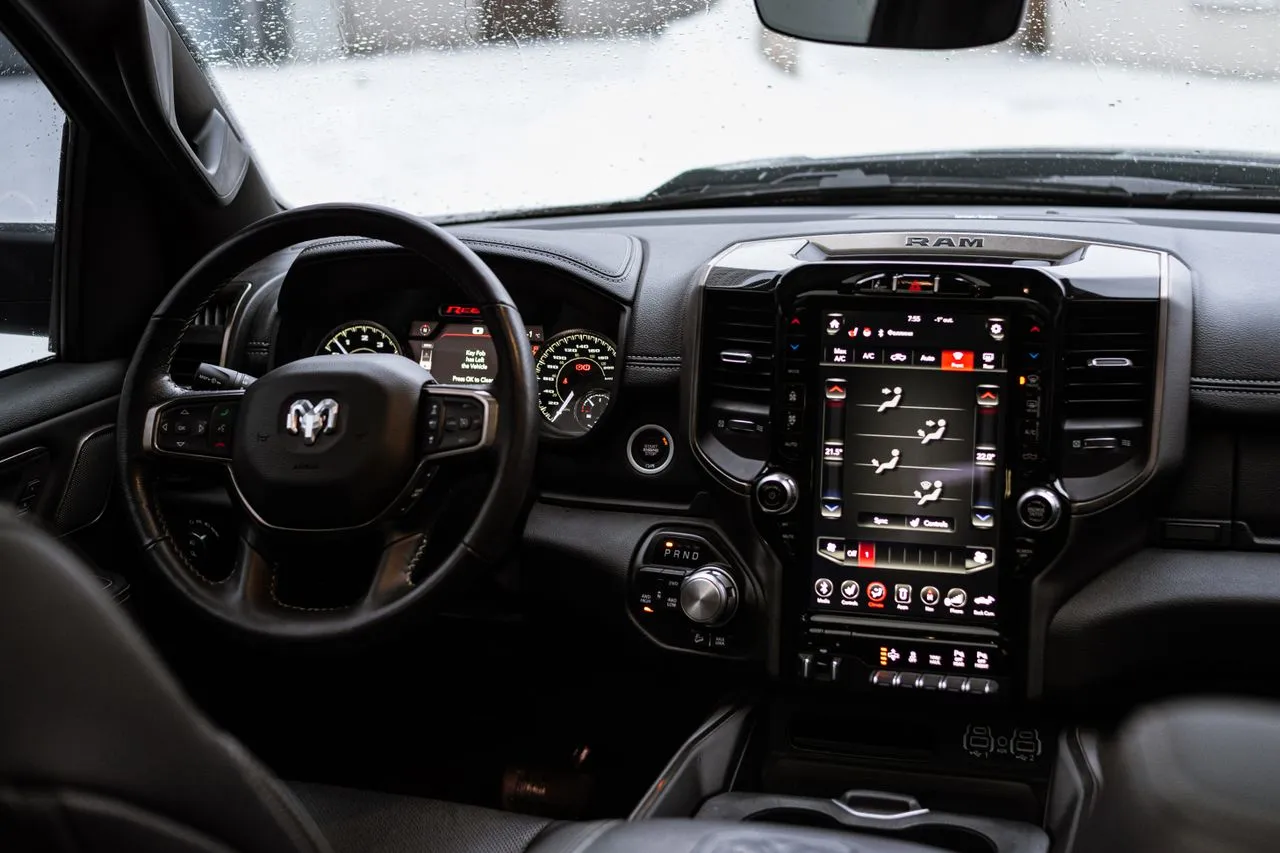
Overall vehicle quality in the United States is showing signs of improvement in 2026, but automakers continue to face a major obstacle in one increasingly important area: in-vehicle multimedia and infotainment systems. According to the J.D. Power 2026 U.S. Multimedia Quality and Satisfaction Study, multimedia remains the most problematic major vehicle category and is the only category to experience a deterioration in quality during the year.
The study shows that multimedia-related problems remain essentially unchanged compared with the previous year, reaching 42.4 problems per 100 vehicles (PP100). While the figure itself has changed little, the importance of multimedia problems within the overall vehicle-quality picture has increased significantly. Multimedia issues now account for approximately 25% of all reported vehicle problems, making the category responsible for the five most frequently reported individual problems across vehicles.
The findings illustrate a growing challenge for automotive manufacturers as modern vehicles become increasingly dependent on software, connected services, large touchscreens and sophisticated digital interfaces. Features that were once considered premium additions are now becoming standard equipment across a wide range of vehicles, increasing customer expectations while also creating more opportunities for software and usability problems.
Automotive quality has traditionally been associated with mechanical components such as engines, transmissions, suspension systems and braking equipment. However, the increasing digitalization of vehicles is changing the definition of quality.
Modern vehicles frequently rely on complex infotainment systems to control navigation, entertainment, smartphone integration, vehicle settings, voice commands and connected services. In many newer models, touchscreen displays have also replaced physical controls for functions that drivers previously accessed through conventional buttons and switches.
This transformation has created new challenges for automakers. A vehicle can perform well mechanically while still receiving negative feedback from customers because its infotainment system is slow, difficult to use, unreliable or confusing.
The J.D. Power study highlights this shift. Although broader vehicle quality is improving, multimedia remains a persistent source of customer complaints. The continued high level of reported problems suggests that improvements in hardware reliability alone are not enough to address the issue.
Software performance, connectivity, interface design and system complexity are increasingly important components of the ownership experience.
The growing adoption of software-defined vehicle architectures is one of the major forces behind the transformation of automotive quality.
Automakers are adding more software-driven functionality to vehicles, enabling manufacturers to update systems, introduce new features and connect vehicles to cloud-based services. These capabilities can create significant benefits for customers and manufacturers, but they also introduce additional technical dependencies.
A malfunctioning mechanical component may affect a specific function, while a software issue can potentially influence multiple systems simultaneously. Connectivity problems can also affect navigation, smartphone integration, streaming services, remote features and other connected functions.
According to Lisa Boor, director of customer success, OEM solutions at J.D. Power, the automotive industry is continuing to improve overall vehicle quality, but multimedia remains a persistent challenge. She emphasized that as vehicles become more software-defined, quality issues are increasingly shifting away from traditional hardware failures toward system complexity, software performance and connectivity.
This change means automakers must approach software quality with the same level of attention traditionally applied to mechanical engineering and manufacturing.
One of the most important implications of the study is the widening gap between technological capability and customer expectations.
Consumers increasingly expect vehicle technology to work immediately and consistently. Drivers are accustomed to smartphones, tablets and other consumer electronics that provide relatively intuitive interfaces and frequent software improvements. As those expectations move into the automotive environment, customers increasingly expect the same level of convenience inside their vehicles.
However, automotive infotainment systems operate in a much more complex environment. They must function while a vehicle is moving, interact with multiple vehicle systems, maintain connectivity and provide information without creating unnecessary driver distraction.
As a result, simply adding more features does not necessarily create a better customer experience.
Complex menus, delayed responses, difficult navigation and connectivity failures can undermine the perceived quality of an otherwise well-engineered vehicle.
The J.D. Power findings therefore reinforce an important lesson for automakers: technology must be easy to use as well as technologically advanced.
Despite the overall challenges associated with multimedia, the 2026 study also contains encouraging findings.
Navigation-related problems declined during the year, particularly in areas involving usability and accuracy. This improvement contributed to a substantial increase in customer satisfaction with navigation systems.
According to J.D. Power, navigation satisfaction increased 17 points on a 1,000-point scale, reaching 933 points in 2026.
The improvement suggests that manufacturers are making meaningful progress in at least some areas of vehicle multimedia technology.
Navigation is particularly important because it is one of the most frequently used functions within modern infotainment systems. Customers depend on navigation systems for route planning, traffic information, destination searches and real-time travel decisions.
Improving both accuracy and usability can therefore have a noticeable impact on the overall ownership experience.
The gains also demonstrate that multimedia problems are not necessarily unavoidable. When manufacturers identify specific sources of customer frustration and address them through better software, interface design and system performance, satisfaction can improve.
The study also identifies improvements in customer satisfaction across multimedia and speaker-related categories.
These gains indicate that automakers and technology suppliers are making progress despite the broader quality challenges affecting infotainment.
Customer satisfaction is particularly important because multimedia systems are among the most visible technologies in a vehicle. Unlike components hidden beneath the vehicle, infotainment systems are directly interacted with by drivers and passengers on a regular basis.
A customer may interact with the touchscreen multiple times during every journey. Consequently, even relatively minor issues can become highly noticeable over time.
Improving responsiveness, interface design, audio quality and connectivity can therefore produce meaningful gains in customer satisfaction.
Connectivity has become another critical component of the modern vehicle experience.
Drivers increasingly expect their vehicles to maintain reliable connections with smartphones, navigation services, cloud platforms and other digital ecosystems. Wireless smartphone integration, connected navigation, streaming media and remote vehicle services have become important features in many new vehicles.
However, every additional connection introduces another potential point of failure.
Connectivity problems can result from software compatibility, network availability, device integration or communication between different systems. Diagnosing these problems can also be more difficult than identifying a conventional mechanical failure.
The J.D. Power results suggest that automakers need to pay greater attention to the complete digital ecosystem rather than evaluating individual features in isolation.
A navigation system may function correctly on its own, for example, but customers may still experience frustration if smartphone connectivity is unreliable or if the system takes too long to respond.
One of the clearest messages from the study is that simplicity may become increasingly valuable in automotive technology.
As manufacturers compete to offer more digital features, there is a risk that infotainment systems become unnecessarily complicated. More applications, settings and connected services can increase the technical burden placed on both customers and vehicle software.
Automakers that prioritize intuitive interfaces and dependable execution may therefore gain an advantage over brands that focus primarily on the number of available features.
The ability to simplify the user experience does not necessarily mean reducing technological capability. Instead, manufacturers can focus on making advanced technology easier for customers to understand and operate.
This could involve clearer menus, faster system responses, better voice interfaces, more consistent software behavior and improved integration between vehicle systems.
The study has implications that extend beyond vehicle manufacturers.
Automotive suppliers developing infotainment hardware, operating systems, displays, connectivity platforms, navigation technologies and audio systems are also under increasing pressure to deliver reliable products.
The transition toward software-defined vehicles is likely to strengthen collaboration between traditional automotive suppliers and technology companies. Software development, cybersecurity, cloud infrastructure and user-interface engineering are becoming increasingly important areas within automotive product development.
Quality testing must also evolve.
Traditional vehicle testing may focus heavily on durability, mechanical performance and component reliability. Digital systems require additional testing across software versions, devices, connectivity conditions and user interactions.
Over-the-air updates add another layer of complexity because software can continue changing after a vehicle has been delivered to a customer.
The 2026 U.S. Multimedia Quality and Satisfaction Study is based on responses from 78,514 purchasers and lessees of new 2026 model-year vehicles.
Participants were surveyed after approximately 90 days of ownership, providing feedback on their experiences with vehicle multimedia systems during the early ownership period.
The study was conducted from June 2025 through May 2026, providing a broad view of customer experiences across the 2026 model year.
The data forms part of J.D. Power’s Component Quality Reports (CQRs) dataset portfolio. The portfolio is derived from the organization’s flagship U.S. Initial Quality Study (IQS) and U.S. Automotive Performance, Execution and Layout (APEAL) Study.
The CQR dataset is designed to provide automakers and suppliers with detailed insight into customer-reported problems and satisfaction levels associated with components and systems in newer vehicles.
The 2026 findings underline a fundamental shift taking place across the automotive industry.
Vehicle quality is no longer determined exclusively by mechanical reliability. Software, connectivity, displays, navigation and digital interfaces are becoming central elements of the customer experience.
The fact that multimedia accounts for roughly one-quarter of reported vehicle problems demonstrates how quickly this transformation is taking place.
At the same time, the improvements in navigation and multimedia satisfaction demonstrate that manufacturers can make progress when they focus on specific customer pain points.
For automakers, the priority will increasingly be to balance technological innovation with reliability and simplicity. New features can attract customers, but those features must perform consistently and remain easy to use throughout the ownership experience.
As software-defined vehicles become more common, this challenge is likely to become even more important.
The J.D. Power 2026 U.S. Multimedia Quality and Satisfaction Study presents a mixed picture for the automotive industry. Overall vehicle quality is improving, but multimedia remains the industry’s most significant major quality challenge and the only category showing deterioration.
With 42.4 problems per 100 vehicles, multimedia problems remain essentially unchanged from the previous year and now represent approximately 25% of all reported vehicle problems.
Nevertheless, improvements in navigation, multimedia and speaker satisfaction show that progress is possible. Navigation satisfaction’s 17-point increase to 933 provides a particularly positive example of how improvements in usability and accuracy can translate into better customer experiences.
As vehicles continue evolving into software-defined, connected platforms, automakers will need to treat digital quality as a fundamental part of vehicle quality. The brands that combine advanced technology with simple interfaces, dependable software and seamless connectivity will be better positioned to meet increasingly demanding customer expectations.
The latest J.D. Power findings ultimately suggest that the future of automotive quality will depend not only on how well a vehicle drives, but also on how effectively its digital systems work every day.
Source Link:https://www.businesswire.com/