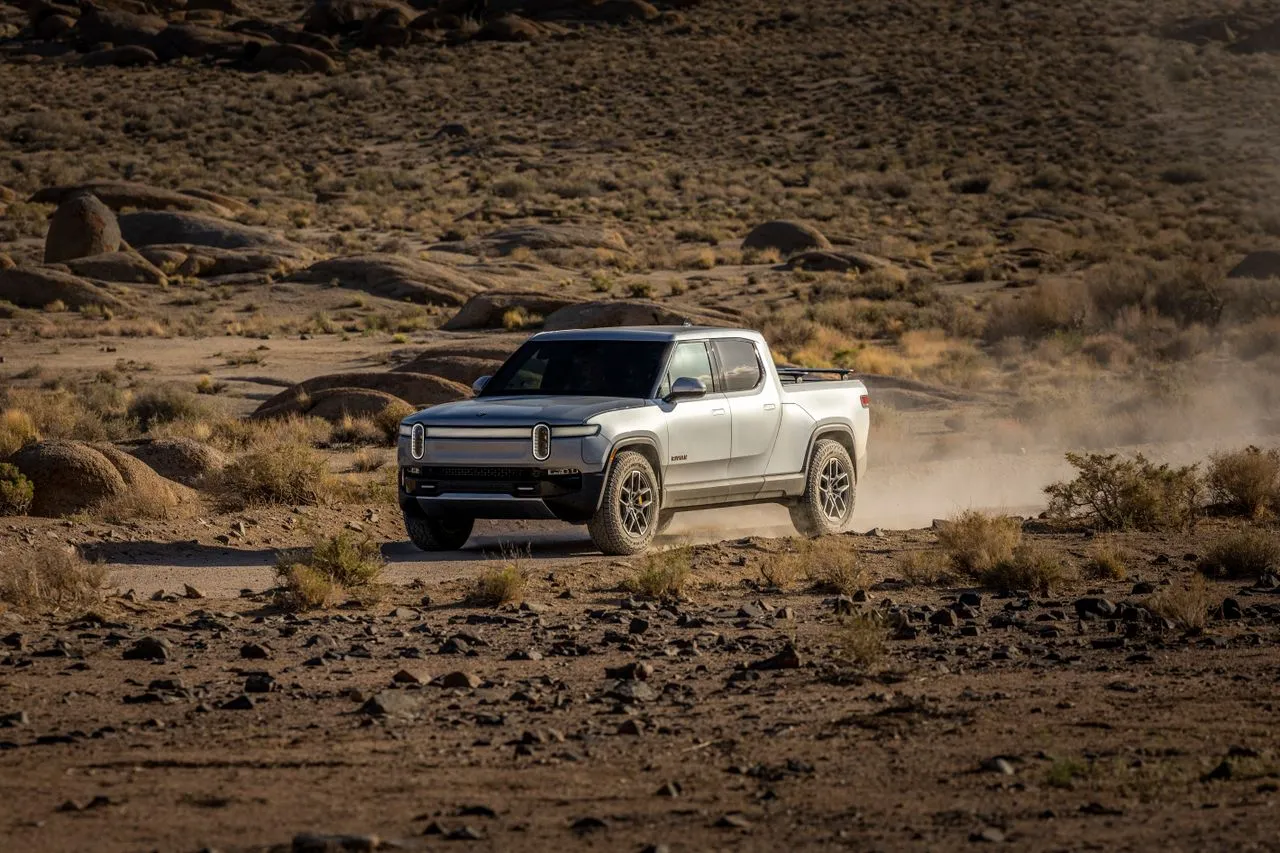
Rivian Automotive, an electric vehicle manufacturer focused on developing advanced electric vehicles and mobility technologies, has announced the acquisition of Third Dimension AI, Inc., a company specializing in artificial intelligence-powered 3D spatial generation. The strategic acquisition is intended to strengthen Rivian’s autonomous driving research and development capabilities by accelerating synthetic data generation, advanced simulation, and the development of more capable driver assistance and self-driving systems.
The transaction represents another step in Rivian’s efforts to advance its autonomy technology through artificial intelligence, real-world data, and sophisticated virtual environments. As autonomous driving systems become increasingly complex, automakers are investing in tools that can help them train, test, and validate their technologies across a broad range of driving conditions. Simulation is becoming an important part of this process because it allows engineering teams to recreate challenging situations that may be difficult, expensive, or unsafe to encounter repeatedly on public roads.
By bringing Third Dimension AI’s technology and engineering talent into its organization, Rivian aims to expand its ability to generate realistic virtual driving environments. These environments can support the training and evaluation of autonomy models while helping engineers investigate how vehicles and automated driving systems respond to changing road conditions, obstacles, and unexpected events.
The companies have not disclosed the financial terms of the acquisition.
Rivian’s acquisition of Third Dimension AI reflects the growing importance of artificial intelligence and simulation in the development of advanced driver assistance systems and autonomous vehicle technologies.
Developing autonomous driving capabilities requires more than collecting large amounts of driving data. Engineers must also ensure that AI models can interpret their surroundings, anticipate potential hazards, and make appropriate decisions in a wide variety of circumstances. These systems must be tested against ordinary traffic conditions as well as unusual situations that can challenge their ability to perceive and respond to the environment.
Real-world testing remains essential, but relying exclusively on physical driving data presents limitations. Some situations occur infrequently, while others may be difficult to reproduce under controlled conditions. Collecting enough examples of these events can require substantial time, vehicle testing, and engineering resources.
Synthetic data and simulation offer a complementary approach. They allow development teams to create artificial training examples and virtual scenarios that reproduce relevant characteristics of the physical world. By adjusting elements within a simulated environment, engineers can study how an autonomous driving model behaves under different conditions without needing to recreate every situation on an actual road.
Rivian expects Third Dimension AI’s capabilities to help accelerate this process. The acquisition brings specialized technology and expertise into Rivian’s Autonomy and AI organization, supporting the company’s broader efforts to improve its automated driving systems.
Third Dimension AI was founded by Tolga Kart and Piotr Sokolski. The company developed an AI-powered simulation platform designed to transform real-world data into detailed, controllable three-dimensional environments.
The platform is intended to make it possible to recreate driving environments with a high level of visual and spatial detail. It also enables engineers to modify the conditions within those environments, allowing multiple variations of a scenario to be generated from an initial set of real-world observations.
This capability is particularly relevant to autonomous driving development because AI systems must operate in environments that are constantly changing. Road layouts, traffic participants, lighting conditions, and the behavior of other road users can all influence how a vehicle’s automated systems interpret a situation.
A simulation platform that can generate realistic environments and systematically vary their characteristics can help engineering teams examine a wider range of possibilities. Rather than relying only on the specific circumstances captured during an actual drive, developers can create additional scenarios to investigate how their systems might respond to different conditions.
For example, a development team could use simulation to evaluate variations in a driving scene involving different vehicle movements, road configurations, or environmental conditions. These virtual scenarios could help identify weaknesses in an AI model and provide additional material for training and validation.
Third Dimension AI’s technology is designed to support this type of flexible scenario generation. By integrating the platform into its internal development processes, Rivian expects to improve how it creates and uses simulation data for its autonomous driving programs.
The practical benefits will depend on how effectively the technology integrates with Rivian’s existing data pipelines, simulation infrastructure, and autonomy models.
Synthetic data is an increasingly important resource for AI development, particularly in applications where real-world examples are expensive to collect or difficult to reproduce.
In autonomous driving, synthetic data can be generated through virtual environments that represent different road scenes and traffic situations. These examples can supplement information collected from vehicles operating in the physical world.
The acquisition is intended to strengthen Rivian’s ability to generate such data at scale. With Third Dimension AI’s platform and team working within Rivian, the company can pursue closer integration between its real-world driving data and virtual simulation capabilities.
This approach can create a feedback process in which information from physical driving informs simulated scenarios, while the results of virtual testing help engineers identify areas that require further development.
The approach is especially useful when autonomy teams need to investigate unusual or difficult situations. These events are sometimes described as edge cases because they occur less frequently than routine driving situations or present unusual combinations of circumstances.
Although rare, such situations can be important to system performance and safety. A model that performs well under common conditions may still encounter difficulties when faced with an unusual obstacle, an unexpected maneuver, or a complex interaction between road users.
Simulation can help developers create multiple versions of these situations and test the behavior of their systems under controlled conditions. Synthetic data can then supplement the real-world examples used to train and evaluate AI models.
However, simulated data does not replace physical testing. Autonomous driving systems must ultimately demonstrate reliable performance in real environments, and simulation results must be carefully assessed to determine how well they reflect actual driving conditions.
Rivian’s investment in Third Dimension AI is intended to strengthen the virtual side of this development process while continuing to support the use of real-world driving data.
One of the central objectives of the acquisition is to expand Rivian’s physical and virtual data flywheel.
In this context, a data flywheel describes a development process in which information collected from one stage of the system’s operation helps improve subsequent stages. For autonomous driving, that process can connect real-world driving observations, data processing, scenario generation, model training, simulation, and validation.
Physical driving data can reveal how vehicles interact with real roads and traffic. Engineers can use this information to identify relevant situations and build corresponding virtual environments. Simulation can then provide additional examples and variations for evaluating the autonomy system.
The results of these evaluations can help engineers identify performance gaps and determine where further training or testing may be required. Those findings can guide subsequent development and help teams prioritize additional investigation.
By incorporating Third Dimension AI’s technology, Rivian aims to make this cycle more efficient and expand the range of conditions that can be studied.
A more extensive simulation capability could also help engineers investigate problems earlier in the development process. Finding a weakness in a virtual environment may allow teams to examine and address it before relying on further physical testing to understand the issue.
The effectiveness of such a flywheel depends on the quality of the underlying data, the realism of the simulations, and the ability to translate testing results into meaningful improvements in model performance. Nevertheless, integrating physical and virtual data is an important strategy for companies developing increasingly sophisticated autonomous systems.
Rivian said the acquisition will support its driver assistance and self-driving systems. These technologies rely on AI models capable of processing information about a vehicle’s surroundings and determining appropriate responses to changing conditions.
Driver assistance systems can support specific driving tasks, depending on the features available in a vehicle and the conditions under which those features are designed to operate. More advanced autonomous driving technologies involve additional technical challenges, including interpreting complex environments and responding to unpredictable situations.
Simulation can support the development of both categories of technology by providing repeatable environments in which engineers can evaluate system behavior.
A virtual environment can be used to test how an autonomy model interprets a scene, responds to another road user, or handles changes in its surroundings. Repeating these scenarios with controlled variations can help engineers compare system performance across different conditions.
The acquisition gives Rivian access to a specialized team focused on generating these environments. Bringing the technology in-house may also allow Rivian’s researchers to adapt simulation workflows to the specific needs of its vehicle platforms and autonomy software.
The company has not announced specific product release dates, new autonomous driving features, or performance targets associated with the acquisition. Its stated objective is to strengthen the development process behind its autonomy technologies.
James Philbin, Rivian’s Senior Vice President of Autonomy and AI, emphasized the importance of simulation in training and validating autonomous driving systems.
According to Philbin, Third Dimension AI has developed technology that transforms real-world data into detailed three-dimensional environments. He explained that the ability to recreate difficult driving situations and vary their conditions can help Rivian improve how its systems respond.
Philbin also said the technology and expertise would strengthen and accelerate autonomy development across Rivian’s consumer and robotaxi roadmaps.
The reference to these roadmaps indicates that Rivian sees potential applications for the acquired capabilities across multiple areas of its autonomy research. Consumer vehicles and robotaxi applications can have different operational requirements, but both depend on robust perception, decision-making, and validation processes.
For consumer vehicles, advanced driver assistance development requires careful evaluation of system performance across the driving situations that customers may encounter. Robotaxi development introduces additional challenges related to operating vehicles with a high degree of automation in defined service environments.
Simulation can provide a common development resource for investigating these requirements. However, the acquisition announcement does not establish that any particular robotaxi service will launch or that the technology has already achieved a specific level of autonomous driving capability.
Tolga Kart, co-founder and chief executive officer of Third Dimension AI, said the company was established to advance embodied AI and autonomous systems.
Embodied AI refers broadly to artificial intelligence designed to interact with and operate within the physical world through systems such as robots and vehicles. Unlike applications that work exclusively with digital information, embodied AI must account for the complexity of physical environments and the consequences of actions taken within them.
For autonomous vehicles, this means developing AI systems that can interpret spatial information, understand the relationships between objects, and respond appropriately as situations change.
Kart said joining Rivian would allow Third Dimension AI to deploy its simulation technology at scale. He also highlighted the importance of accelerating the generation of data needed to train autonomous systems and the validation required to deploy them safely and reliably.
The integration with Rivian provides an opportunity for Third Dimension AI’s technology to be used within a larger automotive engineering organization. It also places the company’s specialized capabilities closer to the vehicle data, software development, and testing activities they are intended to support.
The acquisition could therefore help connect advanced 3D generation research with the practical requirements of automotive autonomy development.
As part of the transaction, Third Dimension AI’s leadership and technical talent will join Rivian’s Autonomy research and engineering teams.
Bringing the acquired team into Rivian is an important component of the deal because simulation technology requires more than software alone. Effective implementation also depends on engineering expertise, integration with existing systems, and a clear understanding of the problems that autonomous driving developers need to solve.
The combined team will be positioned to work on integrating Third Dimension AI’s platform into Rivian’s autonomy development processes. This may include adapting simulation tools to support internal research priorities and improving the generation of environments used for training and validation.
The announcement does not provide further details about organizational changes, the number of employees joining Rivian, or a timeline for completing technical integration.
Financial terms of the acquisition have also not been disclosed.
The acquisition highlights the broader automotive industry’s growing interest in AI infrastructure, synthetic data, and high-fidelity simulation.
As automakers develop more advanced software-defined vehicles and driver assistance systems, the ability to train and validate AI models efficiently has become an important competitive consideration. Companies are exploring different approaches to combine real-world testing with virtual environments to improve development workflows.
Simulation can reduce the need to reproduce every test condition physically, although its value depends on the accuracy of the virtual environment and the quality of the evaluation methods. It can also provide repeatability, allowing engineers to compare model behavior across carefully controlled scenarios.
For Rivian, the acquisition provides access to a specialized platform and team that could strengthen these capabilities. The deal also reflects the importance of combining AI research with practical vehicle engineering, particularly as companies work to develop systems that must operate reliably in complex physical environments.
The acquisition should not be interpreted as proof that autonomous driving challenges have been solved. Real-world reliability, safety validation, software integration, and performance across varied operating conditions remain important requirements for advanced driving systems.
Instead, the transaction represents an investment in the tools and development processes that may help Rivian address these challenges more effectively.
Rivian Automotive’s acquisition of Third Dimension AI represents a strategic move to strengthen its autonomous driving research and development capabilities through advanced 3D simulation and AI-powered synthetic data generation.
By integrating Third Dimension AI’s platform and technical team into its Autonomy organization, Rivian aims to recreate complex driving situations, generate additional training scenarios, and improve the validation of its driver assistance and self-driving systems.
The technology is expected to support a more connected development process in which real-world driving data and virtual simulation reinforce one another. This approach could help Rivian investigate rare driving scenarios, identify weaknesses in its AI models, and accelerate aspects of autonomy development across its consumer and robotaxi roadmaps.
While the companies have not disclosed the financial terms or announced specific product timelines tied to the transaction, the acquisition underscores Rivian’s commitment to investing in the technology infrastructure required for advanced vehicle automation.
As the automotive industry continues to develop increasingly sophisticated AI-driven systems, simulation and synthetic data are likely to remain important tools for training, testing, and validating autonomous driving technologies. Rivian’s integration of Third Dimension AI is intended to strengthen its position in this evolving field.
About Rivian
Rivian (NASDAQ: RIVN) is an American automotive technology company that develops and manufactures category-defining electric vehicles as well as vertically integrated technologies and services. Through innovation across its electrical architecture, end-to-end software, autonomous driving platform, artificial intelligence and propulsion, the company creates vehicles that excel at work and play while accelerating the global transition to zero-emission transportation and energy. Rivian vehicles are manufactured in the United States and are sold directly to consumer and commercial customers. Whether taking families on new adventures or electrifying fleets at scale, Rivian vehicles all share a common goal — preserving the natural world for generations to come.
Source Link:https://www.businesswire.com/