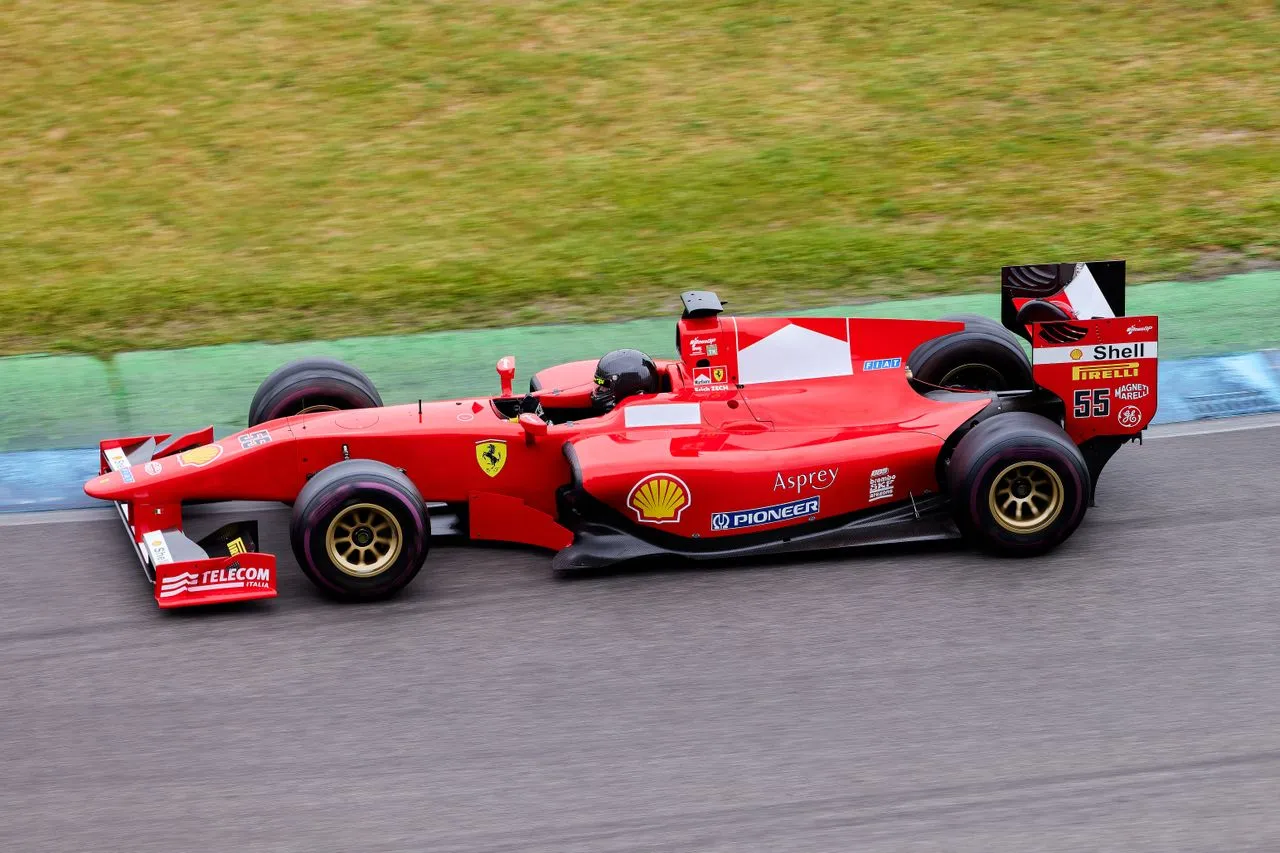
Scuderia Ferrari HP is preparing for one of the most demanding and prestigious events on the Formula 1 calendar as the team heads to Singapore for the Singapore Grand Prix. Following the recent race in Sepang, the Italian team must quickly adapt to the unique challenges of the Marina Bay Street Circuit, where precision, preparation and consistency will be essential to achieving a competitive result.
This year’s Singapore Grand Prix introduces an additional challenge for all participating teams. For the first time, the Singapore event will feature the Sprint format, creating a compressed schedule that leaves teams with limited time to evaluate their cars, refine their setups and prepare for the competitive sessions. The event will also mark the final Sprint weekend of the Formula 1 season, increasing the importance of making the most of every opportunity on track.
For Ferrari, the combination of a demanding street circuit, high temperatures, extreme humidity and a shortened practice schedule will require careful planning and efficient execution throughout the weekend.
The Singapore Grand Prix is widely recognised as one of the most physically and technically challenging races in Formula 1. The Marina Bay circuit places significant demands on drivers and engineers, with its narrow layout, closely positioned barriers and numerous corners requiring a high level of precision.
The introduction of the Sprint format adds another layer of complexity. Unlike a conventional Grand Prix weekend, which generally provides multiple practice sessions before qualifying, the Sprint schedule allows teams only one free practice session before competitive action begins.
Friday’s practice session will therefore be particularly important for Ferrari. Engineers must gather sufficient information about the car’s behaviour, tyre performance, braking characteristics and aerodynamic balance within a limited period. Drivers must also become comfortable with the circuit while identifying the braking points and racing lines needed to deliver consistent lap times.
The first practice session is scheduled for Friday afternoon, with Sprint Qualifying taking place later that evening. This arrangement leaves little room for significant setup changes or extensive experimentation once the competitive sessions begin.
Teams will need to arrive with a well-developed initial setup and make adjustments based on the limited data collected during practice. Any mistakes in preparation could have consequences throughout the remainder of the weekend.
The single-hour practice session is expected to be one of the most important elements of Ferrari’s preparations. Street circuits require drivers to gradually increase their pace as they become familiar with the track surface, corner entries and the proximity of the barriers.
At Marina Bay, confidence is particularly important because even a small error can result in contact with the walls and potentially damage the car. Drivers must find the right balance between pushing for performance and maintaining control in a demanding environment.
Ferrari’s engineers will need to focus on several key areas, including suspension settings, mechanical grip, braking stability and tyre management. The car must also remain predictable through the circuit’s numerous direction changes, allowing drivers to maintain momentum without compromising control.
Because the available practice time is limited, the team must prioritise the most valuable data-gathering activities. Engineers will have to evaluate the car’s performance efficiently and communicate any necessary changes to the drivers before Sprint Qualifying begins.
The Sprint itself will cover 21 laps on Saturday. Its result will provide an early indication of the teams’ relative performance and offer another opportunity to collect valuable information ahead of the main Grand Prix.
Following the Sprint, attention will shift to qualifying for Sunday’s race. The Saturday evening session will be especially important because overtaking opportunities at Marina Bay can be limited, making a strong starting position a significant advantage.
The Marina Bay Street Circuit measures 4.927 kilometres and features 19 corners. Located in Singapore, the circuit combines the characteristics of a traditional street track with the technical demands of a modern Formula 1 venue.
The layout underwent an important modification in 2023, when the sequence between Turns 16 and 19 was removed. This change improved the circuit’s flow and altered the rhythm of the lap, although the venue continues to demand precision and careful management from drivers.
The track’s defining characteristic remains its confined nature. Barriers sit close to the racing line, leaving drivers little room to recover from mistakes. Unlike circuits with extensive runoff areas, Marina Bay punishes errors immediately, making consistency and accuracy essential throughout every session.
Drivers must approach each corner with a clear understanding of braking points, turning angles and acceleration zones. Maintaining momentum is important, but excessive aggression can lead to contact with the barriers or a loss of valuable lap time.
The circuit also places considerable demands on the cars’ braking systems. Repeated braking zones require stable performance and effective heat management, particularly during longer running periods and the race itself.
Cooling is another major consideration. Singapore’s hot and humid conditions can place additional pressure on the cars’ thermal systems, making it necessary for teams to balance aerodynamic performance with the need to maintain appropriate operating temperatures.
Track position is equally significant. Because passing can be difficult on a narrow street circuit, qualifying performance often plays a decisive role in determining a driver’s chances during the Grand Prix. Ferrari will therefore need to maximise its performance during both Sprint Qualifying and the main qualifying session.
Singapore traditionally ranks among the most physically demanding races of the Formula 1 season. Although the main sessions take place in the late afternoon and evening, high temperatures and extreme humidity can make conditions difficult for drivers, mechanics and other team personnel.
The challenges follow the demanding conditions experienced during the preceding race in Sepang, where drivers faced significant heat and humidity during Friday and Saturday. Cooler air later arrived on Sunday, providing some relief during the Grand Prix.
Singapore, however, is expected to present another demanding environment. High humidity can make it more difficult for the body to regulate temperature, while sustained physical exertion inside a Formula 1 cockpit places considerable demands on drivers.
Throughout the race, drivers must maintain concentration, manage their physical condition and make precise decisions while dealing with heat, vibration and repeated braking forces. Even minor reductions in concentration can affect lap times and increase the risk of errors.
Teams must also consider the impact of the weather on car performance. Temperature changes can influence tyre behaviour, braking performance and cooling requirements. Engineers will need to monitor operating conditions carefully and ensure that the car remains within its intended performance range.
The unpredictable nature of tropical weather presents an additional complication. Thunderstorms can develop quickly, potentially changing track conditions and forcing teams to reconsider their strategies.
Rain would introduce further uncertainty, particularly on a street circuit where painted surfaces, drainage conditions and the proximity of the barriers can influence grip. Teams must therefore remain prepared to respond quickly if the weather changes during practice, qualifying or the race.
The Sprint format creates a busy three-day programme, leaving teams with limited opportunities to make changes between sessions.
The schedule, according to the published programme, is as follows:
Friday: Practice and Sprint Qualifying
The weekend begins with the only free practice session at 17:30 local time, corresponding to 11:30 Central European Summer Time (CEST). This session will allow teams to evaluate their initial setups and gather essential performance data.
Sprint Qualifying is scheduled for 20:30 local time, or 14:30 CEST. The results will determine the starting order for Saturday’s Sprint race, making the session a critical early test for Ferrari.
Saturday: Sprint and Grand Prix Qualifying
The 21-lap Sprint is scheduled to begin at 17:00 local time, corresponding to 11:00 CEST. The race will give drivers an opportunity to compete for Sprint points while allowing teams to assess their cars under race conditions.
Qualifying for Sunday’s Grand Prix will follow at 21:00 local time, or 15:00 CEST. This session will determine the starting grid for the main race and provide Ferrari with another opportunity to secure a strong position.
Sunday: Singapore Grand Prix
The main Grand Prix is scheduled to start at 20:00 local time, corresponding to 14:00 CEST. The race will be the culmination of a weekend that demands consistent performance across practice, Sprint Qualifying, the Sprint and Grand Prix qualifying.
The compressed timetable makes preparation and coordination particularly important. Ferrari will need to analyse data rapidly, avoid unnecessary mistakes and ensure that decisions made during one session support performance in the next.
The characteristics of Marina Bay mean that qualifying performance is likely to play an important role in Ferrari’s weekend. On a street circuit where passing opportunities are limited, starting near the front can reduce exposure to traffic and give drivers greater control over their race.
The Sprint adds another competitive session that can influence the overall weekend. Although the Sprint and Grand Prix have different objectives, both require teams to extract maximum performance from their cars while managing tyres and maintaining reliability.
Ferrari will need to evaluate tyre behaviour and understand how the car performs over longer runs. These findings can help engineers make informed decisions about race strategy, particularly if changing weather conditions affect grip levels.
The team must also be prepared to respond to safety cars, interruptions or unexpected changes in track conditions. Such developments can alter the strategic picture quickly, especially on a circuit where recovering lost track position may be difficult.
Efficient communication between drivers, race engineers and the wider team will be essential. With limited practice time, decisions must be based on accurate data and a clear understanding of the car’s behaviour.
The timing of the Singapore Grand Prix creates an additional challenge for Scuderia Ferrari HP. The event comes at the end of a triple-header, a demanding sequence of races that places pressure on personnel, equipment and operational resources.
Back-to-back race weekends require teams to maintain high standards while managing fatigue and ensuring that cars are prepared for each new circuit. The transition to Singapore is particularly demanding because Marina Bay has very different characteristics from many conventional racing venues.
Ferrari’s priorities will include making the most of the sole practice session, helping its drivers build confidence quickly and ensuring that the car is suitably configured for the track’s technical layout.
The team’s approach will need to combine preparation with adaptability. Engineers must establish a competitive baseline before arriving at the circuit, but they must also be ready to respond to the conditions encountered during the weekend.
The narrow track, challenging braking zones and high temperatures leave little room for mistakes. Every session will provide an opportunity to refine performance, and Ferrari will need to use those opportunities effectively.
The Singapore Grand Prix represents a significant test of Ferrari’s technical preparation, driver performance and operational efficiency. The introduction of the Sprint format makes the weekend even more demanding by reducing practice time and bringing competitive pressure forward.
With only one free practice session, the team must establish its setup quickly and give its drivers the confidence needed to attack the circuit safely. Sprint Qualifying and the 21-lap Sprint will then provide the first major tests of the team’s performance before the decisive Grand Prix qualifying session.
The Marina Bay circuit’s 4.927-kilometre layout, 19 corners and closely positioned barriers require exceptional precision. High temperatures, extreme humidity and the possibility of thunderstorms add further uncertainty, making preparation and adaptability central to success.
Ferrari recognises that the small performance differences between teams could make the effective use of every session particularly important. The challenge will be to translate limited practice time into a competitive package capable of delivering strong results across the weekend.
As the final Sprint event of the season and the closing race of a demanding triple-header, the Singapore Grand Prix will test the entire team. Scuderia Ferrari HP will aim to manage the circuit’s technical demands, respond effectively to changing conditions and maximise its opportunities to achieve the best possible result.
Source Link:https://www.ferrari.com/