Diodes Incorporated, a global semiconductor company providing high-quality products for a wide range of electronic applications, has announced the launch of two new automotive-compliant Hall effect current sensors, the AHC1724Q and AHC1725Q. Designed to address the increasing demand for efficient and reliable electric vehicle (EV) charging technologies, the new devices offer accurate, galvanically isolated measurements of both alternating current (AC) and direct current (DC).
As electric vehicle adoption continues to expand worldwide, automotive manufacturers, charging infrastructure providers, and power electronics developers are focusing on improving the efficiency, reliability, and performance of charging systems. Current sensing plays an important role in these systems because it allows electronic control units to monitor electrical current, manage power delivery, identify abnormal operating conditions, and protect sensitive components.
The AHC1724Q and AHC1725Q are developed to support these requirements while addressing two important design challenges: reducing energy losses and minimizing printed circuit board (PCB) space. Their integrated architecture combines a low-resistance copper conductor with a precision Hall effect sensor, enabling current measurement without requiring traditional external sensing components or complicated isolation arrangements.
The rapid development of electric mobility is creating new opportunities for semiconductor technologies that improve power conversion and charging infrastructure. Electric vehicles rely on sophisticated electrical systems to manage energy transfer between charging stations, onboard batteries, and vehicle power electronics.
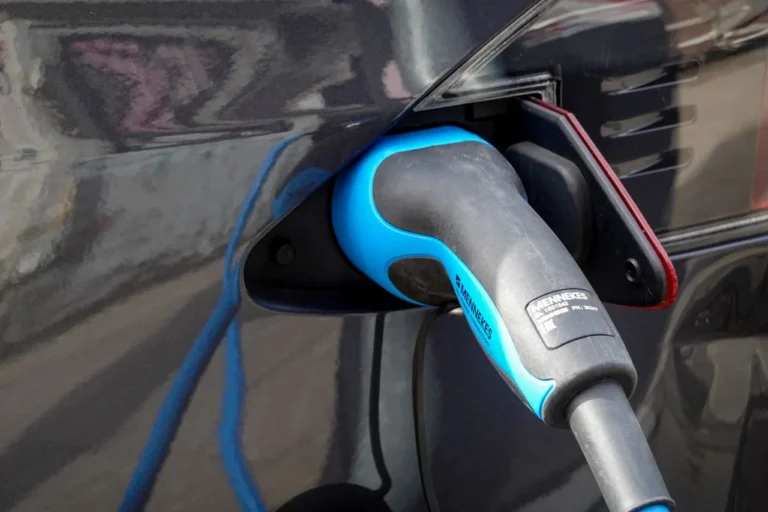
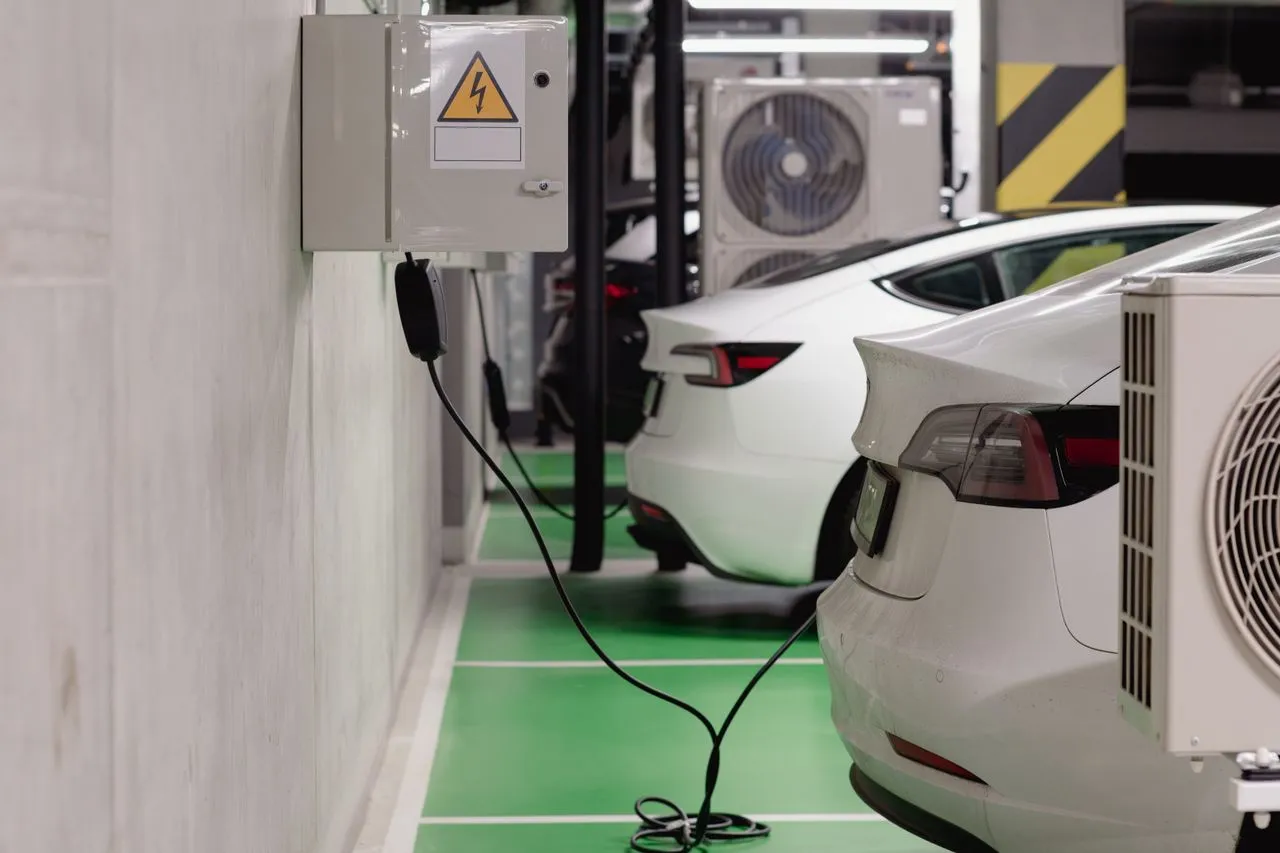
Onboard chargers (OBCs) and external EV charging stations require accurate current measurement to ensure that electrical power is delivered safely and efficiently. Current sensors help monitor charging operations, support power management functions, and detect potentially dangerous electrical conditions.
Diodes Incorporated designed the AHC1724Q and AHC1725Q to address these requirements through accurate AC and DC current measurement with galvanic isolation. Their compact dimensions and low electrical resistance make them suitable for applications where engineers need to balance electrical performance, thermal management, safety, and PCB layout limitations.
The devices can help simplify current-sensing designs by integrating the primary current conductor and sensing circuitry into a single semiconductor package. This approach reduces the need for additional components and can help engineers develop more compact power electronics systems.
One of the major features of the AHC1724Q and AHC1725Q is their extremely low primary conductor resistance. Both sensors incorporate an integrated copper conduction path with a typical resistance of just 1.2 milliohms.
Resistance in a current-carrying conductor produces heat and electrical power losses. In high-current applications, even relatively small resistance values can contribute to unwanted energy dissipation. Reducing conductor resistance is therefore important for improving overall electrical efficiency and controlling operating temperatures.
The 1.2mΩ typical resistance of these sensors helps minimize power losses during normal operation. This characteristic is particularly valuable in EV charging equipment, where electrical efficiency directly influences system performance and thermal requirements.
Lower power dissipation can also reduce the amount of heat generated within the sensing component. This helps engineers manage thermal conditions in compact electronic assemblies, where multiple power components may be positioned close together.
In addition to supporting efficient operation, the integrated copper conductor is designed to withstand high inrush currents. Inrush current can occur when electrical systems are initially energized or when switching operations create temporary current surges. The ability to handle these conditions is important for components used in automotive power electronics and charging infrastructure.
The AHC1724Q and AHC1725Q support current measurement ranges extending up to ±50A. Depending on the selected device configuration, engineers can choose between unidirectional and bidirectional current measurement options.
Bidirectional sensing is particularly useful in modern electric vehicle electrical architectures because current may flow in different directions depending on the operating condition. Accurate measurement of both positive and negative current allows electronic systems to monitor changing power flow more effectively.
The sensors provide an analog output proportional to the measured current. This output can be processed by a microcontroller, power management controller, or other electronic control system to support current monitoring and regulation.
The devices use a low-offset, chopper-stabilized sensing architecture to improve measurement accuracy. Chopper stabilization is a technique commonly used in precision analog circuits to reduce offset-related errors and improve signal stability.
Diodes Incorporated also uses post-packaging trimming to support accurate sensor performance. Manufacturing variations can influence the electrical characteristics of semiconductor devices, so trimming after packaging helps compensate for certain variations and maintain consistent output characteristics.
The resulting sensing architecture is designed to provide reliable current measurement across the devices’ specified operating conditions.
Electrical isolation is another important feature of the AHC1724Q and AHC1725Q.
In many power electronics systems, current must be measured on the high-voltage side of a circuit while the monitoring electronics operate at a different electrical potential. Maintaining appropriate isolation between these sections is essential for system safety and reliable operation.
Traditional high-side current measurement arrangements may require differential amplifiers, external isolation components, or additional circuit protection techniques. These solutions can increase component count, PCB complexity, design effort, and overall system cost.
The AHC1724Q and AHC1725Q integrate an electrically isolated primary conductive path and sensing circuit. This arrangement enables high-side current sensing without requiring a separate high-side differential amplifier or other costly isolation techniques.
The devices support a maximum working voltage of 420VDC for basic isolation according to UL 62368-1. This specification provides engineers with an important design reference when evaluating the sensors for suitable power electronics applications.
By combining current measurement and galvanic isolation within a compact package, Diodes Incorporated aims to simplify circuit implementation while helping developers address electrical safety and system integration requirements.
Modern EV charging systems operate under changing electrical conditions. Charging current can vary depending on battery requirements, power conversion activity, system control decisions, and operating conditions.
For this reason, current sensors must respond quickly enough to detect changes in current and provide useful information to the control system.
The AHC1724Q and AHC1725Q feature an analog output bandwidth of 120kHz. They also provide a typical response time of 4.0 microseconds and a typical propagation delay of 2.0 microseconds.
These characteristics support fast monitoring of changing current conditions. A fast response can help electronic control systems detect current variations and respond appropriately during switching operations, power regulation, and fault-monitoring activities.
The 120kHz bandwidth provides the sensor with the ability to monitor relatively rapid changes in current signals. This is relevant in switching power supplies, onboard chargers, and other power conversion systems where electrical current can change quickly.
The analog output is also ratiometric to the supply voltage. A ratiometric output changes proportionally with the sensor’s supply voltage, which can help simplify signal interpretation and measurement arrangements in systems that use supply-referenced analog inputs.
Together, these features make the devices suitable for applications requiring responsive and accurate current measurement.
Diodes Incorporated has introduced the two sensors with different supply-voltage requirements to support a wider range of electronic system architectures.
The AHC1724Q operates with a supply voltage between 4.5V and 5.5V. It supports selectable current measurement ranges from ±2.5A to ±50A.
The AHC1725Q is designed for lower-voltage electronic systems and operates with a supply voltage between 3.0V and 3.6V. Its supported current measurement ranges extend from ±5A to ±50A.
This distinction gives engineers the flexibility to select a device based on the available power supply, required current measurement range, and electrical architecture of the target application.
Both devices are supplied in a compact, low-profile SO-8 Type CJ2 surface-mount package. The package is intended to support space-efficient PCB layouts while allowing the sensors to be integrated into automotive and industrial electronic assemblies.
The compact footprint is particularly relevant for onboard chargers and charging stations, where designers must accommodate power semiconductors, control circuits, communication interfaces, protection components, and other electrical functions within limited available space.
Reducing the physical footprint of current-sensing components can provide additional flexibility during PCB layout and system integration.
Automotive electronic components must operate reliably across a wide range of environmental conditions. Temperature variations are particularly important because power electronics can generate significant heat during normal operation.
The AHC1724Q and AHC1725Q are specified to operate across a temperature range of -40°C to +150°C.
This broad operating range supports their intended use in demanding automotive environments, where electronic components may experience cold starting conditions, elevated temperatures, and changing thermal loads.
Their automotive-compliant design makes them suitable candidates for evaluation in EV charging systems and other automotive power electronics applications. Engineers should consider the relevant component qualification documentation and end-product requirements when selecting devices for specific automotive platforms.
The combination of compact packaging, galvanic isolation, low resistance, and fast response is intended to address several important requirements in modern automotive electrical systems.
Alongside the automotive-compliant AHC1724Q and AHC1725Q, Diodes Incorporated also offers standard-compliance versions known as the AHC1724 and AHC1725.
These versions are intended for industrial and commercial applications requiring accurate, galvanically isolated AC and DC current measurement.
Potential applications include switched-mode power supplies, load detection and management systems, heating, ventilation and air-conditioning (HVAC) equipment, and overcurrent fault protection circuits.
In switched-mode power supplies, current monitoring is important for maintaining stable power conversion and protecting switching components. Accurate sensing allows control systems to monitor operating conditions and support appropriate power regulation.
Load detection and management systems can also benefit from isolated current measurement. By monitoring current consumption, electronic controllers can identify changes in connected loads and support more effective energy management.
In HVAC equipment, current sensing can help monitor electrical loads associated with motors, compressors, and other power-consuming components. Similarly, overcurrent protection circuits use current measurements to identify abnormal electrical conditions and support protective responses.
The availability of standard versions allows Diodes Incorporated to address a broader range of industrial and commercial markets beyond electric vehicle charging.
The AHC1724Q and AHC1725Q are being introduced publicly for the first time at electronica 2026.
The exhibition provides an opportunity for Diodes Incorporated to demonstrate its semiconductor technologies to engineers, automotive manufacturers, industrial equipment developers, and other professionals involved in electronic system design.
The company is showcasing the new current sensors alongside additional technologies designed to improve power efficiency in automotive and industrial power architectures.
Power efficiency is becoming an increasingly important consideration across the electronics industry. Electric vehicles, charging infrastructure, industrial automation equipment, and advanced power conversion systems all require components capable of delivering reliable performance while reducing unnecessary energy consumption.
By introducing integrated current-sensing solutions with low conductor resistance and galvanic isolation, Diodes Incorporated is targeting the growing demand for efficient and space-saving power electronics components.
The launch also reflects the wider semiconductor industry’s focus on developing integrated solutions that help simplify electronic designs and reduce the complexity associated with traditional circuit implementations.
Diodes Incorporated has announced indicative pricing for the new automotive-compliant current sensors based on quantities of 4,000 pieces.
The AHC1724Q is priced at $1.30 per unit, while the AHC1725Q is priced at $2.20 per unit at the specified order quantity.
These pricing details provide an initial reference for manufacturers and electronics developers evaluating the devices for potential production applications. Actual purchasing arrangements and availability may depend on ordering requirements and distribution channels.
Engineers can obtain additional technical information and product specifications through the company’s official product pages
The introduction of the AHC1724Q and AHC1725Q represents another development in semiconductor technologies designed to support the expanding electric vehicle and charging infrastructure markets.
As EV charging systems become more sophisticated, manufacturers need current-sensing components that combine measurement accuracy, electrical isolation, fast response, and efficient operation. At the same time, engineers must manage PCB dimensions, component costs, and thermal performance.
Diodes Incorporated addresses these requirements through an integrated Hall effect sensing architecture featuring a typical primary conductor resistance of 1.2mΩ, current measurement capabilities up to ±50A, 120kHz analog bandwidth, and a maximum working voltage of 420VDC for basic isolation according to UL 62368-1.
The availability of different supply-voltage options, compact SO-8 packaging, and a wide operating temperature range further expands the potential application opportunities.
With automotive-compliant and standard-compliance versions available, the company’s new sensors are positioned to serve both automotive and industrial electronics developers.
As the global transition toward electric mobility continues, technologies that improve power efficiency and simplify charging system design will remain important. Through the AHC1724Q and AHC1725Q, Diodes Incorporated is expanding its portfolio of current-sensing solutions for next-generation EV charging and power management applications.
Source Link:https://www.businesswire.com/